Author: healing

  • Dr Janice Joneja Histamine Intolerance Interview Transcript

    Dr Janice Joneja Histamine Intolerance Interview Transcript

    more

    http://youtu.be/3kPIkD5U2p4

    Don’t forget to sign up to my newsletter to make sure you don’t miss the second part of this interview.

    Dr Joneja and I cover:

    – How antihistamines are driving up your histamine level

    – Which hidden food additives are torpedoing your recovery

    – Why you shouldn’t worry about going too low histamine

    – The biggest danger you’ll face on the low histamine diet

    – Dr Joneja’s approach to salicylate intolerance

    – Brain fog

    – How excess histamine is causing anxiety disorders

    – Why histamine makes you crazy!

    Dr Joneja interview part 1 transcript:

    Dr Joneja thanks for joining us today. I’d like to start off with an explanation of how allergies are different to histamine intolerance.

    An allergy is quite different, we now see histamine – we should say either histamine excess, histamine sensitivity and histamine intolerance are all used rather loosely but they all actually mean the same thing, which is that the body is trying to cope with an excess of histamine and this is separate and distinct from an allergy. Now, an allergy always involves the release of histamine so obviously we are going to have very similar symptoms from either the histamine released in an allergy – which, of course, will be an excess (that’s what’s responsible for the symptoms) – or we have the same symptoms from histamine which is rising in the body as a result of several other events, separate and distinct from allergy; however, the two can exist together which means that the excess histamine, of course, can be coming from an allergy in addition to other things that are happening in the body. Now, having said that, histamine sensitivity or intolerance, can occur without a person having allergy at all. So they go for allergy tests, which involves detection of allergen-specific IGE, which is the antibody responsible for allergy – and the tests come back negative, and yet all the symptoms seem to indicate that an allergic reaction is occurring. So what we have here is a situation where you have an allergy with the typical symptoms of either respiratory distress, digestive tract distress, symptoms in the skin – all of which can be mediated by the histamine released in the allergic reaction. But with histamine intolerance or sensitivity, that histamine is in excess and therefore the symptoms are going to be the same

    Do you believe it’s possible to lessen allergic reactions by lowering our overall histamine level?

    That’s a very good question and the evidence seems to be pointing to the fact that – yes, this can happen. But we have to look at the reasons for histamine excess in the first place. Very often this seems to be associated with a low level of the enzyme systems called Diamine Oxidase, which break down excess histamine. Now when the histamine in the body reaches a level that the enzyme can not cope with, then we’re into the excess situation. Now, if a person has an allergy and in addition, for example, has a low level of the enzyme that breaks down the excess, we then need to lower the level of histamine overall, so that the body can cope as little better. Now, what I’m referring to here is research that indicates that people who are prone to having anaphylaxis as a result of an allergic reaction, which in some cases can be life threatening, may also have a low level of the Diamine Oxidase, which means that the histamine being released in the allergic reaction is not being broken down as rapidly as in another person, and this can reach a level where that anaphylactic reaction can be so severe it is life threatening. So in those situations, most definitely, one can reduce the effects of the allergy by reducing the histamine. Now, that is supported by research. Wether one can actually reduce the severity of an allergic reaction in people who have a normal level of the enzyme has yet to be proven by research but it would be logical to assume that perhaps one could.

    Could you please give us an idea of how histamine intolerance, mast cell activation and mastocytosis are different; if in fact they are?

    Well, actually, it’s all the same thing, because histamine is made, synthesized and stored within mast cells – so the mast cells are the focus of where the histamine comes from. So if, for example in a condition such as mastocytosis, we have an excess of mast cells, which, of course, means we have an excess of stored histamine. So anything that is going to trigger the release of that histamine, is going to lead to an excess of histamine; it’s not an allergic reaction – it is mast cells that are in excess, therefore histamine is going to be in excess, and anything that could reduce that histamine is going to be effective to a certain degree in reducing the symptoms that result from the release of histamine from the mast cells. So that’s the important factor in mastocytosis and similar conditions where there’s just too much histamine stored and then when it’s released, of course we have far too much of it so that is definitely a histamine associated condition which we could call histamine excess –  not really histamine sensitivity in its sense of being due to an enzyme deficiency, but it’s definitely an excess of histamine.

    I was initially diagnosed with histamine intolerance in 2010 by a histamine plasma and diamine oxidase test. It was only just a few months ago I found out that I actually have mast cell activation disorder – which makes sense in terms of the very severe symptoms I experienced; including anaphylaxis. What advise do you have people who believe they have a histamine disorder and are looking for diagnosis?

    Now, you have brought up a very important point here – and that is that we do not have any definitive tests either for DAO function or histamine levels. What I mean here is that histamine fluctuates in the body constantly. We require histamine for brain function, it’s a neurotransmitter. We require histamine for digestion because it’s the trigger for the release of gastric acid, which is always released when we start to eat – it’s the first stage of breakdown of protein in the stomach, for example –  and we require it constantly for protection because histamine is one of the ways the body fights infection or any adverse event in the body because these events will result in inflammation as the result of histamine release. So, histamine fluctuates in the body constantly, and so a normal level would be different when, for example, a plasma sample is taken at different times during the day – different events during the day – and then in addition we might be able to measure DAO in blood, but it does not translate – never will translate – until we’ve got far better research into what is the importance of that level in clinical outcome. For example, you could say – ok, a plasma level of DAO of such and such will mean that you are going to have a histamine excess. Well, that really  is not the case. Diamine Oxidase is at different levels in different organs throughout the body and we have it in the digestive tract, we’ve got it in the kidneys, we’ve got it throughout different organs at different levels and so how these function in controlling the level of histamine and how that translates into histamine excess symptoms is totally unknown. So this, unfortunately, although it’s actually very fashionable to take these tests (laboratories are making a lot of money from these tests), they really don’t tell us very much at all. So, there we are in the beginning of this being recognised as a separate entity from allergy, but the research does not tell us exactly what this is going to translate to in a particular individual.

    Very interesting you say that because it’s something I’ve suspected that for a long time.

    You are correct – a lot of people are suspecting this now as they realise that the research does not support this. And does not support the way..  you know, we’re so used to medical tests – that’s our problem – so used to being told that we have to have a test for every condition that we see.  The test results will then determine the diagnosis, the diagnosis determines therapy and so on and so forth.. That’s what we call the medical paradigm. And, unfortunately it can not be applied either to histamine sensitivity or to allergy, if we really take it to its extreme – but we’re talking about histamine sensitivity, so we really don’t want to go into the complexities of allergy at this point. But I just want to emphasise that – no, it does not apply at the level that our research is at the moment.

    So if someone suspects they have a histamine condition, how would you advise they go about confirming it?

    Well, as a result of my own research and the articles that I have written, I have as very large practise in this particular condition because so many people have the situation where they suspect they have an allergy and often their general practitioner might also, because of the symptoms, send them for allergy tests – they’re negative – and so they start looking for answers. And of course on the web now we’ve got a lot of references to histamine intolerance – many of which are totally and completely wrong, but there we go! The idea is then planted and then they will go to look for tests, because that’s our medical paradigm. The tests will then either confirm – and often do confirm, because these tests are often indicative of fluctuating histamine levels, which can be high in certain situations and so on, and maybe low Diamine Oxidase although we can not specify what low Diamine Oxidase is because we don’t have an normal level to compare it with.. And so, they end up saying “what do I do now?” When they come to me, after having had many different routes around, what I do is to look at their history – that’s very, very important – so I need their medical history, I need all the results of every test they’ve had and then if the indications are (oh, and they always keep a seven day food and symptom record very carefully, I give the instructions and the recording chart) then, based on that, if it is clear, and often it is very clear, because I suppose I’ve been doing this for almost twenty years now, so one sees this pattern very clearly, or not.. And then I start a low histamine diet – very important. Then, as a result of that, which I developed over the years based on my research, then we can tell very quickly whether they have a histamine sensitivity problem because the results are quite dramatic. And then after that we can then perhaps introduce the idea of supplementing Diamine Oxidase as see if that will then help the problem. But in most cases if it is histamine sensitivity, we’ll reduce the external forces of histamine – and that’s all we can do. Then, in itself, it becomes both a diagnosis and a therapy.

    The results of the diet are indeed dramatic, I went from thinking I was on my death bed to being pretty much fully functional in a matter of months. It was amazing.

    Yes – actually, I’ve had people improve within a few days of reducing it, particularly if they are already following a high histamine diet, as many people do – unknown to themselves.

    Absolutely – they’re thinking they’re being good to themselves by eating all the foods they’re told are healthy – avocados, tomato, fish, shellfish.

    Yes indeed..

    That brings me to the question I am definitely most asked – which foods are safe. My response is that it varies from person to person, aside from the ones that are agreed upon by most lists: soy, shellfish, fermented foods etc.

    Absolutely, I think that is the most important question and I’m very happy to be able to answer it for you because there is so much misunderstanding about the condition and how to manage it because people don’t understand the process – and that’s what I’ve been researching: I always go to the cause, to the process – what is happening, before throwing around different lists and so on. Now, the most important thing about histamine intolerance is that – and this is the biggest difference between histamine intolerance and allergy –  histamine intolerance is a dose related condition, which means that when you exceed your own limited tolerance, then you are going to show symptoms. So, to make this very simple, I give the analogy of filling up a bucket with water. We start at the bottom of the bucket with essential histamine – that will be histamine that our body makes for brain function, digestive function, protection – so we’ve always got a little bit of water in the bucket to begin with. Now if a person has an allergy, for example during the pollen season, so there are respiratory allergies, such as hay fever, they’re releasing more histamine, so that adds more water to the bucket. And then they may be consuming – well, they may even have an allergy to cats or dogs or something, so animal dander can add a bit more to the bucket. Then, they may be eating a high histamine diet: tomatoes -for example, cheese, a glass of wine, a pizza with pepperoni – each of these are adding on to the water that is already in the bucket. Some of these are already quite high and adding more and more and more – when that total level reaches the top of the bucket, it overflows – that’s when symptoms occur, because that’s exceeded the enzymes in the body’s ability to break down the excess and excrete it through the kidneys. So then we see the symptoms – so you can visualise the top of the bucket being that particular person’s limit of tolerance and they’ve filled up the bucket and it’s overflowed and that’s their symptom trigger. So, what we’re dealing with is: each of the different events that are going to add to the water in that bucket. That was your question – where are these things coming from? Multiple sources, but as long as we understand each of the sources, we can control it. What we’re doing is reducing that level that is above the level in the bucket that we require. So anything on top of that  – especially in the diet – we’re going to bring down that level in the bucket. So, let’s look at where this histamine is coming from outside the body. This is what we call extrinsic histamine. So, as you said, we’ve got a variety of different foods – let’s look at the food themselves: where is the histamine coming from? Well, in fish, for example, you buy fresh fish, freshly caught and gutted, frozen fish: fish don’t have any histamine. But, if they are not processed adequately, if they are not frozen immediately after they are caught and gutted, then the bacteria in the gut of the fish start to break down protein. The protein of the flesh contains many amino acids, the most important of which (in our discussion) is histadine. Histadine is converted to histamine by histadine decarboxylase which is a specific enzyme which these bacteria make. This enzyme converts the histadine into histamine and the longer the fish is hanging around unprocessed and un-gutted – the level of the histamine rises and bacteria multiply every twenty minutes. So that histamine could rise pretty rapidly. So there’s the source from the fish. We can eat fish if we have an excess of histamine but it has to be freshly caught, gutted immediately or frozen immediately.

    People often question my use of salmon, tuna and other high omega 3 fatty acid darker fleshed fish. I personally haven’t noticed any difference in my reaction to white or darker fleshed fish. Is dark fish higher histamine?

    No – it makes no difference whatsoever. It’s the bacteria in the gut. Now, talking about canned fish, in North America, I’m pretty sure it would be true in the UK too, we have very stringent regulations regarding caught fish. It’s usually frozen on board ship. That’s fine, because the bacteria don’t have a chance to multiply and act on the flesh. But, a lot of the fish that is canned in countries where the regulations are not as stringent can be from fish which does contain histamine as a result of the processing. So anything that is coming from sources that we don’t know have been processed adequately, avoid – because there is a chance of the fish having already been broken down – the  histadine and the histamine has risen. The other caveat with canned fish – some of it is sulphited, as sulphites release histamine (by a different process) – anything sulphited must be avoided because  that will release histamine. Shellfish, we don’t gut – so obviously, the shellfish are out because the bacteria in the gut of the shellfish do a similar thing – converting histadine to histamine and that’s always a potential source of histamine, so avoid shellfish – that’s the simplest thing. Now, as far as going through other protein foods – anything that is fermented or processed is going to contain histamine. We’re looking at things like pepperoni, salami, baloni, bologna – all of the processed and fermented meats are actually aiming to give flavour to the foods so this is completely out because of the high level of histamine. So, as far as meats on the histamine-restricted diet, only the fresh meat itself – for example, a roast or roasted poultry or things like that, which is not processed and not fermented – so those are okay. Then we go to other protein foods such as eggs – in themselves don’t contain histamine, but egg whites are known to be a histamine-releaser. So anything with excess egg whites – mouse, or merengue or baked alaska, for example, where the egg whites are predominant, are not a good food for histamine. A small amount of egg in a baked product doesn’t seem to be a problem at all.

    How about fermented foods – don’t we need some of those?

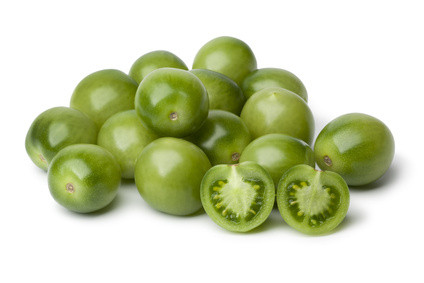
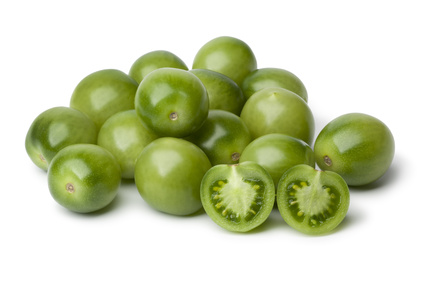
    The fermentation process is going to release a certain amount of histamine, so that’s where probiotics – which are in milk, fermented milk, are not a good idea – but the other protein food which is very important is milk. Now milk, in itself, is perfectly okay, as it doesn’t contain histamine, but fermented milk products, of course, do – because there we’ve got the microbial fermentation and histamine being a product as result of histadine breakdown, histadine conversion. So, cheese, for example, anything that has a microbial culture, including yoghurt, buttermilk, keffir – any of the fermented milk products are likely to contain histamine, whereas milk or cream, including ice cream (as long as it doesn’t have another ingredient that is histamine releasing) and butter, are perfectly okay: it’s the fermented milk products that are a problem. And then we get to the fruits and vegetables. Now some of the fruits and vegetable do have a high level of histamine or may release histamine. I found a very interesting article, years ago actually, in a rather obscure agricultural paper, very interesting, and I was looking into that a little bit further, and it seems that some fruits (particularly) need histamine for ripening. Particularly the red ones. So things like tomatoes, cherries even red beans, for some obscure reason that I can’t find in the research literature, but I’m hoping someone will look at this more closely, they need histamine for the ripening process. So, for example, people who have histamine intolerance, they can probably eat – well, I’ve found this – green tomatoes. And there is a species of tomato that does not ripen. And the histamine level in that is very low, or non-existent. Berries – now this is different source of histamine. Berries tend to be high in benzoates. Natural benzoates. Benzoates release histamine. And so certain berries are higher in benzoates and so release more histamine. And the berries that I see that are really problematic tend to be strawberries, raspberries, cranberries – cranberries are a great, sort of, health food, but for a person who has histamine intolerance they can be a problem. So berries and the benzoates, rather than the ripening process. So, looking at all of these I have made up a list as a result of looking at the ones that are high in histamine, from laboratories that have done histamine level tests, as well as those that are likely to release histamine as a result of the benzoate level. So my lists include the vegetables and the fruits that are associated with histamine levels and histamine release. And then we come to the herbs and spices – and again, looking at these, what are we looking at? Well, in cinnamon, it has a very high level of benzoates – so again we’ve got this factor where histamine is released as a result of the benzoates in the cinnamon. And cinnamon in any spice mixture such as curry spice mixture, chilli spice mixture – and then there are certain herbs which release histamine. Thyme, for example, releases histamine.

    Thyme – well there’s one I certainly wasn’t expecting to hear! I eat thyme with almost every meal and it never fails to make me feel better – it’s in most of my recipes…   

    Well, maybe you don’t have this problem with the benzoate release…

    Ah, that does make sense because I have no problem whatsoever with berries…

    Most of the herbs are okay – it’s the spices which are problematic. Cinnamon, cloves, anise and nutmeg. Thyme is one of those that may or may not be a problem. And I suppose it depends on the species too. We don’t have that research to tell us – it’s the only herb, actually, that is associated with a possibility of the benzoate [process]. . The other group that I haven’t mentioned are the legumes, and the two which are very problematic are soy and red beans.

    How about chickpeas and lentils? A lot of people seem to have the idea that they’re high histamine.

    No, no they’re not. Not really.

    Great! Because I certainly don’t feel that they are…

    That leads me to the thyme information that you just gave me…this is something that I find interesting. A lot of foods that appear on high histamine lists also have positive attributes including some anti-inflammatory, mast cell stablising or antihistaminic properties – such as some varieties of mangos, peaches and cacao. Do you feel that lists adequately address this and how should we weigh up the anti-inflammatory/antihistaminic properties of foods in relation to their appearance as a “no” on these lists.

    Yes, it is a matter of risk-benefit balance. Always a factor when we’re looking at therapies, whatever they may be – dietry, drugs, whatever we’re looking at, really. It’s a risk-benefit balance that we are looking for, where we have more benefits than we do risks. Of the lists that you gave me, mangoes are okay on any histamine list. There’s no reason to avoid mango. Blueberries: these are berries, some of them will have benzoates, some of them don’t – it depends on the species, the ripeness and all sorts of things. Blueberries are low on the berries list, but all berries do have certain level of benzoate that we do have to be a little bit cautious about. So these are usually perfectly okay – the level, the association with histamine is not really significant. Of the list you gave me – cacao: that is a problem with histamine, that one I wouldn’t include. You see the problem is that it’s very difficult to associate a reaction with a specific food. You can do it with allergy, of course, because you eat the food – you have an allergy [reaction], there it is, clear and simple. But if you are on a low histamine diet already, the level of the water in your bucket is pretty low, it’s below your limit of tolerance. And so you can eat certain histamine related foods – particularly if they’re not very high in histamine or benzoate, you’re not filling up your bucket with water, so in this situation you can consume these more beneficial foods and still not fill up your bucket with water. As long as you are not consuming a lot of other high histamine foods. And that’s the beauty of histamine intolerance without allergy is that you do have this more liberal type of diet because until you reach and exceed your own limit of tolerance you are safe.

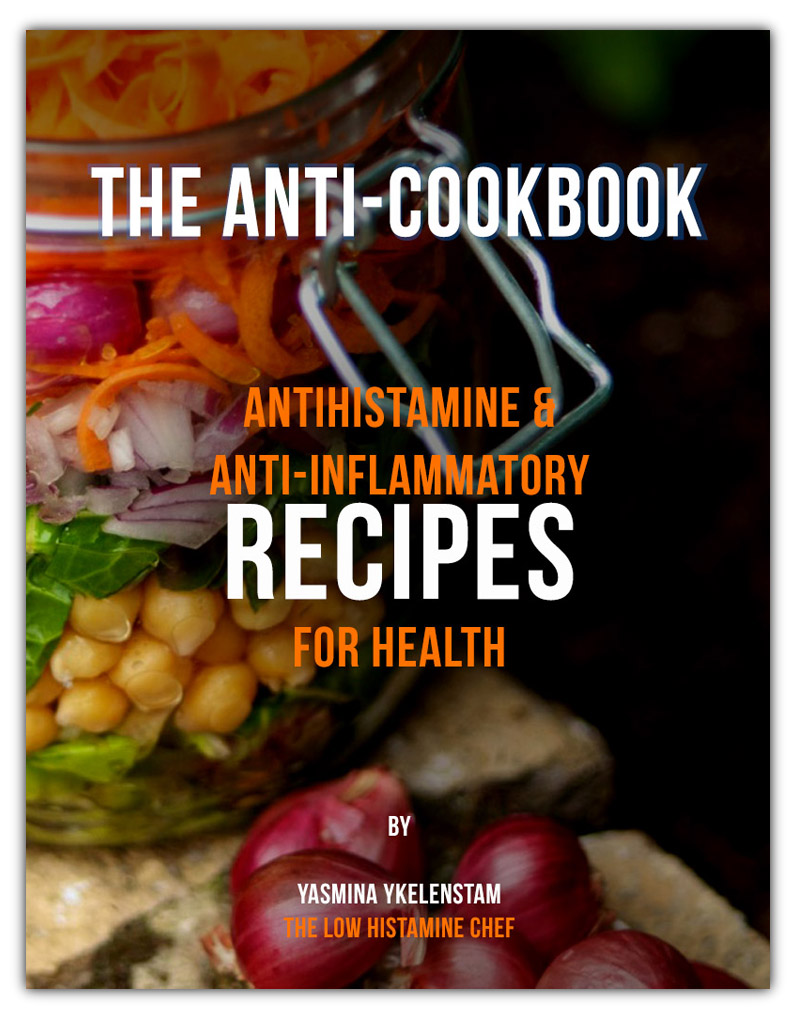
    (You’ll find six pages of antihistamine & anti-inflammatory low histamine foods in the Anti-Cookbook: High Nutrient Antihistamine & Anti-inflammatory Recipes for Health.)

    Absolutely, that is the foundation of my approach.

    Oh, I’m so glad to hear that because it is the only approach that makes any sense or has any value in histamine intolerance management, it truly is. But then, we should discuss other sources of histamine that people may like to know about other than foods. I mean, yes, we control it through food, but there are other factors, for example, this is what brings us to the probiotic question. And that is, many people who have histamine intolerance have a situation where the bacteria in their own digestive tract are converting undigested proteins that go into the colon – these bacteria convert the histadine into histamine so the body itself can be a source of excess histamine. That is important because the same bacteria in the gut of the fish that convert histadine into histamine are in the microbial flora of the colon and these people are, in fact, are the ones who are likely to have excess histamine as a result of it coming from their own microflora.

    Is this where we would consider treating with probiotics?

    Well, let me say that this is the research that – years ago I came to England to do a sabbatical – and I wanted to work on that very topic, because I have a list of the microorganisms that convert histadine into histamine because they make histamine dexycarbolayse. I also have a list of microorganisms that synthesize Diamine Oxidase, which means that these microorganisms will actually break down the histamine that may be produced by these microflora constituents. What I wanted to do was to develop a probiotic that would introduce these DAO producing bacteria and displace those that were converting histadine to histamine: we do not have targeted probiotics at the moment. We do not have probiotics available to us that will make Diamine Oxidase and that will colonise the microflora of the gut and displace the others, so all that we do at the moment is put in random species of bacteria and hope that will help. But we do not have the research that would allow us to specifically target this particular problem – that would be what we really require, is a probiotic that is targeted. I suppose that is what we’d call third generation probiotics. Specifically targeting an enzyme system to displace one and replace it with the one we want.

    DAO producing bacteria, I’m sure that’s something a lot of people have dreamed of!

    Oh, I know the species – I know exactly which organisms to use – the only thing is that we have to go through all the trials to make sure that they are fit for the human body – we couldn’t possibly just randomly throw them at people – and that’s the research that hasn’t been done.

    Well that’s too bad. Hopefully there’ll be some funding in the future because I’m sure we’d all make use of it!

    Just going bac to diet quickly. I wanted to ask your opinion. My personal dietary approach has been to remove high histamine foods, but as I go to replace them with high nutrient, lower histamine foods. But now I’ve actually graduated to the point where I’ve been able to re-introduce higher histamine high nutrient foods. I’m very concerned about the people who write to me telling me that they’ve been reduced to four or five foods. Could you please tell us how we can get past this? 

    That is the thing that I come up against so often and I think that whoever has advised them, if that’s where it’s come from, that’s really malpractice because whatever foods I take out of someone’s diet, I always insist that it is replaced by food of equivalent nutritional value. It’s the most important part of dietary practice, to ensure that the person is adequately nourished – whatever diet the person is on they should never be given a list of foods to avoid without a subsequent list of foods to substitute them with.

    Absolutely! Which brings me to the question: a lot of people who are down to a few foods – what’s the possibility – without saying that – and it used to upset me greatly when people would say it’s all in my head – it’s all in your head don’t worry eat it you’ll be fine!

     I’ve heard that same argument.. That’s just pure ignorance!

    What I am wondering though is, is there a possibility that our brain has become sensitized to a negative experience with food, or more than one food, that has caused a negative experience and that’s now colouring our experience with food. 

    A very big possibility and that I’ve seen through allergy practice through the years – because my practice is all food allergies and intolerances as well as histamine. I think people become food-phobic. They’re convinced that a food is going to make them ill or might even kill them. It is anorexia nervosa, in the true term, which means that the brain is literally starving the body as a result of fear of food – it is a fear, it is a phobic situation, most definitely. My worst experience of a patient with that was a young boy, actually he wasn’t that young – he was fourteen. He came in with his parents to me, referred to me by his doctor and he was fourteen and when I first saw him I would have said he was no older than nine, he was fragile, tiny, very thin hair, wore a baseball cap all the time because his hair was so sparse. And the history was that his mother had taken him for allergy testing when he was six months old and the allergist had done skin testing, which is never something that I would recommend ever, but there you go – six months old, skin testing and he’d come out with so many positive reactions that he was only left with about six or eight foods. And his mother diligently avoided all of the other foods – she’d been told by the allergist that the reactions were severe so he was at risk, so until the age of fourteen he had only eaten these six or eight foods. So he was literally starving, from the nutritional point of view, I mean – he wasn’t starving because he was eating adequate amounts but he was nutritionally very very undernourished. And so the first order of business was to reintroduce foods and I developed a programme that he would start with small quantities and we would slowly reintroduce foods and monitor his reactions to make sure he wasn’t reacting to the foods – so the parents now had this programme to start introducing new foods to his diet in a very controlled fashion. We set up an appointment two weeks later for them to report back what had happened and this time the mother came back only with the son. I asked them what the situation was and how they had got on and they  she said “hmm, we didn’t do it”. I said “oh, why?” And she said that the day before they were going to start the first test, the boy was so anxious that he was vomiting continuously, he couldn’t sleep – he was absolutely in a panic mode because he had been told from the beginning that the other foods he had to avoid because he would die as a result [of eating them]. So he was convinced that the beginning of his testing would mean that he was going to die. And so that was an extreme case of food-phobia to the point that the child couldn’t cope with the idea of starting these foods. I know that’s extreme but there are all degrees of that phobia that I see.

    It’s not that extreme; I come across it every day.

    Oh, you do?

    Yes, every day.

    When you come across a situation like that – personally I was given an elimination list and pretty much little else and struggled with it for a few years, not understanding why I was getting sicker. I eventually realised that I needed to add foods back to heal, but by this point I had become fearful of food because no matter what I ate I was still reacting – to everything. Because I also didn’t understand that digestion releases histamine or that histamine is required for digestion.

    That’s right exactly – you put food in your mouth and your releasing histamine.

    I learned to manage it and get over my fear of food by approaching it as, for lack of a better way of putting it, as a partner in healing.

    Wonderful. Wonderful, yes. That’s how I try to approach my patients and how to make friends with food, if you like – to use a psychological approach, I suppose, I use that a lot. But I also employ the small dose continuous exposure [idea] and I actually talk to my patients and explain what’s going on – that we have to start re-feeding as if they were babies. And as a baby they were given food – in fact, they were first exposed to food in their mother’s breast milk – that’s where we start tolerance, and I explain about tolerance and how we do the same process and give a tiny amount in increasing quantities and literally re-educating the body that this is safe, it’s going to be integrated into your body and we are going to make it part of the process of healing. That’s how I approach my patients while in that situation.

    It’s amazing to hear you say that because that’s exactly what I did for myself, with a hefty dose of meditation on the side. Meditating while prepping food, eating. Is there some kind of stress relief or meditation that you recommend to your patients?

    Well, I’m glad you brought up the topic of stress, because that is very important – in fact, I’ve got this in another of my books ‘Digestion, Diet and Disease’, where I have discussed that whole problem of stress, and give a flow chart showing that stress actually results in the release of histamine as part of the hypothalamic pituitary adrenal access process. So stress in itself, that phobic stress, around food can release more of the problematic chemicals, if you like, to put it simply. So the process itself is contributing to the problem. So anything that is going to reduce stress is very beneficial, because that is not in your head, well, it is in your head but it’s a biochemical process in your head, it’s not something you can control, it’s a biochemical process – a metabolic pathway. And that is something that I explain to my patients as well. That this is part of what’s going on and we have to gently intervene and divert to a positive rather than a negative response.

    Visit Dr Janice Joneja’s site for information on how to book a consultation.

    Listen to part two of our interview here.

    We cover:

    – How antihistamines are driving up your histamine level

    – Which hidden food additives are torpedoing your recovery

    – Why you shouldn’t worry about going too low histamine

    – The biggest danger you’ll face on the low histamine diet

    – Her approach to salicylate intolerance

    – Brain fog

    – How excess histamine is causing anxiety disorders

    – Why histamine makes you crazy!

    – The five most important steps in histamine intolerance recovery
  • Dr Joneja interview: histamine intolerance & mast cells

    Dr Joneja interview: histamine intolerance & mast cells

    tomatoes

    It lives! I haven’t managed to finish the transcription – having not transcribed anything longer than five minutes since my days at CNN, I totally forgot how much of a bugger it is. Yes I know, that’s what outsourcing is all about, but I wanted to extract all the good stuff for us to enjoy – quickly. Dr Joneja was kind enough to offer me 90 minutes of her time so the interview has been spilt into two. Part 1 is below and part two will be posted this time next week.

    For those of you not familiar with her work (do you live on Mars perchance?), Dr Janice Joneja is a pioneering histamine and allergy researcher, immunologist and dietician. Here’s a little interview taster:

    – Why you may still be able to eat tomatoes

    – How lowering your histamine level can help minimise allergies (if you’re histamine intolerant or lacking the histamine-lowering diamine oxidase enzyme)

    – Why elimination is counterproductive (wait, haven’t I been saying that too?)

    – How to figure out whether you have histamine intolerance (not what you’d expect a doctor to tell you!)

    – Why high histamine food lists vary

    – The answer to why some low histamine foods still bother you (starts with a B!)

    – Why some foods with antihistaminic properties still appear on high histamine lists

    – 3rd generation probiotics that poop out histamine lowering diamine oxidase

    – How your brain is tripping up recovery

    Since it’s not clear in the interview, I thought I should share what it is that shocked me about the interview: Dr Joneja’s approach to treating histamine intolerance is pretty much step by step how I healed myself. More than anything, hearing that I am on the same track as a doctor who has made a difference in so many people’s lives was truly wonderful. Yes, I know I have physical proof (medical tests), but knowing that people out there are watching my recovery and cooking up the recipes that took me from my “deathbed” (so it seemed for a long while) to the incredible health I now enjoy, is a responsibility. I’m overwhelmed to see I’m on the right track, but a little sad that I didn’t meet Dr Joneja a few years ago.

    So here it is, the Dr Janice Joneja interview on the role of diet and nutrition in histamine intolerance, mast cell activation and mastocytosis:

    http://youtu.be/3kPIkD5U2p4

    Then don’t forget to isten to part two of our interview here.

    We cover:

    – How antihistamines are driving up your histamine level

    – Which hidden food additives are torpedoing your recovery

    – Why you shouldn’t worry about going too low histamine

    – The biggest danger you’ll face on the low histamine diet

    – Her approach to salicylate intolerance

    – Brain fog

    – How excess histamine is causing anxiety disorders

    – Why histamine makes you crazy!

    – The five most important steps in histamine intolerance recovery
    About Dr Joneja

    Dr. Joneja is a researcher, educator, author, and clinical counsellor with thirty years of experience in the area of biochemical and immunological reactions involved in food allergy and intolerance. She holds a Ph.D. in medical microbiology and immunology, and has been a member of the academic faculty of the University of British Columbia and other universities. Currently, she is an adjunct professor in the Faculty of Agricultural Sciences at the University of British Columbia, and an Honorary Research Fellow in the School of Biosciences at the University of Birmingham in England. Dr. Joneja is also a dietitian (RD), registered in the College of Dietitians of British Columbia, a member of Dietitians of Canada, and the American Dietetic Association. For 12 years she was head of the Allergy Nutrition Program at the Vancouver Hospital and Health Sciences Centre. She is the author of five books and a dietetic practice manual on food allergy, and her work has been published in peer-reviewed scientific and medical journals, as well as in popular magazines. Dr. Joneja is a respected lecturer at universities, colleges and hospitals internationally, and regularly appears on television and radio call-in shows as an expert in her field.

    It’s finally here! Man Food – a high nutrient antihistamine and anti-inflammatory ingredient filled book geared towards guys, women who love to work out, yoga like they mean it, or just load up on healing nutrients. Features my personal shopping list of antihistamine and anti-inflammatory foods. 

    The Anti-cookbook and all liquid Anti-Detox Book, don’t treat any conditions, but feature a plethora of the high nutrient antihistamine and anti-inflammatory ingredients that have been instrumental in helping me feed myself on a limited diet. The Anti-cookbook features a six page list of antihistamine and anti-inflammatory foods and comes in regular and Paleo. 

    The Low Oxalate Cookbook features antihistamine and anti-inflammatory rich recipes. 

    Don’t miss the Low Histamine Beauty Survival Guide for non-toxic beauty tips, the skinny on histamine releasing (mast cell degranulating) beauty ingredients, antihistamine and anti-inflammatory beauty alternatives and the top brands natural brands I’ve found.

    Take a peek at my other low histamine and antihistamine cookbooks for more high nutrient recipes and sign up to my mailing list for freebies. 

    Please remember, even antihistamine and anti-inflammatory foods can hurt us, please always exercise caution and consult a medical practitioner before adding new foods. 

  • DR JONEJA INTERVIEW: HISTAMINE INTOLERANCE & MAST CELLS

    It lives! I haven’t managed to finish the transcription – having not transcribed anything longer than five minutes since my days at CNN, I totally forgot how much of a bugger it is. Yes I know, that’s what outsourcing is all about, but I wanted to extract all the good stuff for us to enjoy – quickly. Dr Joneja was kind enough to offer me 90 minutes of her time so the interview has been spilt into two. Part 1 is below and part two will be posted this time next week.

    For those of you not familiar with her work (do you live on Mars perchance?), Dr Janice Joneja is a pioneering histamine and allergy researcher, immunologist and dietician. Here’s a little interview taster:

    – Why you may still be able to eat tomatoes

    – How lowering your histamine level can help minimise allergies (if you’re histamine intolerant or lacking the histamine-lowering diamine oxidase enzyme)

    – Why elimination is counterproductive (wait, haven’t I been saying that too?)

    – How to figure out whether you have histamine intolerance (not what you’d expect a doctor to tell you!)

    – Why high histamine food lists vary

    – The answer to why some low histamine foods still bother you (starts with a B!)

    – Why some foods with antihistaminic properties still appear on high histamine lists

    – 3rd generation probiotics that poop out histamine lowering diamine oxidase

    – How your brain is tripping up recovery

    Since it’s not clear in the interview, I thought I should share what it is that shocked me about the interview: Dr Joneja’s approach to treating histamine intolerance is pretty much step by step how I healed myself. More than anything, hearing that I am on the same track as a doctor who has made a difference in so many people’s lives was truly wonderful. Yes, I know I have physical proof (medical tests), but knowing that people out there are watching my recovery and cooking up the recipes that took me from my “deathbed” (so it seemed for a long while) to the incredible health I now enjoy, is a responsibility. I’m overwhelmed to see I’m on the right track, but a little sad that I didn’t meet Dr Joneja a few years ago.

    So here it is, the Dr Janice Joneja interview on the role of diet and nutrition in histamine intolerance, mast cell activation and mastocytosis:

    Then don’t forget to isten to part two of our interview here.

    We cover:

    – How antihistamines are driving up your histamine level

    – Which hidden food additives are torpedoing your recovery

    – Why you shouldn’t worry about going too low histamine

    – The biggest danger you’ll face on the low histamine diet

    – Her approach to salicylate intolerance

    – Brain fog

    – How excess histamine is causing anxiety disorders

    – Why histamine makes you crazy!

    – The five most important steps in histamine intolerance recovery
    About Dr Joneja

    Dr. Joneja is a researcher, educator, author, and clinical counsellor with thirty years of experience in the area of biochemical and immunological reactions involved in food allergy and intolerance. She holds a Ph.D. in medical microbiology and immunology, and has been a member of the academic faculty of the University of British Columbia and other universities. Currently, she is an adjunct professor in the Faculty of Agricultural Sciences at the University of British Columbia, and an Honorary Research Fellow in the School of Biosciences at the University of Birmingham in England. Dr. Joneja is also a dietitian (RD), registered in the College of Dietitians of British Columbia, a member of Dietitians of Canada, and the American Dietetic Association. For 12 years she was head of the Allergy Nutrition Program at the Vancouver Hospital and Health Sciences Centre. She is the author of five books and a dietetic practice manual on food allergy, and her work has been published in peer-reviewed scientific and medical journals, as well as in popular magazines. Dr. Joneja is a respected lecturer at universities, colleges and hospitals internationally, and regularly appears on television and radio call-in shows as an expert in her field.

    It’s finally here! Man Food – a high nutrient antihistamine and anti-inflammatory ingredient filled book geared towards guys, women who love to work out, yoga like they mean it, or just load up on healing nutrients. Features my personal shopping list of antihistamine and anti-inflammatory foods. 

    The Anti-cookbook and all liquid Anti-Detox Book, don’t treat any conditions, but feature a plethora of the high nutrient antihistamine and anti-inflammatory ingredients that have been instrumental in helping me feed myself on a limited diet. The Anti-cookbook features a six page list of antihistamine and anti-inflammatory foods and comes in regular and Paleo. 

    The Low Oxalate Cookbook features antihistamine and anti-inflammatory rich recipes. 

    Don’t miss the Low Histamine Beauty Survival Guide for non-toxic beauty tips, the skinny on histamine releasing (mast cell degranulating) beauty ingredients, antihistamine and anti-inflammatory beauty alternatives and the top brands natural brands I’ve found.

    Take a peek at my other low histamine and antihistamine cookbooks for more high nutrient recipes and sign up to my mailing list for freebies. 

    Please remember, even antihistamine and anti-inflammatory foods can hurt us, please always exercise caution and consult a medical practitioner before adding new foods.

  • Histamine Intolerance interview: Dr Janice Joneja part 1

    Histamine Intolerance interview: Dr Janice Joneja part 1

    [trx_video url=”https://www.youtube.com/watch?v=3kPIkD5U2p4″ show_image=”yes” autoplay=”yes”]
    Yasmina Ykelenstam (the Low Histamine Chef) interviews histamine intolerance and allergy researcher, immunologist and nutritionist Dr. Janice Joneja.
    In part 1:
    – Why you may still be able to eat tomatoes
    – How lowering your histamine level can help minimize allergies (if you’re histamine intolerant or lacking the histamine-lowering diamine oxidase enzyme)
    – Why elimination is counterproductive (wait, haven’t we been saying that too?)
    – How to figure out whether you have histamine intolerance (not what you’d expect a doctor to tell you!)
    – Why high histamine food lists vary
    – The answer to why some low histamine foods still bother you (starts with a B!)
    – Why some foods with antihistaminic properties still appear on high histamine lists
    – Third generation probiotics that poop out histamine lowering diamine oxidase
    – How your brain is tripping up recovery

  • Turning health around in (under) a year

    Turning health around in (under) a year

    low histamine breakfast

    UPDATED: 

    Please don’t miss my incredible interview with leading mast cell researcher and practitioner Dr Castells – she outlines how diet and lifestyle changes can make a world of difference to those of us with mast cell/histamine disorders.

    Check below for my October 2015 update! 

    I won’t lie – I was quite alarmed when I heard (through a friend) that famed mast cell expert Dr Castells said resolving mast cell/histamine induced inflammation takes around a year. I was about 8 months into my big health push to turn my life around. While I felt good, I still engaged in a long bout of mental masturbation imagining how many hours/days/months each fall off the wagon had cost me. Would I make that deadline?

    This was the wrong attitude.

    Just four months later, I’m feeling even better than the best I felt last year.

    There are no more off days, no cowering under the duvet or avoiding friends and family. Sure, there are off hours, days where I may be breaking out a little or slightly foggy thanks to pushing things a little too hard diet-wise, and others where doing more than 30 minutes of hatha yoga isn’t such a great idea. I now allow myself to see the small victories for what they are. Sure I wanted to do 60 minutes of high octane kickboxing. But practising my Wing Chun Kung Fu form at home in front of the mirror with some chill out music will do nicely thank you very much, especially considering that just three years ago I was literally passing out at the dinner table and going into shock at the drop of a hat.

    In celebration I’ve decided to share some of my big wins since ditching antihistamines (in July 2012) in favour of a high nutrient low histamine diet. Some of them are major, some will seem petty to anyone who hasn’t experienced some of the hardcore symptoms (like perfume induced anaphylactic shock). Each and every one of these is a huge deal to me. And believe me, it is important to give yourself a hearty pat on the back rather than the wet fish smack across the face we so often subject ourselves to.

    Abandoning meds might not be necessary for everyone…that’s just how I chose to go about healing. You’ll find the recipes that helped me get here in the Anti-Cookbook: High Nutrient Antihistamine & Anti-inflammatory Recipes for Health. 

    I can get out of bed.

    That’s not a joke. Aside from the two years where I was either so dizzy that I couldn’t see straight, was yakking up my guts into a bowl by the bed, or unable to wake up for days at a time, 2011 – early 2012 was still a trying period where I either just physically couldn’t wake up before 2pm, or was simply unwilling to face the world I felt I was no longer a part of.

    I jump out of bed (in the morning).

    Yes folks, I’m actually excited to bound out of bed in the AM, caffeine free, ready to tackle whatever the day has in store for me. That I’m no longer blighted by the “mystery” depression that has plagued me since childhood definitely helps, as has the fact that I can sleep before 6am. That was some insomnia I had there.

    I can use make up and bath products. 

    That was a biggie for me. In 2010 I wasn’t able to wear any make up without my lips swelling up like bozo the clown, my fingers buzzing like live wires, a horrific migraine taking me out with each dab of lipstick and other lovely assorted symptoms. I can now wear (count ’em) five organic brands of make up (more on that in the Low Histamine Beauty Survival Guide), water based nail polish, and have graduated from scrubbing myself raw with a loofah and sea salt to various raw/organic soaps – AND a 100% Pure pomegranate body wash! Last month I even managed to apply shampoo to my scalp, something I haven’t done since December 2011. I know. Ew. It had to be done – I couldn’t afford any more sick days. It’s totally true that the scalp begins to clean itself…

    And…

    I can wear organic Jasmin essential oil! Wow – incredible. It’s not quite my favourite (Jasmin heavy Gucci Envy) but such a relief to smell so lovely. I can’t believe just inhaling someone else’s scent could send me running to the loo for a yak! I would never wear scent around any of my sensitive friends of course…

    I’ve added (high nutrient) foods back to my diet. 

    As Dr Clements of the Hippocrates Institute recently confirmed – elimination has its place, but it’s what you add back to your diet that’s going to help you heal. This last year/six months I’ve managed to add back: olives (I don’t eat them frequently), olive oil, brazil nuts, hazelnuts, walnuts, pecans, pistachios, sunflower seeds, flax seeds, chia seeds, kale, cacao/chocolate, some probiotics (small quantities), quercetin, Vitamin C supplements, buckwheat (small amounts and infrequently), carrots, spirulina, chlorella, all fish (dark, red, white – you name it), coconut yoghurt (dairy free), as well as olive leaf, holy basil and ginger teas.

    How did I do it? I recognised that my salvation lay in not only lowering histamine, but overall inflammation, and that a lack of nutrients was probably what helped break my body in the first place. Having gone through a lengthy (unnecessarily strict in my opinion) elimination diet, I try not to obsess too much over histamine status, preferring to focus on overall nutrition. I often wonder how much faster I would have healed if I had added nutrients right at the outset. For more on my high nutrient approach check out the Anti-Cookbook.

    I can exercise.

    Nothing quite so fun as watching in terror as your trembling arms threaten to give out as you’re in yogic plank position. Or losing your balance and smashing into the mirror from the relatively benign triangle pose. But really it was the fear of dying that stopped me from exercising for over three years. I mean really, I challenge you to keep calm when your hands and feet go numb while running, or when your personal trainer bows out on you saying they’re worried your heart is going to quit on them. Personal trainer turning down money was a biggie for me.

    I doubt I need to stress to you how important exercise is; in addition to all the physical benefits, it can have a calming effect on the brain [1]. I know that’s something most of us with histamine intolerance, mast cell activation, mastocytosis and other mast cell/histamine conditions could use. For me calm is the key to exercising. Either engaging in activities using my own body as weight, that also exert a calming influence (yoga/tai chi/qigong) or using pranayama (yogic breathing)/meditation while playing squash/kickboxing, helps keep my body from going into complete meltdown.

    The best advice I can give you in this regard is to be kind to yourself. Getting upset over not being able to exercise as intensely as you’d like or pushing yourself out of frustration or determination to show your body who is boss isn’t helpful. I know it’s easier said than done, but I done, and so can you.

    I’m not having anaphylactic episodes anymore…

     I can take baths. 

    Again, maybe doesn’t seem like an accomplishment but you have to understand that as recently as five months ago I was freaking out about drinking mineral water from glasses in restaurants – because of any soap/tap water chemical residue. Understanding that by being hyper focused on every tiny little chemical exposure was priming my brain to seek out any connections – like thinking I could smell chlorine on the glass – but really my brain was just permanently stuck in fight or flight mode. Forcing myself to sit in a bath while meditating “cured” me of my water fear. Seriously – I went through a brief phase of only washing in bottled water. That’s how sensitive to chemicals I became. The exposure/meditation combo is how I got over hay fever too. I spent about a week meditating in Hyde Park when the season began.

    I’d love to hear about YOUR progress. I really do think it’s important to remind ourselves of how far we’ve come!

    October 2015 update:

    I’ve gone from having days where 30 minutes of hatha yoga isn’t such a great idea to doing one and a half hours of rocket yoga (power/ashtanga yoga on rocket fuel) six times weekly, walking an hour and a half up mountains in the blistering south of Spain summer sun, taking B12 supps (which bothered me for years!), wearing perfume (natural stuff but still!), painting my nails with regular nasty nail polish (yes, it’s gross but I have a weakness for a pretty, long lasting manicure).

    It’s finally here! Man Food – a high nutrient antihistamine and anti-inflammatory ingredient filled book geared towards guys, women who love to work out, yoga like they mean it, or just load up on healing nutrients. Features my personal shopping list of antihistamine and anti-inflammatory foods. 

    The Anti-cookbook and all liquid Anti-Detox Book, don’t treat any conditions, but feature a plethora of the high nutrient antihistamine and anti-inflammatory ingredients that have been instrumental in helping me feed myself on a limited diet. The Anti-cookbook features a six page list of antihistamine and anti-inflammatory foods and comes in regular and Paleo. 

    The Low Oxalate Cookbook features antihistamine and anti-inflammatory rich recipes. 

    Don’t miss the Low Histamine Beauty Survival Guide for non-toxic beauty tips, the skinny on histamine releasing (mast cell degranulating) beauty ingredients, antihistamine and anti-inflammatory beauty alternatives and the top brands natural brands I’ve found.

    Take a peek at my other low histamine and antihistamine cookbooks for more high nutrient recipes and sign up to my mailing list for freebies. 

    Please remember, even antihistamine and anti-inflammatory foods can hurt us, please always exercise caution and consult a medical practitioner before adding new foods. 

    References

    1. http://well.blogs.nytimes.com/2013/07/03/how-exercise-can-calm-anxiety/

    You’ll find a collection of all liquid high nutrient antihistamine and anti-inflammatory rich recipes for days when my histamine bucket overflowed in the new Anti-Detox book. 

    The Anti-cookbook, while it doesn’t treat any conditions, due to its high nutrient, antihistamine and anti-inflammatory ingredients, has been instrumental in helping me feed myself on a limited diet. It features a six page list of antihistamine and anti-inflammatory foods. It comes in regular and Paleo. 

    The Low Oxalate Cookbook features antihistamine and anti-inflammatory rich recipes. 

    Don’t miss the Low Histamine Beauty Survival Guide for non-toxic beauty tips, the skinny on histamine releasing (mast cell degranulating) beauty ingredients, antihistamine and anti-inflammatory beauty alternatives and the top brands natural brands I’ve found.

    Take a peek at my other low histamine and antihistamine cookbooks for more high nutrient recipes.

    If you’ve found this information useful I’d appreciate your support (at no extra cost to you!) – please check out my online store for your health foods, supplements, kitchen items and beauty product purchases. Affiliate sales through my online store go towards maintaining the website, funding travel to interviews and purchasing all the lovely foods for my free online recipes. You’ll find these items in the “Shop with us” drop down menu on my homepage.  

    Please don’t forget antihistamine, pain killing foods can still hurt us, so please always check with your doctor before adding new foods to your diet. 


  • Interview: Hippocrates Institute director Dr Brian Clement

    Interview: Hippocrates Institute director Dr Brian Clement

    Last weekend, thanks to Gina S. and Jill Swyers of the Fresh Network and Hippocrates Institute, I was incredibly privileged to be granted an interview with the director of what I consider to be the world’s most prestigious natural health institute. As much as I’ve changed my diet over the years, speaking with Dr Brian Clement left me feeling like a slacker.

    His top ten healing foods for allergies, histamine intolerance and mast cell disorders was especially eye opening.

    Always ready to try new approaches, or intensify existing ones, I’m now redoubling my antihistamine and anti-inflammatory diet efforts thanks to my new masticating juice and dehydrator. Expect some fun pictures in the near future! I’m having nothing but green juice with sprouts for breakfast and lunch this week and feeling pretty incredible as a result.

    I’m trying to get on the ball video-wise – this should be the first of many. I’ll be posting some thoughts/analysis on the Clement interview and how it’s driving my nutritional transition as well as an interview with Hippocrates Institute nutritionist  Jill Swyer.

    And now an apology – this video was supposed to be shot by my cameraman, but he wasn’t able to make it. I was planning to be in the frame with Dr Clement, so that we could have a conversation rather than soundbites, but I had to shoot this at the last minute on my DSLR (not tried it before) and the tricky focus got the better of me. Many apologies for that. They’ll be much better in the future…

    You’ll find the transcript of the video below.

    My questions to Dr Brian Clement are in italic bold.

    How does the Hippocrates Institute treat allergies, histamine intolerance and mast cell disorders?

    Nourishment is a key component in doing this and most people are completely misguided when it comes to nutrition. They’re told things like meat is a good source of protein, there’s no meat involved, including fish or chicken. They’re told, as an example, that dairy products are good for you, there’s no dairy products involved in this – it’s all plant based organic so that we don’t confuse the body’s hormonal system with pesticides, fungicides and herbicides. Of course we intervene with a lot of cutting edge medicine (non invasive therapies):  electromagnetic cold laser, H wave treatment, cyber scan – the list goes on and on. And when you get a person who’s willing to change his or her life, we see these people bring about recovery for themselves.

    How important or counter productive is food elimination in the early stages of allergy/histamine/mast cell treatment?

    What one has to do is understand is that nutrition is paramount in keeping the immune system strong.  Avoidance of certain foods is a given, but its about the inclusion of healthy foods and so you don’t give up everything and eat junk or eat nothing. What you do is that when you give up bad you replace it with good. You can read in my books, if not come to the institute, ‘Living Food for Optimum Health’ and ‘Life Force’; we portray what we’ve learned over the decades.

    Salicylate intolerance, how will these people heal if they can’t eat the very foods that are richest in nutrients?

    Well number one you have to recognise that when you avoid particular things, even in healthy foods, it’s not permanent and there’s such a wide array and a full spectrum of nutrients that it’s not as if you’re going to lack anything. So if we’re not going to eat grains because they have active ingredients in them that the body’s not responding to well, you replace that. There are other forms and other things we can use, other grains that you may be able to use. The world is big and wide and we’ve explored and pioneered it forever, and we don’t have problems with these issues. When you have problems is when you don’t have the knowledge and wisdom or are being counselled by someone who doesn’t have the knowledge and wisdom.

    Is histamine intolerance caused by a gut in disrepair/leaky gut? How do we heal that if we can’t have fermented products?

    Well I’m not really sure that the gut’s in disrepair in one hundred percent of histamine issues. I think it’s sort of an over reaction – sort of like a guy who comes back from the war and when he hears an explosion he falls to the ground. I think it’s a biochemical confusion that occurs, and yes the intestinal tract may have something to do with it but it’s more hormonal than it is directly an organ system. So what we do is adjust and balance the hormones with hormonal testing, and see what we can do to increase or decrease particular hormones in the body.

    When you say hormones, are we talking (sorry I’m always focused on the female perspective!) About estrogen/progestorone?

    No, it could be a wide variety. Estols, estrogen, progesterones, testosterone, and some of the nuance hormones.

    A key component of mast cell instability appears to be chemical exposure, how do we deal with that in the 21st century?

     Yes – it  ’s just unbelievable, everyone is being affected by chemical and heavy metal exposure – the numbers are staggering. I mean back in 1983, only 30 years ago from when we’re speaking, it was one out of ten thousand people who had autism. Today it’s one out of 50, and that is definitely chemical and heavy metal exposure. Other people endure cellular concerns with this – but what you do is detoxify the body, with infrared saunas, there’s certain methodologies, nutrients, that we use, certainly eating a very pure and natural diet, drinking adequate amounts of pure fluid, water and green juices etc, not high sugar, no fruit etc.

    And then what we do is use a whole methodology of lymphatic drainage, neuromuscular work, and this expedites the process by two to three times, along with the saunas.

    Could you please touch on the role of meditation and stress relief?

    When a person focuses, contemplates, meditates, prays etc, the immune system goes up one hundred percent of the time. So when you’re trying to get the immune system to activate, strengthen and have muscle on it, contemplation, prayer, meditation, is as important as eating a good diet and exercise.

    Jucing vs smoothies?

    Number 1, when you blend a food, it’s ninety percent dead within 90 seconds. So it’s really not that nutritive. The last thing you want to do is drink roughage. If you notice, the major advocates of blending are either obese or emaciated. Because you can’t take roughage and pour it down your throat and not chew it and expect it to do anything but ferment. Juicing on the other hand, with proper juices and immediately consumed, anyone can digest. So people with any allergic reaction, any kind of histamine problem, this is not an activator, just the opposite, it actually tames.

    My emergency antihistamine is a green juice – what would be in your ideal antihistamine juice?

    Sprouts, sunflower sprouts, pea green sprouts, these high protein, complete protein foods. If I had certain kinds of disorders I might put a little onion sprouts, and garlic sprouts in there, because that’s actually a remedy for you too. Mung bean sprouts if you have other kinds of disorders, aduki beans sprouts. Then there’s the rest can be things like, depending on who you are and what your problem is, celery, cucumber, parsley, watercress.

    You’ll find my emergency green juice and other antihistamine and anti-inflammatory foods in the new Anti-Cookbook: High Nutrient Antihistamine and Anti-inflammatory Recipes for Health. 

  • INTERVIEW: HIPPOCRATES INSTITUTE DIRECTOR DR BRIAN CLEMENT

    Last weekend, thanks to Gina S. and Jill Swyers of the Fresh Network and Hippocrates Institute, I was incredibly privileged to be granted an interview with the director of what I consider to be the world’s most prestigious natural health institute. As much as I’ve changed my diet over the years, speaking with Dr Brian Clement left me feeling like a slacker.

    His top ten healing foods for allergies, histamine intolerance and mast cell disorders was especially eye opening.

    Always ready to try new approaches, or intensify existing ones, I’m now redoubling my antihistamine and anti-inflammatory diet efforts thanks to my new masticating juice and dehydrator. Expect some fun pictures in the near future! I’m having nothing but green juice with sprouts for breakfast and lunch this week and feeling pretty incredible as a result.

    I’m trying to get on the ball video-wise – this should be the first of many. I’ll be posting some thoughts/analysis on the Clement interview and how it’s driving my nutritional transition as well as an interview with Hippocrates Institute nutritionist  Jill Swyer.

    And now an apology – this video was supposed to be shot by my cameraman, but he wasn’t able to make it. I was planning to be in the frame with Dr Clement, so that we could have a conversation rather than soundbites, but I had to shoot this at the last minute on my DSLR (not tried it before) and the tricky focus got the better of me. Many apologies for that. They’ll be much better in the future…

    You’ll find the transcript of the video below.

    My questions to Dr Brian Clement are in italic bold.

    How does the Hippocrates Institute treat allergies, histamine intolerance and mast cell disorders?

    Nourishment is a key component in doing this and most people are completely misguided when it comes to nutrition. They’re told things like meat is a good source of protein, there’s no meat involved, including fish or chicken. They’re told, as an example, that dairy products are good for you, there’s no dairy products involved in this – it’s all plant based organic so that we don’t confuse the body’s hormonal system with pesticides, fungicides and herbicides. Of course we intervene with a lot of cutting edge medicine (non invasive therapies):  electromagnetic cold laser, H wave treatment, cyber scan – the list goes on and on. And when you get a person who’s willing to change his or her life, we see these people bring about recovery for themselves.

    How important or counter productive is food elimination in the early stages of allergy/histamine/mast cell treatment?

    What one has to do is understand is that nutrition is paramount in keeping the immune system strong.  Avoidance of certain foods is a given, but its about the inclusion of healthy foods and so you don’t give up everything and eat junk or eat nothing. What you do is that when you give up bad you replace it with good. You can read in my books, if not come to the institute, ‘Living Food for Optimum Health’ and ‘Life Force’; we portray what we’ve learned over the decades.

    Salicylate intolerance, how will these people heal if they can’t eat the very foods that are richest in nutrients?

    Well number one you have to recognise that when you avoid particular things, even in healthy foods, it’s not permanent and there’s such a wide array and a full spectrum of nutrients that it’s not as if you’re going to lack anything. So if we’re not going to eat grains because they have active ingredients in them that the body’s not responding to well, you replace that. There are other forms and other things we can use, other grains that you may be able to use. The world is big and wide and we’ve explored and pioneered it forever, and we don’t have problems with these issues. When you have problems is when you don’t have the knowledge and wisdom or are being counselled by someone who doesn’t have the knowledge and wisdom.

    Is histamine intolerance caused by a gut in disrepair/leaky gut? How do we heal that if we can’t have fermented products?

    Well I’m not really sure that the gut’s in disrepair in one hundred percent of histamine issues. I think it’s sort of an over reaction – sort of like a guy who comes back from the war and when he hears an explosion he falls to the ground. I think it’s a biochemical confusion that occurs, and yes the intestinal tract may have something to do with it but it’s more hormonal than it is directly an organ system. So what we do is adjust and balance the hormones with hormonal testing, and see what we can do to increase or decrease particular hormones in the body.

    When you say hormones, are we talking (sorry I’m always focused on the female perspective!) About estrogen/progestorone?

    No, it could be a wide variety. Estols, estrogen, progesterones, testosterone, and some of the nuance hormones.

    A key component of mast cell instability appears to be chemical exposure, how do we deal with that in the 21st century?

    Yes – it  ’s just unbelievable, everyone is being affected by chemical and heavy metal exposure – the numbers are staggering. I mean back in 1983, only 30 years ago from when we’re speaking, it was one out of ten thousand people who had autism. Today it’s one out of 50, and that is definitely chemical and heavy metal exposure. Other people endure cellular concerns with this – but what you do is detoxify the body, with infrared saunas, there’s certain methodologies, nutrients, that we use, certainly eating a very pure and natural diet, drinking adequate amounts of pure fluid, water and green juices etc, not high sugar, no fruit etc.

    And then what we do is use a whole methodology of lymphatic drainage, neuromuscular work, and this expedites the process by two to three times, along with the saunas.

    Could you please touch on the role of meditation and stress relief?

    When a person focuses, contemplates, meditates, prays etc, the immune system goes up one hundred percent of the time. So when you’re trying to get the immune system to activate, strengthen and have muscle on it, contemplation, prayer, meditation, is as important as eating a good diet and exercise.

    Jucing vs smoothies?

    Number 1, when you blend a food, it’s ninety percent dead within 90 seconds. So it’s really not that nutritive. The last thing you want to do is drink roughage. If you notice, the major advocates of blending are either obese or emaciated. Because you can’t take roughage and pour it down your throat and not chew it and expect it to do anything but ferment. Juicing on the other hand, with proper juices and immediately consumed, anyone can digest. So people with any allergic reaction, any kind of histamine problem, this is not an activator, just the opposite, it actually tames.

    My emergency antihistamine is a green juice – what would be in your ideal antihistamine juice?

    Sprouts, sunflower sprouts, pea green sprouts, these high protein, complete protein foods. If I had certain kinds of disorders I might put a little onion sprouts, and garlic sprouts in there, because that’s actually a remedy for you too. Mung bean sprouts if you have other kinds of disorders, aduki beans sprouts. Then there’s the rest can be things like, depending on who you are and what your problem is, celery, cucumber, parsley, watercress.

    You’ll find my emergency green juice and other antihistamine and anti-inflammatory foods in the new Anti-Cookbook: High Nutrient Antihistamine and Anti-inflammatory Recipes for Health. 

  • Histamine food lists confusing you?

    Histamine food lists confusing you?

    anti-inflammatory raw cacao covered almonds


    I nearly ran myself into the ground looking for the magic histamine food list that would cure me. After restricting myself to no more than five “safe” foods, I finally understood that salvation lay in creating my very own list – more on that in my Low Histamine Lifestyle 101 Guide.

    Luckily, one of the bonuses of being an ex-CNN/BBC news journalist is the dedication to pursuing interviews with those you most admire. Or maybe it’s just that not many out there (yet) are approaching this topic from a scientific/journalistic angle! In either case, the great news is that I’ll be in a position to clear up a lot of the histamine list confusion in my interview with author, immunologist Dr Janice Joneja. We’ll be going pretty deep into a number of topics of vital importance to our histamine intolerance/food allergy/food intolerance/mast cell activation/mastocytosis community. Sign up to my mailing list to be the first to know when the interview goes live.

    In the meantime, till I get some clarification on how some foods with antihistamine and anti-inflammatory properties end up on high histamine food lists – stuff like cacao (when used to make a healthy chocolate like the picture above), I’ll still continue to enjoy the odd bit of cacao. I do it healthily, very infrequently, with just a touch of coconut sugar. Given that I rarely eat without purpose (healing!) the reason I still eat cacao is because of studies I found not only pointing to cacao’s properties as an anti-inflammatory agent, but also its potential for enhancing thymic function, which could be a good thing for those of us with histamine issues. Please don’t forget that anyone can react to any food, no matter which list it’s on. Cacao is on many lists as being high histamine. I choose to eat it for its other many health benefits.

    For more on foods with antihistamine and anti-inflammatory properties check out the new Anti-Cookbook. 

    Do you tolerate cacao? If so, don’t forget to sign up to my mailing list for the recipe that goes with the picture above!

    I’ll also be sending out a link to my interview with Dr Brian Clements of the Hippocrates Institute (who would not approve of the coconut sugar!), conducted at a wonderful seminar run by the Fresh Network here in London. The Fresh Network brought together a number of great raw food companies for the event, so I walked away with way more than I could carry. You can order online from them here if you’re in the UK.

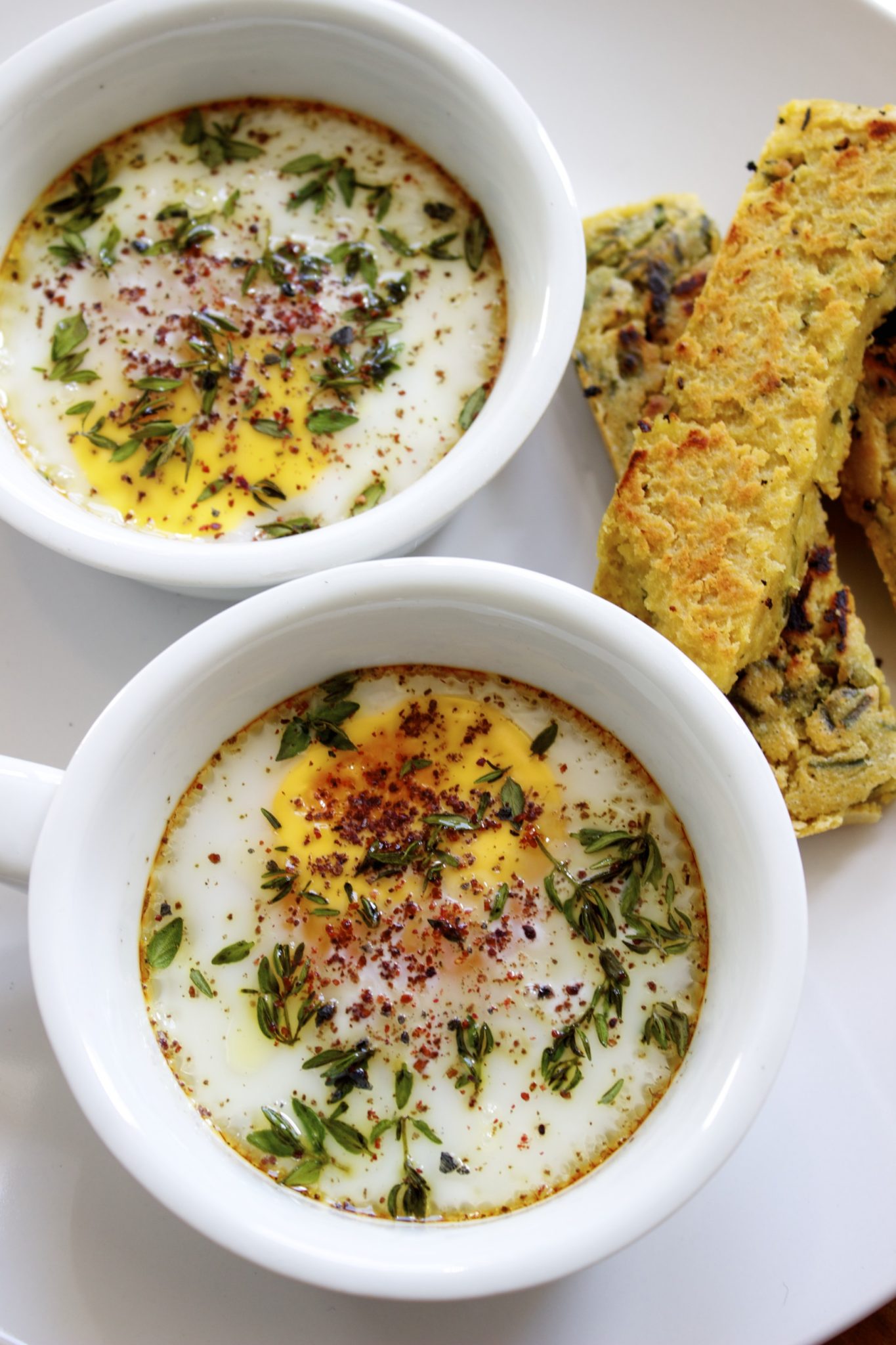
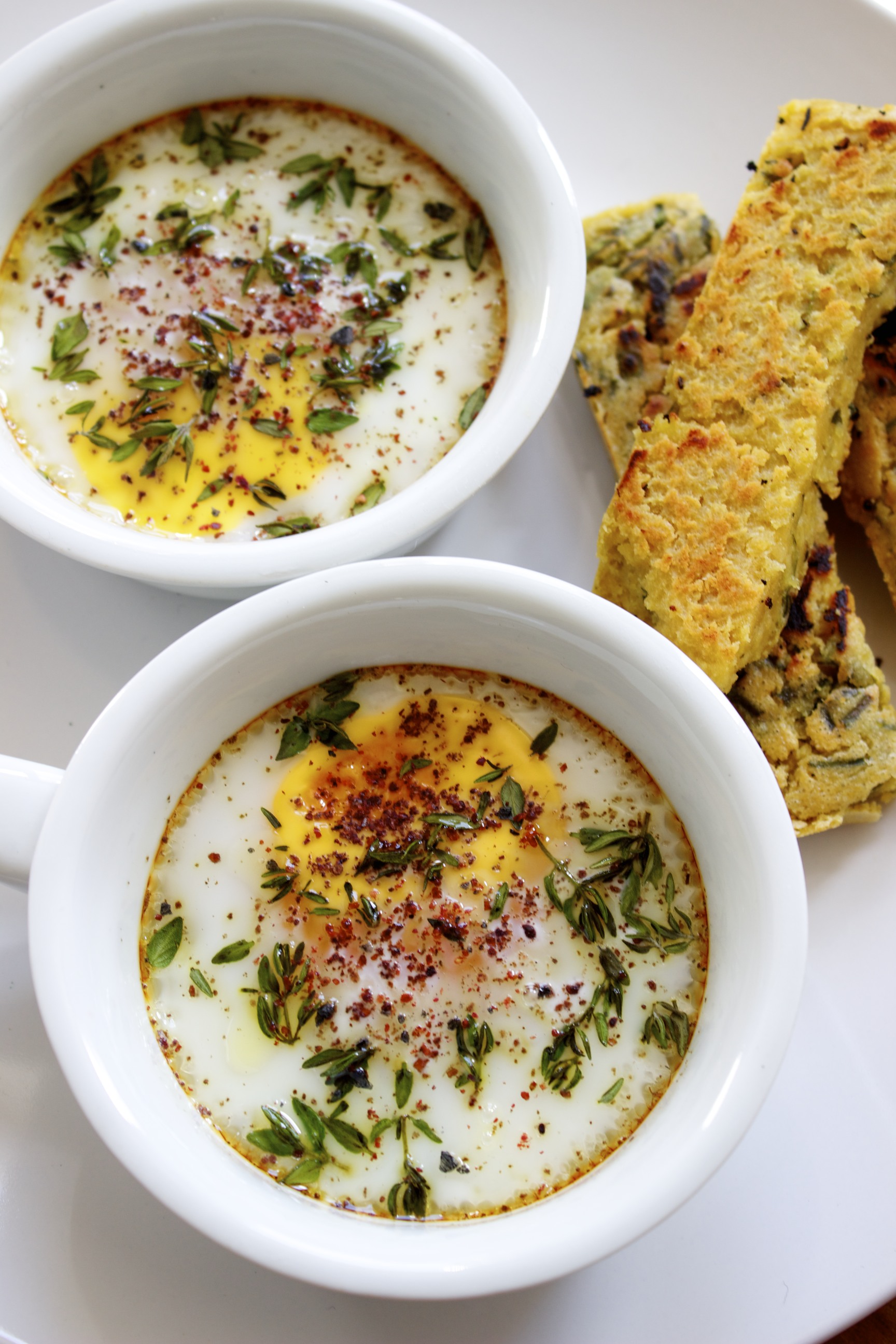
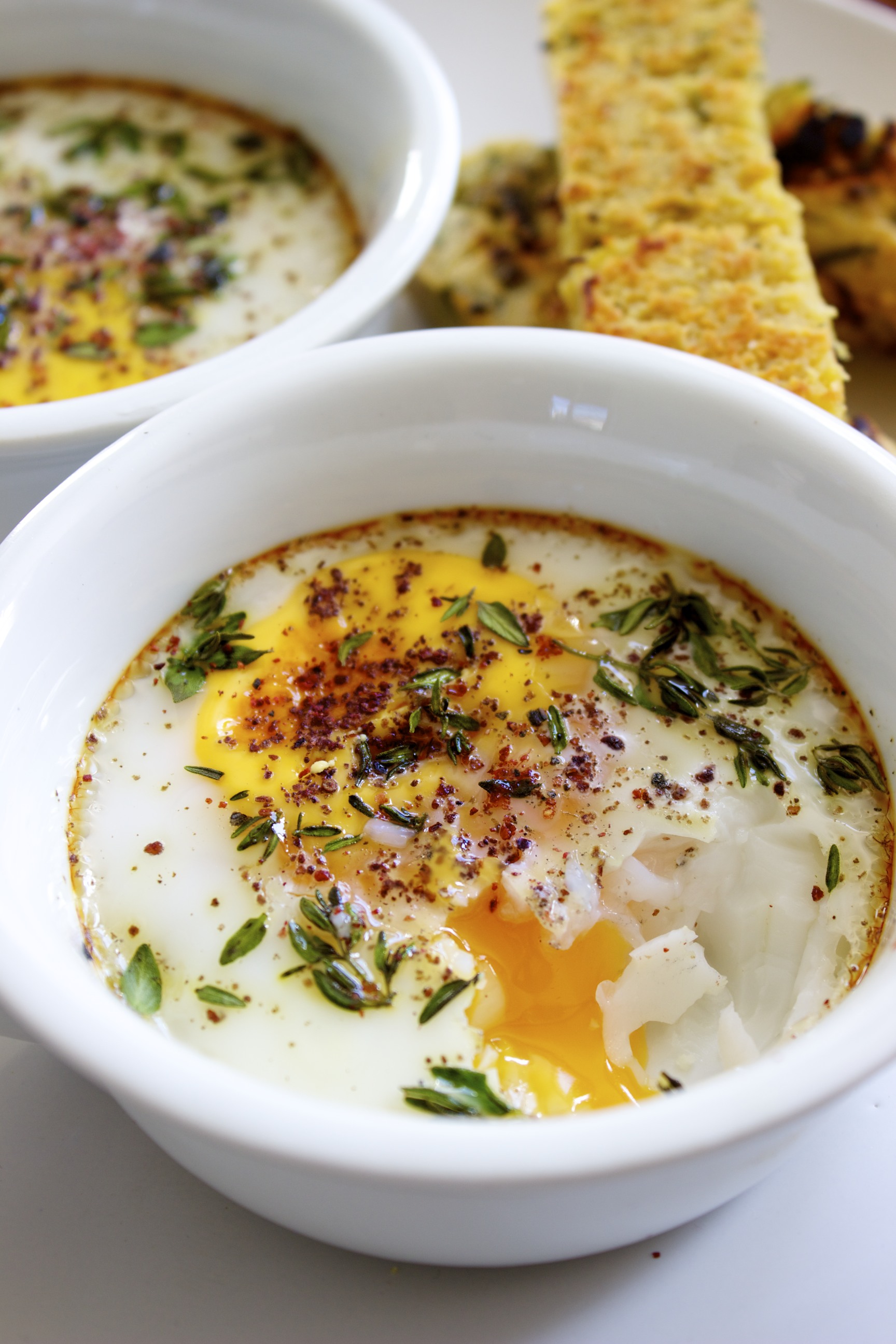
  • Duck Eggs in Cocotte w/Chickpea Soldiers & Antihistamine Herbs

    Duck Eggs in Cocotte w/Chickpea Soldiers & Antihistamine Herbs

    Prep Time: 10mins | Cook Time: 20mins | Servings: 1 | Difficulty: Easy

    IMG_0522

    I’ve only recently come to the conclusion that I need to settle down for a little bit. As much as I love to travel and experience new foods across the world, I really just need access to all of my stuff. I haven’t had all my stuff under one roof (or even within reach) since giving up my place in spring 2012. While it’s lots of fun being a digital nomad, it means that I lose out on a lot of productivity and creativity. Sure, travel is inspirational, but it’s a total buzzkill trying to create beautiful new foods and pictures while you’re constantly lamenting the lack of kitchen utensils, or having to take a time out on safari because you’ve just realised that you can finally get a 3g connection in the Masai Mara. Yes, it’s pretty sad that I’m worried about internet connectivity while experiencing lions and tigers in their natural habitat, but the Masai warriors accompanying us were also furtively checking their email. What can I say, it can be challenging to get connected in Kenya.

    Not quite ready to head back to the rat race, I decided last June to move to a small town in East Sussex, right on the sea. Beautiful. My new apartment has three skylights and I’ve been bursting to take pictures there since I viewed it. My very first brunch was this lovely little number.

    UPDATE: I lasted exactly three months there before heading to Brighton, and then another three months before getting back to London!

    CLICK HERE TO CREATE YOUR OWN PERSONALISED HEALING HISTAMINE PLAN. 

    As always, very little goes into my body unless it’s going in to heal me…

    Duck eggs

    As I mention in my latest book, the Anti-Cookbook: Antihistamine & Anti-inflammatory Recipes for Health, duck egg yolks are larger than that of chickens, thereby cutting down on potential reactions to uncooked egg white (which is what bothers most people with histamine intolerance), as well as giving you a whopping 160% of Vitamin B12 (which those of us with histamine conditions are chronically low in). They also have an incredible six times higher Vitamin D content than chicken eggs [1]. Many people who react to chicken eggs do ok with these, but please always check with your doctor before adding new foods to your diet.

    Thyme

    You’ll find thyme listed in the six page spread of antihistamine and anti-inflammatory foods in my new book. Thyme has been shown to inhibit anaphylaxis in mice [2], as well as displaying anti-inflammatory and anti-bacterial properties. It’s a key ingredient in many modern medications [3].

    Sumac

    Is an interesting one. My research tells me that this tasty lemony/salty herb (used to make za’tar) has anti-inflammatory activity [4], but, it is also related to poison sumac [5]. It’s used in Lebanese cuisine, often as a salt substitute. Studies show that when added to meats, sumac inhibits the formation of biogenic amines like tyramine (not histamine sadly) [6] and it has antioxidant, antifibrogenic (treats fever), anti fungal, antimicrobial, antitumerogenic and antiviral [7] properties.

    Why am I using it? I worry about my calcium levels. As a female, I have to. My doctors warned me that as someone with mast cell activation I should really take care of my bone density. Sodium negatively impacts bone density [8], so I’m always happy to try (healthy) salt subsititutes. Having grown up on sumac, I know it has never harmed me – but please check with your doctor before trying this or any other new food.

    Coriander 

    Anti-inflammatory [9].

    Nigella

    H1 and H2 receptor antagonism [10].

    Duck Eggs in Cocotte w/Chickpea Soldiers & Antihistamine Herbs

    Prep Time: 10 | Cook Time: 20 | Servings: 1 | Difficulty: Easy

    Ingredients:

    Eggs

    2 duck eggs

    fresh thyme

    crushed sumac (optional)

    black salt (high charcoal)

    2 ramekins or small oven proof bowls

     Soldiers/Dippers

    1/2 cup chickpea flour

    1/2 cup water

    1 tbsp olive oil (or tolerated)

    coriander, chopped

    chives, chopped

    nigella seeds (optional)

    IMG_0527

    Directions:

    Pre-heat your oven to 200C/390F.

    Eggs

    Lightly oil your ramekins.

    Crack a duck egg into each ramekin.

    Sprinkle with fresh thyme, crushed sumac (if tolerated), black salt and pepper.

    Then…

    Chickpea Soldiers/Dippers

    Whisk the flour and water together till fluffy. Pour in the olive oil, herbs and nigella seeds.

    Lightly oil a medium baking tin.

    Pour in the batter.

    Poke with a pin/baking pin/fork to check when it’s cooked through (10-15 mins depending on oven). Remove from oven, brush on a little olive oil and sprinkle with a dash of sea salt.

    Before the oven gets cold, turn the oven grill onto medium and place the baking tin with the chickpea soldiers back in. Place the egg ramekins next to them, not too close to the top of the oven.

    Grill till eggs are cooked (about 5 – 10 minutes) and chickpeas are lightly browned/burned (socca style).

    Use a spatula to cut the chickpea dough into fish finger-like rectangles and serve with eggs still in the ramekins (careful they’ll be hot!). Eggs should still be gooey.

    The Anti-cookbook, while it doesn’t treat any conditions, due to its high nutrient, antihistamine and anti-inflammatory ingredients, has been instrumental in helping me feed myself on a limited diet. It features a six page list of antihistamine and anti-inflammatory foods. It comes in regular and Paleo. 

    The Low Oxalate Cookbook features antihistamine and anti-inflammatory rich recipes. 

    Don’t miss the Low Histamine Beauty Survival Guide for non-toxic beauty tips, the skinny on histamine releasing (mast cell degranulating) beauty ingredients, antihistamine and anti-inflammatory beauty alternatives and the top brands natural brands I’ve found.

    Take a peek at my other low histamine and antihistamine cookbooks for more high nutrient recipes.

    If you’ve found this information useful I’d appreciate your support (at no extra cost to you!) – please check out my online store for your health foods, supplements, kitchen items and beauty product purchases. Affiliate sales through my online store go towards maintaining the website, funding travel to interviews and purchasing all the lovely foods for my free online recipes. You’ll find these items in the “Shop with us” drop down menu on my homepage.  

    Please don’t forget antihistamine, pain killing foods can still hurt us, so please always check with your doctor before adding new foods to your diet. 

    References

    [1] https://dev.healinghistamine.com/the-anti-cookbook-antihistamine-anti-inflammatory-recipes/

    [2] http://www.jimmunol.org/cgi/content/meeting_abstract/188/1_MeetingAbstracts/177.3

    [3] http://en.wikipedia.org/wiki/Thymol

    [4] http://www.ncbi.nlm.nih.gov/pmc/articles/PMC2582678/

    [5] http://www.wisegeek.com/what-is-sumac.htm

    [6] https://dev.healinghistamine.com/middle-eastern-indian-spices-lower-histamine-and-other-biogenic-amines-in-foods/

    [7] http://link.springer.com/article/10.1007/s11130-007-0058-4#page-1

    [8] http://www.jacn.org/content/25/suppl_3/271S.full

    [9] http://www.ajebs.com/vol1/22.pdf

    [10] https://dev.healinghistamine.com/plant-seeds-treat-nasal-allergies-better-than-steroid-spray/

  • The Anti-Cookbook: Antihistamine & Anti-inflammatory recipes

    The Anti-Cookbook: Antihistamine & Anti-inflammatory recipes

    The Anti-Cookbook: High Nutrient Antihistamine and Anti-inflammatory Recipes for Health

    CLICK THE IMAGE ABOVE TO PURCHASE THE BOOK

    (Now also available in a Paleo version)

    Wondering why you’re still not feeling better, despite eliminating all the foods those lists tell you to? Have a niggling suspicion that losing all those high nutrient foods could be counter productive? Starting to worry that your five “safe foods” might turn on you one day?

    It’s time to ask yourself – why go low histamine when you can go anti-histamine?

    While I always tell people that it’s not just about the food, eliminating high nutrient foods from my diet turned out to be the BIGGEST mistake I ever made. But by the time the damage was done, I struggled to figure out how to fix it. At first adding high nutrient foods was challenging, till I figured out that if the goal was to add the least histamine possible to my body, why not go one step further and add antihistamine foods to my diet instead? It worked and I was finally able to come off my remaining antihistamine (zyrtec)!

    My reading of the mast cell field’s top researchers (Drs Theoharides, Akin, Castells, Escribano) soon revealed that histamine, in addition to the other pro-inflammatory elements released by mast cells (prostaglandins et al), were likely causing further dysfunction in my body.

    Many people in our histamine intolerance, mast cell activation disorder, and mastocytosis community are prescribed aspirin to relieve that inflammation – but why not go straight to the source? Aspirin is salicylic acid – guess where in nature you can find it? High nutrient green leafy foods! My new understanding of histamine/prostaglandin induced inflammation and the very serious ilnesses it can feed (cancer, neuro-inflammation, heart disease and many others) prompted me to address the very scarily elevated inflammatory markers in my blood work.

    Thanks to my high nutrient antihistamine and anti-inflammatory approach, I’m now in the best health of my life (and have the blood tests to prove it)! And it took less than a year…

    The Anti-Cookbook: High Nutrient Antihistamine & Anti-inflammatory Recipes for Health shares:

    The 10 easy steps that changed my life.

    The power of positivity.

    A list of my top high nutrient antihistaminic, anti-inflammatory and mast cell stabilising foods.

    Tasty antihistamine beverages.

    Antihistamine and anti-inflammatory breakfasts, lunches and dinners.

    NB: Almost every single ingredient in this book was chosen for its antihistaminic, mast cell stablising or anti-inflammatory properties…

    This book is fairly hardcore high nutrient and as such incorporates green juices and smoothies. If you are new to the low histamine diet or still eating the Standard American Diet (SAD) then I recommend trying one of my other books. Please be aware that this is not a diet book, but rather a collection of the high nutrient recipes. Please be sure to consult with your doctor before adding any new foods to your diet.


GET STARTED HEALING HISTAMINE

WHAT YOU NEED TO KNOW ABOUT HISTAMINE DELIVERED TO YOUR INBOX