Have allergies (or histamine intolerance, mast cell activation, mastocytosis) and can’t sleep? It’s not just you – a new study reveals that in narcolepsy, a condition that causes excess sleep, extra histamine is produced.
Here are my top 5 tips for getting a good night’s sleep
1. Try to eat dinner as early as possible.
I’ve found that it takes two to four hours for my body to get the histamine reaction properly going, and around six to eight hours for it to die down again. (And that’s the secret, most reactions will pass if you remain calm and let them wash over you). Having dinner around six to eight pm means that I’m over the worst of it by midnight…
2. Go liquid
As Dr Fuhrman points out in his teachings, liquids are easier to digest, requiring less enzymes, and are easier on the digestive process. I wonder if this means we need less of the enzymes responsible for breaking down histamine (like diamine oxidase), or if less stress on the digestive system means that we need less histamine to get it going? Read all about how digestion itself causes histamine release.
3. Embrace natural antihistamines
Whether you’re currently taking pharmaceutical antihistamines or not, adding some natural antihistamines and anti-inflammatories could help. I often combine points 1, 2 and 3 by making myself an emergency antihistamine juice for dinner.
4. Switch off the electronics
We’ve known for some years that exposure to light impairs the production of the sleep inducing hormone melatonin, but now researchers think that blue light from computer screens and iPads in particular not only disrupts melatonin production, but that it also causes an increase in alertness! So switching off that device not only means more melatonin, it means you’ll be less mentally alert, thereby hopefully heading off any midnight obsessing over issues that need resolving the next day.
5. My top tip – go low histamine, all the time!
Was that high histamine smorgasbord of the last few days really worth a week of insomnia? How about losing all the gains you’ve made these last few months? Eventually my answer was no, and that’s when I healed. Check out the high nutrient low histamine, antihistamine and anti-inflammatory recipes that help me stay meds free.
Beating yourself up for not being able to shift that extra 15 pounds you’ve been lugging around for the last few years? Thinking that it’s kinda weird it’s there to start with – you’re a really healthy eater, no junk foods, you’re watching the calories, eating mostly organic foods (as far as your wallet stretches), exercising a few times a week (ok maybe once but you’re busy!), and all your friends comment that they can’t understand why you’re still overweight?
Yeah, join the club. Here’s me on a BBC training course in 2005 (I continued to gain weight after these photos) – before I worked that allergies (histamine) can make you overweight, or thin, but that antihistamines definitely make you fat!
Before I launch into what helped me lose 77lbs in under six months, let’s go over the basics of what can trip you up…
1. Are you sure you’re tracking calories correctly?
I use the free version of www.fitday.com to track my calories and nutrients. Though I no longer have to count calories (more on why in a minute), it’s important to get a handle of what a plate of food actually measures up to.
2. Do you know what real hunger feels like?
According to Dr Fuhrman, the dizziness, brain fog and stomach cramps we get about four hours after eating, are actually caused by toxins from our food being released into the blood stream. Numerous fasts and being sure to only eat when hungry have put me back in touch with real hunger. I can honestly say at least 90% of the time I only eat when hungry.
3. Lack of nutrients
Ever suddenly go crazy craving something but not sure what it is? Sometimes an eating binge is the body’s way of trying to get the nutrients it needs. In it’s most extreme form we have pica, a weirdo disorder where people (usually women and children) eat dirt, sand, chalk and other things we wouldn’t call food – it’s mostly seen in people who are iron deficient.
Using Fitday (or any other tracker) will help you work out what’s lacking in your diet.
4. Lack of exercise
While I wish I could say there was an easy way around this, there really isn’t. On a very basic level, exercise is needed to help fight inflammation, boost feel good dopamine and endorphins that keep you happy (and out of the fridge!), in addition to burning calories.
I used to spend $$$ on exercise classes and dvds before discovering GAIAM TV! They’re the folks behind my absolute favourite exercise dvds – all of which you can now stream for just $10 a month.
I started out slow; just 10 minutes a day for the first few weeks, before gradually working my way up to 50 minutes of hardcore cardio several times a week, in addition to ashtanga yoga. Exercise raises histamine levels, please check with your doctor before beginning any exercise.
5. Overestimating how many calories exercise burns…
Here’s the one that tripped me up for decades! I was so excited by how many calories I had burned that I would just go out and eat what I wanted afterwards…now I just don’t factor in exercise. Getting back in tune with my body was easy once I eliminated meds from my diet and fasted a few times. I trust my body to let me know when it needs food.
How allergies (histamine) make you fat, or the chicken and egg scenario
Histamine, the yucky stuff released in response to an allergen, and the other inflammatory elements released by mast cells, cause major inflammation in the body, making us retain water (I used to pass up to 5lbs a day in pee!) and fat, as well as damaging our internal organs and creating a ripe breeding ground for cancer and other inflammatory diseases. Elevated inflammatory markers can even predict future weight gain!
But here’s where it gets really interesting…
Obesity also causes inflammation! So even if you’re on a low histamine diet, but you’re overweight/obese, simply maintaining your current weight could be causing inflammation in the body.
And here’s where it gets confusing….
Histamine can help you lose weight!
Histamine a double edged sword. On the one hand it regulates appetite (making us eat less), potentially helps us burn fat faster and researchers think it can prevent the leptin-resistance in dieters which creates a decrease in thyroid activity, muscle tone, drop in basal metabolic rate, all of which make it more likely that you’ll regain lost weight weight. But it causes inflammation that makes us gain weight, and potentially develop a whole host of nasty conditions.
Scientists account for this by explaining that histamine has four receptors – H1 to H4, and each of these serves a different function, thereby exerting different actions on the body.
How can YOU harness histamine, avoid allergies and lose weight?
Figuring out I was allergic to soy helped me instantly lose 10lbs, pretty much almost over night. But cutting out other sources of histamine from my diet (more on that in the Low Histamine Lifestyle 101 Book) was the first step in losing weight. But my histamine was soooo high at the time that its appetite suppressing activity must have been in full swing and I lost 77lbs (35kgs) – 10lbs too much! It took some tinkering over the years but I finally settled on a low histamine, highly anti-inflammatry diet, with lots of antihistamine foods thrown in for good measure. I gained back the 10lbs I needed, so I’m no longer rocking the skeletor look that elicited dozens of concerned friends to have the anorexia talk with me.
Interesting note about my friends and family – when I was at my sickest, no one wanted to believe I had a real illness.I was skin and bones, wore a hat at all times (to cover up the remaining nasty, snaggly strands I had managed not to lose) and no make up what so ever. They thought I had a breakdown of some kind. Once I had regained my figure (albeit minus the weight of a small child) and was the glowing picture of health I am now, suddenly everyone became massively supportive of my bizarre eating habits and began pumping me for info and recommending me to friends. I do wonder though how much of this had to do with MY attitude turn around? I went from mewling victim (first few months) to health freak on a mission to spread the gospel of histamine to anyone who would lend me their ear. I wonder if others have had a similar experience?
Here are the most important points I’ve learned in losing, and keeping off, the weight:
Get that inflammation under control. Find any undiagnosed allergies and eliminate all low nutrient high histamine foods.
I figured adding back some of the high nutrient higher histamine foods like pecans, walnuts, raw cacao, bits of avocado, pineapple, berries might offer some of the upsides of histamine (appetite suppression, higher metabolism, higher energy), and it definitely seems to be working. I’ve maintained my weight, without counting calories or even weighing myself more than once a month, for the last three years. This is just a personal theory, and I may be waaaaay off, and please do not attempt this if you are allergic to any foods and alwayscheck with your doctor before adding any new foods.
Approach the weight issue as a lifestyle change rather than a diet. Feel empowered when you’re lugging that quart of super green juice or eating a plate of veggies.
Don’t deprive yourself. You’ll only end up going beserk and blowing it all, so give yourself a treat when you need it, but re-adjust your taste buds so that you take pleasure in healthy snacks. I make raw coconut cacao brownies with a touch of low GI, high mineral, coconut sugar, or when spoiling friends – low histamine gluten free cupcakes with almond butter frosting (see my low histamine dessert book for recipes). I try to keep my “treats” to less than 10% of my total calories. Sometimes I’ll make something for friends and have a spoonful, nothing more.
Surround yourself with supportive people who also look after their diet. It’s hard enough dealing with your own issues without being dragged down by those who don’t care enough about their own health to make similar empowering changes in their diet. Join a meditation circle, a healthy pot luck meet up, or start your own low histamine diet group through something like meetup.com
Stop blaming food for your weight gain. The cupcake isn’t using some kind of Jedi mind trick to get you to eat it – YOU are in control. Those of us with food allergies and histamine conditions already have a pretty funky relationship with food; it’s important to accept responsibility as (literally) captains of our ship.
You can check out the high nutrient low histamine recipes I developed to help me lose and keep the weight off here.
I make no bones about the fact that I believe the key to moderating, managing, treating or “recovering” from histamine intolerance, mast cell activation and mastocytosis lies in the very thing many of us are afraid of.
Am I allowed to say the “F” word here? Ok, I’m going for it.
FOOD.
It’s the four letter word demonised (at some point) by pretty much every one of us on this nutty histamine rollercoaster.
But, you know the saying: “a poor workman blames his tools”?
I operate my body. For many years I worked from a faulty manual espousing a fat, chemical and colouring laden diet as being normal. I mean really, I used to drink cocktails with those disgusting day glo maraschino cherries. I now have plenty of information on how to feed myself right.
Ignorance was bliss for sure, but now I have no one to blame, or thank, but myself. Yes, I believe that genetics plays a part in illness, but research shows that what we put into our body, how we treat it, and the thoughts we think can switch those genes on or off. (For more I suggest reading up on epigenetics).
My diet isn’t even low histamine 2.0 at this point. I’m operating on some weird scientology-like thetan betan shmetan level of higher consciousness – at least that’s what I tell myself as I shlurp my third dark green potion of the day while some poor shlub scarfs down “organic” pizza at the next table. I do believe it though. I have found my salvation in food.
How? I eat with intention. I ask what every food does for my body, before putting it in there. And I’m not talking about some kind of unfocused “dark chocolate is good for you” (what about the sugar, soy, milk and “natural” flavours???) kind of way, but a hardcore decade long CNN/BBC (my former employers) style research effort. Luckily I’ve done most of the research for you. Check out my booksfor a ton of antihistamine, anti-inflammatory, high nutrient foods. Worried the recipes won’t be quite right for you? Most people use them as a springboard to get the juices flowing and to gain an understanding of how to eat with intent.
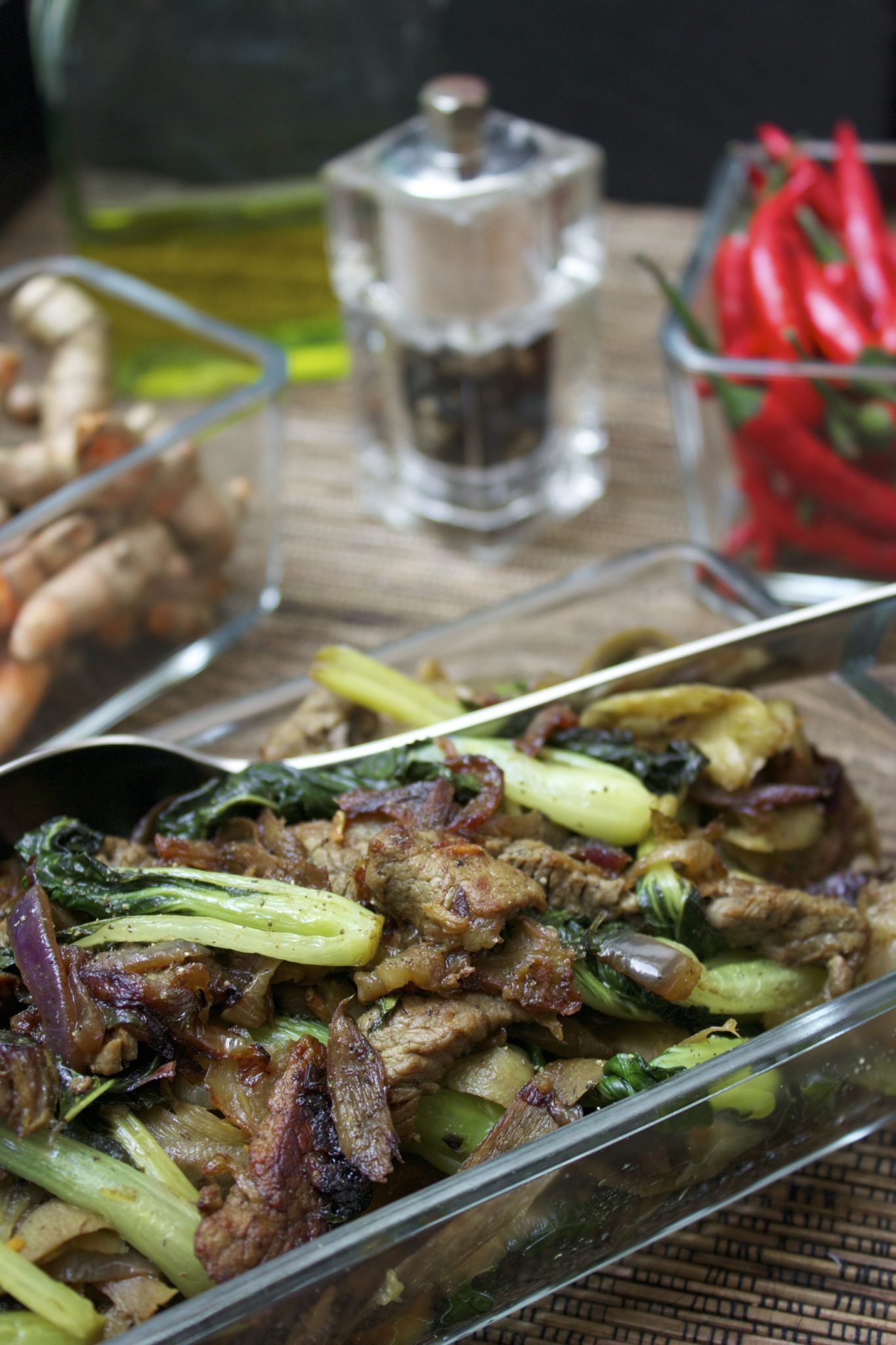
In the meantime, an example of how I eat.
I owe you (and myself) an apology though – I never wrote down the recipe. Was too busy scarfing it down while taking photos and wrangling my incredible buddy P’s two little ones. We had simultaneous shoots you see – my friend’s five year old takes great photos. Unfortunately she refused to sign the release for me to publish them. I told her she needs to get a new agent! But you’ll get the idea…
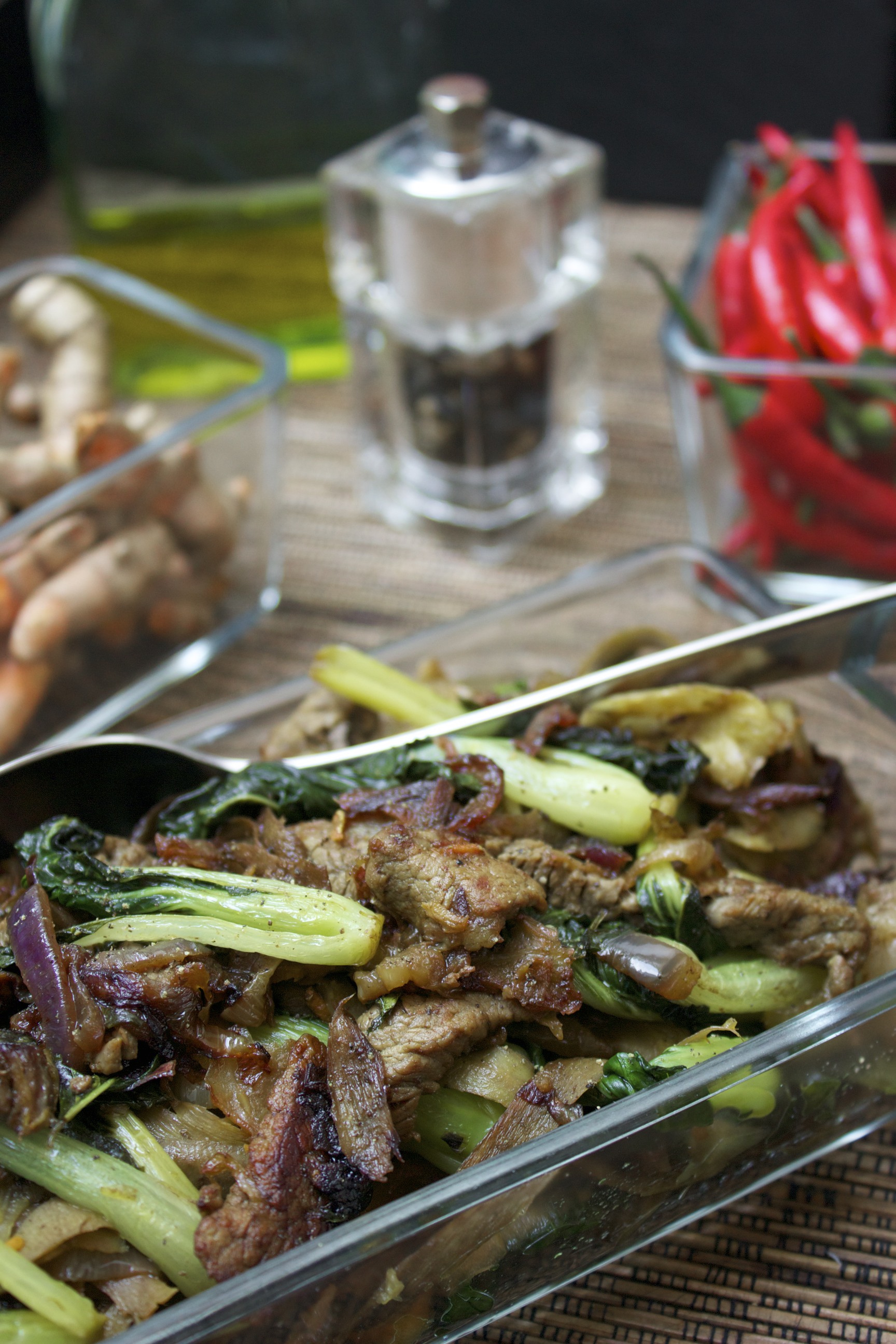
ANTIHISTAMINE & ANTI-INFLAMMATORY BURDOCK BEEF
shaved burdock root – antihistamine and anti-inflammatory
ginger – as effective an H2 receptor antagonist as Zantac (ranitidine)
holy basil – as potent and anti-inflammatory as Diclofenac, mast cell degranulation inhibitor, as effective an H2 receptor antagonist as Zantac (ranitidine)
chili – anti-inflammatory, rich in mast cell stabilising quercetin and luteolin (but can cause local histamine release in the stomach) – avoid if sensitive to nightshades.
nigella sativa seeds – clear up nasal allergies better than a commonly prescribed steroid (H1 receptor antagonist) and kills gastric acid (H2 antagonist).
turmeric – many studies: anti-allergic, mast cell stabilising, anti-inflammatory, cancer preventative.
red onion: is one of the richest sources of histamine lowering quercetin.
garlic: anti-inflammatory, anti-bacterial, now being investigated as IBS treatment. Also has some mast cell stabilising properties.
bak choi: anti-inflammatory, high in cancer fighting beta carotene and folate.
nigella sativa oil
beef (you could easily use fish or go vegan though!)
It’s finally here! Man Food – a high nutrient book geared towards guys, women who love to work out, yoga like they mean it, or just load up on healing nutrients.
The Anti-cookbook and all liquid Anti-Detox Book, don’t treat any conditions, but feature a plethora of the high nutrient antihistamine and anti-inflammatory ingredients that have been instrumental in helping me feed myself on a limited diet. The Anti-cookbook features a six page list of antihistamine and anti-inflammatory foods and comes in regular and Paleo.
The Low Oxalate Cookbook features antihistamine and anti-inflammatory rich recipes.
Don’t miss the Low Histamine Beauty Survival Guide for non-toxic beauty tips, the skinny on histamine releasing (mast cell degranulating) beauty ingredients, antihistamine and anti-inflammatory beauty alternatives and the top brands natural brands I’ve found.
Please remember, even antihistamine and anti-inflammatory foods can hurt us, please always exercise caution and consult a medical practitioner before adding new foods.
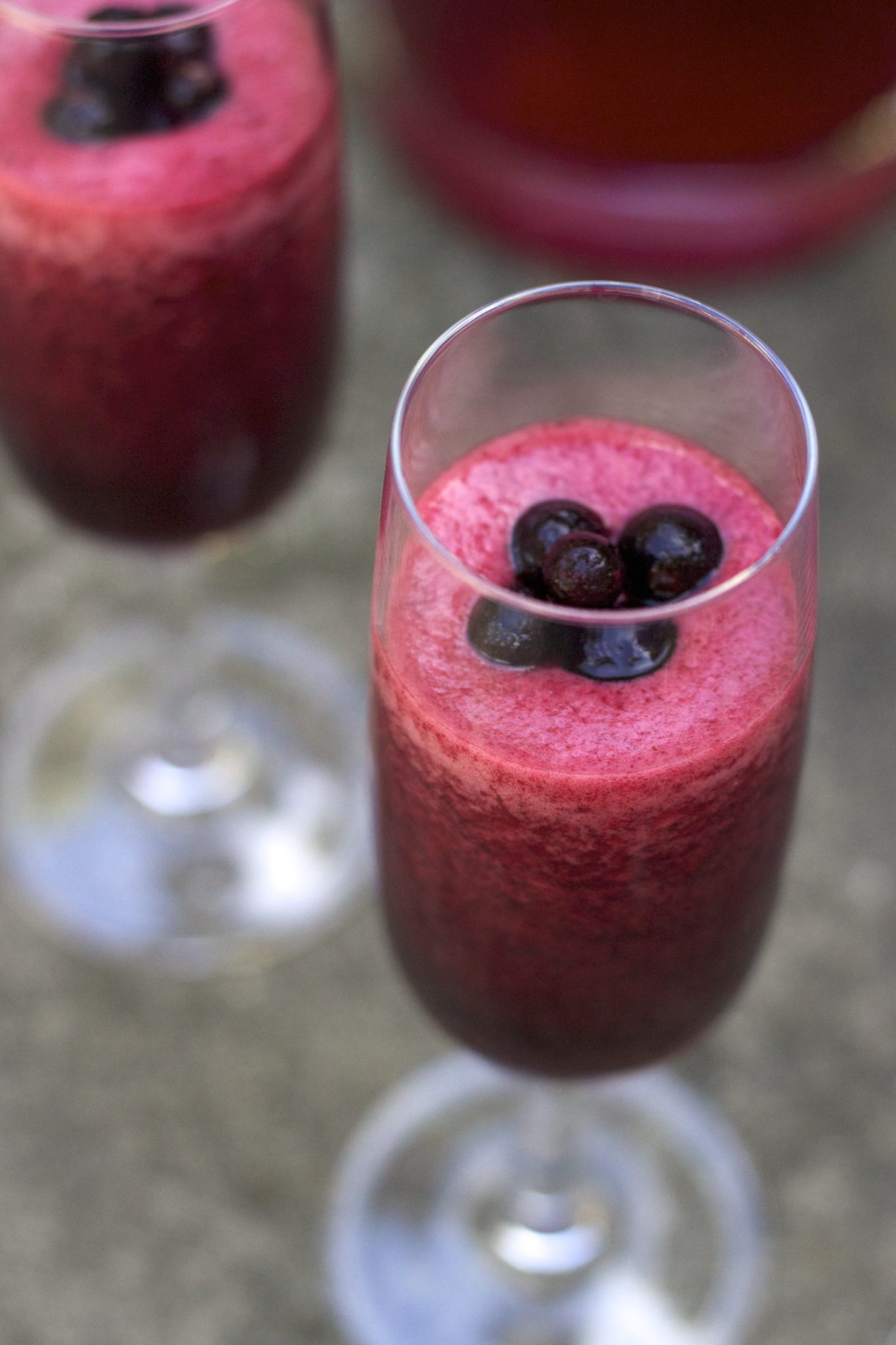
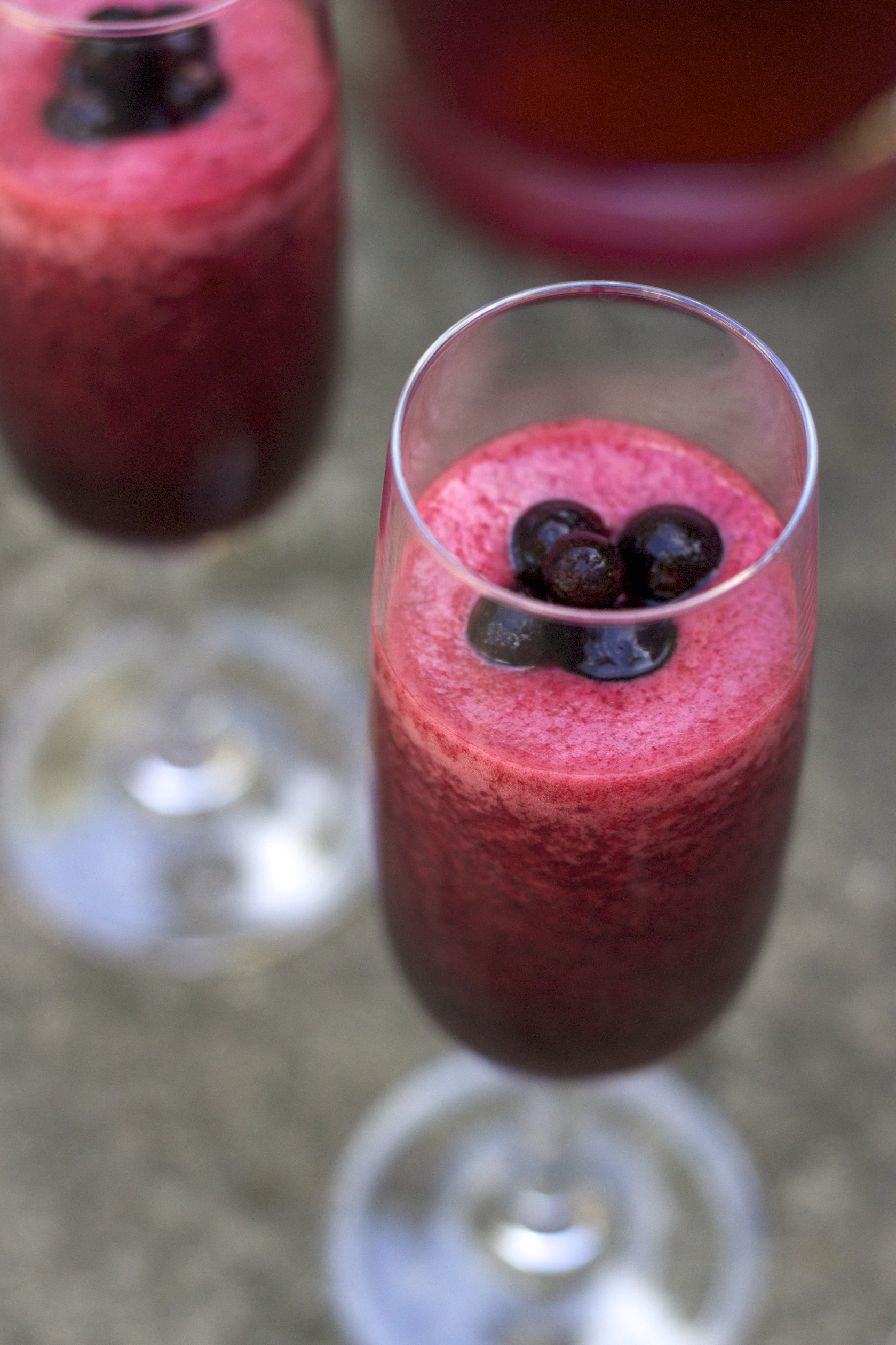
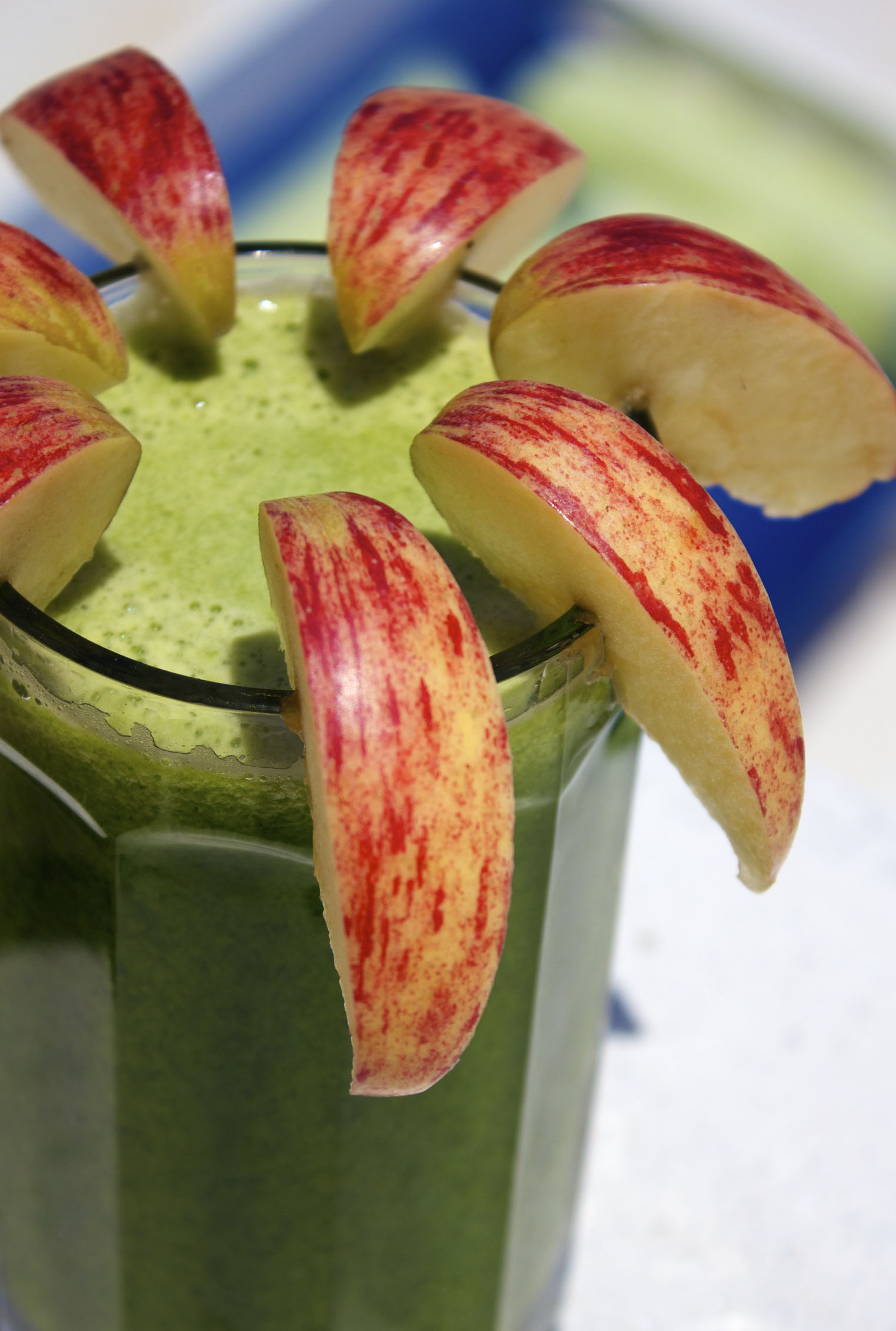
Yum yum yum! This beautiful smoothie is perfect for outdoor summer entertaining. Thanks to the vibrant colour, even my friend’s kids wanted a glass.
I brewed up a cup of mast cell stabilising/antihistamine quercetin rich and anti-inflammatory hibiscus, let it cool for a minute, before tossing in a cup of quercetin and mast cell stabilising/histamine lowering Vitamin C rick black fruits, and a bit of ice. Blasted it for a minute and then served with a few blueberries. You could also strain it if you’d like a clear liquid.
The Anti-cookbookand all liquid Anti-Detox Book, don’t treat any conditions, but are high in the high nutrient antihistamine and anti-inflammatory ingredients that have been instrumental in helping me feed myself on a limited diet. The Anti-cookbook features a six page list of antihistamine and anti-inflammatory foods and comes in regular and Paleo.
The Low Oxalate Cookbook features antihistamine and anti-inflammatory rich recipes.
Don’t miss the Low Histamine Beauty Survival Guide for non-toxic beauty tips, the skinny on histamine releasing (mast cell degranulating) beauty ingredients, antihistamine and anti-inflammatory beauty alternatives and the top brands natural brands I’ve found.
As you all know by now (’cause I’m fond of reminding you), I’m not a doctor. What I am is an avid student of nutrition,) and a mast cell activation/histamine intolerance survivor and thriver. The pictures I post of myself traveling the world aren’t a vanity project. When I made the decision to bare my soul to the world, anonymously, everything I said was taken with a pinch of salt. When I decided to go public it was so that you could all see me putting my money where my mouth is.
Now I’ve said before that labels don’t matter. A histamine condition, food allergies, food intolerance, mast cell activation, mastocytosis, or any of the other histamine related conditions, call it what you will, they all respond to nutrition. I’m not saying nutrition can cure them, in some cases it might, but it can certainly improve prognosis, quality of life and mood.
You’re no doubt aware at this point that what happens is that histamine is naturally in our bodies, sitting in our mast cells. The histamine is then released, as needed, by the mast cells. Problem is, some of us release more than we’re supposed to. Stress, allergic reactions, digestion and histamine containing foods all contribute. Thing is, mast cells don’t just splurge histamine. They also release a number of other inflammatory substances that wreak havoc in the body. Given that we know inflammation causes/is involved in many illnesses and conditions (heart disease, cancer, autism, multiple sclerosis, Alzheimer’s, Parkinson’s), I’ve been thinking that a low histamine, or even better, antihistamine diet could benefit them too. The upshot of explaining this is that I find lowering histamine is only part of it. Getting my inflammation down asap brings almost immediate relief.
So as promised, here’s how I use nutrition to shut down a histamine reaction (or allergy).
Please remember we are all different and that one man’s cure is another’s poison (always check with your doc before trying new foods) and always be safe – any reaction can turn deadly in a heartbeat, so please don’t convince yourself that a shot of juice will do an epi pen’s job.
You’ll find less hardcore recipes versions of the recipes that helped me regain my health here.
UPDATE: you’ll find my emergency histamine meditation here
Ginger: as potent an H2 receptor antagonist as Zantac/ranitidine.
Side order:
Shot of thyme juice.
Thyme: has been shown to inhibit anaphylaxis in mice, as well as displaying anti-inflammatory and anti bacterial properties. It is a key ingredient in many modern medicines.
Pre lunch: 15 minutes meditation and visualisation, with top ups throughout the day. On the bus, on the tube, while walking. You can practice mindfulness meditation anywhere.
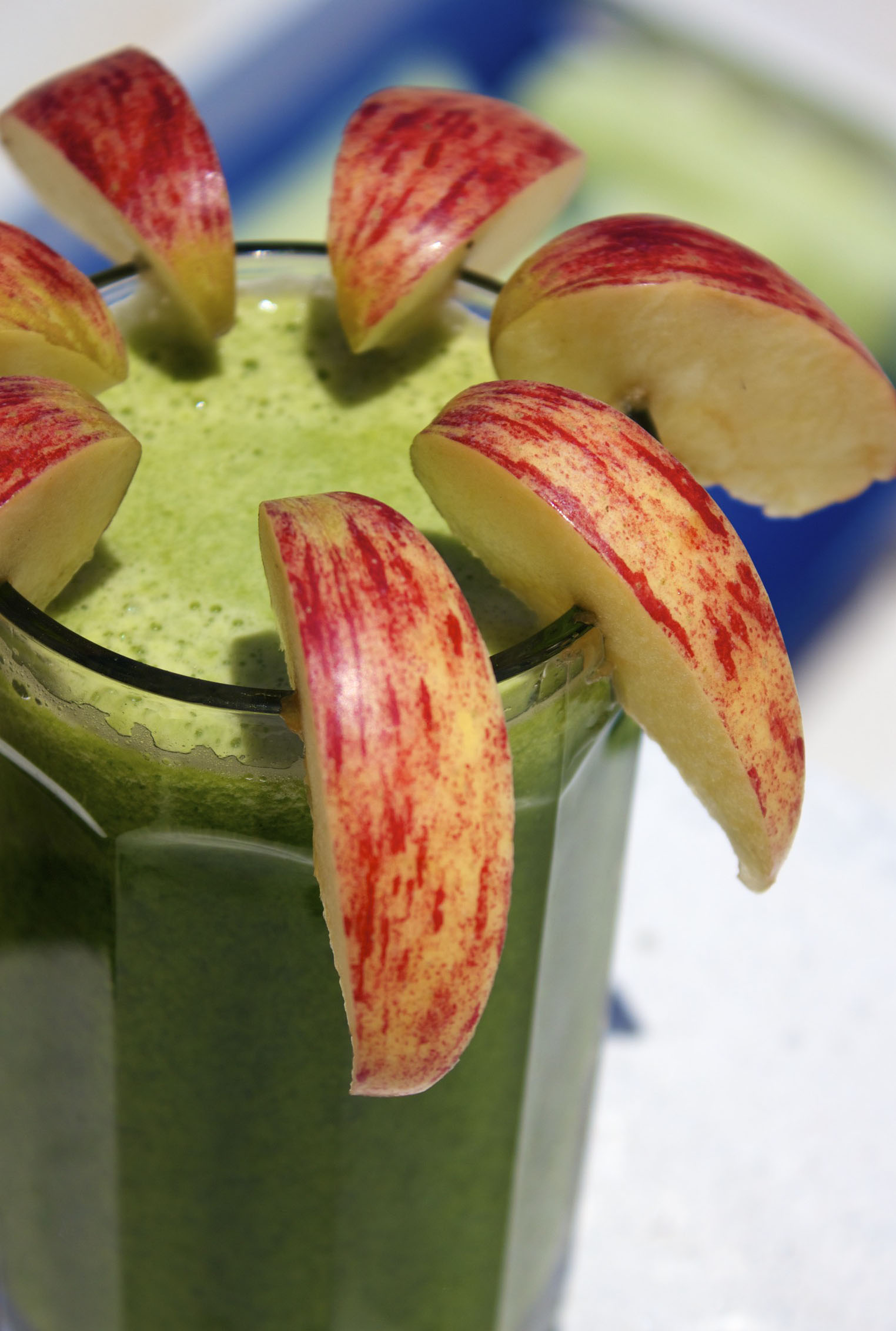
Lunch juice:
Apple
Fennel
Watercress
Parsley
Broccoli
Ginger
Side order:
Shot of thyme juice
Dinner:
Green soup
Broccoli
Fennel
Cauliflower
Parsley
Thyme
Rosemary
Turmeric: inhibits anaphylactic shock, stabilises mast cells and prevents histamine release. It’s also anti-inflammatory and anti-tumour.
Side order:
Shot of thyme juice
Nightcap:
I dilute 2 caps powdered quercetin in 1 tbsp nigella sativa oil
Lie back and indulge in another 15 mins (usually more) meditation.
Like I always say, being healthy doesn’t mean being chained to your kitchen…I regularly make a great antihistaminic and anti-inflammatory breakfast and lunch in just 10 minutes!
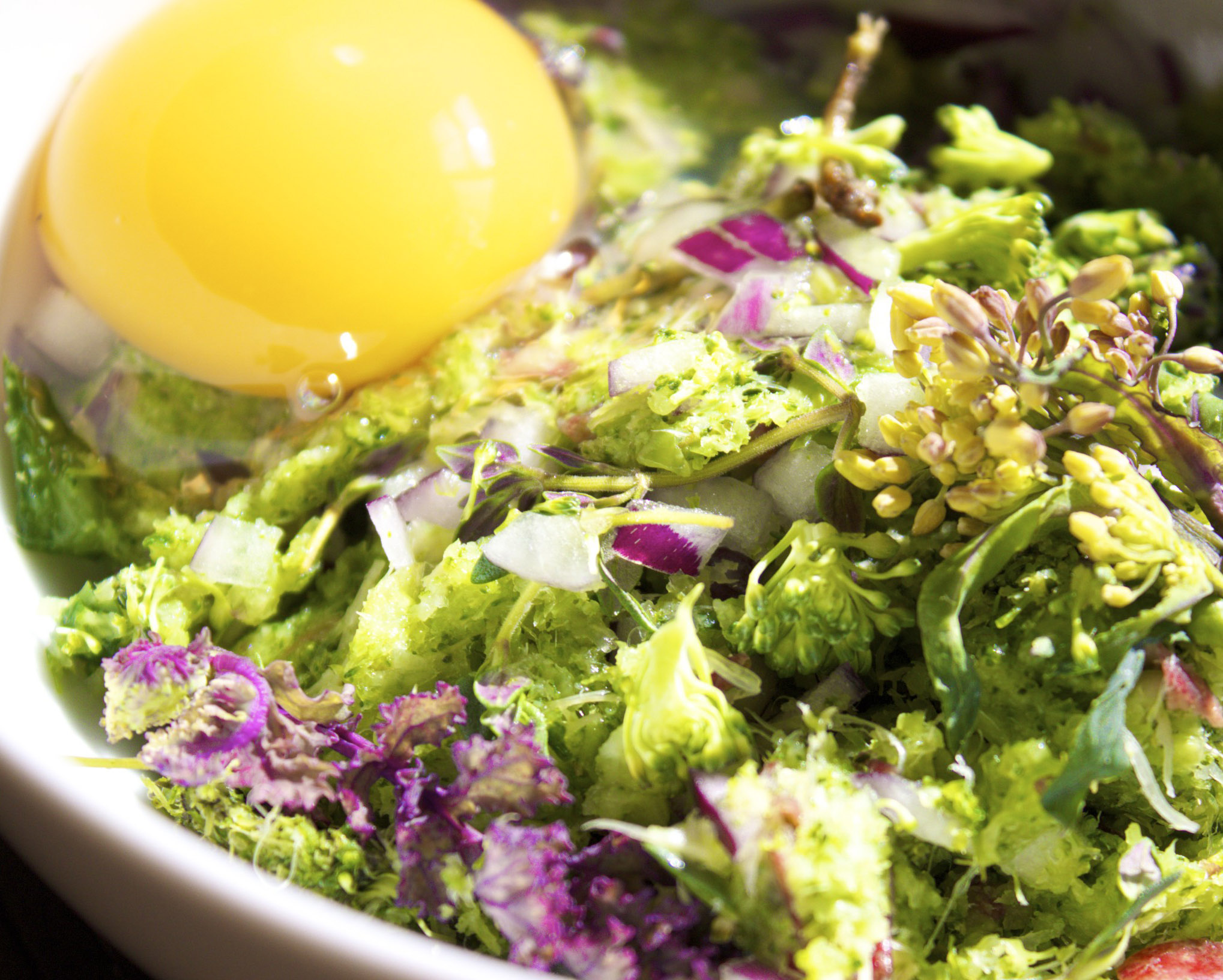
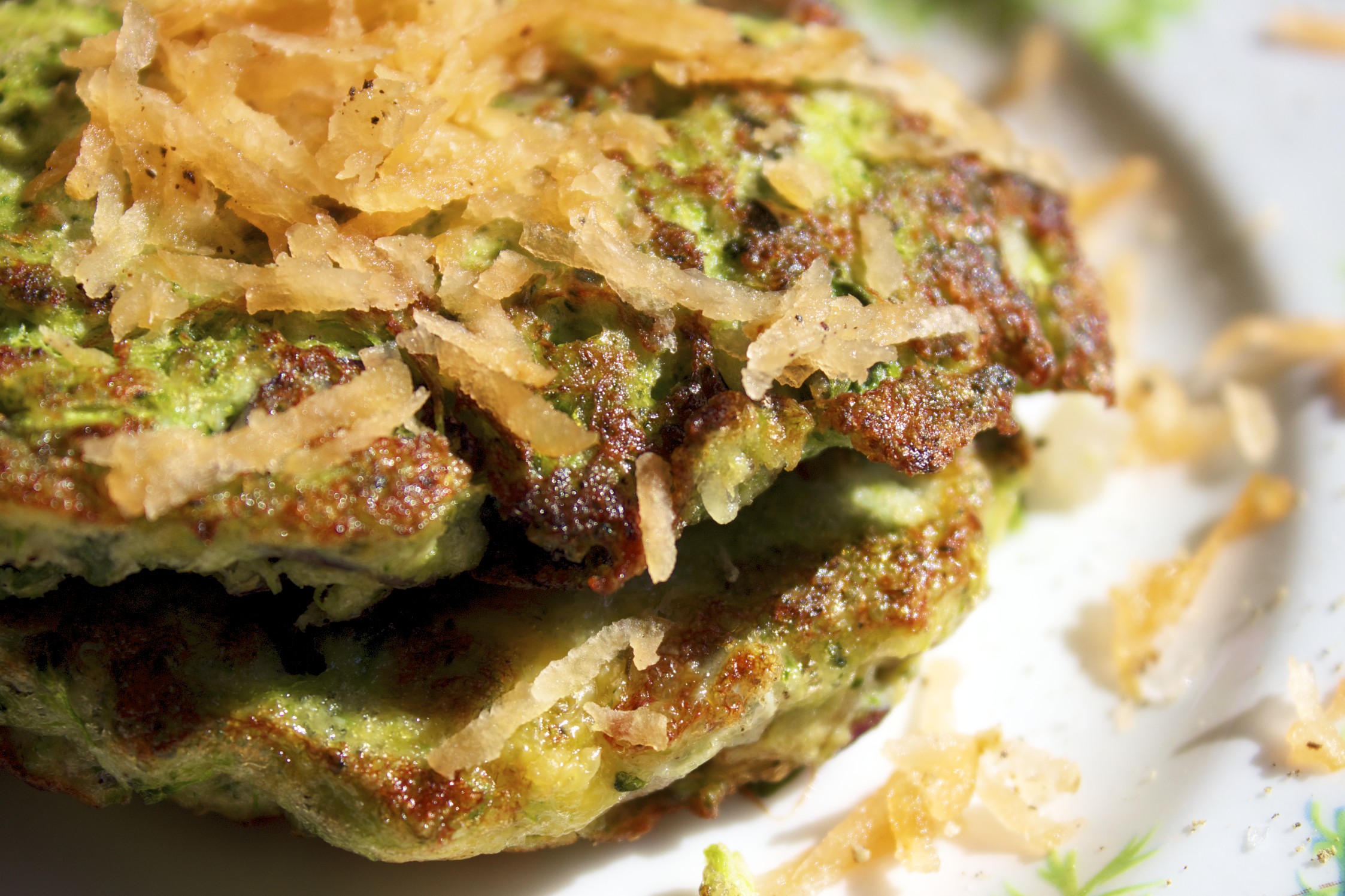
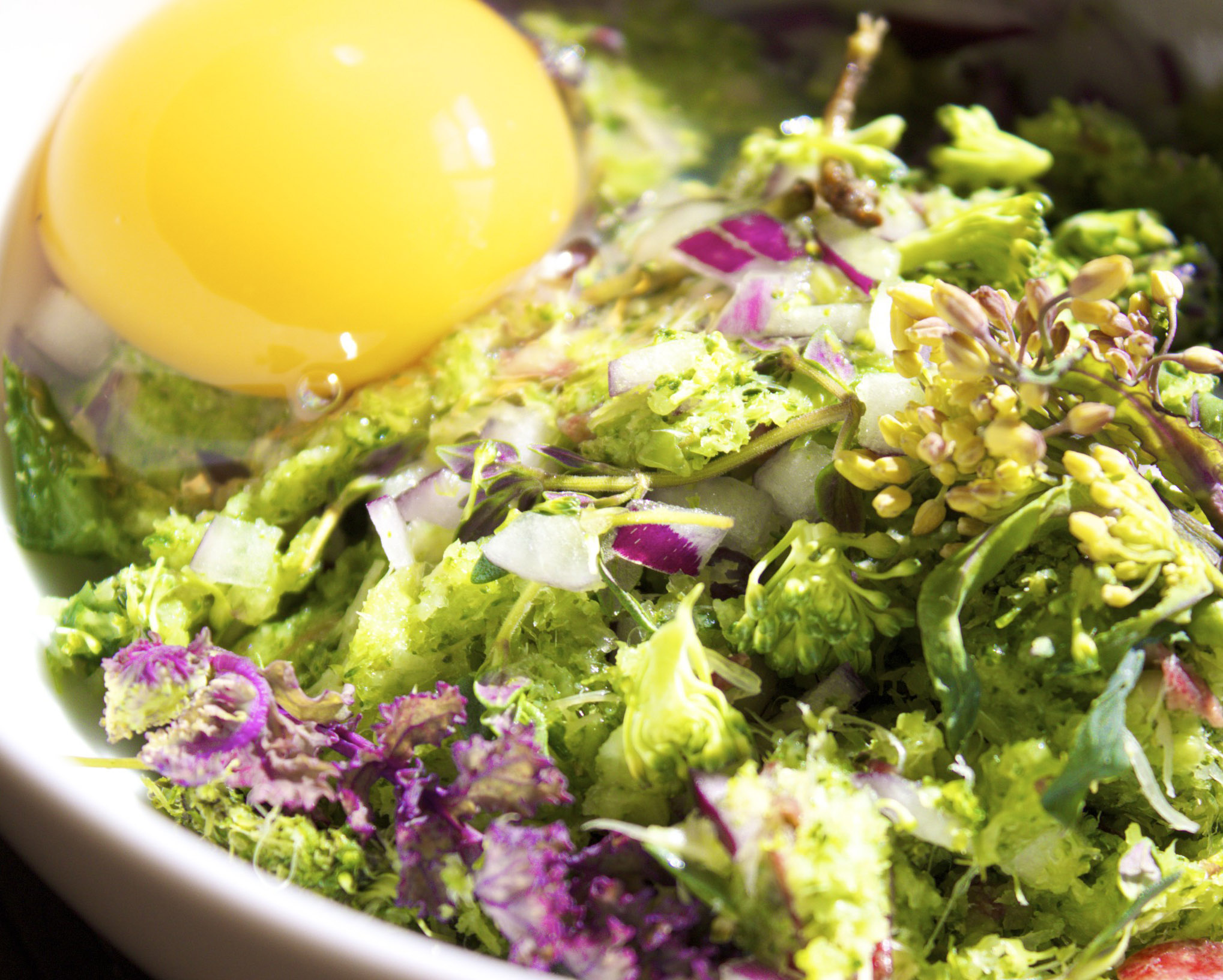
How to do it? I make myself a green juice, juicing the veggies first, because I’m so not into sweet burgers, then scoop them out and into a bowl. I add a chopped antihistamine quercetin rich red onion, loads of fresh histamine lowering, anti-inflammatory thyme, oregano, parsley (and more!). I then crack in a duck egg or two for the Vitamin B12 (130% RDA) and cook quickly in a lightly oiled pan. You can use some soaked flax or chia seeds if you prefer not to use eggs.
I know it’s not ideal cooking ahead of time, but most of us don’t have the luxury of cooking from home every single day. I’ll generally eat foods that have been cooked hours before, as long as I’m not in a hot climate. You can of course refrigerate the juiced veggies till you’re ready to cook lunch.
Kale: is highly anti-inflammatory and has cancer prevention potential.
Fennel: anti-inflammatory, antihistamine, analgesic and antioxidant.
Red onion: is one of the richest sources of histamine lowering quercetin.
Apples: rich in histamine lowering quercetin and inhibit the development of allergies.
Turmeric: inhibits anaphylactic shock, stabilises mast cells and prevents histamine release. It’s also anti-inflammatory and anti-tumour.
Preparation
Juice everything but the apples.
Scoop out the roughage and add to a bowl.
Mix in the onions and herbs.
Crack in the duck eggs if using, or soak 1-2 tbsp ground flax or chia and allow to gelatinise.
Heat a little oil in a pan and cook as veggie burgers.
Meanwhile, juice the apple into the veggies.
Hit the road!
NOTE:Please remember you can be allergic to anything, even foods with antihistaminic properties. Please consult with your doctor before trying any new foods.
As one of the UK’s most well respected naturopathic practitioners and health writers, could you please share with my readers your view on the underlying causes of histamine intolerance?
Gosh, that’s the sixty million dollar question, isn’t it? I am not a histamine expert, and I am sure others will have much more on that, so I can only tell you how I see it.
It might be a problem producing the DAO enzyme that helps break down histamine in the body so you get a build up of histamine and the consequent symptoms, they might not produce enough histamine N-methyltransferase either, which inactivates histamine so the histamine remains very active, or they might even have too much Histidine Decarboxylase, an enzyme that converts histidine into histamine so they are very efficient at making histamine. Of course, they might have none, one or all of those going on!
There are other people who, according to research by Carl Pfeiffer in the 50s have a methylation issue and simply produce too much histamine. He calls this ‘histadelia’ and describes it as a familial, inherited disorder which usually shows itself in compulsive behaviours, anxiety and depression as well as increased allergic reactions, headaches, itching etc . In this case, he advises use of methionine which helps to detoxify the histamine in the body and calcium which releases the body stores of it. In fact, this is how I first got into looking at histamine and, if the blood level is high and those sorts of symptoms are present, there is a protocol that can be used, which is based on his work.
I suspect much of it is genetic predisposition, but I am beginning to wonder if it is acquired too in some people. My specialist area is gluten sensitivity and one thing we do know is that gluten can cause inflammation and auto-immune damage to pretty much anywhere in the body. We know it can affect the parietal cells in the stomach, for example, and people then go on to have problems producing stomach acid and instrinsic factor etc. I wonder if the damage is also being done to enzyme production/methylation in some way. I have no way of knowing and I haven’t had time to go down that investigative route so far, but I wouldn’t be surprised, especially as we are finding it a lot in people with gluten sensitivity, along with fructose and lactose intolerance.
Most people have no idea they are what we call ‘true gluten sensitive’ and they think that they are not coeliac and that’s the end of it, which is, sadly we are finding, very far from the truth. Does the gluten – or something else entirely – damage the enzymatic processes in some way or are we just born that way. I suspect there is a genetic predisposition that gets triggered but that is pure conjecture on my part!
What is your approach to diagnosing and treating histamine intolerance?
For years, I have done high blood histamine in depression/compulsive cases with allergy present just in case it is the methylation issue.
I really introduced DAO testing for my truly gluten free patients and readers. As part of the Barrier Plan, our treatment protocol designed to lower inflammation, repair the damaged mucosal tissues and prevent auto-immunity, the first thing I advise is that they remove any allergens in their diet that could be perpetuating the problems and stopping them healing.
Part of that is looking for gluten, fructose, lactose and histamine sensitivity. With those results, they can then get an idea of what diet they need to follow to enable optimal healing. That’s the ideal, of course, and not everyone either wishes to or needs to go that far. I then had to find ways of testing them all.
Obviously, the DAO enzyme will tell someone if they have enough of it nor not and the whole blood gives them the levels of histamine they have in their body. If the histamine is high and there is a lack of DAO, there’s your answer, although you could have normal levels of histamine and low DAO and that’s sometimes enough. It’s the difference between how much histamine there is and the ability to break it down.
You can test for methyltransferase and for decarboxylase genetically and possibly biochemically, which I haven’t sourced yet. If I get more into histamine – gluten is enough to deal with currently, trust me – then I will!
In reality, if there is a suspicion of histamine intolerance, we do the DAO/whole blood test and, even if negative, trial a low histamine diet and see if the person responds well to it.
In terms of treatment, I usually refer people to sites like yours and books to learn about histamine foods. I also tell them about DAO enzyme products like DAOSin, which sadly are not grain free for the truly gluten free people, but could be used by most others.
For the histadelia, I advise a specific protocol or finding someone who can help with that.
I also, of course, talk to them about auto-immunity, gluten and possible causes of enzymatic problems to try and see if they can identify the root cause if not wholly genetic.
In your view, is a low histamine version of the standard diet (most speak of SAD) enough, or should patients explore a higher nutrient diet?
Absolutely, they must not just take stuff out of the diet but need to nourish themselves well enough to heal and repair. In my limited experience, histamine intolerance tends not to occur in isolation and I advocate at least an anti-inflammatory, mucosal barrier repair diet as per the Barrier Plan if they can. People with inflammatory bowel disorders are known to have lower DAO and this is not surprising when you learn that the DAO is made by intestinal cells in the mucosal gut lining.
I also advise they seek other types of intolerance if they are not 100% better after a few months on low histamine. Many people with intolerances are malabsorbers too in my opinion, which makes it all the more important to eat well, as well as remove the allergenic foods. People with HIT have been found to be particularly low in B6, for example.
Which factors (diet, lifestyle, stress) impact production of the histamine degrading diamine oxidase (DAO) enzyme and release of histamine in the body?
This isn’t something I have looked into much yet. I do know that many pain killers can block the DAO production or increase the release of histamine from mast cells. So can some sleeping pills, asthma medication, mucolytics, anti-hypertension drugs and antibiotics. Leaky gut and H pylori infection are thought to make it worse.
Obviously, any amount of stress is going to have an effect on health generally and on the gut particularly, as would a poor diet, especially in relation to the gut flora levels.
The release of histamine in the body is going to be much higher in someone who is constantly taking in an allergen, whether they realise it is an allergen or not, which is why I advise trying to find allergens as much as possible and heal the gut to try and stop the allergens getting through and triggering the histamine reaction.
Do you believe leaky gut is the root cause of histamine intolerance?
Very probably to do with mucosal breakdown, yes, although I am not sure that is the primary cause as I said above. I think you have to go a step further and think about what might be affecting those intestinal cells supposed to be making the DAO, what is affecting production of the other enzymes, the methylation etc. I am convinced it is gluten in some people.
Although, it is interesting that many women especially seem to become histamine intolerant in their late 40s. Is there a hormone element or trigger maybe?
Having said that, I do find that gluten sensitivity and leaky gut does seem to ‘suddenly’ show itself around that age – is it just that it takes that amount of time for the body to show the problem outwardly, or we have lost the ability to keep it under control..?
Is there any way for people in other countries to take your test?
Yes, as long as they can send the DAO sample back within 7 days to the lab in Germany (their cost). Whole blood needs to be returned to the UK lab in 48 hours and not in the hold of a plane as it shouldn’t freeze, again their cost. I’ve done quite a few DAOs in Europe already; I think further afield would be a problem to get it back in time. People should check they can do that OK before ordering. There will be extra postage to send the kit (s) to them and I Paypal invoice that when they have ordered.
Micki Rose, DN Med, natural health consultant and writer
The Anti-cookbook, while it doesn’t treat any conditions, due to its high nutrient, antihistamine and anti-inflammatory ingredients, has been instrumental in helping me feed myself on a limited diet. It features a six page list of antihistamine and anti-inflammatory foods. It comes in regular and Paleo.
The Low Oxalate Cookbook features antihistamine and anti-inflammatory rich recipes.
Don’t miss the Low Histamine Beauty Survival Guide for non-toxic beauty tips, the skinny on histamine releasing (mast cell degranulating) beauty ingredients, antihistamine and anti-inflammatory beauty alternatives and the top brands natural brands I’ve found.
If you’ve found this information useful I’d appreciate your support (at no extra cost to you!) – please check out my online store for your health foods, supplements, kitchen items and beauty product purchases. Affiliate sales through my online store go towards maintaining the website, funding travel to interviews and purchasing all the lovely foods for my free online recipes. You’ll find these items in the “Shop with us” drop down menu on my homepage.
Please don’t forget antihistamine, pain killing foods can still hurt us, so please always check with your doctor before adding new foods to your diet.
UPDATE: for more on methylation and how it relates to histamine intolerance, mast cell activation and mastocytosis, don’t miss my interview with Dr Ben Lynch of MTHFR.net – sign up to my mailing list!
There’s little in life more frightening than having a sick child. Make it an illness that no one has ever heard of, that has little treatment beyond over the counter medications, and you’re entering a vortex of fear. Enter the warrior moms.
Today’s guest poster has devoted her life to helping heal her son’s severe mast cell activation disorder. Please meet Tiffany Blackden…
We’ve been living in this crazy world of histamine and hyperactive mast cells now for several years. Our son will be turning 5 this month, and he’s been our docent, as we gather our education in the museum of mast cell madness. He’s shared with us all the nuances of mast cell activation disorder, which may have been missed, had it been anyone other than our charming little guy guiding us. This disorder has both opened up our world like new understandings around family member’s health histories, and restricted it as well, particularly where social outings and nutrition comes in.
For anyone going through mast cell activation disorder, or histamine intolerance, you are aware that the symptoms can affect *any* of your body systems, many of them all at once. This is because histamine and other chemicals housed in the mast cells don’t stay isolated, but travel throughout the body.
In our world, we have experienced symptoms in some body systems more dramatically than others. Skin presentations from foods, friction, contact with triggers could cause swelling, hives, dermatographia as well as other persistent skin lesions and eczema. We’ve had years with terrible stomachaches, headaches, dizziness, vomiting, leg pain, neurological symptoms and anaphylaxis. The neurological symptoms have been mostly tics or behavioral shifts from exposure to triggers, or being overloaded with chemicals he was exposed to outside our home. In the last two years, we’ve been able to calm his body, get some vital nutrients on board, and lower his overall histamine burden.
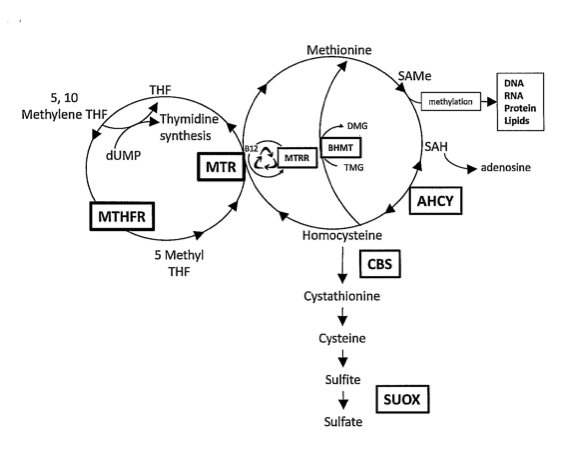
I just noticed some of your ears perked up…’What do you mean lower his overall histamine burden?’ I go into more detail in this presentation (http://www.slideshare.net/tiffanyblackden/working-with-histamine-overload-april-2013-20158082 ) I’ve shared at Mastocytosis Society conferences, but it has a LOT to do with supporting the liver. The liver support I am talking about in particular is supporting methylation and sulfation in the body that assist in clearing chemicals, both exogenous (those entering our body from our environment) and endogenous chemicals (those made by the body).
Methylation. I first heard this term over a year ago, several years after we were experiencing the ‘joy’ of mast cell madness. I had floundered around in the world of ‘food allergy mom’ before arriving at mast cell activation syndrome. Medical professionals kept making me believe that the only trouble was something that was going INTO my son that was causing the problems…but now I realize that his acute presentation was very closely linked to what was NOT coming OUT.
The magic of genetics has given us a way for us to understand some deficiencies in enzymes in our family. As we’ve studied methylation as it affects mast cell activation, we’ve also come to a greater understanding of how lifestyle, diet, environmental exposures can all cause FUNCTIONAL deficiencies that can look exactly like genetic disorders.
If you are looking into genetics and enzymes related to high histamine levels in the body, you may have stumbled over some of these: MTHFR, MAO A, DAO1, ABP1, HNMT…and more! Some of those affect enzymes that are responsible for histamine degradation, and some are in the methylation cycle. These and many more genes are involved in the body’s ability to excrete chemicals from the body, INCLUDING histamine. There are some very detailed warnings for supplements, medications and more, for those of us who have some of these genetic mutations (I like the term variant better, but you’ll see mutation in many texts as you dive into the ocean of genetics) in the methylation cycle. Some of us need to have activated forms of vitamins, because our bodies can’t convert nutrients as simple as folic acid. Some of us need to avoid high sulphur foods or medications. Then, many of us need to lighten up the already heavy toxic load on our livers. Something to be aware of, though, is there is no way there can be a ONE SIZE FITS ALL solution to chronic issues like this, because our individual genetics vary SO much! For instance, Epsom salt baths are really helpful for many people (transdermal absorption of magnesium sulfate can help with a number of health issues, especially supporting sulfation, a Phase II liver detox process!), but for people with certain CBS gene mutations, they can actually drain some of the vital nutrients from the body, if overused.
Our goal in helping our little guy was to lower the histamine we were putting IN his body,reduce the amount of the chemicals that were competing for the same pathway out, and lighten up the functional bottleneck that was backing up histamine in his body. Part of the reason this was happening was his genetic hiccups in the methylation cycle inhibit some of the enzymes that act as the ‘bouncers’. The liver secretes these molecules in order to escort the chemicals you don’t want in your body anymore to the door…or the toilet, as the case may be.
Methylation does more than just excrete the bad stuff, it is also a process that turns genes on and off, supplies active enzymes that manage important metabolic functions in the body and more. The big gene that is being talked about in our methylation circles is MTHFR. These are a few resources, if you want to learn a little more about it. http://babyfoodsteps.wordpress.com/2013/03/24/snips-about-snps-mthfr/ http://www.MTHFR.net and http://www.mthfrsupport.com/
As you work to find more pieces to your particular health puzzle, keep looking for answers. Each week we have new insights and information that helps us connect dots. It’s painstaking work, but worth it each time we figure out something that helps our children.
Tiffany Blackden is a warrior mom working to find answers for her children about health problems that baffle most doctors. She stresses that moms need to take care of themselves, find support, trust their intuition about their children’s health, and be very particular about the medical professionals her family hires. Tiffany’s family page on facebook, where she posts medical information and research she is discovering is: http://www.facebook.com/blackdenfamily. She is also building out a new blog about her experience with mast cell challenges here: http://www.mastcellmadness.com Connect with her on facebook, Twitter or LinkedIn.
Eating the same thing over and over numbs the appetite. Nowadays when I slip into “can’t be bothered to cook/eat/grocery shop” mode, I realise what’s amiss.
Seduction.
Eating for health means easily falling prey to the “it’s ugly and tastes nasty so it must be good for me” way of thinking.
Wrong.
Convincing yourself that the high nutrient low histamine, or antihistamine and anti-inflammatory diet, means you’ll never enjoy food again is just plain wrong.
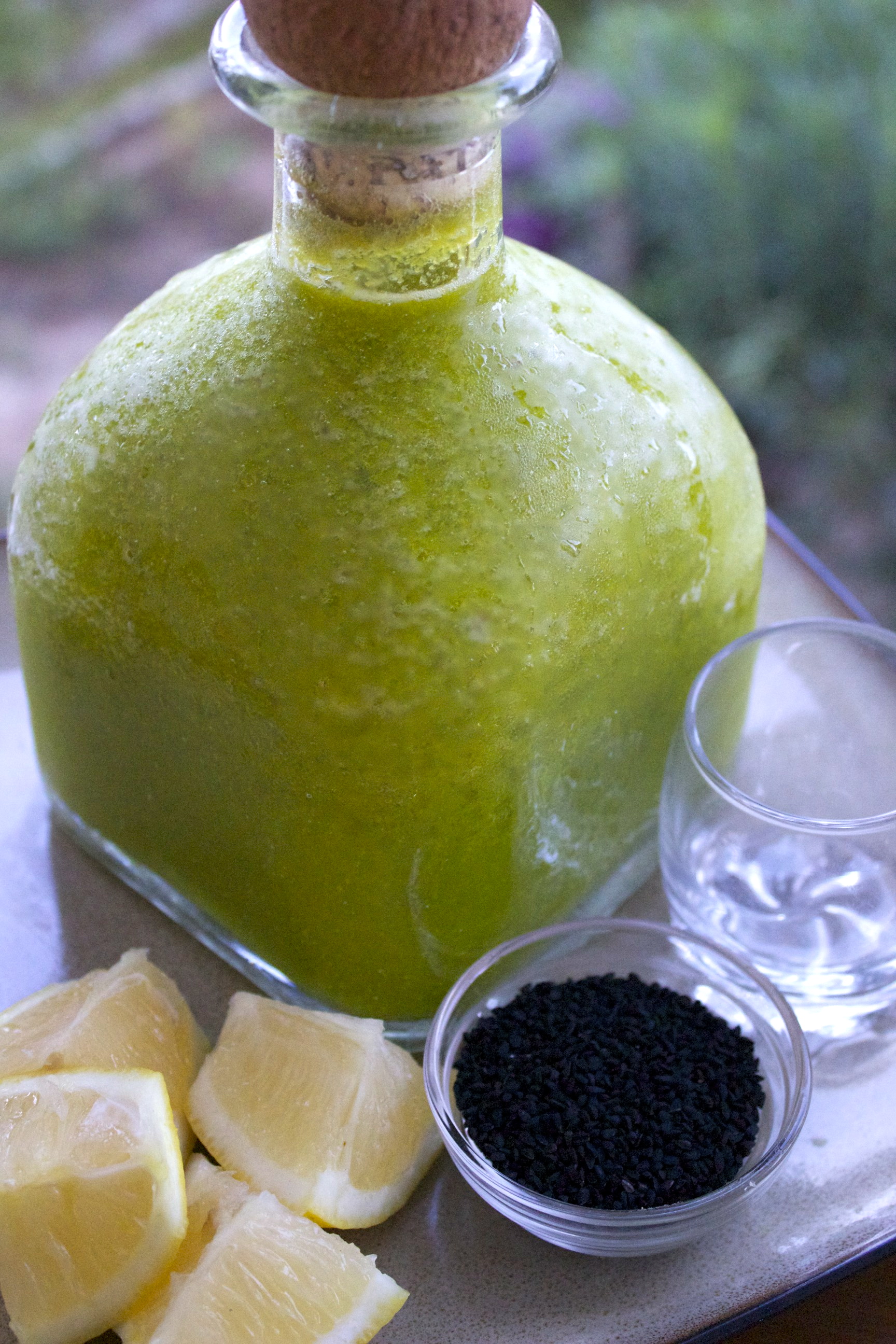
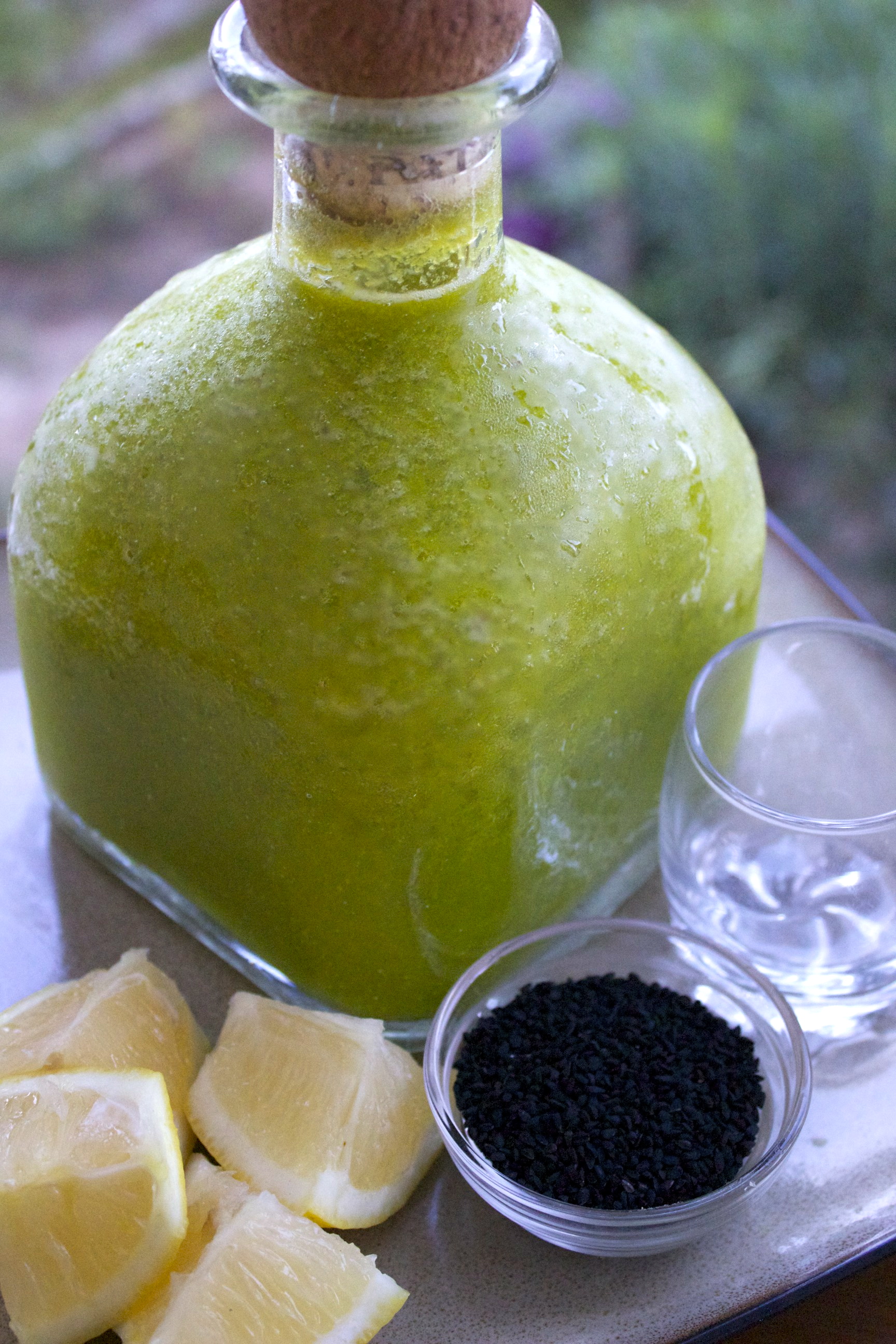
Check out how I up-cycled this bottle of Patron tequila…shown here served with ground (antihistaminic) nigella sativa seeds.
Unfortunately inspiration struck as the sun was almost down. Will retake this shot soon.
Sometimes it’s fun just to play with food for the hell of it!
I’m beside myself with excitement that Dr Junger was gracious enough to take some time out of his busy schedule (check out his recent appearance on the Dr Oz Show) to share how his Clean program can benefit those of us with food intolerances or allergies. As an aside, he’s Gwyneth Paltrow’s doc, and as those of you signed up to her Goopnewsletter no doubt are aware, Gwynnie is the reigning celebrity detox queen!
Clean came into my life as I was struggling to feed myself. Newly diagnosed with histamine intolerance (now clarified as mast cell activaion disorder), I was bewildered as to what to eat. Thankfully someone was good enough to save my life by creating the Kindle, and I was able to download a copy of his book while living (if you can call it that) in Bangkok. Much to my incredible relief, the list of foods to avoid while on this cleanse were almost word for word the list I had been given when diagnosed! Unable to believe my luck, I began the three week cleanse that helped me understand that nutrition was the key to recovery.
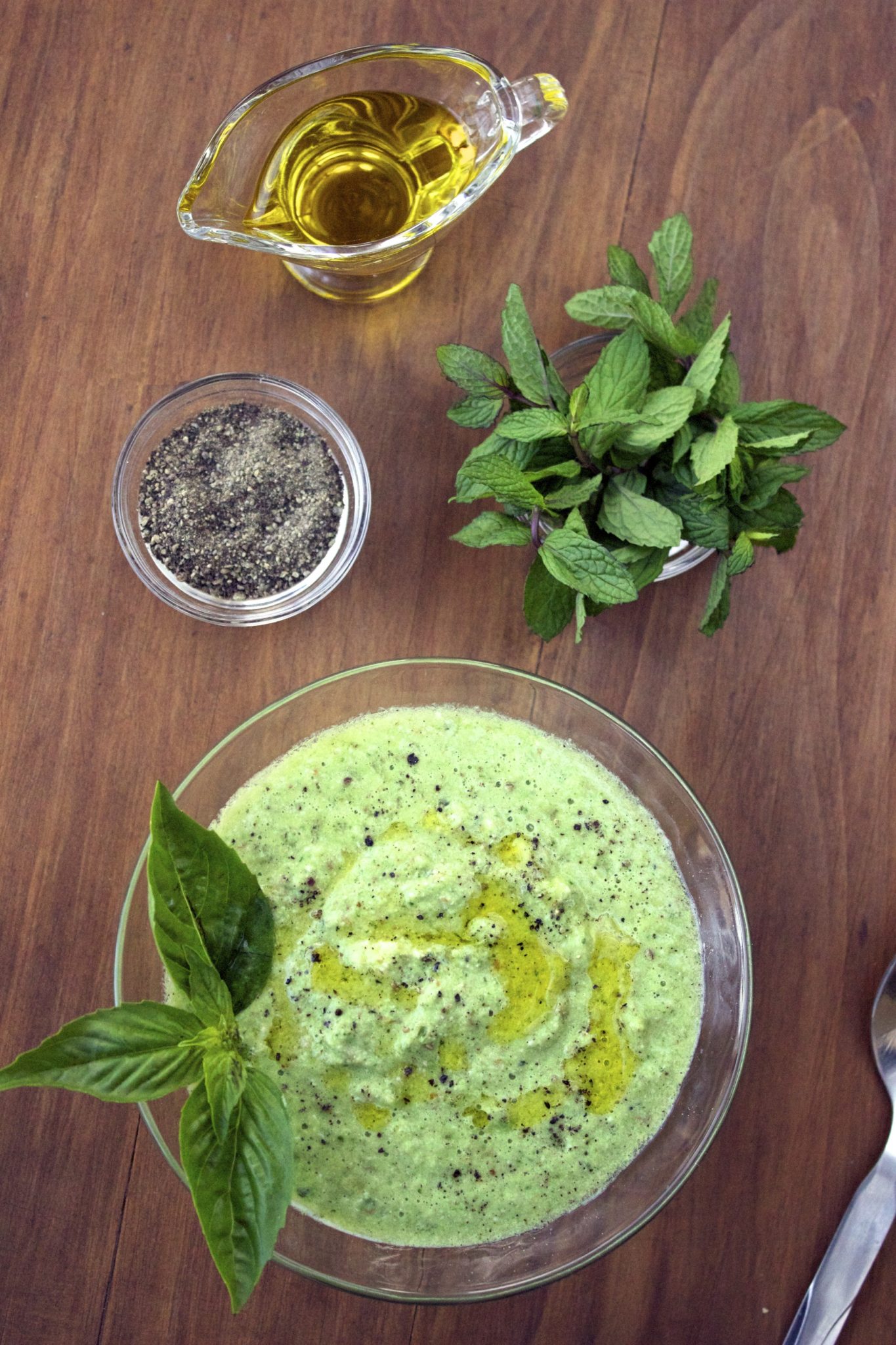
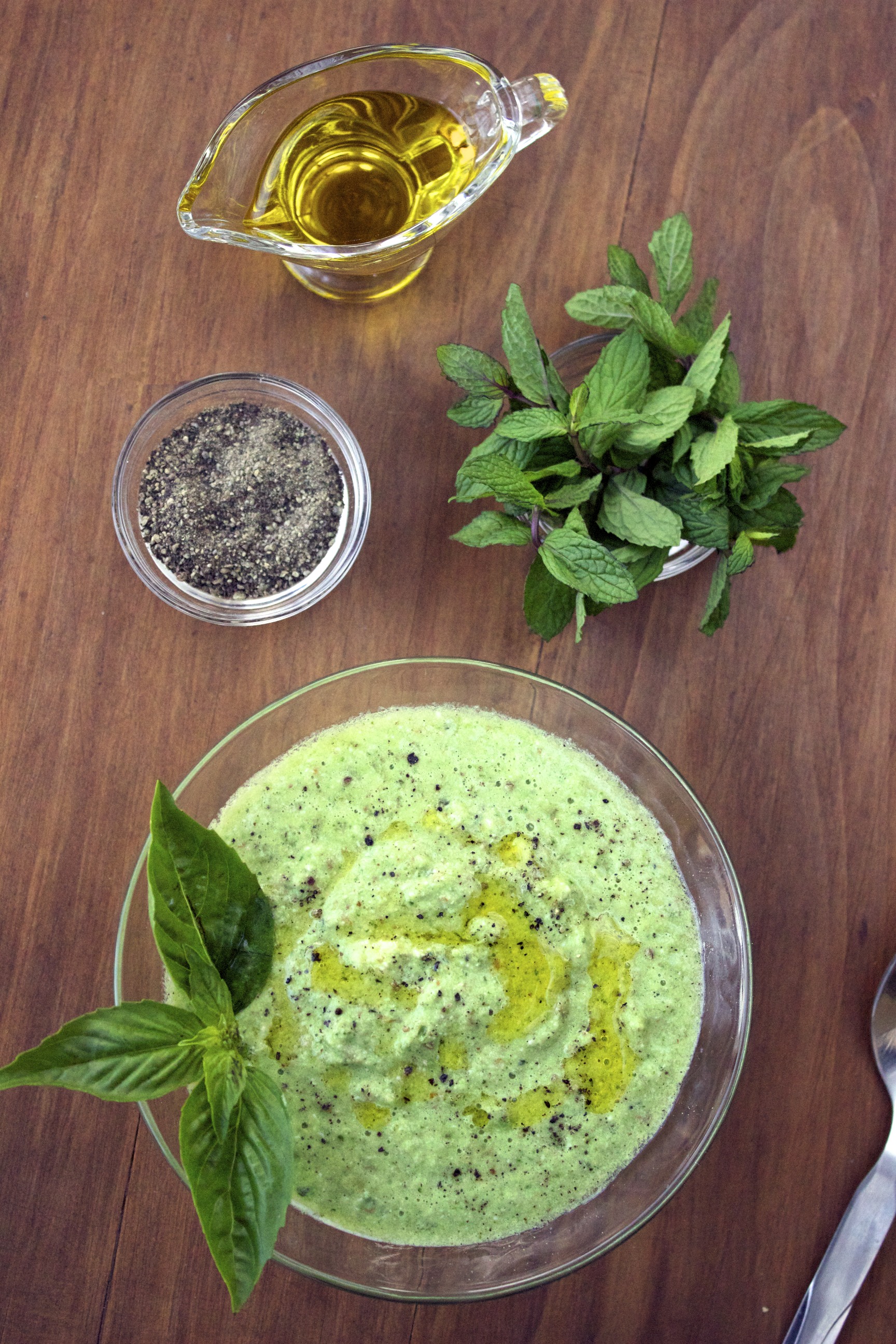
A recent Clean tune up was just what the doctor ordered! I felt energised, even though I cooked most of my evening soups. You’ll find my take on Dr Junger’s Clean detox mint soup just under the interview below.
Dr Junger, please tell us how the Clean program benefit those with food intolerances/allergies?
Let’s first be clear that food allergies are different from food intolerances. Think of them both on a continuum from “no reaction” to “very strong allergic reaction” ( an anaphylactic reaction). Food sensitivities and strong food allergies can fall anywhere on this continuum of reaction. The issue is complex because many of these foods can cause reactions and sensitivities based on the quantity eaten and in combination with other foods (i.e. when grains are eaten with animal protein).
We call these foods, Toxic Triggers, or foods that cause indigestion, inflammation, bloating, fatigue, and, if consumed over long periods of time, minor sicknesses, full-blown diseases, and major health challenges.
The most common toxic triggers are gluten, dairy, sugar, coffee, alcohol, and nightshades (tomatoes, peppers, eggplant, potato).
The Cleanse helps people with food sensitivities in three ways:
1. It removes the majors foods that cause sensitivities and helps you identify which foods were causing you problems.
2. It rests the gut from the toxic triggers listed above, so that it can begin to repair itself .
3. You take specific supplements to replenish gut flora (probiotic) and reduce pathogenic bacteria (Berberine formula). The good flora helps digest food better and absorb nutrients. The berberine formula reduces the pathogenic bacteria that are partially to blame for bloating and digestive upset.
Reintroduction
When you have finished your 21 days of the program, you enter the reintroduction phase. This is when you reintroduce many of the toxic trigger foods like dairy and gluten to see how they affect you. Because you have removed them for 21 days, your body acts as a good barometer for how the foods actually affect you. When you eat trigger foods all the time, it’s difficult to see how they affect you, we often just think our body’s response to, for example, gluten, is part of normal digestion. It’s revolutionary to think that you can eat food without any after meal fatigue, gas, bloating or indigestion!
TakeAway
When your program is finished you have reduced toxins in the body, helped support the body’s natural ability to repair itself, and figured out which foods work best for you. This knowledge, if you take it seriously, can go a long way in developing your own way of eating that keeps you well and strong and clear of food sensitivities.
Founder of the Clean Program, Dr.Junger was born in Uruguay. He graduated from medical school there in 1990 and moved to New York City for his postgraduate training. He completed three years of training in Internal Medicine at NYU Downtown Hospital and three more years of fellowship in Cardiovascular Diseases at Lenox Hill Hospital.
The drastic change in lifestyle and diet resulting from his move to New York City soon showed up as irritable bowel syndrome and depression. Becoming a patient of the system he was practicing was such a shock, that it started his journey in search of an alternative solution to his health problems.
His findings are the subject of his first book, Clean: The Revolutionary Program To Restore the Body’s Natural Ability to Heal Itself, where Dr. Junger describes how he became aware of the toxicity of our planet. He also explains how detoxification and cleansing have been around for thousands of years, but the knowledge has been lost, and right now it’s more important than ever to reclaim this information. Most importantly, Clean is a manual for readers to learn how to turn on and work with their own detoxification systems to restore and maintain optimal health.