Author: healing

  • Antihistamine rich artichoke Soup

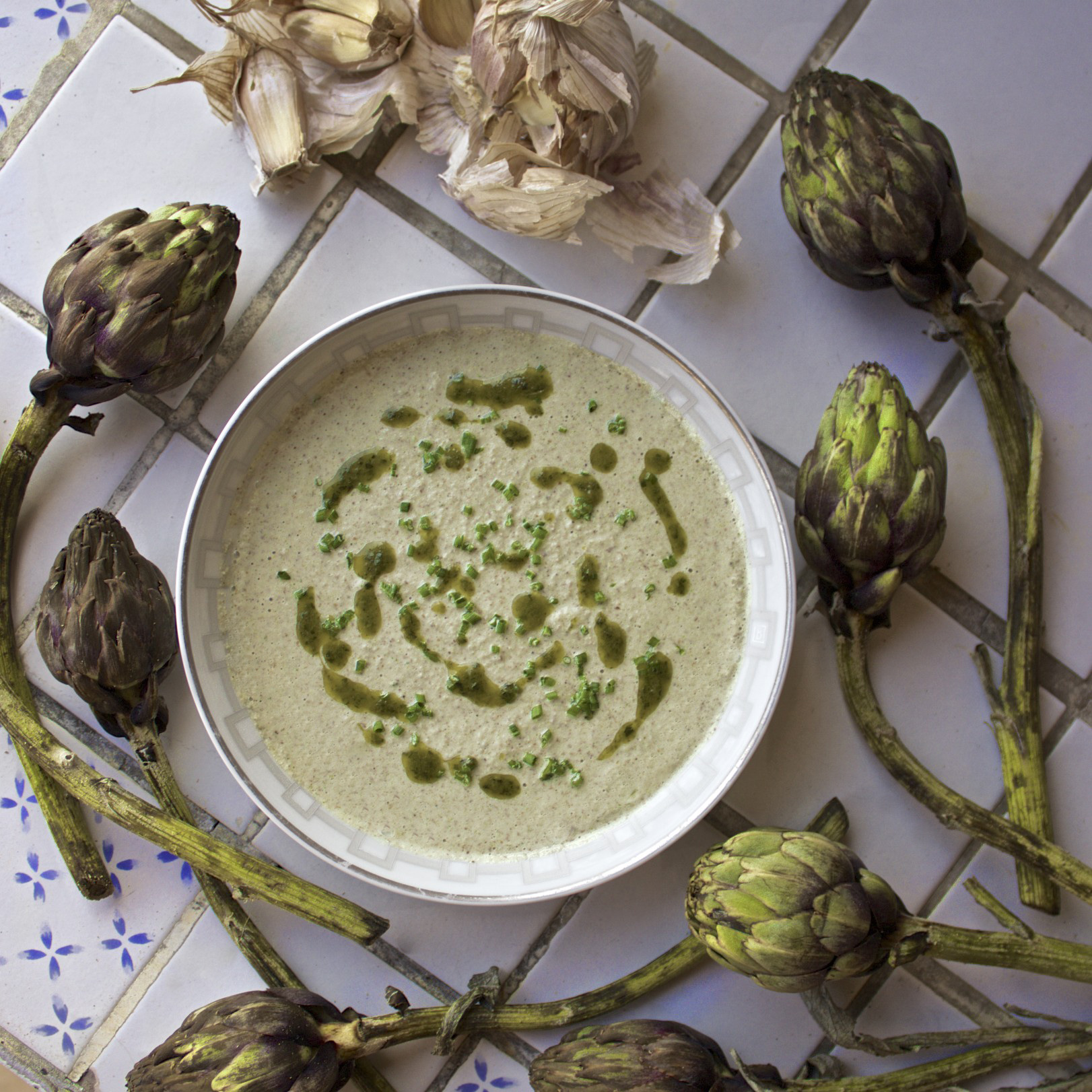
    Antihistamine rich artichoke Soup

    antihistamine artichoke soup

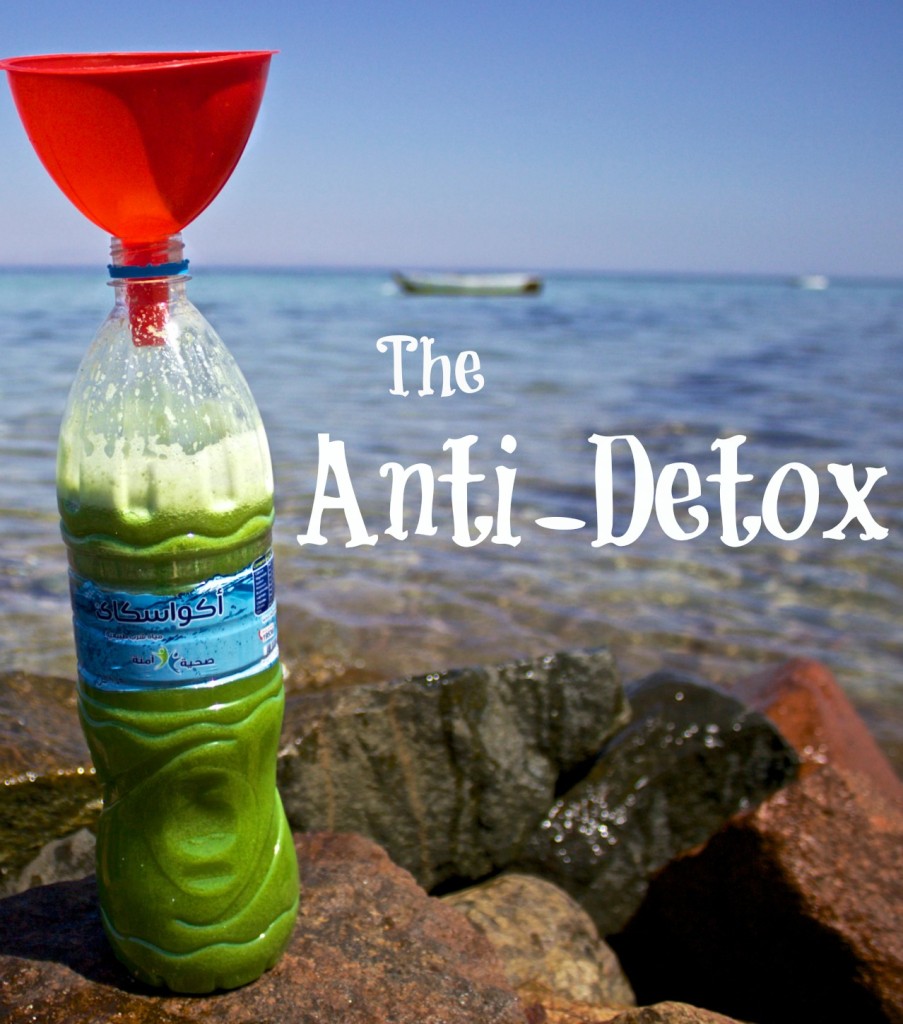
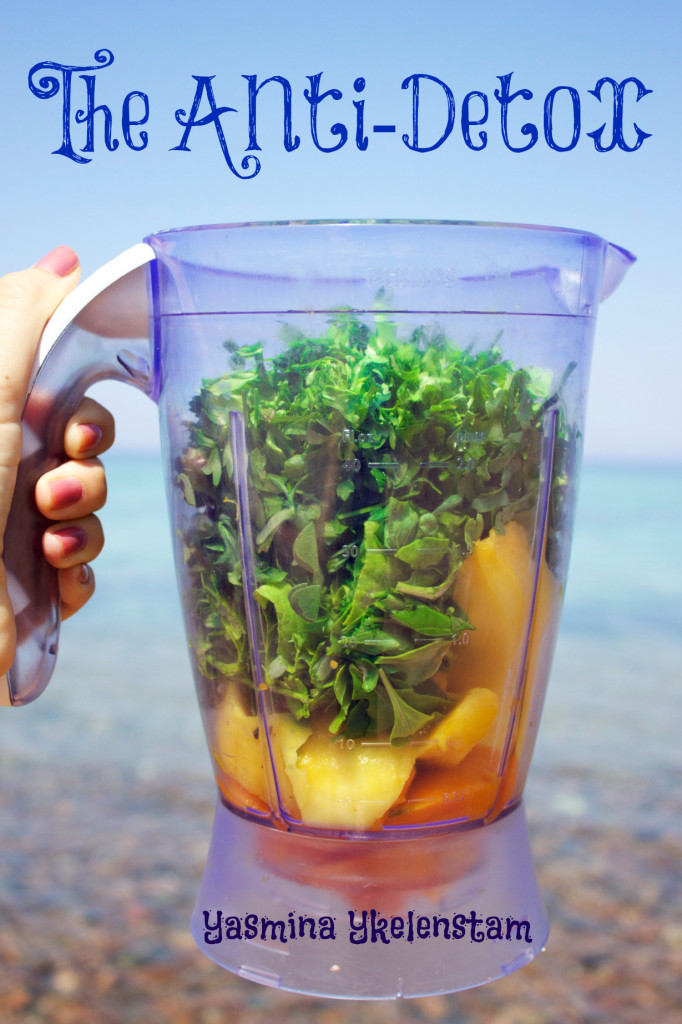
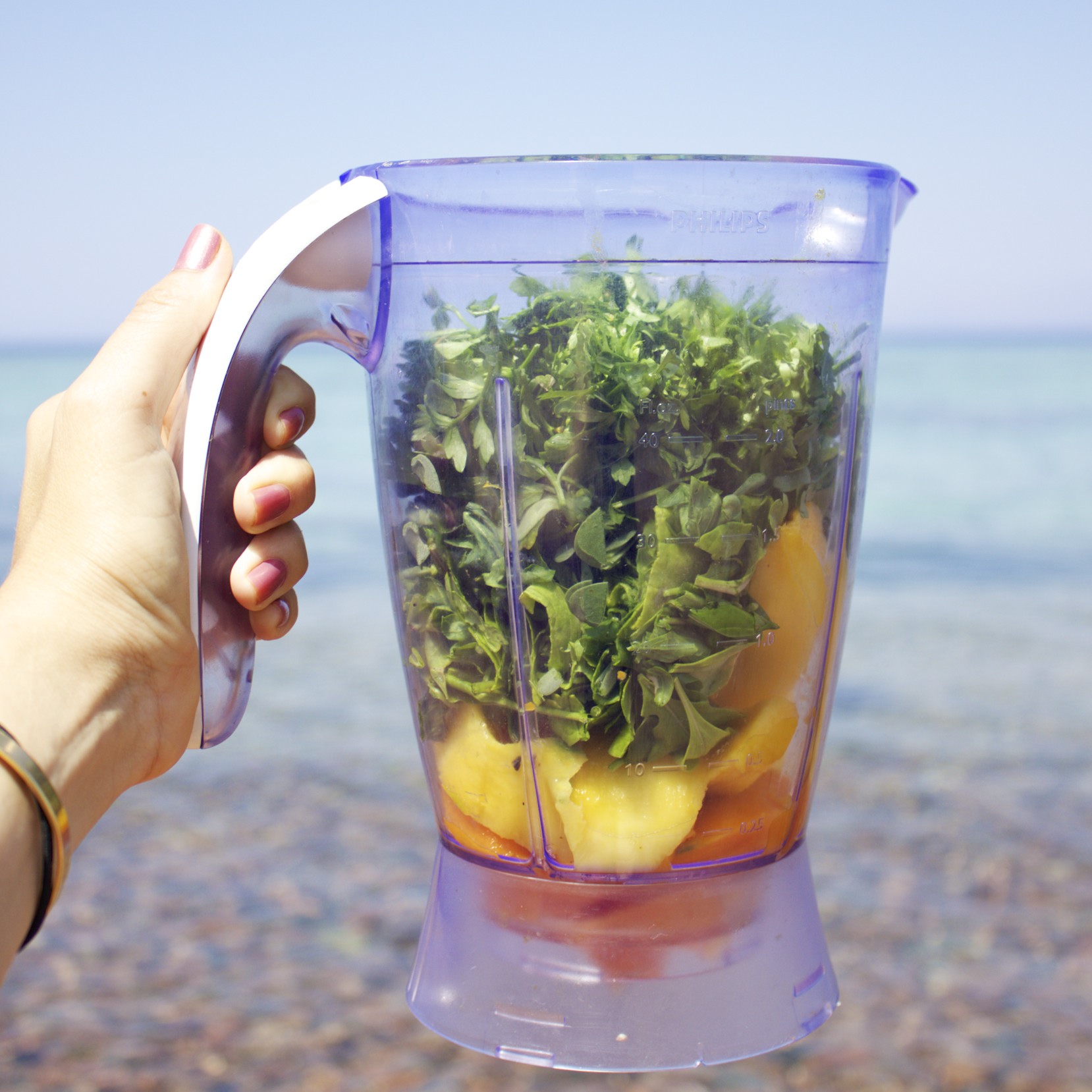
    As you may have heard, I recently released the Anti-Detox, a new book of high nutrient antihistamine and anti-inflammatory rich all liquid recipes for those days when when I was feeling my histamine bucket gearing up to splurge all over the place.

    This is a recipe I really wish had gone in there, but the wonderful chef Edward O’Neill (of The Naked Radish) and I just met out here in France, coming up with this recipe for a super healthy themed lunch, and hey, now you’re getting it for free!

    And looking for the upside is pretty much what this blog has been about since its inception. “Condemned” to the weirdest diet I had ever heard of (and believe me, there have been some doozies, more on that in the Anti-Detox book) in 2010, I pretty much went to pieces when I realised I’d have to cut out all my favourite foods, but at the same time my type A, controlling personality breathed a massive sigh of relief at the thought there was a way to take charge of my insanely frightening health decline of the previous years.

    And there really was. I’m so grateful that I was initially diagnosed with histamine intolerance and told the only treatment was diet, because once I got my mast cell activation diagnosis, you better believe those folks thought I was completely barking mad when I told them I was managing my symptoms through lifestyle changes alone (thank you very much) and that I had no intention of taking multiple meds so I may once again enjoy “real” food. The items under discussion: pizza, pasta, coca cola. It was my turn to look at them as if they’d lost the plot, telling them I no longer considered said items to be “food”.

    Which brings me to the point of today’s post (other than sharing a delicious healing recipe with you of course!): gratitude.

    I can honestly say that gratitude is something that had been missing from my vocabulary.

    While I certainly knew many people far better off than me, I definitely led a very privileged life. The wheel of fortune spun fast and hard for my mother, causing many upheavals and instability, but there was never a shortage of shopping trips, tech gadgets and trips around the world when I was growing up. Flying around in private jets, beautiful boats, champagne and all that jazz were pretty much the norm. And yet, my mother and her friends often lamented my completely blasé attitude (direct quote heard many times) towards this bounty. Eventually unable to process why I couldn’t enjoy any of it, I escaped, cutting contact with all my friends and everything associated with my home town – running off to work 16-20 hour days as a journalist, grounded by the horror of “reality” around me.

    But this entitled attitude followed me into my work life and more frighteningly into my health struggles. I believed that good health was my god given right and that I had every reason to scowl my way through life because I was shortchanged.

    Pouting, crying, railing against my misfortune in not being able to enjoy the very things I had rejected decades before, I fed the toxicity I was sure I had left behind in my home town. But of course, in leaving home I still had not addressed the root of my malaise: my inability to give thanks and my gratitude to the universe, my mother and all my wonderful friends who scratched their heads in bewilderment the day I tossed them aside with as much ceremony as the kleenex I used to violently empty my inflamed sinus passages into.

    So it’s time to reflect on what’s going into my gratitude diary tonight:

    I am grateful for having found all you amazing people who have allowed me into your lives, inspiring me to continue my research and blogging, in addition to supporting my work so that I can actually feed myself while I do so!

    I am grateful for having experienced extreme adversity in life, for me at least, it was a necessary part of the learning process.

    I am grateful to this illness for having taught me how much I value being alive (there was a time I craved oblivion) and for forcing me to become the absolute healthiest I have been in my entire life.

    I am grateful for all the wonderful people who have come into my life now that I am ready for them.

    I am grateful to my (not so extended family) P&RS, for their tireless work in helping me understand that I am a human being of value who deserves to be treated as such, and for the latest addition to their brood, who I can’t wait to meet.

    I am grateful to my mother, she did the absolute best she could and I’m very thankful it was more than enough to raise me as an (eventually) grounded person with an incredible toolkit that made me into a successful journalist.

    I am grateful to HM for being my surrogate mom, best friend, cousin, confessional priest, who, even when I was at my absolute lowest in life, never made me feel like I was.
    I am grateful to B for more than I can adequately express in words. I think I have tried in a couple of letters, but just in case I haven’t: thank you for providing me a haven of healing in the care of one of the most enlightened and inspiring beings I have known. I have learned more about myself from our talks in the last few weeks, than in a lifetime of searching for answers. I’m sure you’ll be getting more gratitude letters from me in the near future…

    And I am of course very grateful to this healing soup and all others that have allowed me to regain control of my health.

    Now, before we dive into the recipe du jour, I’d like you to make me a promise: you’ll get yourself a nifty little diary to keep at your bedside, and fill it with at least five things your grateful for, nightly. Why? Gratitude has been shown to lower inflammation, boost quality of life and increase happiness [1]. Not bad for something that can be practiced in as little as a few minutes a day, right?

    Antihistamine and anti-inflammatory rich artichoke soup

    Nutritional breakdown:

    Antihistamine: artichokes, onion, garlic, broccoli, thyme, basil, chives.

    Anti-inflammatory: artichokes, onion, almonds, coconut, garlic, lemons, broccoli, mushrooms, thyme, olive oil, chives, basil.

    Ingredients:

    6 large artichokes
    1 large brown onion
    1/2 cup almond/coconut milk
    1/2 cup artichoke water
    3 cloves garlic
    2 lemons cut in half
    1 cup broccoli juicing leftovers (or chopped broccoli)
    1 cup mushrooms (optional, some believe them to be high histamine – you can use 1/2 cup chopped asparagus or more broccoli)
    handful thyme
    olive oil

    garnish
    very finely chopped chives 

    drizzle
    1/4 cup olive oil
    1/2 cup basil
    1/2 clove garlic
    squeeze lemon juice

    Directions:

    Clean the artichoke by peeling off the leaves and furry bit, till you’re left with just the hearts.

    Place in a pot with the lemons and then pour in enough water to cover. 

    Bring to the boil then simmer for 30 minutes. 

    Sauté the garlic, onions, mushrooms (if using), broccoli juicing leftovers and thyme in a little olive oil till soft. 

    Blend with the almond/coconut milk, half a cup of the artichoke water and the veggies. 

    Garnish with chives and drizzle. 

    You’ll find a collection of all liquid high nutrient antihistamine and anti-inflammatory rich recipes for days when my histamine bucket overflowed in the new Anti-Detox book. 

    The Anti-cookbook, while it doesn’t treat any conditions, due to its high nutrient, antihistamine and anti-inflammatory ingredients, has been instrumental in helping me feed myself on a limited diet. It features a six page list of antihistamine and anti-inflammatory foods. It comes in regular and Paleo. 

    The Low Oxalate Cookbook features antihistamine and anti-inflammatory rich recipes. 

    Don’t miss the Low Histamine Beauty Survival Guide for non-toxic beauty tips, the skinny on histamine releasing (mast cell degranulating) beauty ingredients, antihistamine and anti-inflammatory beauty alternatives and the top brands natural brands I’ve found.

    Take a peek at my other low histamine and antihistamine cookbooks for more high nutrient recipes.

    If you’ve found this information useful I’d appreciate your support (at no extra cost to you!) – please check out my online store for your health foods, supplements, kitchen items and beauty product purchases. Affiliate sales through my online store go towards maintaining the website, funding travel to interviews and purchasing all the lovely foods for my free online recipes. You’ll find these items in the “Shop with us” drop down menu on my homepage.  

    Please don’t forget antihistamine, pain killing foods can still hurt us, so please always check with your doctor before adding new foods to your diet. 

    ————–REFERENCES————–

    [1] http://www.sfgate.com/health/article/Berkeley-center-funds-gratitude-research-4091181.php
     

  • The Anti-Detox

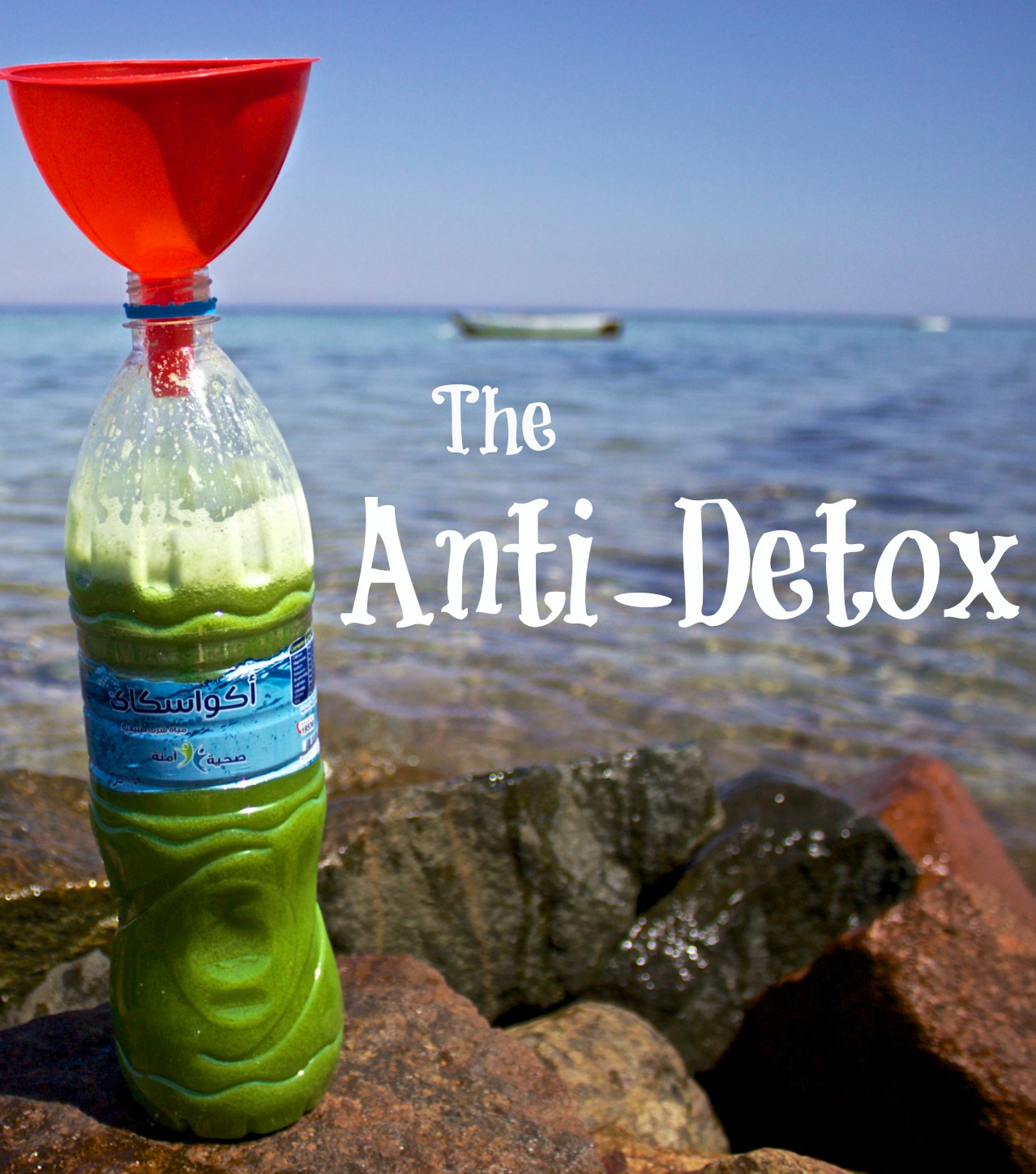
    The Anti-Detox

    antidetox

    I’m super duper excited to share that the Anti-Detox un-cook (e)book is available in my online store! 

    This is a seven day collection of highly antihistamine and anti-inflammatory juices, smoothies, or a combination of both, which I have dubbed “jui-cies”, and delicious soups I have used to mediate histamine-induced inflammation. I can’t claim they’ll do the same for you, but at the very least, you’ll be getting a WHOPPING dose of nutrients that are known to bring down inflammation and stabilise mast cells (so they’ll hopefully stop dumping histamine and other inflammatory mediators into the body). 

    There are times in life where we just need to kill the inflammation, be it histamine induced, or caused by any of the other inflammation spawning elements released from mast cells when the body is having a bit of a meltdown. I consider this book to be an inflammation busting cleanse, that just also happens to be low histamine as well.

    Why liquid? Dr. Fuhrman (my nutritional hero) points out that liquids put less stress on the digestive tract as well as requiring less enzymes to be processed. It’s also what so many of you have written in to request!

    Why is this the Anti-Detox? Because to me, what we put into the diet is FAR more important than whatever we take out of it. These recipes were created to nourish the body rather than simply deprive it of histamine intake.

    The book serves up daily:

    An antihistamine/mast cell stabilsing natural tea

    x2 juices/smoothies/jui-cies

    A super duper high nutrient soup

    Information on why to cleanse, what toxic hunger is, a list of antihistamine, anti-inflammatory and mast cell stabilsing herbs and supplements, and whether water fasting is superior to juicing for beating histamine-induced inflammation.

    As with the Anti-Cookbook, nothing in this book is here without purpose. Every single ingredient here is antihistamine and/or anti-inflammatory.

    I’ve included lower oxalate options for the recipes. 

    This book is not Paleo. 

    As with all my recipes, please be aware that antihistamine and anti-inflammatory ingredients can still hurt us, so I respectfully ask that you show your doctor/medical practitioner/faith healer/shaman the book before trying any of the recipes. 

    theantidetoxcover

    The Anti-cookbook, while it doesn’t treat any conditions, due to its high nutrient, antihistamine and anti-inflammatory ingredients, has been instrumental in helping me feed myself on a limited diet. It features a six page list of antihistamine and anti-inflammatory foods. It comes in regular and Paleo. 

    The Low Oxalate Cookbook features antihistamine and anti-inflammatory rich recipes. 

    Don’t miss the Low Histamine Beauty Survival Guide for non-toxic beauty tips, the skinny on histamine releasing (mast cell degranulating) beauty ingredients, antihistamine and anti-inflammatory beauty alternatives and the top brands natural brands I’ve found.

    Take a peek at my other low histamine and antihistamine cookbooks for more high nutrient recipes.

    If you’ve found this information useful I’d appreciate your support (at no extra cost to you!) – please check out my online store for your health foods, supplements, kitchen items and beauty product purchases. Affiliate sales through my online store go towards maintaining the website, funding travel to interviews and purchasing all the lovely foods for my free online recipes. You’ll find these items in the “Shop with us” drop down menu on my homepage.  

    Please don’t forget antihistamine, pain killing foods can still hurt us, so please always check with your doctor before adding new foods to your diet. 

  • The (liquid) histamine cleanse

    The (liquid) histamine cleanse

    juicing for histamine intolerance

    Today’s lunch!

    This book is now available for purchase here! 

    Busy, busy bee here in Egypt. This may look like a holiday but I’m here in Dahab (1 hr from Sharm el Sheikh) shooting my meditation course and finishing up photography on my first 100% liquid book (The Histamine Detox) here. (There’s a couple more surprises and freebies being developed – I’ll share more soon – sign up to my mailing list so you don’t miss out!)

    Why liquid? Dr. Fuhrman, among others, points out that liquids put less stress on the digestive tract as well as requiring less enzymes to be processed. It’s also what SO many of you have written in to request!

    I’m struggling with something though:

    Contrary to the impression the name of this website imparts, I do not believe that a low histamine diet is a sound approach for histamine intolerance, mast cell activation or mastocytosis. My personal diet is what I call a histamine-balanced approach. I know it’s very tempting to run out and try to eliminate ALL histamine from your diet the minute you’re diagnosed (or at least convince yourself that you are), but let’s just consider physiology for a moment: the body needs histamine for wakefulness, to run the immune system, to keep our brain working, to control appetite and metabolism (that’s just for starters), so what do we think might happen if we deprive the body of dietary histamine that is certainly involved in these processes? One theory is that the body will begin to produce more endogenous histamine, meaning mast cells will degranulate and dump histamine, along with other inflammatory molecules into the body.

    Let’s consider a possible alternative: we continue providing the body with a healthier supply of dietary histamine, from clean, high nutrient sources, along with a plethora of antihistamine and anti-inflammatory foods to help it all balance out. This is one of my favourite light meals that’s a good example…

    IMG_0467

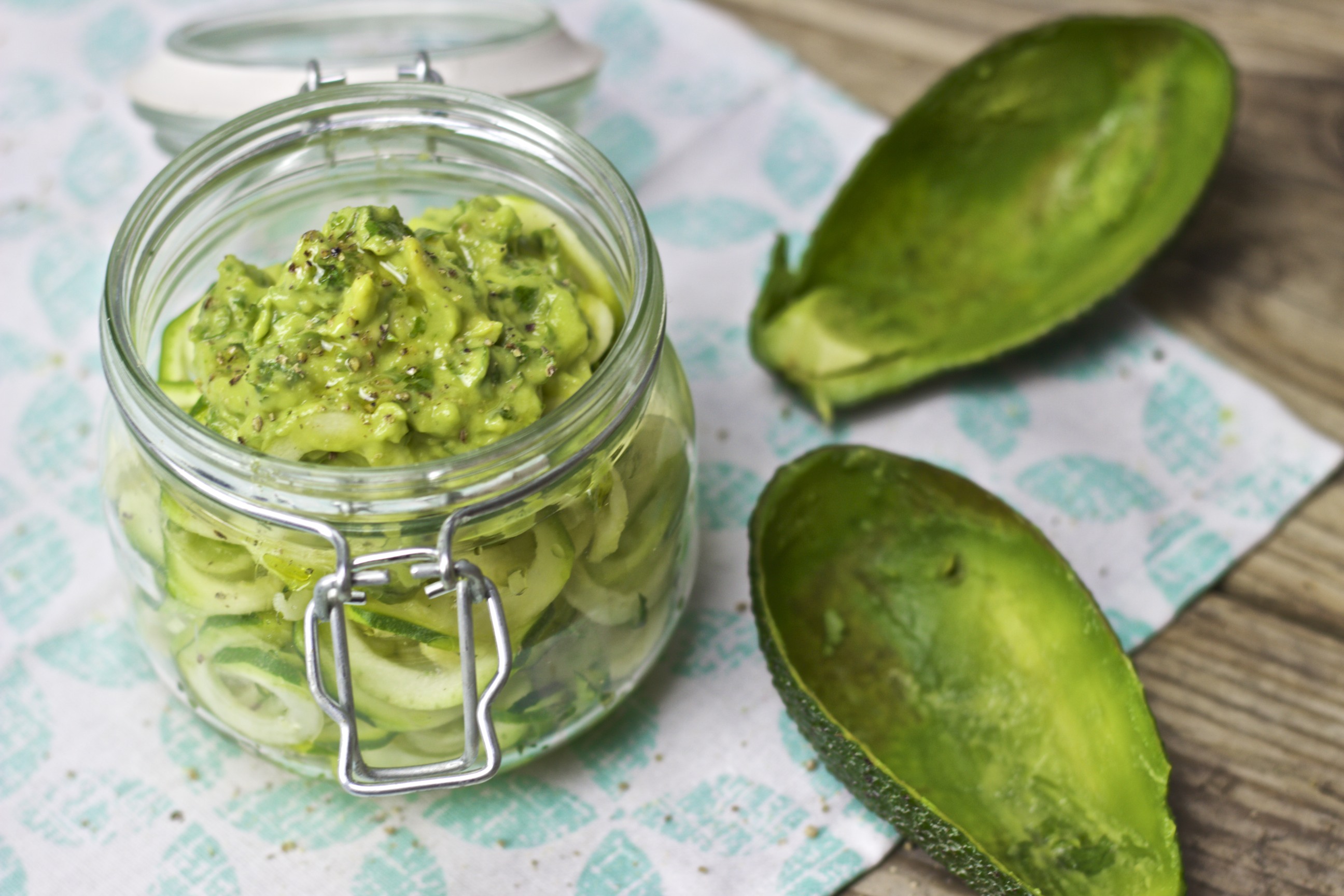
    Raw zucchini (courgette) noodles with avocado sauce (coriander, parsley, garlic, onions, olive oil). I’ll have this for lunch. The higher histamine of the avocado is, in my view, balanced out by its anti-inflammatory properties (yup, weirdly enough a high histamine food can also have anti-inflammatory properties – balance is found all through nature), in addition to the mast cell stabilising and antihistamine properties of the fresh herbs, garlic and onion.

    Now, back to a low histamine diet. Eating a piece of lamb with rice every day for years didn’t yield the same results as a histamine-balanced diet for me.

    Those results: being told I’m now in the best health of my life and finally being truly free to travel the world without the fears that plagued me these last few years (where will I eat, will I get sick, what will happen if I have an accidental splash of tomato).

    I’m sure that a huge part of the process was no longer demonising foods and not being afraid to eat. I lost that fear by gradually re-introduing higher histamine foods in small amounts until my body accepted they no longer posed a threat to me. I do know they did at some point – anaphylaxis is no freaking joke (as many of you know!), but when my body finally healed, thanks to a high nutrient diet my brain sadly hadn’t yet caught up with the healing I had lavished on my body, and so I continued to suffer. Meditation was a huge help to me here, as was re-training my amygdala.

    So, why am I writing a histamine detox book?

    There are times in life where we just need to kill the inflammation, be it histamine induced, or caused by any of the other inflammation spawning elements released from mast cells when the body is freaking out. I consider this book to be an inflammation busting cleanse, that just also happens to be low histamine as well.

    photo 1

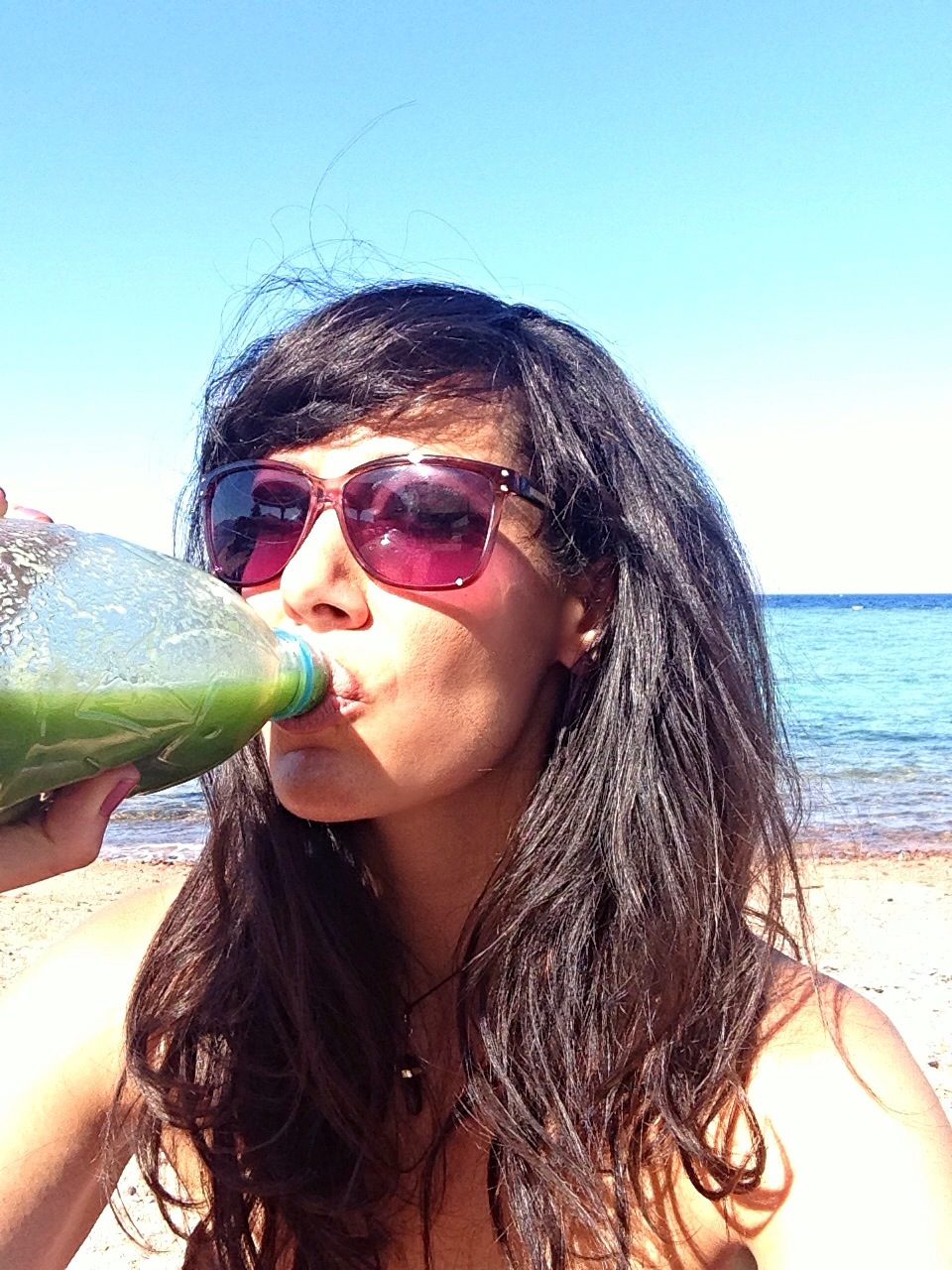
    I practice what I preach man – here I am getting juicy on the beach.

    For example, I’m on a cleanse right now. I’m getting tons of antihistamine and anti-inflammatory juice into me, and getting my histamine from various marine sources (apologies vegans, I was one of your tribe but my body functions better this way), oily nuts (macadamia, walnut), seeds, avocado, aubergine and tomatoes. I’m including these high histamine foods because they add a number of vital nutrients and phytonutrients that would otherwise be missing from my diet. These things, according to Dr. Fuhrman’s wisdom, will help me heal in the long term:

    “You can’t put this problem in a vacuum. Such as avoiding histamine containing foods, on a standard deficient and toxic diet. The body works in conjunction with thousands of complicated chemical reactions, and only with superior nutrition can the histamine sensitivity be better controlled. So exposure to thousands of phytochemicals and even to a low dose of histamine in their diet is good, not bad and can offer hope of getting better over the years to come. ” Dr Fuhrman. 

    It’s certainly working, as you can probably tell from the pictures!

    All that being said, I believe there’s a place for a high nutrient low histamine diet for a few weeks/months. It just breaks my heart over and over to get emails from people who have been living on the same five foods for years (as I was), but also so gratifying to see them recover.

    Because, as I tell people who consult with me – it might feel like you’re getting nowhere, but trust me, we ALL get there in the end.

    Here’s wishing you happy holidays and continued health, no matter where you are on your journey.

    IMG_1332

    The Anti-cookbook, while it doesn’t treat any conditions, due to its high nutrient, antihistamine and anti-inflammatory ingredients, has been instrumental in helping me feed myself on a limited diet. It features a six page list of antihistamine and anti-inflammatory foods. It comes in regular and Paleo. 

    The Low Oxalate Cookbook features antihistamine and anti-inflammatory rich recipes. 

    Don’t miss the Low Histamine Beauty Survival Guide for non-toxic beauty tips, the skinny on histamine releasing (mast cell degranulating) beauty ingredients, antihistamine and anti-inflammatory beauty alternatives and the top brands natural brands I’ve found.

    Take a peek at my other low histamine and antihistamine cookbooks for more high nutrient recipes.

    If you’ve found this information useful I’d appreciate your support (at no extra cost to you!) – please check out my online store for your health foods, supplements, kitchen items and beauty product purchases. Affiliate sales through my online store go towards maintaining the website, funding travel to interviews and purchasing all the lovely foods for my free online recipes. You’ll find these items in the “Shop with us” drop down menu on my homepage.  

    Please don’t forget antihistamine, pain killing foods can still hurt us, so please always check with your doctor before adding new foods to your diet. 

  • Gluten free blueberry muffins (with vegan option)

    Gluten free blueberry muffins (with vegan option)

    gluten low histamine free blueberry muffins

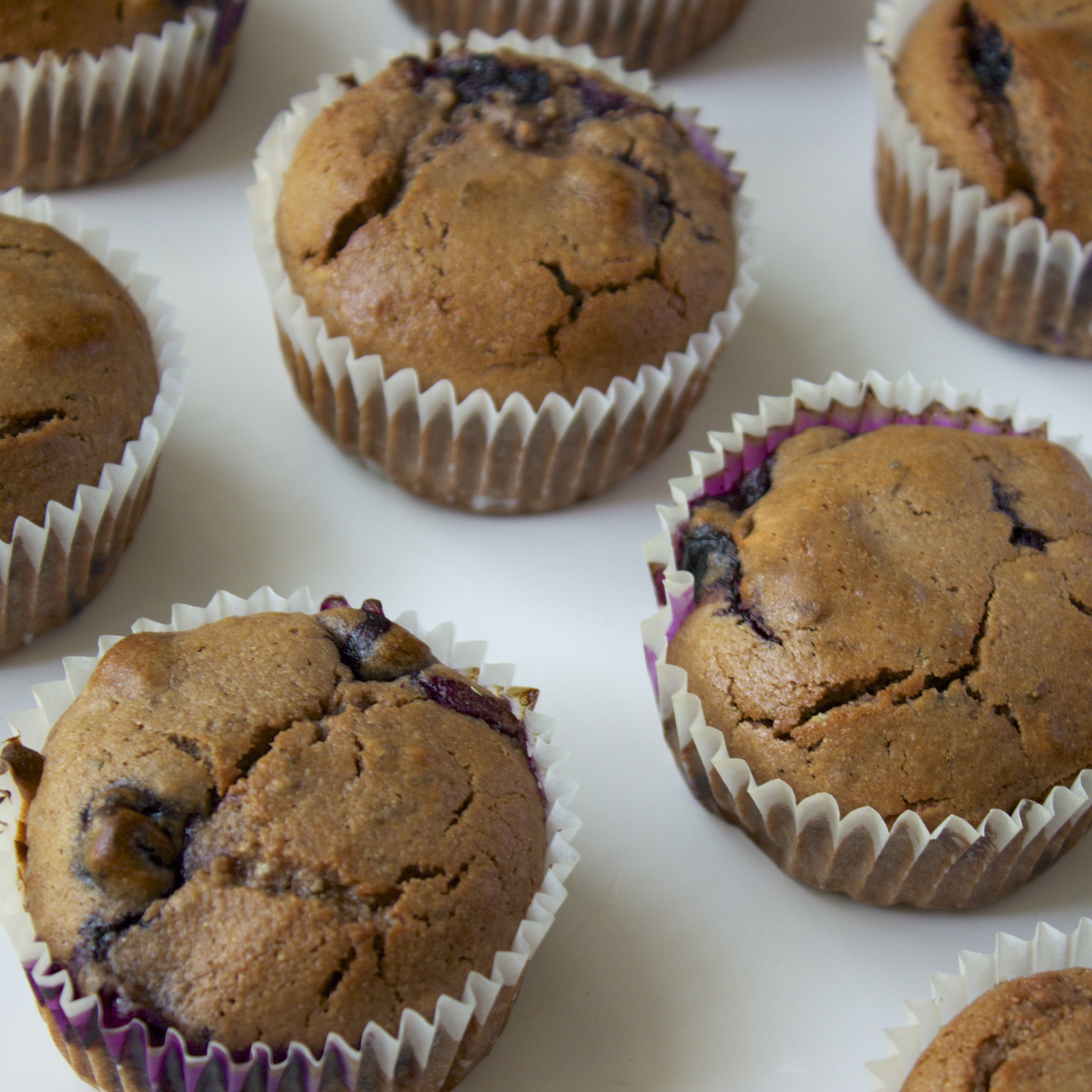
    The muffin muse is with me – I’ve come up with just under five different muffin recipes in the last two weeks. It’s challenging figuring out how to stuff something so inherently unhealthy full of nutrients, while keeping the fat content down. Or in my case, keep it up.

    No, not for me of course, but rather for a friend I’m helping fatten up! I’m working on variations of these suitable for my purposes, ie not to gain a ton of freaking weight.

    Because, while it’s true that I’m working out a minimum of five days a week: x3 days 1hr weight training & x2 days 30-45 mins cardio, plus walking up to three hours daily in 30C heat, I still want to watch my caloric intake. More on exercise in my next post – I’m just super excited at how little time it has taken to retrain my mast cells in that regard.

    If you’ve been reading my blog for a while, you’ll know that my goal is to make high nutrient antihistamine and anti-inflammatory rich foods that will help the body heal, rather than simply eliminating the histamine that may be causing allergy-like symptoms including: flushing, rashes, hives, migraine, dizziness, coughing etc. In my case, eliminating histamine by embracing the “low histamine diet” meant I was still eating a bunch of crap rather than examining my diet objectively. I mean how was my body to heal if I was only feeding it boiled potatoes, lamb, beef, lettuce and rice? It just wasn’t is the honest answer.

    It took just a year of a high nutrient antihistamine and anti-inflammatory rich diet to help me heal. I’m now on what I call a histamine-balanced diet, the upside of which is that my body gets all the cancer-fighting benefits of the higher histamine foods and my taste buds stay engaged, meaning I still have the will to nourish myself, unlike the years I spent fearing/hating food and starving myself towards an early grave.

    What I mean by an antihistamine and anti-inflammatory diet: a high nutrient diet, similar to the anti-inflammaotry one successfully employed by thousands/hundreds of thousands of followers of Dr Fuhrman’s diet, but with the addition of quercetin, luteolin and rutin rich foods. These bioflavonoids have been proven to stabilise mast cells [1], thereby preventing histamine release in the body. I believe doing that ha allowed me to ingest more of the excellent health building higher histamine foods I so craved.

    So here’s my healthy, antihistamine and anti-inflammatory rich muffin recipe…

    Recipe substitutions

    You can make these lovely muffins vegan by substituting the eggs with flax or chia eggs.

    The sweetener situation is totally fluid, so if you prefer to use whole dates, please do go ahead. I would advise soaking them a little bit and then blending with the coconut and other liquid ingredients.

    You can use any fruit instead of blueberries – I would advise something a little tart that also liquidises during baking.

    You can replace the coconut butter with pureed apple.

    The seeds are totally optional – I use them for an omega 3 fatty acid boost.

    Feel free to leave out the ginger. In fact, leave out the ginger for the first go, then decide if you’d like some.

    I made another batch of these today but I swapped out half of the tapioca for pea protein (helping to build muscle).

    Nutritional highlights

    Antihistamine ingredients: blueberries, ginger, flax seeds.

    inflammatory ingredients: sorghum, duck eggs, coconut, dates, ginger, flax seeds, chia seeds.

    You’ll find more recipes like this in my books Anti-Recipes and The Anti-Cookbook

    CLICK HERE TO CREATE YOUR OWN PERSONALISED HEALING HISTAMINE PLAN. 

    Gluten free blueberry muffins

    Prep Time: 10mins | Cook Time: 30min | Difficulty: Easy

    Ingredients:

    1 cup sorghum flour
    1/2 cup tapioca
    3 eggs/2 duck eggs or three flax/chia “eggs” here’s a great link on how to make them
    1 cup blueberries
    1/3 cup coconut butter (ie whole coconut in butter form, like almond butter, not just coconut fat. Can substitute with apple puree for a lower calorie option)
    1/2 cup date syrup/coconut nectar or your choice of liquid sweetener
    1/4 cup coconut or date sugar (optional, just for a bit of texture)
    2 tbsp grated ginger (optional)
    4 tbsp flax seed
    4 tbsp chia seed

    Directions:

    Pre-heat oven to 180C/350F.

    Combine the flours and seeds. In another bowl mix the coconut butter, date syrup, sugar, ginger and blueberries. 

    Tip the liquid into the flour and combine by hand.

    Place muffin cups into a muffin tray, evenly spoon the mixture into them.

    Bake at 180C for 20-35 minutes, depending on oven.  

    You’ll find more recipes like this in my books Anti-Recipes and The Anti-Cookbook

    CLICK HERE TO CREATE YOUR OWN PERSONALISED HEALING HISTAMINE PLAN. 

    Please don’t forget antihistamine, pain killing foods can still hurt us, so please always check with your doctor before adding new foods to your diet. 

    ——————-REFERENCES—————–

    [1] http://mastcellmaster.com


  • Summertime white gazpacho soup

    Summertime white gazpacho soup

    low histamine recipes white gazpacho

    It’s coming up on that time of year where my desire to spend all day in the kitchen pretty much flies out the window. It’s especially hard to justify it here in Spain, where I’ve decided to settle for a little while. It’s been a long, long year, full of highs like being quoted in The Times newspaper in the UK, mentioned in the Huffington Post by a dear friend, but also a number of tragedies like the loss of one of my closest friend’s brother, emergency hospitalisation scares (not mine) and the end of a relationship I poured my heart into, with a soul mate I was sure I would grow old with.

    Rather than lose myself in an urban kitchen (where I have been known to drown my woes), I’m back in the town where I grew up, in the south of Spain, licking my wounds and slowly picking up the pieces. A number of you have been checking in on me, for which I am grateful. I hope you understand and I apologise for replying in blog form rather than personally by email, but I’ve been taking a vacation from my old life, while exploring the deep spirituality I pushed to the side almost the day I became a journalist. It’s hard to express gratitude to or interest in a divine force when you’re drowning in death and the misery of daily bombings.

    Thankfully that’s all behind me.

    Now in the care of another friend, I’m free to meditate, do yoga and explore the gorgeous tree lined avenues still frequented by señoritas on their way to the feria. Not much has changed since I left here over a decade ago; not much but me.

    I’m slowly remembering that life isn’t full of pain, that friends are our greatest support network, the importance of spirituality in life and the joy found in pushing my body to its (admittedly still weak) limits, under the guidance of wonderful trainer who understands my acquired fragility of recent years. (I’ll be sharing more on how I’m re-building my body next week, as well as sharing tips on getting fit with histamine intolerance/mast cell activation disorder exclusively with my mailing list – don’t forget to sign up.)

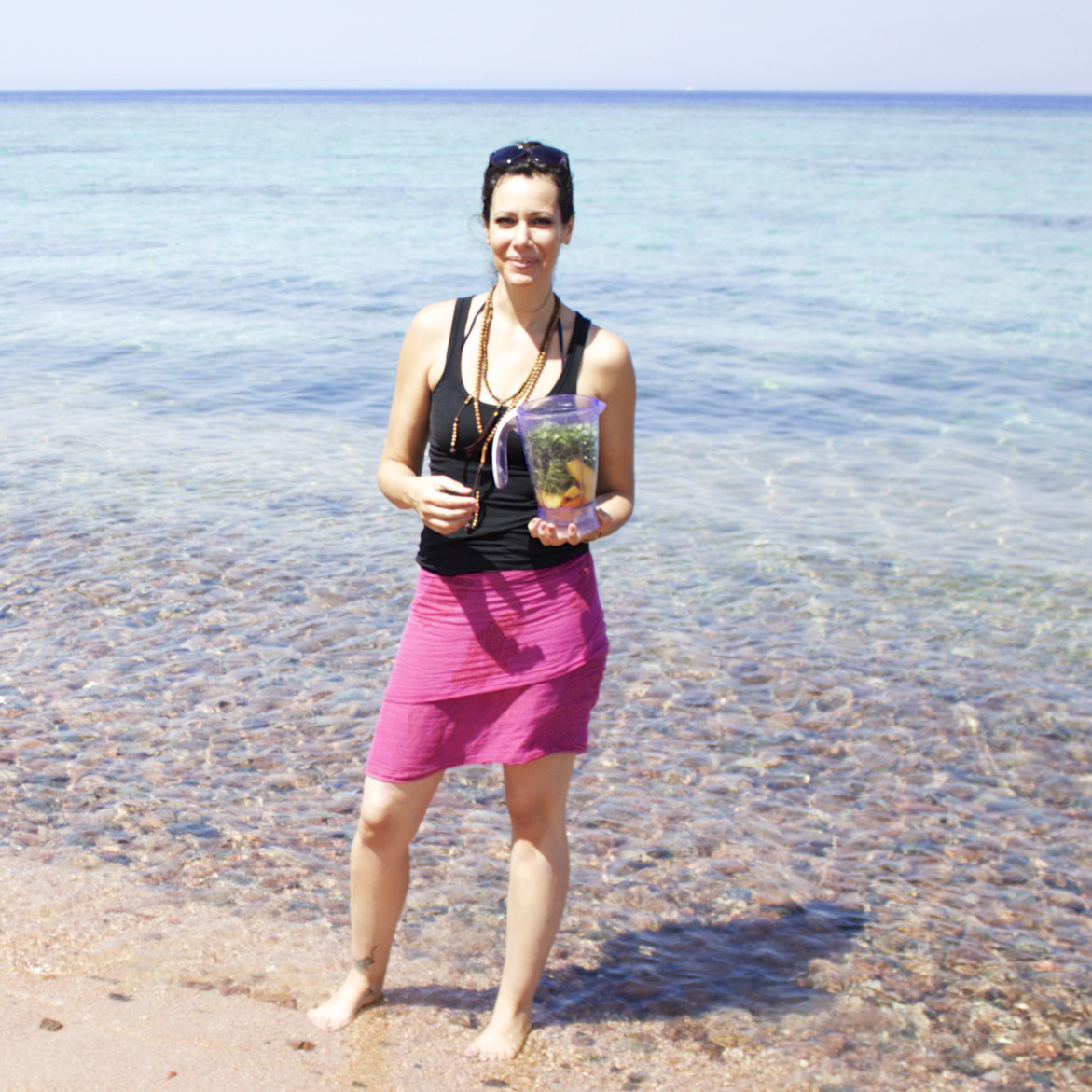
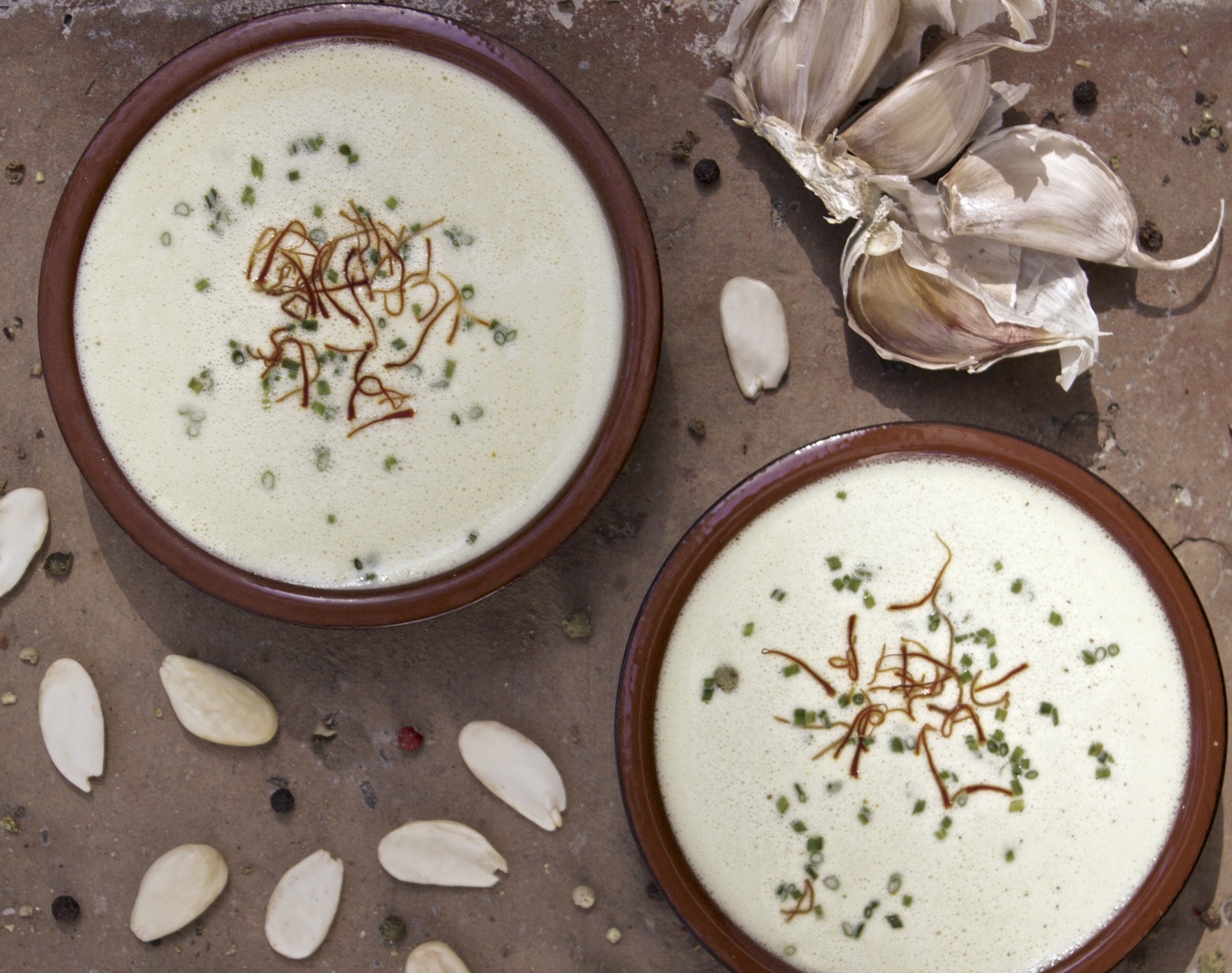
    And so today, rather than slave over a hot stove, I threw a seemingly random assortment of antihistamine and anti-inflammatory foods into a borrowed European version of my Vitamix (it’s called the Thermomix) and realised I’d come up with a super duper high nutrient white gazpacho.

    I poured myself a cup and headed out to eat and then meditate in the shade of a pine tree. It’s been a windy day, so I  had to pick out some pine needles from the gazpacho, but really, there’s so much in my life to be thankful for and a little extra garnish never hurt anyone.

    I’d really love it if you’d consider spending some time meditating today on what you’re grateful for. I know I’m very privileged to have you all in my life. Without you I don’t know that I’d have had the same burning desire to research and push the limits of diet and exercise on my healing journey.

    I am grateful to you all. xo

    I’m deeply indebted to PWS & RHS for your words of wisdom, endless patience and for being my family.

    Thanks EKA for taking care of me, force feeding me when I’d given up on myself and reminding me that friendship is never ending. And for loaning me your Thermomix of course!

    And to BD for inspiring me to reconnect with something (and someone) I thought I’d lost and showing me how much there is in life to be grateful for, each and every day. 

    Enough of the fluff, here’s the recipe and nutritional breakdown:

    White Gazpacho Antihistamine and anti-inflammatory nutrients

    Don’t forget to check out more antihistamine and anti-inflammatory recipes in the anti-cookbook. 

    Almonds: highly anti-inflammatory and high in beneficial nutrients like vitamin E and B vitamins like riboflavin [1].

    Olive oil: highly anti-inflammatory, helps prevent osteoporosis [2].

    Apple: rich in histamine lowering quercetin and inhibit the development of allergies [3].

    Cauliflower: anti-inflammatory Vitamin K rich, lowers multiple inflammatory markers significantly [4].

    Fennel: anti-inflammatory, antihistamine, analgesic and antioxidant [5].

    Apple cider vinegar: is the lowest histamine of all vinegars (according to various histamine food lists on the internet). Made from apples which posses significant antihistamine and mast cell stabilising activity. I use it quite a bit.

    Saffron: an H1 receptor antagonist (like claritin for example) [7].

    Garlic: anti-inflammatory, anti-bacterial, now being investigated as IBS treatment. Also has some mast cell stabilising properties [8].

    Cucumber: analgesic, antioxidant, prevents prostaglandin (inflammatory molecule) synthesis [9].

    Carrot: I try and eat purple ones which possess even greater anti-inflammatory activity than the usual orange coloured [10].

    White Gazpacho

    Ingredients:

    1/2 cup white almonds, soaked overnight
    1 cups ice cold water
    or
    1/4 cup smooth white almond butter
    1/2 cup ice cold water
    1/2 cup olive oil
    1 apple, peeled and chopped
    1/4 cup cauliflower, chopped
    4 tbsp chopped fennel (optional)
    2-4 tbsp apple cider vingegar or lemon juice/tamarind paste
    10 threads saffron
    2 cloves garlic
    handful chives, very finely chopped
    white pepper
    pinch of himalayan salt
    optional
    1 cucumber, finely chopped
    1 carrot, finely chopped

    Directions:

    Blend together all the ingredients but the saffron, chives and white pepper.

    Pour into individual bowls.

    Garinsh with saffron, chives and white pepper, as well as cucumber and carrot if using.

    Enjoy!

    Don’t forget to sign up to my newsletter to be the first to know when registration opens up for webinars, histamine wellness retreats and workshops in Europe and the United States, to get great freebies like antihistamine and anti-inflammatory recipes and lifestyle tips. 

    The Anti-cookbook, while it doesn’t treat any conditions, due to its high nutrient, antihistamine and anti-inflammatory ingredients, has been instrumental in helping me feed myself on a limited diet. It features a six page list of antihistamine and anti-inflammatory foods. It comes in regular and Paleo. 

    The Low Oxalate Cookbook features antihistamine and anti-inflammatory rich recipes. 

    Don’t miss the Low Histamine Beauty Survival Guide for non-toxic beauty tips, the skinny on histamine releasing (mast cell degranulating) beauty ingredients, antihistamine and anti-inflammatory beauty alternatives and the top brands natural brands I’ve found.

    Take a peek at my other low histamine and antihistamine cookbooks for more high nutrient recipes.

    If you’ve found this information useful I’d appreciate your support (at no extra cost to you!) – please check out my online store for your health foods, supplements, kitchen items and beauty product purchases. Affiliate sales through my online store go towards maintaining the website, funding travel to interviews and purchasing all the lovely foods for my free online recipes. You’ll find these items in the “Shop with us” drop down menu on my homepage.  

    Please don’t forget antihistamine, pain killing foods can still hurt us, so please always check with your doctor before adding new foods to your diet. 

    ————– REFERENCES —————

    [1-9] The Anti-Cookbook. Yasmina Ykelenstam, 2013.

    [10] http://www.ncbi.nlm.nih.gov/pubmed/18433135


  • Dr Janice Joneja: histamine intolerance or mast cell disorder?

    Dr Janice Joneja: histamine intolerance or mast cell disorder?

    diagnosing histamine intolerance

    It’s a question most of us diagnosed with histamine intolerance have asked ourselves at some point (if not obsessively, all the time): am I dealing with something else? Something like a mast cell activation disorder, or mastocytosis.

    Immunologist, nutritionist and pioneering histamine researcher Dr Janice Joneja was kind enough to share her view on it.

    Watch the video or read the transcript below.

    And don’t forget to check out my earlier post on how histamine intolerance, mast cell activation disorders and mastocytosis are diagnosed.

    Yasmina

    Let’s say we suspect we have histamine intolerance and then have it confirmed, at what point to we decide whether to seek further clarification and investigation into whether it’s a mast cell disorder or not?

    Dr Janice Joneja

    That’s something that at the moment is difficult even in clinical practice. That’s because at least in North America and to some extent in the UK, neither condition is well understood.  There’s a lot of questions around it, especially histamine intolerance, is it real, is it something we should be looking at, but it’s not in our medical literature to the extent that we feel that we should have it in clinical practice. On the other hand, mastocytosis and mast cell disorders, I should put it that way because, mastocytosis has about 10 different subtypes, more and more immunologists and haematologists are becoming quite knowledgeable in that condition.  Tryptase levels for example are becoming more tested in labs generally. It’s much more recognised as a disease entity.

    On the other hand histamine intolerance is very obvious to anyone who has it and certainly for us who work in the field constantly, because the symptoms are so clear and it responds so well to a histamine restricted diet for example, whereas someone with mastocytosis will not respond to that degree, because histamine is only one of many mediators released in mast cell disorders. So a histamine restricted diet alone will not give the response one would see with a diamine oxidase deficiency, which would be what one would look for in a histamine sensitive person.

    Of course, both conditions can appear together, but very rarely, because mastocytosis itself is a rare disease and to have that plus a diamine oxidase deficiency that is often inherited, is a very rare combination.

    Yasmina

    What I am finding is that, as you say, is not many people with mastocytosis who have concurrent diamine oxidase deficiency, but they’re living in the united states where they don’t actually test for DAO, especially in those with mastocytosis. I am finding that people who have been diagnosed with mast cell activation syndromes and disorders were initially diagnosed with histamine intolerance. So at what point do you think that someone who has been diagnosed with, or suspects histamine intolerance, should potentially seek further diagnosis. I mean obviously we don’t want people to be worried, because with histamine intolerance it usually goes undiagnosed for quite some time, during which we’ve been told we’re either imagining things…

    Dr Janice Joneja

    (Laughing) Oh yes! Of course – well it is all in your head because histamine is a neurotransmitter, so yes it is…physiologically all in your head, but not psychologically! (Read about the anxiety/histamine link here.)

    Yasmina

    Initially, in my case, I improved on a low histamine diet and then I had a kind of relapse, which I now know is happening to many others who have histamine intolerance. Often people just think they’re not doing the diet right, which is a possibility – I mean a lot of people who write or consult with me think they’re doing it right, and they aren’t doing it as well as they could. So in my case when I found that I relapsed again, I decided to seek clarification. But at the end of the day the diet just needed to be tweaked a little to add more antihistamine and anti-inflammatory foods because as you said, mast cell disorders are so much more than just histamine.

    Dr Janice Joneja

    Oh yes, histamine is only one mediator in mast cell disorders and in the degranulation of mast cells you have leukotrines, prostaglandins, chemotaxins, cytokines you know there’s a whole list of mediators that are going to act on body systems.

    Yasmina

    Exactly, and the great thing is that they too can be addressed through diet.

    (Read more about how foods can help resolve these kinds of inflammation. Or check out the Anti-cookbook for a six page list of high nutrient antihistamine and anti-inflammatory foods.)

    You know, mangosteen for prostaglandins, I think it was cucumbers for leukotrines, but in any case, yes, the point is that diet works for most disorders, at least it’ll get the body functioning more normally. So, so you think it’s a good idea to go into further testing at some point if one isn’t improving on a low histamine diet?

    Dr Janice Joneja

    I think that is wise, I really do. And now it’s not difficult to find practitioners who will look for mast cell disorders, especially in the United States. Unfortunately, in Canada though we do have people who are very known for mastocytosis diagnosis and other mast cell disorders, but what we see, that’s been reported to me, is that the general practitioners aren’t that knowledgeable, and they don’t necessarily discourage it, but they don’t take it quite as far as they should.

    Yasmina

    I’ve definitely heard cases of them discouraging it!

    Dr Janice Joneja

    (Laughing) I didn’t want to be too unkind!

    Yasmina

    So, let’s say, how long would we expect to be on the low histamine diet before we see an improvement? Actually though, let’s talk about this too: is it realistic to expect a complete resolution of symptoms on a low histamine diet if you have histamine intolerance?

    Dr Janice Joneja

    Some people do find that definitely. It depends on, much like in lactose intolerance, how much of the enzyme the body is still producing. Of course everybody is different, which means that some might be producing quite a bit but not quite enough to stay below the top of their bucket for example. They still need to stay on that diet.

    We also find that of course that in times when histamine is being released because of allergy, then the low histamine diet won’t keep them below the top of their bucket.  Because let’s say it’s pollen season for them, and they’re having rhinitis and all kinds of histamine symptoms, their body is producing and releasing a lot more histamine, and so o keep themselves below the top of their bucket is going to be much more difficult, and perhaps the diet won’t do it at that point.

    (Read more about how I use the inflammation bucket model to eat a normal and healthy histamine balanced diet here)

    Yasmina

    That’s an excellent point!  I tell people all the time, watch your stress levels.

    Dr Janice Joneja

    Oh yes stress definitely! I don’t think people recognise that enough, because the stress, the hypothalamic/pituitary/adrenal axis which is where we go around in the stress response cycle: cortisol  levels, release of histamine at each of the sites of  the cycle for example, definitely a very important fact.

    (Read about how I use meditation and visualisation to lower inflammation and fight stress induced histamine release.)

    Don’t forget to sign up to my newsletter to be the first to know when registration opens up for webinars, histamine wellness retreats and workshops in Europe and the United States, to get great freebies like antihistamine and anti-inflammatory recipes and lifestyle tips. 

    The Anti-cookbook, while it doesn’t treat any conditions, due to its high nutrient, antihistamine and anti-inflammatory ingredients, has been instrumental in helping me feed myself on a limited diet. It features a six page list of antihistamine and anti-inflammatory foods. It comes in regular and Paleo. 

    The Low Oxalate Cookbook features antihistamine and anti-inflammatory rich recipes. 

    Don’t miss the Low Histamine Beauty Survival Guide for non-toxic beauty tips, the skinny on histamine releasing (mast cell degranulating) beauty ingredients, antihistamine and anti-inflammatory beauty alternatives and the top brands natural brands I’ve found.

    Take a peek at my other low histamine and antihistamine cookbooks for more high nutrient recipes.

    If you’ve found this information useful I’d appreciate your support (at no extra cost to you!) – please check out my online store for your health foods, supplements, kitchen items and beauty product purchases. Affiliate sales through my online store go towards maintaining the website, funding travel to interviews and purchasing all the lovely foods for my free online recipes. You’ll find these items in the “Shop with us” drop down menu on my homepage.  

    Please don’t forget antihistamine, pain killing foods can still hurt us, so please always check with your doctor before adding new foods to your diet. 


  • Antihistamine & anti-inflammatory rich Thai rice salad

    Antihistamine & anti-inflammatory rich Thai rice salad

    IMG_1041

    Mmmmmm, two of my favourite hobbies came together in a very pleasing manner recently when I finally managed to get my butt into gear to get to Triyoga, one of Europe’s most highly regarded yoga studios here in London (where I’ve been living).

    Ironic that I only managed to do it two weeks before leaving for what’s shaping up to be a very, very long absence from home, but hey, that’s the way the (gluten and dairy free, low histamine, anti-inflammatory) cookie crumbles.

    Investing my remaining time in London taking full advantage of their introductory £20/$35 for two weeks of unlimited yoga offer, I spent my days class hopping, from vinyasa flow to yin to scaravelli, to you name it, often all in one day. Having re-discovered my appetite in recent years,  I naturally got hungry between classes. Luckily Triyoga in both Chelsea and Primrose Hill (and soon Soho) have excellent cafes that I’d likely take the trouble to visit even when not attending a class.

    The ever changing menu definitely held my interest, and even though I’m no longer a fan of grains, one of my favourites turned out to be their Thai rice salad. So today, while chilling by the pool in the south of Spain (don’t hate me, I was typing away on the sun lounger!), I decided I needed to whip up a super duper pimped out version for myself.

    CLICK HERE TO CREATE YOUR OWN PERSONALISED HEALING HISTAMINE PLAN. 

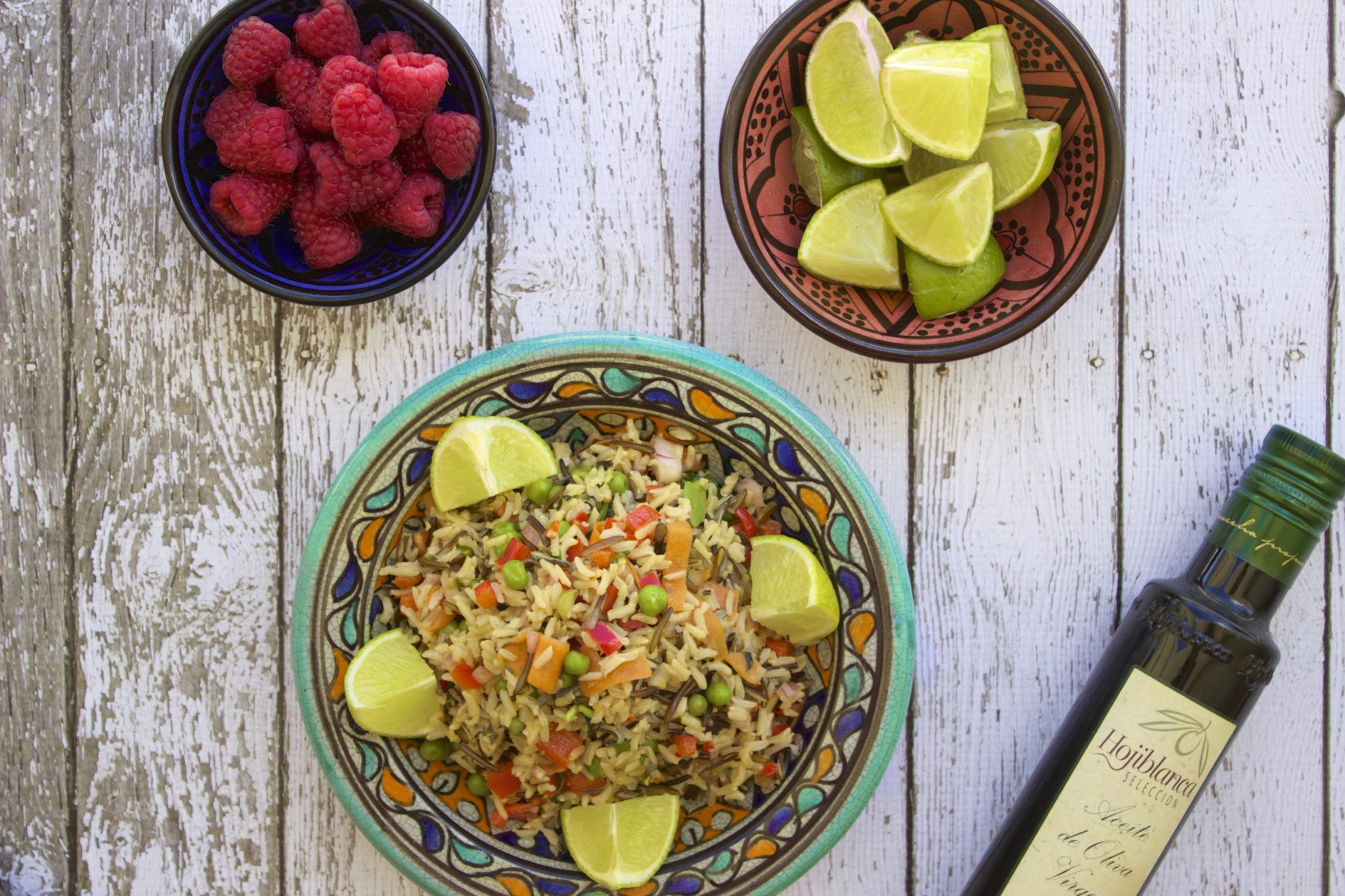
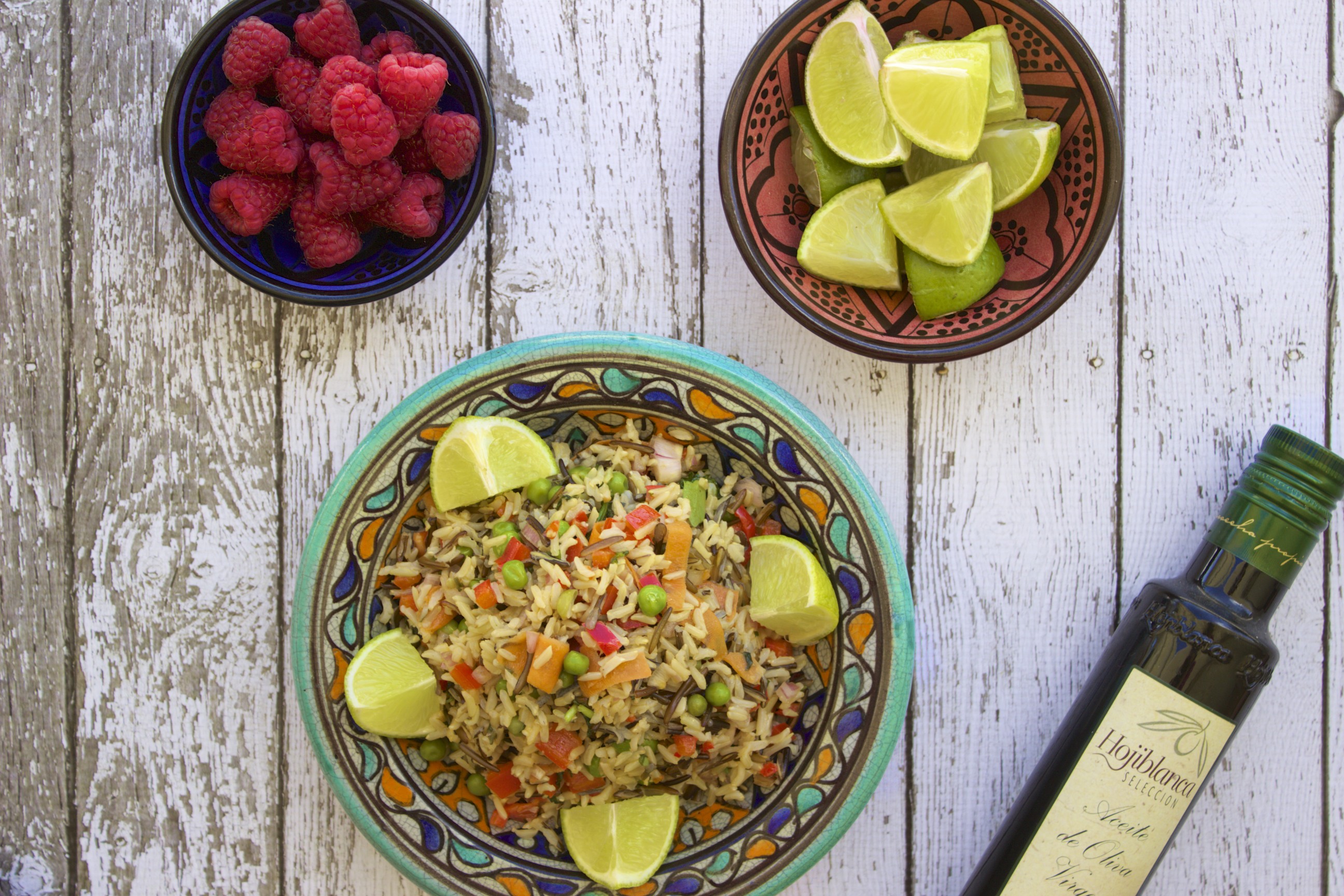
    A quick trip to the place where the locals get their veg left me gasping for air as I fought for my share of juicy produce. Priced at least a quarter of the asking price at local supermarkets, it was populated by dozens of hot blooded shouty Andalusian’s unapologetically elbowing their way through the stalls. One woman actually seemed ready to get into a fight with me over beautifully constructed fire engine red pepper I snagged for the photos.

    You may have noticed the cheeky serving of raspberries in the photo. Why would I include a food that’s listed as high histamine on most food lists? Have a read of this for an explanation of how I’m healing myself using a histamine-balanced approach rather than starving myself of nutrients and joy. In Lebanon (where my mom is from) we eat a bucket load of fresh fruit after meals – I am aware of the food combining “rules”, but those of you who read this blog regularly will know that I’m a bit of a rebel 😉 As for the lime, you can use lemon, or nothing at all. 

    Nutritional benefits of this recipe:

    Red pepper: anti-inflammatory, high in vitamin E (can be inflammatory to some – is a nightshade) [1]

    Green peas: 1 cup provides nearly 100% of your RDA Vitamin C and nearly 50% inflammation fighting and bone building Vitamin K [2]

    Onion: is one of the richest sources of histamine lowering quercetin [3]

    Basil: as potent an anti-inflammatory as the pharmaceutical Diclofenac. Holy Basil meanwhile is as potent an antihistamine/H2 receptor antagonist as Zantac/ranitidine [4]

    As for the rest:

    Antihistamine: apple, ginger

    Anti-inflammatory: carrot, coriander, chile, olive oil, sesame oil

    You’ll find six pages of antihistamine and anti-inflammatory foods in the anti-cookbook…

    Antihistamine & anti-inflammatory rich Thai rice salad 

    Ingredients

    1/2 cup rice (brown if not low oxalate), I used basmati

    1/4 cup long grain wild rice (optional)

    1 red pepper, finely chopped (optional – it’s a nightshade)

    1 cup green peas (optional – appears on some lists as high histamine. You could also use lentils)

    1 red onion (use shallots if low oxalate)

    2 carrots, shredded

    1 cup basil, finely chopped (or to taste)

    1/2 cup coriander, finely chopped (or to taste)

    1 small chile (optional), finely chopped

    4 tbsp grated ginger (or to taste)

    olive or sesame oil (or any tolerated), to taste

    1/4 cup apple juice or 2-4 tbsp coconut nectar

    1 lime, squeezed (optional – on some lists as a histamine liberator) or 2 tbsp apple cider vinegar with mother (the lowest histamine of all vinegars)

    Directions

    Combine the ginger, apple juice/coconut nectar, sesame oil, lime/vinegar and chile. Allow to sit in the fridge while you Cook the rice according to directions.

    Once strained, combine the rice, red pepper (if using), green peas, onion, and dressing in a large bowl.

    Garnish with extra lime or basil and serve.

    Enjoy!

    You’ll find more recipes like this in my books Anti-Recipes and The Anti-Cookbook

    CLICK HERE TO CREATE YOUR OWN PERSONALISED HEALING HISTAMINE PLAN. 

    Please don’t forget antihistamine, pain killing foods can still hurt us, so please always check with your doctor before adding new foods to your diet.

    ————-REFERENCES————–

    [1] http://www.sciencedirect.com/science/article/pii/S0278691502000376

    [2] http://nutritiondata.self.com/facts/vegetables-and-vegetable-products/2520/2

    [3] http://fnic.nal.usda.gov/404/fnic/foodcomp/Data/Other/AICR03_VegFlav.pdf

    [4] http://www.dailymail.co.uk/health/article-1216278/How-eating-fresh-basil-help-banish-arthritic-aches-pains.html

    [5] https://dev.healinghistamine.com/holy-basil-the-anti-inflammatory-anti-histamine-superstar/

  • Dr Joneja: natural diamine oxidase for histamine intolerance

    Dr Joneja: natural diamine oxidase for histamine intolerance

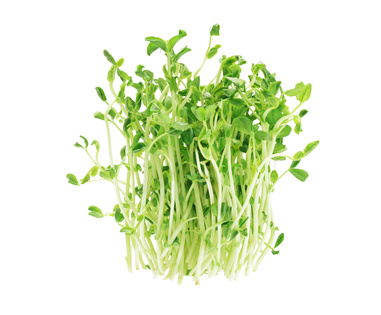
    Bundle Of Fresh Pea Sprouts On White Background

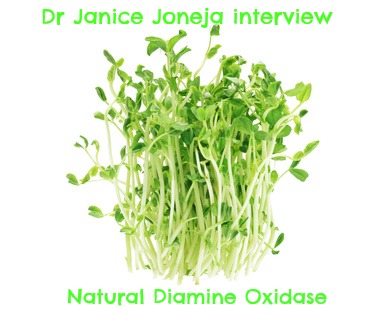
    A number of years ago immunologist and researcher Dr Janice Joneja had a brilliant idea: to extract the histamine-lowering diamine oxidase enzyme from natural (vegan) sources, to help those of us with histamine intolerance to lower histamine naturally.

    (Check out my incredibly comprehensive “everything you’ve ever wanted to know about” histamine intolerance interview with her here.)

    This was such a long time ago, a time when histamine intolerance and other related histamine/mast cell disorders were even less diagnosed and understood than they are now, and so she wasn’t able to interest anyone in funding research.

    (She does tell me though that in 2006/7 an Italian group applied for a patent on a DAO extraction process, but they never did anything with it. The person who diagnosed me was also working on a pea based DAO supplement that never came to market.)

    Just recently I was lucky enough to receive an email from her, detailing how those of us at home, who are unable to tolerate commercially available diamine oxidase (DAO), can come up with our own DIY diamine oxidase supplement from natural sources. (You can read it here).

    Basically, a number of legumes have especially high levels of diamine oxidase (DAO). According to Dr Joneja (and my own experience) home sprouting and consuming these is a really easy way to get a natural diamine oxidase fix, without the exorbitant cost. Not to mention not having to ingest a bunch of nasty fillers. In my case, I always try to get my medicine from food, so I can was totally over the moon to hear about this.

    What Dr Joneja would like to do is get enough feedback from a group of us (ideally at least a thousand), in order to put together a study so that we can try and get some accurate statistics on dosage and growing methods. If you’d like to be part of this exciting project, please join a lovely little Facebook group I put together here. It’s a closed group so all postings are private and we’re all sharing our results and methodology there.

    Many of you had questions about the process, so I put them all together and scored another interview with the lovely doctor of infinite patience.

    Read the transcript below…

    Listen to the interview here.

    Right click here to download the interview mp3 (opens in iTunes).

    Which other peas or beans would also have diamine oxidase? Is it just the green peas?

    Legumes. And the legumes are different from each other. It would be the seedlings in each case, because the diamine oxidase is actually functions in helping the plant to make its structural components, like the stem, when the seed is developing, so that’s the function of diamine oxidase in the plant. The other ones that one could try are lentils, and chickpeas. The diamine oxidase seems to be produced, from the literature, about three days into the development of the pea or seedlings, and then goes on and reaches a maximum at about 10 days and then it will decrease because it’s no longer needed. We find, from the literature, that diamine oxidase, is a protective enzyme, both for the human (that would be in the placenta of course) and in the plant, so when the plant is under stress, it produces more diamine oxidase. So if a plant develops under stress, in darkness for example, rather than the light, it becomes what we call etiolated, but the diamine oxidase is about five times higher, if not more, than the concentration you would find in a seedling developing in the light.

    So actually, if a person wanted to go that route themselves, what I would recommend is to grow the seedlings yourself, in the dark, so put it in a seed bag or whatever and put it in the dark, for about 10 days, no later, then harvest the seedlings and use them more or less in the same way, as a smoothie, rather than eating them as they are because the diamine oxidase is attached to the cell wall. It’s there to help the plant make the cell wall, if you put it in a blender and blend up these seedlings, you will find that it is much more readily available to you.

    So that would be five times, if not more, the diamine oxidase content of the seedlings than if it had just been grown in.

    Does it matter if they’ve been soaked and sprouted or grown in soil?

    You can grow them in soil of course but it’s much easier to do it in water, and much cleaner too.  You don’t want to have bacteria, contamination from the soil, because you do not sterilise them. If you do, if you heat them, you’re deactivating the diamine oxidase enzyme, which is a protein. So I would definitely not recommend growing in soil.

    I’ve got a three level sprouter, you add a layer of sprouts, a layer of water, but actually you can buy mechanical sprouters where the water filters down automatically.

    Ready bagged sprouts I know have varying histamine levels, is buying those something you would think is ok?

    Those would be ok, but ideally, one that was grown in the dark, commercially to have a higher level of diamine oxidase, would be better.

    How about pea sprout powder? Does quantity mean more DAO?

    Well, when you buy sprouts commercially, you’ll see they’re nice and green and healthy looking, the ones you’d want to put into your salad – they have a much lower concentration of diamine oxidase, they just have what’s needed to help them grow to that level. When they’re in the dark and struggling to grow, they’re not green, they don’t look healthy but they have a much higher level of diamine oxiase because the plant’s trying to grow.

    Are we talking about spoons, cups per day? What kind of “dosage” are we looking at ideally?

    It’s very hard to say exactly how much is actually in that plant. The research indicates that up to 4% of the total protein content of the seedlings can be diamine oxidase. Being a protein, it’s also subject to digestion and then of course the diamine oxidase itself will be broken down in the process of protein digestion, so it’s a matter of seeing how much can be absorbed and how much of it is still active. But it is still absorbed in the small intestine, so it doesn’t have the entire length of the digestive tract to exposed to digestive enzymes.

    It’s hard to say you need a cupful a day, but if one could try that, and then that could be our experiment, to find someone who does well with one cupful a day, and see what they measure as their optimum amount.

    Well, I can tell you we’ve already had a few successes, in what, just over 10 days or so.

    That’s great news because in my practice I’ve always told people to avoid supplements as much as possible, to use real foods as much as you possibly can, because the human race has for millennia survived on real foods and I don’t like supplements.

    Absolutely! The people who have done really well, one of them has been juicing them, she said that as soon as she started juicing a cup full a day, she’s noticed an incredible improvement.

    That’s exactly right – juicing, because then you get the diamine oxidase away from the stems and it will be much more readily available.

    And we have another person reporting an incredible upsurge in energy and a few other positive reports coming in.

    I’m so happy to hear that, because it’s so much better than waiting for some commercial operation to put it on the market.

    I know, that for a lot of people, the problem is that the supplements are derived from pork, which is either a religious issue or a health one, but those who are salicylate intolerant have been asking me if they find the DAO in meat rather than high salicylate sprouts.

    Diamine oxidase is concentrated in certain organs. So it won’t be in the muscle meat, it would be in organs like the kidneys, the intestines, which is where human diamine oxidase comes from, and that’s the same with most animals too, placenta is very high, which is why many pregnant women experience relief from their allergy or histamine symptoms during pregnancy, but then of course, after the baby is born, the placenta is no longer producing the diamine oxidase, which is actually there for protection of the foetus. So it’s very specific to organs, you won’t find it in the muscle meats that we can usually easily find in the supermarket.

    A few people wrote in to me who do have access to organ meats, would that work for them if they’re unable to tolerate the sprouts?

    Possibly. The only thing they would actually want as far as the organs are concerned is the kidneys.  As you know in England we tend to eat the kidneys, but not so much in America. But yes, that is a possibility.

    Don’t forget to sign up to my newsletter to make sure you don’t miss information about upcoming histamine wellness retreats and workshops in Europe and the United States, to get great freebies like antihistamine and anti-inflammatory recipes and lifestyle tips. 

    The Anti-cookbook, while it doesn’t treat any conditions, due to its high nutrient, antihistamine and anti-inflammatory ingredients, has been instrumental in helping me feed myself on a limited diet. It features a six page list of antihistamine and anti-inflammatory foods. It comes in regular and Paleo. 

    The Low Oxalate Cookbook features antihistamine and anti-inflammatory rich recipes. 

    Don’t miss the Low Histamine Beauty Survival Guide for non-toxic beauty tips, the skinny on histamine releasing (mast cell degranulating) beauty ingredients, antihistamine and anti-inflammatory beauty alternatives and the top brands natural brands I’ve found.

    Take a peek at my other low histamine and antihistamine cookbooks for more high nutrient recipes.

    If you’ve found this information useful I’d appreciate your support (at no extra cost to you!) – please check out my online store for your health foods, supplements, kitchen items and beauty product purchases. Affiliate sales through my online store go towards maintaining the website, funding travel to interviews and purchasing all the lovely foods for my free online recipes. You’ll find these items in the “Shop with us” drop down menu on my homepage.  

    Please don’t forget antihistamine, pain killing foods can still hurt us, so please always check with your doctor before adding new foods to your diet.

    Natural DAO diamine oxidase source

  • DR JONEJA: NATURAL DIAMINE OXIDASE FOR HISTAMINE INTOLERANCE

    A number of years ago immunologist and researcher Dr Janice Joneja had a brilliant idea: to extract the histamine-lowering diamine oxidase enzyme from natural (vegan) sources, to help those of us with histamine intolerance to lower histamine naturally.

    (Check out my incredibly comprehensive “everything you’ve ever wanted to know about” histamine intolerance interview with her here.)

    This was such a long time ago, a time when histamine intolerance and other related histamine/mast cell disorders were even less diagnosed and understood than they are now, and so she wasn’t able to interest anyone in funding research.

    (She does tell me though that in 2006/7 an Italian group applied for a patent on a DAO extraction process, but they never did anything with it. The person who diagnosed me was also working on a pea based DAO supplement that never came to market.)

    Just recently I was lucky enough to receive an email from her, detailing how those of us at home, who are unable to tolerate commercially available diamine oxidase (DAO), can come up with our own DIY diamine oxidase supplement from natural sources. (You can read it here).

    Basically, a number of legumes have especially high levels of diamine oxidase (DAO). According to Dr Joneja (and my own experience) home sprouting and consuming these is a really easy way to get a natural diamine oxidase fix, without the exorbitant cost. Not to mention not having to ingest a bunch of nasty fillers. In my case, I always try to get my medicine from food, so I can was totally over the moon to hear about this.

    What Dr Joneja would like to do is get enough feedback from a group of us (ideally at least a thousand), in order to put together a study so that we can try and get some accurate statistics on dosage and growing methods. If you’d like to be part of this exciting project, please join a lovely little Facebook group I put together here. It’s a closed group so all postings are private and we’re all sharing our results and methodology there.

    Many of you had questions about the process, so I put them all together and scored another interview with the lovely doctor of infinite patience.

    Read the transcript below…

    Right click here to download the interview mp3 (opens in iTunes).

    Which other peas or beans would also have diamine oxidase? Is it just the green peas?

    Legumes. And the legumes are different from each other. It would be the seedlings in each case, because the diamine oxidase is actually functions in helping the plant to make its structural components, like the stem, when the seed is developing, so that’s the function of diamine oxidase in the plant. The other ones that one could try are lentils, and chickpeas. The diamine oxidase seems to be produced, from the literature, about three days into the development of the pea or seedlings, and then goes on and reaches a maximum at about 10 days and then it will decrease because it’s no longer needed. We find, from the literature, that diamine oxidase, is a protective enzyme, both for the human (that would be in the placenta of course) and in the plant, so when the plant is under stress, it produces more diamine oxidase. So if a plant develops under stress, in darkness for example, rather than the light, it becomes what we call etiolated, but the diamine oxidase is about five times higher, if not more, than the concentration you would find in a seedling developing in the light.

    So actually, if a person wanted to go that route themselves, what I would recommend is to grow the seedlings yourself, in the dark, so put it in a seed bag or whatever and put it in the dark, for about 10 days, no later, then harvest the seedlings and use them more or less in the same way, as a smoothie, rather than eating them as they are because the diamine oxidase is attached to the cell wall. It’s there to help the plant make the cell wall, if you put it in a blender and blend up these seedlings, you will find that it is much more readily available to you.

    So that would be five times, if not more, the diamine oxidase content of the seedlings than if it had just been grown in.

    Does it matter if they’ve been soaked and sprouted or grown in soil?

    You can grow them in soil of course but it’s much easier to do it in water, and much cleaner too.  You don’t want to have bacteria, contamination from the soil, because you do not sterilise them. If you do, if you heat them, you’re deactivating the diamine oxidase enzyme, which is a protein. So I would definitely not recommend growing in soil.

    I’ve got a three level sprouter, you add a layer of sprouts, a layer of water, but actually you can buy mechanical sprouters where the water filters down automatically.

    Ready bagged sprouts I know have varying histamine levels, is buying those something you would think is ok?

    Those would be ok, but ideally, one that was grown in the dark, commercially to have a higher level of diamine oxidase, would be better.

    How about pea sprout powder? Does quantity mean more DAO?

    Well, when you buy sprouts commercially, you’ll see they’re nice and green and healthy looking, the ones you’d want to put into your salad – they have a much lower concentration of diamine oxidase, they just have what’s needed to help them grow to that level. When they’re in the dark and struggling to grow, they’re not green, they don’t look healthy but they have a much higher level of diamine oxiase because the plant’s trying to grow.

    Are we talking about spoons, cups per day? What kind of “dosage” are we looking at ideally?

    It’s very hard to say exactly how much is actually in that plant. The research indicates that up to 4% of the total protein content of the seedlings can be diamine oxidase. Being a protein, it’s also subject to digestion and then of course the diamine oxidase itself will be broken down in the process of protein digestion, so it’s a matter of seeing how much can be absorbed and how much of it is still active. But it is still absorbed in the small intestine, so it doesn’t have the entire length of the digestive tract to exposed to digestive enzymes.

    It’s hard to say you need a cupful a day, but if one could try that, and then that could be our experiment, to find someone who does well with one cupful a day, and see what they measure as their optimum amount.

    Well, I can tell you we’ve already had a few successes, in what, just over 10 days or so.

    That’s great news because in my practice I’ve always told people to avoid supplements as much as possible, to use real foods as much as you possibly can, because the human race has for millennia survived on real foods and I don’t like supplements.

    Absolutely! The people who have done really well, one of them has been juicing them, she said that as soon as she started juicing a cup full a day, she’s noticed an incredible improvement.

    That’s exactly right – juicing, because then you get the diamine oxidase away from the stems and it will be much more readily available.

    And we have another person reporting an incredible upsurge in energy and a few other positive reports coming in.

    I’m so happy to hear that, because it’s so much better than waiting for some commercial operation to put it on the market.

    I know, that for a lot of people, the problem is that the supplements are derived from pork, which is either a religious issue or a health one, but those who are salicylate intolerant have been asking me if they find the DAO in meat rather than high salicylate sprouts.

    Diamine oxidase is concentrated in certain organs. So it won’t be in the muscle meat, it would be in organs like the kidneys, the intestines, which is where human diamine oxidase comes from, and that’s the same with most animals too, placenta is very high, which is why many pregnant women experience relief from their allergy or histamine symptoms during pregnancy, but then of course, after the baby is born, the placenta is no longer producing the diamine oxidase, which is actually there for protection of the foetus. So it’s very specific to organs, you won’t find it in the muscle meats that we can usually easily find in the supermarket.

    A few people wrote in to me who do have access to organ meats, would that work for them if they’re unable to tolerate the sprouts?

    Possibly. The only thing they would actually want as far as the organs are concerned is the kidneys.  As you know in England we tend to eat the kidneys, but not so much in America. But yes, that is a possibility.

    Don’t forget to sign up to my newsletter to make sure you don’t miss information about upcoming histamine wellness retreats and workshops in Europe and the United States, to get great freebies like antihistamine and anti-inflammatory recipes and lifestyle tips. 

    The Anti-cookbook, while it doesn’t treat any conditions, due to its high nutrient, antihistamine and anti-inflammatory ingredients, has been instrumental in helping me feed myself on a limited diet. It features a six page list of antihistamine and anti-inflammatory foods. It comes in regular and Paleo. 

    The Low Oxalate Cookbook features antihistamine and anti-inflammatory rich recipes. 

    Don’t miss the Low Histamine Beauty Survival Guide for non-toxic beauty tips, the skinny on histamine releasing (mast cell degranulating) beauty ingredients, antihistamine and anti-inflammatory beauty alternatives and the top brands natural brands I’ve found.

    Take a peek at my other low histamine and antihistamine cookbooks for more high nutrient recipes.

    If you’ve found this information useful I’d appreciate your support (at no extra cost to you!) – please check out my online store for your health foods, supplements, kitchen items and beauty product purchases. Affiliate sales through my online store go towards maintaining the website, funding travel to interviews and purchasing all the lovely foods for my free online recipes. You’ll find these items in the “Shop with us” drop down menu on my homepage.  

    Please don’t forget antihistamine, pain killing foods can still hurt us, so please always check with your doctor before adding new foods to your diet.

  • Dr Janice Joneja histamine intolerance interview: natural diamine oxidase from pea shoots

    Dr Janice Joneja histamine intolerance interview: natural diamine oxidase from pea shoots

    [trx_video url=”https://www.youtube.com/watch?v=gg5kVla6ePk” show_image=”yes” autoplay=”yes”]
    Yasmina Ykelenstam (dev.healinghistamine.com, formerly thelowhistaminechef.com) interviews immunologist Dr. Janice Joneja on how those with histamine intolerance can enjoy a natural source of diamine oxidase from the comfort of our homes.

GET STARTED HEALING HISTAMINE

WHAT YOU NEED TO KNOW ABOUT HISTAMINE DELIVERED TO YOUR INBOX