Author: healing

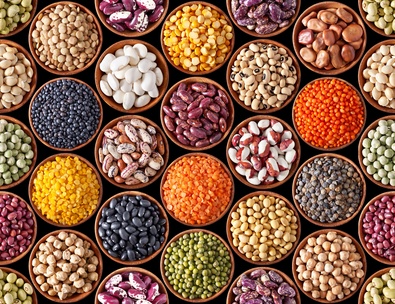
  • Beanz meanz antihistamines!

    Beanz meanz antihistamines!

    antihistamine beans

    Updated post, originally published in March 2013.

    A research scientist friend, whose findings on the anti-cancer benefits of spirulina were recently published (see end of post for link), messaged me yesterday, asking if I was aware that yet another food on the “high histamine” or “Histamine NO” lists, actually has antihistamine properties.

    Indeed I am, having written this post on not only the cancer fighting, cancer preventing [1], anti-inflammatory and antihistamine properties of beans, specifically kidney beans [2], quite some time ago. A number of studies I’ve read now have found that sandosaponins from kidney, generic beans and soybeans all inhibited histamine, with kidney beans being the most potent. Aside from beans having proven anti cancer properties, the good news is that cooking beans eliminates biogenic amines like tyramine and others, as long as you throw out the water [3].

    That said, I have always used the bean water in my cooking (and continue to do so) because, as Dr Fuhrman says, now that the beans have released their vitamins into the water, it’s highly nutritious.Remember though, beans still contain lectins, which though often neutralised through thorough soaking and cooking, may still prove problematic for some. Please keep in mind that though they possess antihistamine properties, you can still be allergic to or react to them so please always proceed with caution.

    Maybe this wasn’t taken into account, and that’s why we may sometimes find beans on the NO lists. More than that, if a food possess both the ability to raise and lower histamine, it might just be that your present state of health determines which wins out. I personally believe that emptying the inflammation bucket allows us to eat far more high histamine foods, hopefully others will use this newly found super power for good rather than bad (put down that cupcake!, otherwise the bucket might not stay empty for long.

    As I said in my post on the inflammation bucket (why I can now eat shrimp), eliminating foods, focusing on eating only low histamine foods, did not heal me. It didn’t even prevent my symptoms. In fact, it seemed to make me worse. I now know that this condition is inflammatory in nature, and therefore eliminating some foods that are high histamine, but leaving in a bunch of others that may be low histamine but not anti-inflammatory (ie corn, rye, spelt, potatoes, milk, beef, chicken), isn’t resolving anything. For more on how I healed myself by lowering my inflammation bucket please read this post.

    I know this is all shocking (lol, to me anyway!), yet another food on those food lists that so many follow, without any explanation as to how they were created, possess antihistamine properties. Check out the anti-cookbook for a six page list of antihistamine and anti-inflammatory foods, as well as recipes made only with these ingredients.

    I’ve rung a few labs in Europe to ask them to help me out with some food testing, to my surprise they all told me it’s impossible to accurately test histamine levels in non animal flesh foods, because the levels are almost undetectable. If anyone has a lead on a lab for me that can, or can tell me which labs have been used by those who have compiled these lists, I’d much appreciate it. One would think though, that a big problem is that no matter what the histamine level of the foods, our individual body make up, what we have eaten the foods with, our level of inflammation that day, our stress level, any food contamination and the variety of food will all effect the outcome of consuming said foods.

    Not only that, but to assume that because today we react to histamine foods, doesn’t mean we will in the future.

    What about this mind scramble though, what if reducing dietary histamine, needed by the body for so many functions, we only encourage the body to produce more? That would certainly explain a lot…(thanks K for putting this intriguing thought in my head!). It’s what happens when we take antihistamines [4]. 

    Having watched yet another Discovery Science program (yes, I’m a science/tech geek) on the pitiful amount of data our eyes are picking up from the world that surrounds us, and how, in an effort to sort out the world around us, the brain then fills in what it believes we’ve seen (more on this in Stephen Hawking’s brilliant book The Theory of Everything), I can now understand how my brain messed with me. So desperate was I to see any kind of patterns, to help me heal, that I drove myself insane figuring out what food was doing what.

    And the histamine lists explained everything. I now know that when there’s overall inflammation, we’re likely to experience reactions to ALL foods, so no wonder I got confused by all that was happening with me. I even believed I had fructose malabsorption, salicylate intolerance and more.

    But now I see that labelling things leads to unhappiness and more illness. Food affected me. So I found a healthier way to eat. When my diet was excellent, I turned my attention to my stress, and once that was sorted (through meditation), my next target was my past.

    Be happy, be serene. Be good to your body. Feed it high nutrient foods that don’t cause inflammation.

    It’s smart enough to do the rest.

    And now  back to beans! I leave you with possibly the greatest bean scene of all time – from Blazing Saddles. 

    Join my mailing list for more recipes and to be the first to know when registration for my low histamine webinar opens!

    The Anti-cookbook, while it doesn’t treat any conditions, due to its high nutrient, antihistamine and anti-inflammatory ingredients, has been instrumental in helping me feed myself on a limited diet. It features a six page list of antihistamine and anti-inflammatory foods.

    Take a peek at my low histamine and antihistamine cookbooks for more high nutrient recipes.

    If you’ve found this information useful I’d appreciate your support (at no extra cost to you!) – please check out my online store for your health foods, supplements, kitchen items and beauty product purchases. Affiliate sales through my online store go towards maintaining the website, funding travel to interviews and purchasing all the lovely foods for my free online recipes. You’ll find these items in the “Shop with us” drop down menu on my homepage.

     Please don’t forget antihistamine, pain killing foods can still hurt us, so please always check with your doctor before adding new foods to your diet. 
    ———–REFERENCES———-

    Katerina’s spirulina study http://www.ncbi.nlm.nih.gov/pubmed/24552870

    1. http://www.ncbi.nlm.nih.gov/pubmed/9178523

    2. http://www.ncbi.nlm.nih.gov/pubmed/9178523

    3.  http://www.ncbi.nlm.nih.gov/pmc/articles/PMC2995314/

    4. https://dev.healinghistamine.com/dr-janice-joneja-histamine-intolerance-interview-transcript/

  • Buy, borrow or steal this book. Your body & brain will thank you!

    Buy, borrow or steal this book. Your body & brain will thank you!

    last-best-cure-home1

    “…what you really need to translate for people — those for whom Western medicine has done all it can — is this: all the science is pointing to the fact that your brain is your last best cure.” – Anastasia Rowland-Seymour, MD, Assistant Professor of Internal Medicine, Johns Hopkins (in a quote to author Donna Jackson Nakazawa). 

    Have you reached the limits of what conventional medicine has to offer you? Then, as it was for award-winning journalist and author Donna Jackson Nakazawa, your brain might be your last best cure.

    It certainly was for me. I was doing everything right but still my recovery had stalled. I had made so much progress, but something was holding me back.

    Me.

    Or to be more precise, my past, and my inability to navigate the present without an overwhelming stress response to everyday, unremarkable, events.

    I noticed something odd…

    I wasn’t the only one. It seemed that almost ALL the women I came across in forums and those who wrote to me for help, had some kind of trauma in their past. While common sense tells us that trauma and stress can cause illness, I wanted to know the why of it. And then Donna’s book dropped into my lap. She not only serves up the science behind the trauma/immune disorders in women (and men), but offers well researched, irrefutable scientific evidence, showing us that we can change our brains and take charge of the course of our illness, or at the very least, how to tune out of the “pain channel” and into the “joy channel”.

    Since reading this book, the dietary changes I have made (lowering my inflammation bucket) have had all the more impact on my overall health and I feel better than I ever have before. 

    If you are only going to read one book on healing or just one book this year, please make it The Last Best Cure.  It will change your life. 

    Donna’s book, the Last Best Cure, documents her year-long quest to heal herself, aided by Anastasia Rowland-Seymour, her wonderful MD at Johns Hopkins, and shares the groundbreaking neuroscience on how mind-body therapies such as meditation, yoga and acupuncture awaken the healing potential of our brains, change our biology, and revitalize our cells and our health.

    Listen to the interview…

    Download the podcast to your mobile device or desktop here.

    Read the transcript…

    Thank you very much for joining me today.You are an award-winning science journalist and author of The Last Best Cure, a chronicle of your year-long journey to investigate the ground-breaking neuroscience on how meditation, yoga, and acupuncture awaken the healing potential of our bodies.  Just a little bit more information on you: Donna has appeared on The Today Show, NPR, ABC News, and her work is featured in Time Magazine, USA Today, Psychology Today, The Washington Post, Glamour Magazine, and many others.  The question is, where do you find the time?

    Do you want to include in there raising two teenage daughters?  Where do I find the time?  I think I spoke to this before you were recording.  One, I might turn around and say the same to you.  The truth is that twenty years of working with women and chronic illness, writing books, I’ve come to find that women in this community who have been impacted through family, be it parents, children, spouse, and so very often themselves since autoimmune diseases affect women at three times the rate as men, are blazing forward to change the world on eight cylinders and often we function on fewer than your average person, but we are out there trying to make change and do more.  And often, why is that?  I’ve thought about this and I think there is a particular spunk in the woman who has been felled by autoimmune diseases and gotten up to fight another day, even if she can only get up to fight every other day.  I have a phrase for it.  I call it, “women not interrupted”.

    Excellent; love it!

    So I am a woman not interrupted and you are a woman not interrupted, and what gives us the fuel to do that may be a little bit of what we often hear…Life is touched by suffering for all of us at sometime in our lives and when you are a woman who meets suffering sometimes inside your own body that may keep you from living to the fullest of your potential in mid-life and in the best years of life, you can begin to question that in a really profound way.  Women are impacted by autoimmune disease often in the prime of their lives.  In their prime living, loving, child-making years.  At a time in our history when so much is available to women to do so much more than fifty years ago, so it doesn’t surprise me that women who have something to say passionately find themselves touched by this unique form of suffering in their own bodies in the prime of life would not want to be interrupted.  So it isn’t to me so much a matter of time, as it is a matter of using the time that I have well.

    Hmmm.  Absolutely.  Do I sense that there is a book in the making on this?  I’d love to read it.

    There’s no book called “Women Not Interrupted”. I could be sitting there five years ago quite ill and had read some woman giving that answer and said, “Oh well, excuse me!  I just guess I don’t have your energy.”  The truth is, there is so much that I don’t get done.  For instance, I hear from hundreds of people who want me to do little interviews or write blurbs or do a press guest blog.  I can’t do all of that.  I hear from my publisher that I should be traveling around the country and speaking to everyone who will gather two or more and converse and blogging and tweeting and I can’t do all of that.  I can write, I can advocate, and I can raise my family.

    I think that’s more than enough and thank you very much for doing all of those.  I can’t tell you how much this book has impacted my life.  I advise absolutely everybody that I come into contact with to read this book.

    Oh, I love you.  Thank you.  As I’ve just said, I’ve failed miserably on the PR end and I do hear about it, so when I meet someone who says that, I feel so much gratitude because I cannot be the legs on the ground carrying the word.  I can’t.

    For those who haven’t read your book, and for those, I recommend that you run out immediately following this interview and buy the book.  Please tell us a little bit about your condition and what you did when you reached the limits of what conventional medicine had to offer you, if you did.

    So, I have had, luckily, the greatest doctors.  I say that because the work I did on “The Autoimmune Epidemic” which is the book that I did before “The Last Best Cure”, I worked with so many women who had the worst of care.  For those who know the statistics, the average woman spends four years seeing six doctors before she gets an autoimmune diagnosis despite the fact that autoimmunity has increased three times in the past 20 – 30 years, especially among women.  It also affects women three times as often as it affects men.  So, there has been a big disconnect in the medical community.  I’ve been working really hard on that as have so many of my peers to bring an awareness to that.  With that said, because I am a medical journalist, a science journalist, and a health/science advocate, who lives near Johns Hopkins and has friends there, I was able to get a pretty good diagnosis pretty quickly, fortunately for me, through a neurologist to save my life.  This was a really incredible physician that said there was just so much that could be done when one has face paralysis and demyelination which is the loss of the nerves, the wrapping, the myelin sheath that wrap around the axonal nerves.  When that re-grown several times we are not exactly like our peers; we’re different.  Each time I was less able to recover fully and I found myself at a point where despite having had the best care, I really was having trouble functioning and just getting up the stairs.  So I have a husband and two children, an aging mom, and aging in-laws and a busy life and I just couldn’t keep up with the normal day-to-day.  There was really just a moment as I think there so often is when we make a decision in life to try to live differently.  I was just lying down at the top of the stairs.  It had taken me a good amount of time to get up there.  I would often just get halfway up, sit down, take a rest.  I had gotten the laundry basket up in between doing some interviews and doing some writing.  I was just lying at the top of the stairs and watching my family run around me as if this was the most natural thing in the world.  My daughter was calling for a piece of clothing and I was telling her it was in the laundry.  My husband had lost his wallet which is not that unusual frankly, and I did everything that a  woman does from the floor.  That was just as far as I could get in a moment.  No one thought anything of it.  That’s what my life had become.  It had become pushing too hard on the cylinders that I had, but also living in a place where everything was about kind of grinding forward rather than living with joy and I began to feel that illness had become what I termed in my mind as “the joy thief”.  I had another way of looking at that; that I was so busy managing and monitoring “will my leg get up this step, I can’t really make it up this step, I need to lay down before I fall down in front of people and that won’t be good”, the sheer fatigue, pain, and fear… you know, fear… how long can I go on like this.  What’s coming next?  When will the other shoe drop?  I had spent seven years in and out of hospitals and I began to feel that my whole life was on what I called “the pain channel” constantly, the little bleating fears coming in, you know “oh gosh, my left leg is twinging up and down.  Do I need to call my doctor?  Is that going to be gone in the morning”, to “wow, my son is in this incredible event tomorrow and I don’t know if I’m going to be able to go or will I be too busy throwing up because one of the ramifications of Guillan Barre were a lot of bowel issues that made it very difficult for me to judge where I could be day-to-day.  I wanted to get on “the life channel” and I just so deserpately wanted to taste that sweetness.  It seemed I could only tune into it in very small moments and I had a moment where shortly after lying down on the floor, I was braiding my daughter’s hair and it was wet and she smelled so sweet and she was chatting on about her day.  Some part of me was aware of research that had come up on my work in the autoimmune book about a new field called “psychoneuroimmunology”.  That is really the relationship between our thoughts, our neuro or brain immune function and that the two are really inextricably linked.  I wanted to find out more about it.  I guess that’s really the instant that this book was really born, but then serendipity stepped in.  Within a few days, I was in the office of a new doctor which I had not asked for.  Mine had moved to Massachusetts to go to Mass General and she had put me in the hands of another doctor at Hopkins with my internist.  When I met her, she asked me a question and that question pretty much changed my life.  That was:  “Did anything happen in your past that might have led to everything that you are experiencing now?”

    So many people would kill to have that kind of experience and others might be a little incredulous you know, “why would a doctor ask such a question?”, but you actually found research that confirmed something.  When I first became a member of all of these mast cell related forums, people were talking about their childhood trauma as if, “well yes, it’s the cause of my present stress, but this has nothing to do with my illness”.  Then, the more and more women I found had this same traumatic background and I just thought this can’t be a coincidence, but it was never something I followed up on.  It was just incredible to read your research so please tell us about it and the role of childhood trauma.

    Well, it was really shocking to me when she asked that question.  She is now the director of internal medicine and integrative health at Johns Hopkins and at that time she was a new internist there.  I didn’t know her and she didn’t know me.  I looked at her with all my science journalist, key not speaking at scientific conferences and just said, “What are you talking about?”.  Then she began to break it down for me and she said, “Well, what do you know about psychoneuroimmunology?”  I basically said, “Well actually…” and that was the serendipity part of it which I am learning to appreciate more as I get older and older…  “I actually have been doing some research in that and I’m really interested  because we are in this new, deep understanding of how our state of mind impacts the release of different hormones and neurochemicals that absolutely and categorically determine our cellular function moment by moment and second by second.  Now this was three years ago and the research was just starting to come out and in the past three years it has absolutely exploded.  So I said, “Now, I can join you on that, that I get, but why are you bringing up my childhood?”  She said, “It may just be and it looks to be as if much of that future immune response is imbedded in experiences that happened early in life.”  What researchers have long called “early stress programming”.  We know and we accept for instance that if a mom smoked during pregnancy that child will have a different health outcome in 50 years.  We know and we accept that if certain illnesses happen very early in childhood, certain high fevers which reset the tone of the brain, things will be different for that child 50 years later.  Or if the mother had a flu or virus  at particular weeks in pregnancy that will have a great impact.  It can cause a change in the tone of the brain-immune function so that it can impact later outcomes such as autism and schizophrenia.  We’ve accepted that.  What we hadn’t looked at and had not accepted is that early stress, childhood adversity can cause an over or hyperactivity of the HPA axis.  So that’s your hypothalamus in your brain sending a message to your pituitary which sends a message to your immune system and your adrenals and to your endocrine system.  So your immune system and your hypothalamus and your pituitary is talking now directly to your endocrine system so that you will express a certain level of stress and inflammatory bio-markers that are related to every disease that we have from depression to autoimmune disease to cancer.  That dial, once it’s turned up, is set through a shift in genetics, known as epigenetics, which is how our experiences affect how our genes express themselves and that happens when you are a kid.  That is what my next book is about, exploring that relationship between early life stress and early childhood adversity and long-term health outcomes with a great emphasis on what the science is telling us and moreover what we can do about it as adults to get back to who we really are.

    What can we do?  What is it that you did?

    Talking about “The Last Best Cure” because the next book is called “Childhood Interrupted” and I’m working with a bunch of people on what we know about that relationship and what we can do about it much more specifically.  At the time I was undertaking “The Last Best Cure”, my new doctor and I, Her name is Anastasia Roland Seymour (check spelling), agreed to go on a one year journey together.  She had sent me home and said “Read up about this.  You’re a science journalist.  Really what you need to do is translate for people that when Western medicine has done all it can, as it has for you, their brain may be the last best cure.”  Armed with that challenge, I did some research and came back to her and we decided to challenge each other really.  She had never had a patient who was willing to go through a one year journey with her and I had never had a doctor who was willing to go on such a journey with me.  She took 17 vials of my blood.  So much that I had to leave and go drink a gallon of water and come back.

    I hope they gave you a cookie afterwards!

    You know, I can’t have a cookie.  I can’t eat gluten.

    There you go.  Wise woman!

    They did offer me graham crakcers and orange juice, but I’m just not that type of person so…  I took a gallon of water.  She tested for every inflammatory and chemical marker possible and activity in bone marrow since one of my issues has been a chronic bone marrow issue and gosh, I began a year doing everything that the research supported as being able to change our inflammatory bio-markers.  The research was most supportive of meditation, mindfulness, which is part of meditation, but a very distinct part of meditation.  It’s very different than just sitting there focusing one’s mind on their breath and it requires training, the best training of which is available through a program called “Mindfulness Based Stress Reduction” and “BSR”.  Also yoga has been shown to really change the neurotransmitter activity in the brain to be less stress reactive.  Breathwork which we know helps to shift the “stress now” system as I call it, or the sympathetic nervous system to the parasympathetic nervous system.  Those are the two arms of our stress response.  One is that fight or flight feeling, the sympathetic nervous system, you know you’ve got a fight, flight, or freeze.  It’s that feeling you probably had in childhood when bad things were happening.

    Oh yeah, and in adulthood, because it doesn’t stop until you do something about it.

    That’s right.  That’s the dial that I talked about getting turned on.  So when that “stress now” system or that sympathetic dial is turned up in childhood, it doesn’t go down.  You are just there doing it over and over all your life long.  So, how do you turn that dial down and get it back on to what nature intended which is the parasympathetic nervous system.  I call that the “purrrr now” system.

    And I love that!

    Because we all want to purr right?

    Right.

    We really don’t want to be in fight or flight.

    No.

    Nature intended for us to return to a state of homeostasis or this parasympathetic nervous system or the “purr now system”.  Our bodies were intended to return to that state where we are like a cat licking our paws.  We don’t when we have had a stressful life.  We don’t return to that because we’ve undergone epigenetic shifts and shifts in our hormonal makeup and in our neurobiological makeup that make it very difficult.

    Absolutely.  Do you believe it is possible to address the underlying issues just through supplements or do you see it as an approach of just involving more of the avenues that you explored in combination with other things. 

    My answer to that would be that disease is multi-factorial.  So we know with autoimmune disease, we’re looking at environmental toxins, we’re looking at what I call the greatest internal toxin which is self-created stress, or non-self-created stress, which is biological stress that may come from the past that we don’t even recognize.  Either way, it is interior toxicity as opposed to exterior toxicity.  So if that makes sense…  we have these things that we breathe and taste and touch that are toxic and I wrote a whole book about that,  “The Autoimmune Epidemic”.  We also have things that we think and latch onto emotionally and that we have experience through no fault of our own that creates shifts in our bio-chemistry that are interior toxins.  That is a good way to distinguish.  Then we have our food source and supplementation, so those are things that we take in that may be for it eating a lot of velveeta cheese on a white hamburger bun, that’s going to be a very different hit to our immune system than if we were drinking kale smoothies.  So I think that is pretty well understood, although I have to say, when I wrote “The Autoimmune Epidemic”, the idea of food as a toxin was really difficult for people to understand.  So it is multi-factorial.  We also have to add in our genetics, where we live and how much sun-light we get, and I could go on and on.  With that said, recovery is also multi-factorial.  I have dealt with thousands of women with chronic diseases professionally and personally through my work, my books, through my readers, through talks, through conferences and I would say that the key to healing is usually an open-mindedness about combining many different factors toward healing.  So is it a bad idea to think about a supplement?  Well, let’s look at Vitamin D and omega 3.  We know that those are really good for women with autoimmune disease.  The studies are repeated and robust and pretty definitive that if you are a woman with autoimmune disease you want to be thinking about vitamin D and omega 3.  The specificity for all of the different supplements out there for all of the different diseases is more than I personally can keep up with.

    Yes, it’s crazy.

    I have a cautionary bias because of my work as a science and health researcher and reporter and that is that I have all too often seen the supplement of the day turn into the supplement you don’t want to touch 3 or 4 years later.  I see this constantly in the research so I am cautionary about it.  I like to see 3 to 4 years of research on something and have it all come back pretty much saying the same thing.  That is not to say that people don’t want to look and see what is happening out there and what is new, but simply in my realm, I would never think that supplements are enough for one reason that every story of healing is usually involving a story of re-seeing, a story of how you see your illness, everything that led to it and that often includes for people with autoimmunity where there is a stress reactivity, how you respond to the world and I am not convinced that a supplement can alone can do that for us.

    You talk about the mentality behind healing.  I have read so many books on healing and while it believed that it was possible to heal some of the most truly horrific conditions, for some reason, I think because of the way they were written, or the lack of credentials on the part, what I considered to be solid scientific credentials of the people writing the books that there was always this doubt in the back of my mind.  Well, maybe it works for people that were gullible enough to believe it, maybe, you know that kind of thing, journalists, scientific background, very research oriented.  This is why your book really blew me away.  You had the credentials.  You had the science.  You did the research.  Somehow it just suddenly legitimized everything for me.  It opened me up to the healing process.  I cannot believe since reading your book, I’ve healed at an astonishing rate.

    I’m so happy!  You just made my day saying that because that is my intention to open the reader up to what is possible driven through the lens of real science.

    Exactly.  What do you say to people who don’t believe that healing is possible or that they can’t do it or you know, what’s okay for that person might work for them, but not for me.  Or, they’re not as sick as I am.  What do you say to these people?

    I say that, number one, being cured and being healed are two different things.  So I would never say to a colleague in a wheelchair, and I’ve been in a wheelchair and I understand the magnitude of that in a visceral way.  I wasn’t in a wheelchair for a day.  I was in a wheelchair for half a year.  So I understand where we are sometimes and so I would never say to someone who is in a wheelchair with Rheumatoid Arthritis or Multiple Sclerosis or from an accident or a trauma, “Oh well, you have the potential to get up and out of that chair just by reframing the way you think your thoughts and your psychoneuroimmunologic response and by getting to that purring feeling of being a kitty cat you’ll be….  No!”  Please  stop me!  I would never go there because we are all in a different place and there are types of damage in the body that are very very difficult and in some cases impossible given where we are with the science to reverse.  I certainly hope that one day we are able to work with stem cells and other increasingly understood treatments for people in wheelchairs, and not just to focus on wheelchairs, I’m just saying that I can’t give my book to people and expect that it’s the whole picture.  Nor would I.  I would think that it would not have the dignity and understanding of our humanity that I think I have.  So with that said, I believe in healing as opposed to being cured and I believe that whether or not one finds one’s self in a radically different place, physically…. I think you will when you engage in “The Last Best Cure”, when you understand that your brain is your last best cure, I think you will find yourself in a radically different place physically.  Will that mean that you are cured?  Well, healing and being cured are two different things.  Healing is really about where we are in our mental space.  Healing is coming to a place where we are back on the life channel.  Healing is about experiencing our moment to moment life with a thread of joy that carries through so that we are here in the present so that we can see what’s good.  Our brain isn’t focusing 24/7 on tapes of fear, anxiety, resentment, rheumanation.  When you think about it, what is stress?  You know, stress is really our thoughts.  That is what stress is.  There is some really interesting research the neuroscientists in Dilbert has done on comparing the happiness of people who are lottery winners with the happiness of people who are in wheelchairs.  It really is about one’s state of mind.  So I don’t say that any situation is something you can wrap your brain around it and feel happy about it.  I can tell you lying at the top of the stairs with my children stepping over me was not a happy place to be and it would have been really tough for you to give me my book at that time and tell me, “Hey!  This will help you get up off the carpet and see your life differently.”  It isn’t that simple.  It’s about a journey toward replacing the way in which your brain sends forth what I call either the “negative floating brain”, all those neurochemicals that course through the body and do cellular damage, or the “positive floating brain”, all those neurochemicals that course through your body and help to repair cellular damage.  It is a process of engaging in that with faith and compassion for one’s self.  There’s a reason why it’s a 300 page journey.  It’s really complicated and it requires often really stepping back and doing a hard and engaging look at how you view yourself, yourself in the world, your illness, your interactions with people around you, your interactions with your past, and your interactions with your own mind.  Did I answer your questions?

    Yes, you did indeed.  One of the ways we can alter our perception of symptom intensity is in my experience, meditation.  Could you share some of your findings and personal experiences on that?

    Sure, so meditation is really the place where the science is so profound on shifting moment to moment experience on pain and chronic illness and the work going on is really deeply moving to me.  I spent a lot of time with researchers who for instance were working with meditation and people who had been in chronic pain with Rheumatoid Arthritis for many many years and the ability to learn to focus on one’s breath, return to one’s breath, be mindful of one’s emotions so that when we are able to see and observe our experience, when pain is present in our experience and when we are simply able to do this very simple thing of naming it as pain and saying to ourselves, “that’s pain” and allowing the pain to come into our experience, name it, here’s what happens in the brain:  the fear centers of the brain that are trying to keep us from really experiencing the pain are lighting up and sending more stress hormones and inflammatory chemicals throughout the body which increases our pain response.  In meditation and through mindfulness when we are able to name the experience, the simple act of naming the experience causes the information coming into the amygdala, the amygdala quiets down.  What happens when the amygdala quiets down?  We send fewer stress hormones and chemicals through our body.  So that is just a very small and tiny example of how this feedback loop is set in place.  So that the more time that we practice and learn how to sit in meditation and experience the benefits of mindfulness, the more we are decreasing the inflammatory response that is leading to the symptoms themselves.

    Wow.  I can speak for myself.  Uncertainty of any kind, not knowing what is happening… I think you talked about it in the book, identifying.  I think the fear comes from the brain trying to work out whether we should be scared or not and just generally just meditation has worked to take the fear out of any situation, any uncertainty of will this symptom develop into something worse?  Am I going to be able to get out of bed tomorrow and work?  It’s just been completely life changing.  For you, what was the most powerful tool you’ve explored in your year-long journey and writing the book, well in healing yourself and writing the book?

    So first of all, like you, I am science-driven.  So what I always come back to with that question is that for me the grounding in the science is curative itself.  To know that the science is in this place where we are seeing thousands and thousands and thousands of people achieve a greater level of healing through these very easy, non-harmful, no side effect treatments.  If you can call meditation, yoga, mindfulness, breathwork, all of this, if you can call it a treatment.  It is to me very empowering because I know how to sift good research from bad research and non-replicable studies from replicable studies.  So for me that was very empowering and to be able to look at tools that stood up to that scientific rigor.  For me, meditation, mindfulness (which again is the act of learning how to observe and name one’s experience) to be a traffic cop in my own brain so that I can say, “Wow, this is a thought thread that’s looking like it’s going to lead to lost half hours that isn’t going to be very productive and you’re going to feel really bad, really scared, and really afraid.”  So, mmmt… mindfulness:  that’s fear, that’s worry, this is anxiety.  Return to the breathwork.  Well, here’s what’s so fascinating about the breathwork.  In pharmacology we have a pill for almost everything that the “stress now system”, remember the sympathetic nervous system does.  That’s fight or flight or freeze.  That’s the system that was established through any early adversity as being a little too profoundly active and leads to inflammatory response.  So we have a million pills for the “stress now system”.  I don’t knock pharmacology because there is no question that for many people SSRI’s and anti-depressants are invaluable.  I’ve seen it save lives.  I am not negative about that.  Having said that, we’ve developed a great many pills to help quiet down the sympathetic nervous system and keep it functioning in a way that will be less harmful to us.  We have never created a pill to up the performance of the parasympathetic nervous system which is that “purr now system”, which is how nature intended us to be when there is no fight or flight threat.

    That’s a very good point.

    Yet there is one thing available to us in our own toolbox that will allow us to put the parasympathetic nervous system into place and to have it become active over the sympathetic nervous system.  So in this case we are not shushing down the sympathetic nervous system or the “stress now system”, we’re actually bringing the parasympathetic nervous system into dominance as nature intended and that is the breath.  That is learning to work with the breath best taught by many mindfulness teachers and meditation teachers.  It is the ability to wake up at 2 in the morning with a symptom you don’t like, get your body and mind to focus on the breath.  There are many tricks to do this one of which is simply to put your right hand over your belly and your left hand over your heart and focus on nothing but the rise and fall of your breath.  It takes usually about 14 seconds to break the sympathetic nervous system.  I like that because I think any of us can focus on our hands on our belly and our hands on our heart for 14 seconds.

    I have to tell you though that in the beginning 14 seconds would have been a lot for me.

    Yet you did it.  Did you not?

    Of course, but I had honestly been meditating since I was 18 on and off and I never felt anything like I did after I read your book and knew the science behind it and understood conclusively, I found some more research about meditation and mast cell disorders in general and how it affects us epigenetically.  I needed that, but once I had that, absolutely, I did it.

    I’m glad you said that because there are Tibetan breath techniques where you exhale really rapidly three times after you begin to inhale and so I write about that in the book and I would ask your listeners and readers, “You know, have you ever been really worried about something and then you sneezed?”  And for just one thread of a second, 1/1,000 of a second you had to come back and remember what you are worried about?

    Oh, interesting.

    That is what breathwork does.  It affords you this space, this pause between the thing that worries you and the potential for momentary freedom.  In that freedom, our cells shift.  When our cells shift in that freedom on the neurochemical basis, here’s the really powerful and beautiful thing:  we begin to change the brain.  We begin to rewrite how our brain functions so that all that damage, whether it’s from childhood, or years of adult illness, or we’ve developed a reactivity and fear pattern that’s been damaging to our body, we change it back.  The brain is wonderfully plastic.  We used to believe that the brain was immune-priveleged.  In other words you couldn’t really shift the immune tone of the brain or the brain-immune function, but now we know that we can.  You can rewrite that and change it back.  For me to see the results of that in the scientific literature, to look at the brain scans of that happening, to talk to the researchers who are doing it and doing it specifically in the field of chronic illness, hey!  I’m going to give that a go

    There was some exciting news in your book regarding meditation overall particularly related to aging about the length of our telomeres. 

    Absolutely.  So, telomeres are measured by something called telemorase.  Telemorase is an indicator of how long the caps are and how robust the caps are at the end of our DNA.  If you think of a shoelace and a shoelace usually has a little cap on the end of it, telomeres are like those caps on shoelaces.  They keep our DNA kind of healthy and young, supple and great.  Like a shoelace when it begins to fray at the ends it is less so and over time your shoelace needs to be thrown away, well our DNA is kind of like that.  As we age, our telomeres weaken and fray and eventually our cells die and we die.  So it is a sign of aging and stress when telomeres are shortened.  In a very well-known study, it’s been found and repeated since that meditation will lengthen and strengthen our telomeres as shown through our levels of telemorase.  So no one can actually go in and look at your telomere length, but they can look at your telemorase which is a good sign of your telomere activity.  So the science comes in through these various threads in many different ways and each way leads to Rome which is that our brain is our last best cure.

    Absolutely.  I went on a meditation retreat to be able to teach people in my community.

    Wonderful!

    Again, it was inspired by your book.  I was on it for one week and I was sleeping maybe three or four hours because I wasn’t used to the schedule of waking up at 5:45 in the morning, but I tell you what, after 5 hours of meditation daily for a week, I did not look like I hadn’t slept, my skin was smooth, I felt young and at the end of the course we were given an Oxford study questionnaire which was asking about how we perceived our life and our past, were we happy, our level of mindfulness.  I was quite surprised that I scored very very low.  At the end of the course we did it again and my score had doubled.  My satisfaction with my past had doubled.  I mean, nothing has changed in my past, but my perception of it and that was mind-blowing to me.

    What I would say is that lines up perfectly with the research which is when we look at people that have the ability and the techniques to meditate and shift their experience through their perception of their experience we see profound changes in their biology.  The understanding in perceived stress lines up perfectly with everything you and I have been talking about this hour.  That is that we all have had traumatic experiences.  We’ve all had difficulties and we all face them everyday.  You can be driving in traffic and somebody behind you is just honking crazily and your whole stress reactivity goes into play because that will set you off most especially if you had early stress in your life and your stress response is set on high.  You can get a bill in the mail for something that happened medically a year ago that you thought had already been paid and whatever.  It goes on and on all day long.  You know your teenager says and does something to you that makes you feel unappreciated or unloved and you wonder.  It goes on and on.  You have a fight with your spouse and we know from research that this gives you a 5 times greater chance of developing a cold in the next week.  So it goes on and on.  The interlacing between our stress hormones, our stress reactivity, and our physical state.  Yet, if you take that same person and the car is honking behind them and they are able to be that observer in their mind, that traffic cop, and say, “that person must be having a really difficult day and I can’t pull out in traffic now or I will kill myself and my family by doing so, I hope the day gets better for them.”  It’s gone and what happens with the observer, the interior observer, that mindful companion, that traffic cop in our own mind, by having that and working on it and making it a part of our day-to-day practice through meditation and mindfulness is that it’s able to stand upon the mountain top and send the stressors away in such a way that we just don’t engage and the stress response doesn’t rise.  The teenager comes in and rolls their eyes and is hungry and slams the refrigerator door and your thinking, “wow, I just drove you all over to your poetry competition and to the grocery store to get your favorite fruits and I don’t deserve that”.  Instead the observer stands there when you have trained the mind and says “wow, it’s really tough to be 15 when you have 3 exams tomorrow in today’s stressful world”.  I was 15 and I know what that feels like.  I also know that in 90 seconds, this mood of hers will probably be gone.  And you know what?  It’s gone.  You’re not in your story.  You’re able to stay out of your story, return to your tricks, your toolbox, your breath, your rapid exhales, your naming of your feelings, your mindfulness, your walking meditation.  Go and pet the dog, whatever is in your toolbox and all of a sudden life turns around and meets you in a far better place.  The people that you could have had a rant about are turning around and hugging you instead.  Or as my kids once said to me, “Mom, you yell a lot less than you used to.”  And I’m  not a yeller.

    That’s lovely.  In your book, “The Last Best Cure” you have a plan at the end of the book and share with people how they can create their own healing plan.  Obviously I highly recommend that people run out and buy your book now.  Are there any quick tips just to round everything up that you can share with us now?

    I think that we have run through some of them.  I also really encourage people to get involved in community classes and I tell them that for two reasons.  I give a lot of talks and meet a lot of people.  I think that you came to “The Last Best Cure” with a history of having tried a lot of these things and so you were ready to kind of hit the ground and go to a meditation retreat and give it a go.  You don’t have to sign up with a guru or anything like that.  I wouldn’t recommend that and I certainly haven’t.  I think getting involved in some community classes in almost any yoga studio these days or almost any community center or certainly in any hospital are very affordable; 6, 8, 10 or 12 weeks of mindfulness based stress reduction courses. The reason I say that, that is not to say that my book won’t get you to a better place, but the reason I say try to also augment that with some community classes is because I think we learn better in groups.  I think also when we’ve had a lifetime of hardship, stress, adversity, chronic illness, pain, it is very important that we have some kind of community support system where we are going every Tuesday night and there are people in our situation and biologically our mirror neurons kick in.  Our mirror neurons are these really cool things that without our conscious words allow us to be next to other people who are learning what we are learning and we just learn it better and deeper.  So when you went to that meditation retreat, by sitting in a room of people who were doing what you were doing, you were actually learning it better and deeper and more deeply.  One trick I would say is that if this all seems overwhelming to you, get the book because it’s $12.00 on Amazon, get a used copy.  I don’t care.  Get it from the library.  As I said, I’m not the promotional person I probably should be.  Download it on Kindle.  I think it’s $11.00.  For heaven’s sakes, it’s worth the how to guide at the end and just for that.  So it’s like two lattes at Starbucks.  Grab the book and read the book and sign up for an MBSR and yoga or meditation class.  Do these two things and in 6 months you will be in a different place.

    Just before we go, I want to remind listeners of something you’ve said.  I’m often told by people that they are too ill to even meditate or do yoga.  In your words, it takes about 14 seconds to disrupt a negative thought process, to completely reset the way that we are feeling at that moment and it starts with as little as 14 seconds.

    Thank you for that reminder.  That’s so beautifully said.  Let’s remember that meditation does not have to be 40 minutes sitting on the floor in a cross legged position.  I will leave your readers with the fact that for me it requires a hard backed chair, a prop under my feet so that my legs won’t go numb, wiggling my legs every three to four minutes so they won’t go numb because of my neurological damage, a prop behind my back because of some of my neurological stuff.  So, you know what, it can be done if you give it those first 14 seconds and you reach and establish for yourself that sweetness of freedom from your fears and thoughts, you begin to return to that place again.

    Beautiful.

    And I want people to find that place.  I want them to find mental release, but moreover, cellular release.

    I’ve been  speaking with Donna Jackson Nakazawa, author of “The Autoimmune Epidemic” and “The Last Best Cure” both available on Amazon, Kindle, and in hard copy.  As I said a couple of times already, I highly recommend it.  If you are only going to read one book on healing or just one book this year, please make it this book.  It will change your life.  Thank you, Donna. 

    Thank you.  Great talking to you.

    Join my mailing list for more recipes and to be the first to know when registration for my low histamine webinar opens!

    The Anti-cookbook, while it doesn’t treat any conditions, due to its high nutrient, antihistamine and anti-inflammatory ingredients, has been instrumental in helping me feed myself on a limited diet. It features a six page list of antihistamine and anti-inflammatory foods.

    Take a peek at my low histamine and antihistamine cookbooks for more high nutrient recipes.

    If you’ve found this information useful I’d appreciate your support (at no extra cost to you!) – please check out my online store for your health foods, supplements, kitchen items and beauty product purchases. Affiliate sales through my online store go towards maintaining the website, funding travel to interviews and purchasing all the lovely foods for my free online recipes. You’ll find these items in the “Shop with us” drop down menu on my homepage.

     Please don’t forget antihistamine, pain killing foods can still hurt us, so please always check with your doctor before adding new foods to your diet. 
     

  • BUY, BORROW OR STEAL THIS BOOK. YOUR BODY & BRAIN WILL THANK YOU!

    “…what you really need to translate for people — those for whom Western medicine has done all it can — is this: all the science is pointing to the fact that your brain is your last best cure.” – Anastasia Rowland-Seymour, MD, Assistant Professor of Internal Medicine, Johns Hopkins (in a quote to author Donna Jackson Nakazawa). 

    Have you reached the limits of what conventional medicine has to offer you? Then, as it was for award-winning journalist and author Donna Jackson Nakazawa, your brain might be your last best cure.

    It certainly was for me. I was doing everything right but still my recovery had stalled. I had made so much progress, but something was holding me back.

    Me.

    Or to be more precise, my past, and my inability to navigate the present without an overwhelming stress response to everyday, unremarkable, events.

    I noticed something odd…

    I wasn’t the only one. It seemed that almost ALL the women I came across in forums and those who wrote to me for help, had some kind of trauma in their past. While common sense tells us that trauma and stress can cause illness, I wanted to know the why of it. And then Donna’s book dropped into my lap. She not only serves up the science behind the trauma/immune disorders in women (and men), but offers well researched, irrefutable scientific evidence, showing us that we can change our brains and take charge of the course of our illness, or at the very least, how to tune out of the “pain channel” and into the “joy channel”.

    Since reading this book, the dietary changes I have made (lowering my inflammation bucket) have had all the more impact on my overall health and I feel better than I ever have before.

    If you are only going to read one book on healing or just one book this year, please make itThe Last Best Cure.  It will change your life. 

    Donna’s book, the Last Best Cure, documents her year-long quest to heal herself, aided by Anastasia Rowland-Seymour, her wonderful MD at Johns Hopkins, and shares the groundbreaking neuroscience on how mind-body therapies such as meditation, yoga and acupuncture awaken the healing potential of our brains, change our biology, and revitalize our cells and our health.

    Download the podcast to your mobile device or desktop here.

    Read the transcript…

    Thank you very much for joining me today.You are an award-winning science journalist and author of The Last Best Cure, a chronicle of your year-long journey to investigate the ground-breaking neuroscience on how meditation, yoga, and acupuncture awaken the healing potential of our bodies.  Just a little bit more information on you: Donna has appeared on The Today Show, NPR, ABC News, and her work is featured in Time Magazine, USA Today, Psychology Today, The Washington Post, Glamour Magazine, and many others.  The question is, where do you find the time?

    Do you want to include in there raising two teenage daughters?  Where do I find the time?  I think I spoke to this before you were recording.  One, I might turn around and say the same to you.  The truth is that twenty years of working with women and chronic illness, writing books, I’ve come to find that women in this community who have been impacted through family, be it parents, children, spouse, and so very often themselves since autoimmune diseases affect women at three times the rate as men, are blazing forward to change the world on eight cylinders and often we function on fewer than your average person, but we are out there trying to make change and do more.  And often, why is that?  I’ve thought about this and I think there is a particular spunk in the woman who has been felled by autoimmune diseases and gotten up to fight another day, even if she can only get up to fight every other day.  I have a phrase for it.  I call it, “women not interrupted”.

    Excellent; love it!

    So I am a woman not interrupted and you are a woman not interrupted, and what gives us the fuel to do that may be a little bit of what we often hear…Life is touched by suffering for all of us at sometime in our lives and when you are a woman who meets suffering sometimes inside your own body that may keep you from living to the fullest of your potential in mid-life and in the best years of life, you can begin to question that in a really profound way.  Women are impacted by autoimmune disease often in the prime of their lives.  In their prime living, loving, child-making years.  At a time in our history when so much is available to women to do so much more than fifty years ago, so it doesn’t surprise me that women who have something to say passionately find themselves touched by this unique form of suffering in their own bodies in the prime of life would not want to be interrupted.  So it isn’t to me so much a matter of time, as it is a matter of using the time that I have well.

    Hmmm.  Absolutely.  Do I sense that there is a book in the making on this?  I’d love to read it.

    There’s no book called “Women Not Interrupted”. I could be sitting there five years ago quite ill and had read some woman giving that answer and said, “Oh well, excuse me!  I just guess I don’t have your energy.”  The truth is, there is so much that I don’t get done.  For instance, I hear from hundreds of people who want me to do little interviews or write blurbs or do a press guest blog.  I can’t do all of that.  I hear from my publisher that I should be traveling around the country and speaking to everyone who will gather two or more and converse and blogging and tweeting and I can’t do all of that.  I can write, I can advocate, and I can raise my family.

    I think that’s more than enough and thank you very much for doing all of those.  I can’t tell you how much this book has impacted my life.  I advise absolutely everybody that I come into contact with to read this book.

    Oh, I love you.  Thank you.  As I’ve just said, I’ve failed miserably on the PR end and I do hear about it, so when I meet someone who says that, I feel so much gratitude because I cannot be the legs on the ground carrying the word.  I can’t.

    For those who haven’t read your book, and for those, I recommend that you run out immediately following this interview and buy the book.  Please tell us a little bit about your condition and what you did when you reached the limits of what conventional medicine had to offer you, if you did.

    So, I have had, luckily, the greatest doctors.  I say that because the work I did on “The Autoimmune Epidemic” which is the book that I did before “The Last Best Cure”, I worked with so many women who had the worst of care.  For those who know the statistics, the average woman spends four years seeing six doctors before she gets an autoimmune diagnosis despite the fact that autoimmunity has increased three times in the past 20 – 30 years, especially among women.  It also affects women three times as often as it affects men.  So, there has been a big disconnect in the medical community.  I’ve been working really hard on that as have so many of my peers to bring an awareness to that.  With that said, because I am a medical journalist, a science journalist, and a health/science advocate, who lives near Johns Hopkins and has friends there, I was able to get a pretty good diagnosis pretty quickly, fortunately for me, through a neurologist to save my life.  This was a really incredible physician that said there was just so much that could be done when one has face paralysis and demyelination which is the loss of the nerves, the wrapping, the myelin sheath that wrap around the axonal nerves.  When that re-grown several times we are not exactly like our peers; we’re different.  Each time I was less able to recover fully and I found myself at a point where despite having had the best care, I really was having trouble functioning and just getting up the stairs.  So I have a husband and two children, an aging mom, and aging in-laws and a busy life and I just couldn’t keep up with the normal day-to-day.  There was really just a moment as I think there so often is when we make a decision in life to try to live differently.  I was just lying down at the top of the stairs.  It had taken me a good amount of time to get up there.  I would often just get halfway up, sit down, take a rest.  I had gotten the laundry basket up in between doing some interviews and doing some writing.  I was just lying at the top of the stairs and watching my family run around me as if this was the most natural thing in the world.  My daughter was calling for a piece of clothing and I was telling her it was in the laundry.  My husband had lost his wallet which is not that unusual frankly, and I did everything that a  woman does from the floor.  That was just as far as I could get in a moment.  No one thought anything of it.  That’s what my life had become.  It had become pushing too hard on the cylinders that I had, but also living in a place where everything was about kind of grinding forward rather than living with joy and I began to feel that illness had become what I termed in my mind as “the joy thief”.  I had another way of looking at that; that I was so busy managing and monitoring “will my leg get up this step, I can’t really make it up this step, I need to lay down before I fall down in front of people and that won’t be good”, the sheer fatigue, pain, and fear… you know, fear… how long can I go on like this.  What’s coming next?  When will the other shoe drop?  I had spent seven years in and out of hospitals and I began to feel that my whole life was on what I called “the pain channel” constantly, the little bleating fears coming in, you know “oh gosh, my left leg is twinging up and down.  Do I need to call my doctor?  Is that going to be gone in the morning”, to “wow, my son is in this incredible event tomorrow and I don’t know if I’m going to be able to go or will I be too busy throwing up because one of the ramifications of Guillan Barre were a lot of bowel issues that made it very difficult for me to judge where I could be day-to-day.  I wanted to get on “the life channel” and I just so deserpately wanted to taste that sweetness.  It seemed I could only tune into it in very small moments and I had a moment where shortly after lying down on the floor, I was braiding my daughter’s hair and it was wet and she smelled so sweet and she was chatting on about her day.  Some part of me was aware of research that had come up on my work in the autoimmune book about a new field called “psychoneuroimmunology”.  That is really the relationship between our thoughts, our neuro or brain immune function and that the two are really inextricably linked.  I wanted to find out more about it.  I guess that’s really the instant that this book was really born, but then serendipity stepped in.  Within a few days, I was in the office of a new doctor which I had not asked for.  Mine had moved to Massachusetts to go to Mass General and she had put me in the hands of another doctor at Hopkins with my internist.  When I met her, she asked me a question and that question pretty much changed my life.  That was:  “Did anything happen in your past that might have led to everything that you are experiencing now?”

    So many people would kill to have that kind of experience and others might be a little incredulous you know, “why would a doctor ask such a question?”, but you actually found research that confirmed something.  When I first became a member of all of these mast cell related forums, people were talking about their childhood trauma as if, “well yes, it’s the cause of my present stress, but this has nothing to do with my illness”.  Then, the more and more women I found had this same traumatic background and I just thought this can’t be a coincidence, but it was never something I followed up on.  It was just incredible to read your research so please tell us about it and the role of childhood trauma.

    Well, it was really shocking to me when she asked that question.  She is now the director of internal medicine and integrative health at Johns Hopkins and at that time she was a new internist there.  I didn’t know her and she didn’t know me.  I looked at her with all my science journalist, key not speaking at scientific conferences and just said, “What are you talking about?”.  Then she began to break it down for me and she said, “Well, what do you know about psychoneuroimmunology?”  I basically said, “Well actually…” and that was the serendipity part of it which I am learning to appreciate more as I get older and older…  “I actually have been doing some research in that and I’m really interested  because we are in this new, deep understanding of how our state of mind impacts the release of different hormones and neurochemicals that absolutely and categorically determine our cellular function moment by moment and second by second.  Now this was three years ago and the research was just starting to come out and in the past three years it has absolutely exploded.  So I said, “Now, I can join you on that, that I get, but why are you bringing up my childhood?”  She said, “It may just be and it looks to be as if much of that future immune response is imbedded in experiences that happened early in life.”  What researchers have long called “early stress programming”.  We know and we accept for instance that if a mom smoked during pregnancy that child will have a different health outcome in 50 years.  We know and we accept that if certain illnesses happen very early in childhood, certain high fevers which reset the tone of the brain, things will be different for that child 50 years later.  Or if the mother had a flu or virus  at particular weeks in pregnancy that will have a great impact.  It can cause a change in the tone of the brain-immune function so that it can impact later outcomes such as autism and schizophrenia.  We’ve accepted that.  What we hadn’t looked at and had not accepted is that early stress, childhood adversity can cause an over or hyperactivity of the HPA axis.  So that’s your hypothalamus in your brain sending a message to your pituitary which sends a message to your immune system and your adrenals and to your endocrine system.  So your immune system and your hypothalamus and your pituitary is talking now directly to your endocrine system so that you will express a certain level of stress and inflammatory bio-markers that are related to every disease that we have from depression to autoimmune disease to cancer.  That dial, once it’s turned up, is set through a shift in genetics, known as epigenetics, which is how our experiences affect how our genes express themselves and that happens when you are a kid.  That is what my next book is about, exploring that relationship between early life stress and early childhood adversity and long-term health outcomes with a great emphasis on what the science is telling us and moreover what we can do about it as adults to get back to who we really are.

    What can we do?  What is it that you did?

    Talking about “The Last Best Cure” because the next book is called “Childhood Interrupted” and I’m working with a bunch of people on what we know about that relationship and what we can do about it much more specifically.  At the time I was undertaking “The Last Best Cure”, my new doctor and I, Her name is Anastasia Roland Seymour (check spelling), agreed to go on a one year journey together.  She had sent me home and said “Read up about this.  You’re a science journalist.  Really what you need to do is translate for people that when Western medicine has done all it can, as it has for you, their brain may be the last best cure.”  Armed with that challenge, I did some research and came back to her and we decided to challenge each other really.  She had never had a patient who was willing to go through a one year journey with her and I had never had a doctor who was willing to go on such a journey with me.  She took 17 vials of my blood.  So much that I had to leave and go drink a gallon of water and come back.

    I hope they gave you a cookie afterwards!

    You know, I can’t have a cookie.  I can’t eat gluten.

    There you go.  Wise woman!

    They did offer me graham crakcers and orange juice, but I’m just not that type of person so…  I took a gallon of water.  She tested for every inflammatory and chemical marker possible and activity in bone marrow since one of my issues has been a chronic bone marrow issue and gosh, I began a year doing everything that the research supported as being able to change our inflammatory bio-markers.  The research was most supportive of meditation, mindfulness, which is part of meditation, but a very distinct part of meditation.  It’s very different than just sitting there focusing one’s mind on their breath and it requires training, the best training of which is available through a program called “Mindfulness Based Stress Reduction” and “BSR”.  Also yoga has been shown to really change the neurotransmitter activity in the brain to be less stress reactive.  Breathwork which we know helps to shift the “stress now” system as I call it, or the sympathetic nervous system to the parasympathetic nervous system.  Those are the two arms of our stress response.  One is that fight or flight feeling, the sympathetic nervous system, you know you’ve got a fight, flight, or freeze.  It’s that feeling you probably had in childhood when bad things were happening.

    Oh yeah, and in adulthood, because it doesn’t stop until you do something about it.

    That’s right.  That’s the dial that I talked about getting turned on.  So when that “stress now” system or that sympathetic dial is turned up in childhood, it doesn’t go down.  You are just there doing it over and over all your life long.  So, how do you turn that dial down and get it back on to what nature intended which is the parasympathetic nervous system.  I call that the “purrrr now” system.

    And I love that!

    Because we all want to purr right?

    Right.

    We really don’t want to be in fight or flight.

    No.

    Nature intended for us to return to a state of homeostasis or this parasympathetic nervous system or the “purr now system”.  Our bodies were intended to return to that state where we are like a cat licking our paws.  We don’t when we have had a stressful life.  We don’t return to that because we’ve undergone epigenetic shifts and shifts in our hormonal makeup and in our neurobiological makeup that make it very difficult.

    Absolutely.  Do you believe it is possible to address the underlying issues just through supplements or do you see it as an approach of just involving more of the avenues that you explored in combination with other things. 

    My answer to that would be that disease is multi-factorial.  So we know with autoimmune disease, we’re looking at environmental toxins, we’re looking at what I call the greatest internal toxin which is self-created stress, or non-self-created stress, which is biological stress that may come from the past that we don’t even recognize.  Either way, it is interior toxicity as opposed to exterior toxicity.  So if that makes sense…  we have these things that we breathe and taste and touch that are toxic and I wrote a whole book about that,  “The Autoimmune Epidemic”.  We also have things that we think and latch onto emotionally and that we have experience through no fault of our own that creates shifts in our bio-chemistry that are interior toxins.  That is a good way to distinguish.  Then we have our food source and supplementation, so those are things that we take in that may be for it eating a lot of velveeta cheese on a white hamburger bun, that’s going to be a very different hit to our immune system than if we were drinking kale smoothies.  So I think that is pretty well understood, although I have to say, when I wrote “The Autoimmune Epidemic”, the idea of food as a toxin was really difficult for people to understand.  So it is multi-factorial.  We also have to add in our genetics, where we live and how much sun-light we get, and I could go on and on.  With that said, recovery is also multi-factorial.  I have dealt with thousands of women with chronic diseases professionally and personally through my work, my books, through my readers, through talks, through conferences and I would say that the key to healing is usually an open-mindedness about combining many different factors toward healing.  So is it a bad idea to think about a supplement?  Well, let’s look at Vitamin D and omega 3.  We know that those are really good for women with autoimmune disease.  The studies are repeated and robust and pretty definitive that if you are a woman with autoimmune disease you want to be thinking about vitamin D and omega 3.  The specificity for all of the different supplements out there for all of the different diseases is more than I personally can keep up with.

    Yes, it’s crazy.

    I have a cautionary bias because of my work as a science and health researcher and reporter and that is that I have all too often seen the supplement of the day turn into the supplement you don’t want to touch 3 or 4 years later.  I see this constantly in the research so I am cautionary about it.  I like to see 3 to 4 years of research on something and have it all come back pretty much saying the same thing.  That is not to say that people don’t want to look and see what is happening out there and what is new, but simply in my realm, I would never think that supplements are enough for one reason that every story of healing is usually involving a story of re-seeing, a story of how you see your illness, everything that led to it and that often includes for people with autoimmunity where there is a stress reactivity, how you respond to the world and I am not convinced that a supplement can alone can do that for us.

    You talk about the mentality behind healing.  I have read so many books on healing and while it believed that it was possible to heal some of the most truly horrific conditions, for some reason, I think because of the way they were written, or the lack of credentials on the part, what I considered to be solid scientific credentials of the people writing the books that there was always this doubt in the back of my mind.  Well, maybe it works for people that were gullible enough to believe it, maybe, you know that kind of thing, journalists, scientific background, very research oriented.  This is why your book really blew me away.  You had the credentials.  You had the science.  You did the research.  Somehow it just suddenly legitimized everything for me.  It opened me up to the healing process.  I cannot believe since reading your book, I’ve healed at an astonishing rate.

    I’m so happy!  You just made my day saying that because that is my intention to open the reader up to what is possible driven through the lens of real science.

    Exactly.  What do you say to people who don’t believe that healing is possible or that they can’t do it or you know, what’s okay for that person might work for them, but not for me.  Or, they’re not as sick as I am.  What do you say to these people?

    I say that, number one, being cured and being healed are two different things.  So I would never say to a colleague in a wheelchair, and I’ve been in a wheelchair and I understand the magnitude of that in a visceral way.  I wasn’t in a wheelchair for a day.  I was in a wheelchair for half a year.  So I understand where we are sometimes and so I would never say to someone who is in a wheelchair with Rheumatoid Arthritis or Multiple Sclerosis or from an accident or a trauma, “Oh well, you have the potential to get up and out of that chair just by reframing the way you think your thoughts and your psychoneuroimmunologic response and by getting to that purring feeling of being a kitty cat you’ll be….  No!”  Please  stop me!  I would never go there because we are all in a different place and there are types of damage in the body that are very very difficult and in some cases impossible given where we are with the science to reverse.  I certainly hope that one day we are able to work with stem cells and other increasingly understood treatments for people in wheelchairs, and not just to focus on wheelchairs, I’m just saying that I can’t give my book to people and expect that it’s the whole picture.  Nor would I.  I would think that it would not have the dignity and understanding of our humanity that I think I have.  So with that said, I believe in healing as opposed to being cured and I believe that whether or not one finds one’s self in a radically different place, physically…. I think you will when you engage in “The Last Best Cure”, when you understand that your brain is your last best cure, I think you will find yourself in a radically different place physically.  Will that mean that you are cured?  Well, healing and being cured are two different things.  Healing is really about where we are in our mental space.  Healing is coming to a place where we are back on the life channel.  Healing is about experiencing our moment to moment life with a thread of joy that carries through so that we are here in the present so that we can see what’s good.  Our brain isn’t focusing 24/7 on tapes of fear, anxiety, resentment, rheumanation.  When you think about it, what is stress?  You know, stress is really our thoughts.  That is what stress is.  There is some really interesting research the neuroscientists in Dilbert has done on comparing the happiness of people who are lottery winners with the happiness of people who are in wheelchairs.  It really is about one’s state of mind.  So I don’t say that any situation is something you can wrap your brain around it and feel happy about it.  I can tell you lying at the top of the stairs with my children stepping over me was not a happy place to be and it would have been really tough for you to give me my book at that time and tell me, “Hey!  This will help you get up off the carpet and see your life differently.”  It isn’t that simple.  It’s about a journey toward replacing the way in which your brain sends forth what I call either the “negative floating brain”, all those neurochemicals that course through the body and do cellular damage, or the “positive floating brain”, all those neurochemicals that course through your body and help to repair cellular damage.  It is a process of engaging in that with faith and compassion for one’s self.  There’s a reason why it’s a 300 page journey.  It’s really complicated and it requires often really stepping back and doing a hard and engaging look at how you view yourself, yourself in the world, your illness, your interactions with people around you, your interactions with your past, and your interactions with your own mind.  Did I answer your questions?

    Yes, you did indeed.  One of the ways we can alter our perception of symptom intensity is in my experience, meditation.  Could you share some of your findings and personal experiences on that?

    Sure, so meditation is really the place where the science is so profound on shifting moment to moment experience on pain and chronic illness and the work going on is really deeply moving to me.  I spent a lot of time with researchers who for instance were working with meditation and people who had been in chronic pain with Rheumatoid Arthritis for many many years and the ability to learn to focus on one’s breath, return to one’s breath, be mindful of one’s emotions so that when we are able to see and observe our experience, when pain is present in our experience and when we are simply able to do this very simple thing of naming it as pain and saying to ourselves, “that’s pain” and allowing the pain to come into our experience, name it, here’s what happens in the brain:  the fear centers of the brain that are trying to keep us from really experiencing the pain are lighting up and sending more stress hormones and inflammatory chemicals throughout the body which increases our pain response.  In meditation and through mindfulness when we are able to name the experience, the simple act of naming the experience causes the information coming into the amygdala, the amygdala quiets down.  What happens when the amygdala quiets down?  We send fewer stress hormones and chemicals through our body.  So that is just a very small and tiny example of how this feedback loop is set in place.  So that the more time that we practice and learn how to sit in meditation and experience the benefits of mindfulness, the more we are decreasing the inflammatory response that is leading to the symptoms themselves.

    Wow.  I can speak for myself.  Uncertainty of any kind, not knowing what is happening… I think you talked about it in the book, identifying.  I think the fear comes from the brain trying to work out whether we should be scared or not and just generally just meditation has worked to take the fear out of any situation, any uncertainty of will this symptom develop into something worse?  Am I going to be able to get out of bed tomorrow and work?  It’s just been completely life changing.  For you, what was the most powerful tool you’ve explored in your year-long journey and writing the book, well in healing yourself and writing the book?

    So first of all, like you, I am science-driven.  So what I always come back to with that question is that for me the grounding in the science is curative itself.  To know that the science is in this place where we are seeing thousands and thousands and thousands of people achieve a greater level of healing through these very easy, non-harmful, no side effect treatments.  If you can call meditation, yoga, mindfulness, breathwork, all of this, if you can call it a treatment.  It is to me very empowering because I know how to sift good research from bad research and non-replicable studies from replicable studies.  So for me that was very empowering and to be able to look at tools that stood up to that scientific rigor.  For me, meditation, mindfulness (which again is the act of learning how to observe and name one’s experience) to be a traffic cop in my own brain so that I can say, “Wow, this is a thought thread that’s looking like it’s going to lead to lost half hours that isn’t going to be very productive and you’re going to feel really bad, really scared, and really afraid.”  So, mmmt… mindfulness:  that’s fear, that’s worry, this is anxiety.  Return to the breathwork.  Well, here’s what’s so fascinating about the breathwork.  In pharmacology we have a pill for almost everything that the “stress now system”, remember the sympathetic nervous system does.  That’s fight or flight or freeze.  That’s the system that was established through any early adversity as being a little too profoundly active and leads to inflammatory response.  So we have a million pills for the “stress now system”.  I don’t knock pharmacology because there is no question that for many people SSRI’s and anti-depressants are invaluable.  I’ve seen it save lives.  I am not negative about that.  Having said that, we’ve developed a great many pills to help quiet down the sympathetic nervous system and keep it functioning in a way that will be less harmful to us.  We have never created a pill to up the performance of the parasympathetic nervous system which is that “purr now system”, which is how nature intended us to be when there is no fight or flight threat.

    That’s a very good point.

    Yet there is one thing available to us in our own toolbox that will allow us to put the parasympathetic nervous system into place and to have it become active over the sympathetic nervous system.  So in this case we are not shushing down the sympathetic nervous system or the “stress now system”, we’re actually bringing the parasympathetic nervous system into dominance as nature intended and that is the breath.  That is learning to work with the breath best taught by many mindfulness teachers and meditation teachers.  It is the ability to wake up at 2 in the morning with a symptom you don’t like, get your body and mind to focus on the breath.  There are many tricks to do this one of which is simply to put your right hand over your belly and your left hand over your heart and focus on nothing but the rise and fall of your breath.  It takes usually about 14 seconds to break the sympathetic nervous system.  I like that because I think any of us can focus on our hands on our belly and our hands on our heart for 14 seconds.

    I have to tell you though that in the beginning 14 seconds would have been a lot for me.

    Yet you did it.  Did you not?

    Of course, but I had honestly been meditating since I was 18 on and off and I never felt anything like I did after I read your book and knew the science behind it and understood conclusively, I found some more research about meditation and mast cell disorders in general and how it affects us epigenetically.  I needed that, but once I had that, absolutely, I did it.

    I’m glad you said that because there are Tibetan breath techniques where you exhale really rapidly three times after you begin to inhale and so I write about that in the book and I would ask your listeners and readers, “You know, have you ever been really worried about something and then you sneezed?”  And for just one thread of a second, 1/1,000 of a second you had to come back and remember what you are worried about?

    Oh, interesting.

    That is what breathwork does.  It affords you this space, this pause between the thing that worries you and the potential for momentary freedom.  In that freedom, our cells shift.  When our cells shift in that freedom on the neurochemical basis, here’s the really powerful and beautiful thing:  we begin to change the brain.  We begin to rewrite how our brain functions so that all that damage, whether it’s from childhood, or years of adult illness, or we’ve developed a reactivity and fear pattern that’s been damaging to our body, we change it back.  The brain is wonderfully plastic.  We used to believe that the brain was immune-priveleged.  In other words you couldn’t really shift the immune tone of the brain or the brain-immune function, but now we know that we can.  You can rewrite that and change it back.  For me to see the results of that in the scientific literature, to look at the brain scans of that happening, to talk to the researchers who are doing it and doing it specifically in the field of chronic illness, hey!  I’m going to give that a go

    There was some exciting news in your book regarding meditation overall particularly related to aging about the length of our telomeres. 

    Absolutely.  So, telomeres are measured by something called telemorase.  Telemorase is an indicator of how long the caps are and how robust the caps are at the end of our DNA.  If you think of a shoelace and a shoelace usually has a little cap on the end of it, telomeres are like those caps on shoelaces.  They keep our DNA kind of healthy and young, supple and great.  Like a shoelace when it begins to fray at the ends it is less so and over time your shoelace needs to be thrown away, well our DNA is kind of like that.  As we age, our telomeres weaken and fray and eventually our cells die and we die.  So it is a sign of aging and stress when telomeres are shortened.  In a very well-known study, it’s been found and repeated since that meditation will lengthen and strengthen our telomeres as shown through our levels of telemorase.  So no one can actually go in and look at your telomere length, but they can look at your telemorase which is a good sign of your telomere activity.  So the science comes in through these various threads in many different ways and each way leads to Rome which is that our brain is our last best cure.

    Absolutely.  I went on a meditation retreat to be able to teach people in my community.

    Wonderful!

    Again, it was inspired by your book.  I was on it for one week and I was sleeping maybe three or four hours because I wasn’t used to the schedule of waking up at 5:45 in the morning, but I tell you what, after 5 hours of meditation daily for a week, I did not look like I hadn’t slept, my skin was smooth, I felt young and at the end of the course we were given an Oxford study questionnaire which was asking about how we perceived our life and our past, were we happy, our level of mindfulness.  I was quite surprised that I scored very very low.  At the end of the course we did it again and my score had doubled.  My satisfaction with my past had doubled.  I mean, nothing has changed in my past, but my perception of it and that was mind-blowing to me.

    What I would say is that lines up perfectly with the research which is when we look at people that have the ability and the techniques to meditate and shift their experience through their perception of their experience we see profound changes in their biology.  The understanding in perceived stress lines up perfectly with everything you and I have been talking about this hour.  That is that we all have had traumatic experiences.  We’ve all had difficulties and we all face them everyday.  You can be driving in traffic and somebody behind you is just honking crazily and your whole stress reactivity goes into play because that will set you off most especially if you had early stress in your life and your stress response is set on high.  You can get a bill in the mail for something that happened medically a year ago that you thought had already been paid and whatever.  It goes on and on all day long.  You know your teenager says and does something to you that makes you feel unappreciated or unloved and you wonder.  It goes on and on.  You have a fight with your spouse and we know from research that this gives you a 5 times greater chance of developing a cold in the next week.  So it goes on and on.  The interlacing between our stress hormones, our stress reactivity, and our physical state.  Yet, if you take that same person and the car is honking behind them and they are able to be that observer in their mind, that traffic cop, and say, “that person must be having a really difficult day and I can’t pull out in traffic now or I will kill myself and my family by doing so, I hope the day gets better for them.”  It’s gone and what happens with the observer, the interior observer, that mindful companion, that traffic cop in our own mind, by having that and working on it and making it a part of our day-to-day practice through meditation and mindfulness is that it’s able to stand upon the mountain top and send the stressors away in such a way that we just don’t engage and the stress response doesn’t rise.  The teenager comes in and rolls their eyes and is hungry and slams the refrigerator door and your thinking, “wow, I just drove you all over to your poetry competition and to the grocery store to get your favorite fruits and I don’t deserve that”.  Instead the observer stands there when you have trained the mind and says “wow, it’s really tough to be 15 when you have 3 exams tomorrow in today’s stressful world”.  I was 15 and I know what that feels like.  I also know that in 90 seconds, this mood of hers will probably be gone.  And you know what?  It’s gone.  You’re not in your story.  You’re able to stay out of your story, return to your tricks, your toolbox, your breath, your rapid exhales, your naming of your feelings, your mindfulness, your walking meditation.  Go and pet the dog, whatever is in your toolbox and all of a sudden life turns around and meets you in a far better place.  The people that you could have had a rant about are turning around and hugging you instead.  Or as my kids once said to me, “Mom, you yell a lot less than you used to.”  And I’m  not a yeller.

    That’s lovely.  In your book, “The Last Best Cure” you have a plan at the end of the book and share with people how they can create their own healing plan.  Obviously I highly recommend that people run out and buy your book now.  Are there any quick tips just to round everything up that you can share with us now?

    I think that we have run through some of them.  I also really encourage people to get involved in community classes and I tell them that for two reasons.  I give a lot of talks and meet a lot of people.  I think that you came to “The Last Best Cure” with a history of having tried a lot of these things and so you were ready to kind of hit the ground and go to a meditation retreat and give it a go.  You don’t have to sign up with a guru or anything like that.  I wouldn’t recommend that and I certainly haven’t.  I think getting involved in some community classes in almost any yoga studio these days or almost any community center or certainly in any hospital are very affordable; 6, 8, 10 or 12 weeks of mindfulness based stress reduction courses. The reason I say that, that is not to say that my book won’t get you to a better place, but the reason I say try to also augment that with some community classes is because I think we learn better in groups.  I think also when we’ve had a lifetime of hardship, stress, adversity, chronic illness, pain, it is very important that we have some kind of community support system where we are going every Tuesday night and there are people in our situation and biologically our mirror neurons kick in.  Our mirror neurons are these really cool things that without our conscious words allow us to be next to other people who are learning what we are learning and we just learn it better and deeper.  So when you went to that meditation retreat, by sitting in a room of people who were doing what you were doing, you were actually learning it better and deeper and more deeply.  One trick I would say is that if this all seems overwhelming to you, get the book because it’s $12.00 on Amazon, get a used copy.  I don’t care.  Get it from the library.  As I said, I’m not the promotional person I probably should be.  Download it on Kindle.  I think it’s $11.00.  For heaven’s sakes, it’s worth the how to guide at the end and just for that.  So it’s like two lattes at Starbucks.  Grab the book and read the book and sign up for an MBSR and yoga or meditation class.  Do these two things and in 6 months you will be in a different place.

    Just before we go, I want to remind listeners of something you’ve said.  I’m often told by people that they are too ill to even meditate or do yoga.  In your words, it takes about 14 seconds to disrupt a negative thought process, to completely reset the way that we are feeling at that moment and it starts with as little as 14 seconds.

    Thank you for that reminder.  That’s so beautifully said.  Let’s remember that meditation does not have to be 40 minutes sitting on the floor in a cross legged position.  I will leave your readers with the fact that for me it requires a hard backed chair, a prop under my feet so that my legs won’t go numb, wiggling my legs every three to four minutes so they won’t go numb because of my neurological damage, a prop behind my back because of some of my neurological stuff.  So, you know what, it can be done if you give it those first 14 seconds and you reach and establish for yourself that sweetness of freedom from your fears and thoughts, you begin to return to that place again.

    Beautiful.

    And I want people to find that place.  I want them to find mental release, but moreover, cellular release.

    I’ve been  speaking with Donna Jackson Nakazawa, author of “The Autoimmune Epidemic” and “The Last Best Cure” both available on Amazon, Kindle, and in hard copy.  As I said a couple of times already, I highly recommend it.  If you are only going to read one book on healing or just one book this year, please make it this book.  It will change your life.  Thank you, Donna. 

    Thank you.  Great talking to you.

    Join my mailing list for more recipes and to be the first to know when registration for my low histamine webinar opens!

    The Anti-cookbook, while it doesn’t treat any conditions, due to its high nutrient, antihistamine and anti-inflammatory ingredients, has been instrumental in helping me feed myself on a limited diet. It features a six page list of antihistamine and anti-inflammatory foods.

    Take a peek at my low histamine and antihistamine cookbooks for more high nutrient recipes.

    If you’ve found this information useful I’d appreciate your support (at no extra cost to you!) – please check out my online store for your health foods, supplements, kitchen items and beauty product purchases. Affiliate sales through my online store go towards maintaining the website, funding travel to interviews and purchasing all the lovely foods for my free online recipes. You’ll find these items in the “Shop with us” drop down menu on my homepage.

     Please don’t forget antihistamine, pain killing foods can still hurt us, so please always check with your doctor before adding new foods to your diet. 
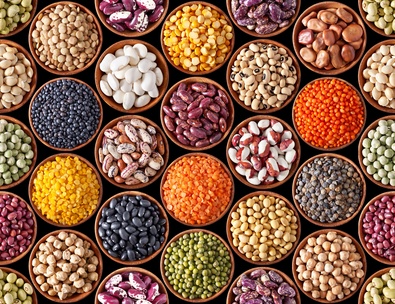
  • The inflammation bucket (why I can now eat shrimp)

    The inflammation bucket (why I can now eat shrimp)

    the inflammation bucket

    You’ve heard of the histamine bucket – whereby every little bit of histamine put into the body (food, animal dander, stress, pollen) builds, until it spills over into a reaction. You then need to spend a certain amount of time emptying it in order to feel better (antihistamines, green juice, stress relief).

    But here’s a new model for you to consider – the inflammation bucket.

    Rather than trying to keep histamine low, by not eating, by avoidance of triggers, I find that lowering the baseline of inflammation, through a phytonutrient rich, antihistamine and anti-inflammatory diet, meditation and happiness, allows me to fill it up with a bunch more histamine.

    Sound improbable?

    Histamine is stored in mast cells in the body. In addition to the histamine we get from foods, histamine is released by mast cells, as needed, to begin digestion, act as a neurotransmitter, fire up the healing process and much more. What if I were to tell you though that histamine is only one of a number of inflammatory compounds released by mast cells?

    Might that change your dietary approach at all?

    It certainly did mine. Rather than focus on eliminating dietary histamine, I realised that I was dealing with leukotreines (cause asthma symptoms, generalised inflammation and more), prostaglandins (cause hair loss, migraines, generalised inflammation and more), heparin (causes bruising, excessive bleeding, generalised inflammation and more) and much, much more.

    So why on earth focus on just histamine?

    Well, there’s a good answer for that, so I’m told, but sadly I don’t believe we have solid enough evidence to keep doing so. Many in the nutrition field believe that those of us with these funky histamine induced symptoms have a lack of histamine-degrading enzymes like DAO. They prove this to us with a test that has neither been proven to measure DAO where it really counts, a test whose results have been shown to fluctuate wildly from day to day, hour to hour. To make matters worse, we can’t test the activity of HNMT, another histamine degrading enzyme. I’m no scientist but I would think you’d need more than one marker to prove something? Ah yes, we often have our plasma histamine tested. Sadly this too fluctuates wildly and often indicates very little. But don’t take my word for it…check out my interview with immunologist Dr Janice Joneja for more.

    I’m not saying that our symptoms might not be caused or aggravated by a lack of enzymes, only that it seems a little silly to stuff DAO supplements down our gullet after every meal in the hope of clearing up major symptoms. A little heartburn, acid reflux, maybe. Shivering cold in summer, vomiting after meals, hives, bone pain, dizziness, trembling, excruciating gut pain, inflamed bowels, basketball stomach, not so much maybe.

    The fact is, that while dietary histamine is in fact problematic for many, as it was to me, I propose that once the overall inflammation in the body is lowered, the histamine ingested, as long as not wildly exaggerated, will not cause the same harm/symptoms.

    What choo talkin’ bout Willis?

    Yeah, I’m saying that histamine isn’t the bad guy here. Inflammation isn’t even the bad guy here: we need inflammation to heal. It’s a part of the healing process.  In this scenario, crappy diet and massive amounts of stress (proven to cause mast cells to release histamine) are the bad guys. And we’re not just helpless bystanders at the mercy of our genetics. I truly believe that people can heal. I believe that genetics don’t determine our fate (entirely), and that pollution, chemicals we’re exposed to in the womb, our parents’ dietary choices, our diet, exposure to stress hormones and diet and more, play a huge role.

    Stress makes it impossible to eat

    We all know it’s pretty darned impossible to eat when all wound up. It’s just a fact. I’ve seen this in myself and countless others I’ve spoken with. I don’t know how it works in “regular” folk, but in histamine peeps, you can pretty much bet on the stress hormones causing mast cells to break open, releasing histamine and other inflammatory elements into the body. So stress = inflammation. Inflammation = excess histamine. Excess histamine in the body = less tolerated dietary histamine.

    I don’t know about you, but when I’m not stressed, I can eat more. Lots more. For many of us it’s not that we’re genetically unable to eat the strawberry, just that the environment we’re putting the strawberry into isn’t likely to react to it very well. Even if we are genetically programmed to react to strawbs (ie born with an allergy or histamine intolerance), there’s an excellent chance we’ll outgrow it or outfox it. The study of epigenetics tells us so.

    I doubt it’s a coincidence that my incredible healing of late began when I really committed to my meditation practice.

    The proof of the pudding is in the gambas al pil pil (so to speak)

    So how have I come up with this inflammation bucket theory? While obviously based on the histamine bucket theory (attributed to Dr Janice Joneja), I believe that controlling the inflammation causing compounds released by mast cells, which includes, but is absolutely not limited to, histamine, through a high nutrient, absolutely clean diet, combined with intensive stress hormone controlling, inflammation and histamine lowering meditation is more effective than continuing to live on a limited, soul destroying, elimination diet for the rest of my life, in the hope of controlling ingested histamine.

    Sound far fetched? I know it works, because I’ve done it.

    I’ve lowered the contents of my inflammation bucket to the point that I even “cured” myself of a soy allergy!

    collage

    The progress I made on a low histamine elimination diet (which I then lost as my body became starved of important healing phytonutrients) gathered speed after just a year on a high nutrient antihistamine and anti-inflammatory diet as outlined in the Anti-Cookbook. Gathering momentum faster than a snowball attempting a cannonball run through hell, the last five months have been a blur of happiness, with one victory after the next jostling for space in my ever-growing thankfulness memory bank. (The above collage just details this last week ).

    Soy sauce (it’s neither a health food nor a hurt food, I’m a sushi junky), soy nail polish remover, shrimp, tomatoes, avocado, pineapple, oranges, kiwis, grapes, strawberries, raspberries, mushrooms, mandarins, spinach, now all feature regularly in my diet.

    I balance these out with a great deal of daily meditation, stress relief, indulging in activities that bring joy to my life, a phytonutrient rich, high nutrient, antihistamine and anti-inflammatory rich diet. I do not put any garbage in my body! I’m definitely pushing the boundaries of good taste a little (nail polish?? But it makes me so very happy not to have to re-apply water based stuff every time I reach into my handbag), a few glasses of wine over the last few months (just to see if I could), a few pieces of bread (no issue whatsoever, but I remain dedicated to a gluten/primarily grain free diet).

    And to think, I was told I had a soy allergy just a few years ago! All gone now…tested and gone. I’m no longer even having to stick to a low oxalate diet…I certainly don’t go nuts with them, just like I don’t eat shrimp, avocado, yeast or soy daily. Nor do I EVER put junk foods into my body.

    The power of diet and mind never cease to amaze me.


     Please don’t forget antihistamine, pain killing foods can still hurt us, so please always check with your doctor before adding new foods to your diet. 
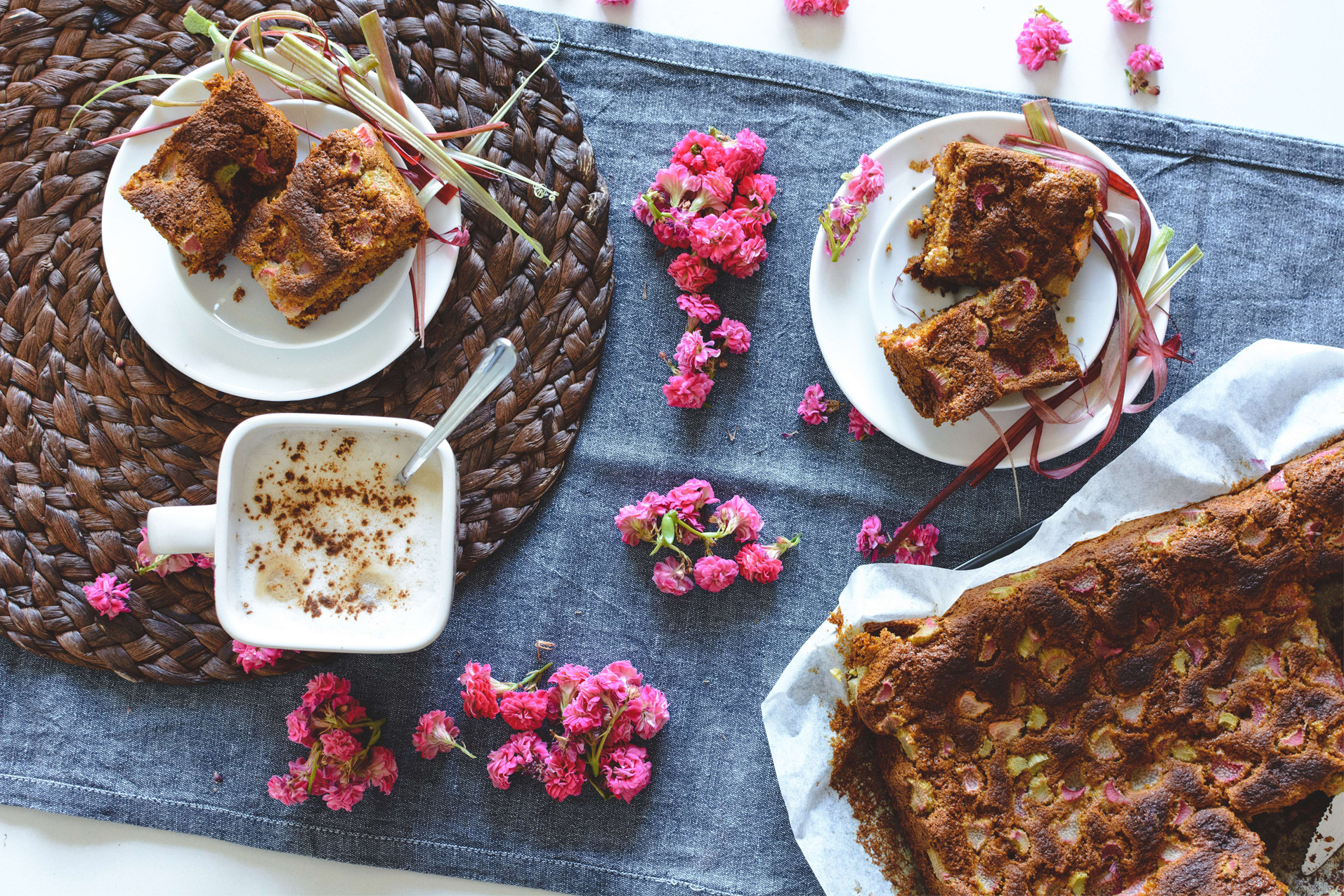
  • The Low Oxalate (low histamine) Cookbook

    The Low Oxalate (low histamine) Cookbook

    lowoxalatecookbook

    The low oxalate cookbook isn’t just for those on a low oxalate diet…there’s plenty of tasty, high nutrient, low histamine recipes for all!

    Wondering how on earth to go low oxalate and low histamine at the same time?

    The low oxalate cookbook serves up the high nutrient antihistamine and anti-inflammatory recipes I created to fuel my body while healing. You’ll find healthy green juices and smoothies, pancakes, waffles, tarts, tacos and more, many of which feature simple adaptations the entire family will enjoy.

    low oxalate low histamine pancakes

    In keeping with my dietary philosophy, this book doesn’t embrace the pursuit of the elimination of symptoms through restriction, but rather adding as much nutrition to the body as possible, to give it a fighting chance of healing overall. Recipes do not contain: refined sugars, soy, corn, dairy, nuts or gluten.

    low oxalate low histamine butternut squash noodles

    Purchase the low oxalate cookbook here. 

    This book is not vegan. Please note that as with histamine lists, oxalate lists vary in content, so I have chosen not to include any particular list of low oxalate foods in this book. The recipes were created using Susan Owen’s oxalate food list. I highly recommend joining her ‘trying low oxalates yahoo group’ for a comprehensive list. 

    low oxalate muffins

    Join my mailing list for more recipes and to be the first to know when registration for my low histamine webinar opens!

    Take a peek at my low histamine and antihistamine cookbooks for more high nutrient recipes.

    If you’ve found this information useful I’d appreciate your support (at no extra cost to you!) – please check out my online store for your health foods, supplements, kitchen items and beauty product purchases. Affiliate sales through my online store go towards maintaining the website, funding travel to interviews and purchasing all the lovely foods for my free online recipes. You’ll find these items in the “Shop with us” drop down menu on my homepage.

     Please don’t forget antihistamine, pain killing foods can still hurt us, so please always check with your doctor before adding new foods to your diet. 
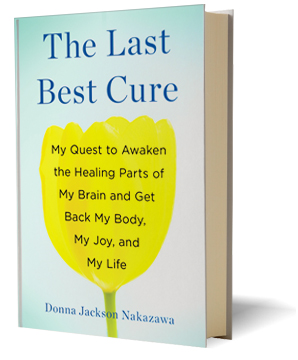
  • Anti-inflammatory Fruit Bread (gluten free)

    Anti-inflammatory Fruit Bread (gluten free)

    IMG_0708

    Breakfast, we’re told, is the most important meal of the day. Which is why a quart/litre of green juice/smoothie is my absolute favourite. Sometimes though I’m feeling a bit more decadent, or want something to snack on later in the day, or even for dessert. And that’s how this antihistamine and anti-inflammatory breakfast fruit loaf was born.

    Because I’m no longer limiting my histamine intake, I served mine up with delicious home made raspberry jam (1 cup raspberries, 1/2 cup apple juice, 1 tsbp coconut sugar, 10 grapes, pinch of salt and a little lemon juice). Raspberry isn’t considered low histamine on most food lists, so you might want to try high quercetin blueberries, apples, pears or quince for your jam instead.

    I used a generous helping of my apple and carrot juicing leftovers, but you can just go ahead and use grated apple and carrot instead. I’ve made this with both coconut and date sugar – lovely either way, but you could also just use dates, or home made applesauce.

    You can use baking powder/soda if you’re ok with it – I usually leave it out.

    I chopped up the loaf and froze it, then popped the slices into the toaster as needed and served with a generous smear of jam.

    Nutrient breakdown: 

    Some varieties of sorghum flour possess anti-inflammatory properties [1].

    Apples are high in histamine lowering, mast cell degranulation preventing quercetin [2].

    Carrots are anti-inflammatory [3].

    Coconuts possess anti-inflammatory and pain killing properties [4].

    Ginger is an antihistamine (H1 and H2 receptor antagonist) and anti-inflammatory [5].

    Duck eggs are very high in Vitamin B12 [6].

    Vanilla is an anti-inflammatory [7].

    Fruit loaf

    Prep Time: 5-10mins | Cook Time: 30-40 | Servings:  8-12| Difficulty: Easy

    Ingredients:

    1 cup sorghum flour

    1/2 cup apple juicing remains

    1/2 cup carrot juicing remains

    2 tbsp ginger juicing remains

    1/2 cup coconut/date sugar

    1/4 cup coconut butter

    2 eggs (or 1/2 cup vegan coconut yoghurt) I use 1 large duck which provides 70% RDA Vitamin B12

    1 tsp vanilla (if tolerated)

    pinch salt

    Directions:

    Pre-heat your oven to 200C/350F.

    Combine the flour, apple, carrot, ginger, vanilla and pinch of sea salt in a bowl. In a blender, or in a small bowl, whisk together the sugar, eggs and coconut butter till fluffy. Make a well in the flour and spoon in the egg mix.

    Combine, pour into a small to medium baking tin and bake for 30-40 minutes.

    Remove from the oven, tip out onto cooling rack.

    Slice and freeze.

    Join my mailing list for more recipes and to be the first to know when registration for my low histamine webinar opens!

    Take a peek at my low histamine and antihistamine cookbooks for more high nutrient recipes.

    If you’ve found this information useful I’d appreciate your support (at no extra cost to you!) – please check out my online store for your health foods, supplements, kitchen items and beauty product purchases. Affiliate sales through my online store go towards maintaining the website, funding travel to interviews and purchasing all the lovely foods for my free online recipes. You’ll find these items in the “Shop with us” drop down menu on my homepage.

     Please don’t forget antihistamine, pain killing foods can still hurt us, so please always check with your doctor before adding new foods to your diet. 
    ———-REFERENCES———–

    [1] http://www.ncbi.nlm.nih.gov/pubmed/20673059

    [2] http://www.ncbi.nlm.nih.gov/pubmed/16081068

    [3] http://www.everydayhealth.com/rheumatoid-arthritis-pictures/foods-that-fight-inflammation.aspx

    [4] http://www.ncbi.nlm.nih.gov/pubmed/19429325

    [5] http://journals.tums.ac.ir/upload_files/pdf/_/2382.pdf

    [6] http://www.fitday.com/fitness-articles/nutrition/vitamins-minerals/the-8-best-foods-for-vitamin-b12.html

    [7] http://www.rethinkingcancer.org/blog/spice-of-the-month-vanilla/

  • Histamine Intolerance, allergy & mast cell supplements pt1 (transcript)

    Histamine Intolerance, allergy & mast cell supplements pt1 (transcript)

    twinlab quercetin

    Thanks so much to Judith for your transcription of this video – very kind of you to make this text available to our community. And a quick note to anyone who has a little spare time and would like a couple of free books – please let me know if you are up for transcribing interviews/videos and I’ll hook you up! 

    Histamine Intolerance, allergy & mast cell supplements pt1 (transcript)

    View part one and part two of the video. 

    Today I thought I’d take you through the answer to one of the questions that I’m asked the most which is, what supplements do I take? Now, I was anti-supplements for a really long time because I believed in trying to allow the body to heal itself. But it became apparent after a while that my body was going to need just a little bit of help. So I thought I would try a few things and see what was a hit and what was a miss. Today I´m going to take you through the hits because – we´re all so very different –  I don´t really believe in saying, “Well, this worked for me so it should definitely work for you”. We all have a lot of other issues going on and so it´s best to see what works for you.”

    So today I´m going to show you my absolute favourite supplement on the planet at the moment which is the Twinlab Quercitin with Vitamin C. Now, some people don´t know this but Vitamin C – or may know this – that Vitamin C is a potent mast cell stabilizer and antihistamine. What do I mean by a mast cell stabilizer? Histamine and other inflammatory elements are contained within a mast cell which is in our body. The mast cells then release these inflammatory elements as needed by the body to fight infection or to help wound healing. Now the problem arises in some people like myself when we either have to many mast cells or mast cells are just leaking too many of these inflammatory molecules into the body and wreaking havoc on our systems. So Vitamin C is a potent mast cell stabilizer, preventing it from degranulating and leaking this inflammation into the body. The thing is, ascorbic acid – which is what you generally find in supplements – is generally made from fermented corn. Now, fermented foods are definitely off the menu for most of us which is a bit of a bummer as you know we like to take probiotics and other things but this Twinlab Quercitin with Vitamin C: the Vitamin C is actually made from sago palms, so its ascorbyl palmitate and this is the only Vitamin C I´ve never actually had a problem with. And the Quercitin is derived from the sophora japonica tree, I know because I called and asked. A lot of Quercetin supplements are derived from fava beans which are definetly a big no for those of us with histamine problems. So this is currently my favorite. I take between 2 and 4 tablets a day which is above the recommended dosage which I don´t  advise others to do but it´s just something I´m trying out for myself. I know that it is used in some medical trials at that dose for people with cancer and other disorders.

    My other current favorite is Mangosteen. It’s the Source Naturals Mangosteen tablets. It´s 36 mg of calcium with 187 mg of Mangosteen. I started taking Mangosteen because it is an anti-inflammatory, it´s an antihistamine, it’s a mast cell stabilizer. But it also is very effective in treating high prostaglandin levels. Now prostaglandins are one of the inflammatory molecules that are released by mast cells into the body. Now why should you care about prostaglandins? Well, a complaint I hear quite a bit is, “Oh my god, my hair is falling out, I don´t know what to do.” I was one of them. I lost a quarter of my hair.  It was very, very scary. I did a few things to stop the hair loss. The first thing was to stop washing my hair with shampoo. At least on the scalp. I was still using it on the ends. It gave me absolutely beautiful hair. But after a year I called it quits because I had enough. I just wanted a scalp that smelled really, really fresh. At the same time I started taking these Mangosteen tablets and my hair stopped falling out. I´m not sure if it´s a coincidence but if you read on my blog, prostaglandins cause hair loss in men and women. So you know, it´s always worth a try.

    Now those of you who either don´t want to take the Twinlab Quercitin or want something that packs  a little bit more of a punch: my other favourite supplement is Dr. Theoharides at TUFTS University, his supplement Neuroproteck. Dr. Theo is one the worlds most renowned mast cell experts with an incredibly number of studies under his belt. And he created Neuroproteck after finding out that bioflavonoids such as quercitin, luteolin and rutin are as effective as stabilizing mast cells thereby preventing them from releasing histamine and other inflammatory elements into the body. So, he put these all together in one capsule which is very handy.

    The basis of my diet, the anti histamine and anti inflammatory diet is bioflavonoids. It´s actually how I created my diet. I was looking at the research online and seeing that these bioflavonoids are as effective a treatment if not more effective than what is being prescribed to us by the doctors. Now if for some reason you either don´t tolerate Dr. Theos supplements or you just want to try something different, I found a couple of brands that due the other bioflavonoids, quercetin is very easy to find, its hard to find a clean source of luteolin and rutin. I´m currently trying out these Swanson Ultra Luteolin Complex which has in it luteolin and rutin from the sophora japonica tree. But also  – a little worringly –  from citrus sinensis, whis is otherwise known as an orange. So this one I´m trying at the moment  and I will report back. I seem to be doing ok with it. I´m on day 4 but we´ll give it a little bit of time.

    You’ll find more info on my diet and the recipes that helped heal me here.

    My other favourite Twinlab Vitamin C, also from sago palm. It´s 1500 mg of Vitamin C. If you can´t take Quercitin for some reason, this usually knocks a reaction right out of the park for me, it´s pretty amazing stuff. And now the last of the supplements I take on a daily or almost daily basis. This one is not on a daily basis but as needed when I feel a little bit tired or when I know that my iron is low. It was really amazing to find this stuff because I really, really struggled with iron supplements – my goodness – I reacted to every single one that I took but in the end water saved the day! This is Spatone. It is available in the United States. It´s basically an iron rich water. Who knew such a thing existed, I mean logically it must exist because there are minerals in water but this one has definitely been a lifesaver. And that´s it! That’s a roundup of these supplements that I use on a daily or almost daily basis and that´s it for now. Hope, you enjoyed it!

    Join my mailing list for more recipes and to be the first to know when registration for my low histamine webinar opens!

    Take a peek at my low histamine and antihistamine cookbooks for more high nutrient recipes.

    If you’ve found this information useful I’d appreciate your support (at no extra cost to you!) – please check out my online store for your health foods, supplements, kitchen items and beauty product purchases. Affiliate sales through my online store go towards maintaining the website, funding travel to interviews and purchasing all the lovely foods for my free online recipes. You’ll find these items in the “Shop with us” drop down menu on my homepage.

     Please don’t forget antihistamine, pain killing foods can still hurt us, so please always check with your doctor before adding new foods to your diet. 
  • Eczema: a mast cell/histamine related condition

    Eczema: a mast cell/histamine related condition

    eczema

    It’s official: though we’ve long suspected it, we can now add eczema/atopic dermatitis to the list of histamine/mast cell related conditions.

    A new study [1] recently proved, for the first time in humans, that mast cells (the pesky little buggers that house histamine in the body) are a key culprit in causing eczema (also known as atopic dermatitis). The researchers also revealed that a protein known as STAT5, plays an important role in the equation by triggering major mast cell increases in some.

    They now think the key to prevent or better treat eczema lies in blocking STAT5, which along with histamine, lives in our mast cells.

    Lost?

    Ok, so, mast cells are kind of the army barracks where histamine and others live. When our body’s in trouble, mast cells open their doors, allowing histamine and other inflammatory elements to be released in order to get to the site of an injury or infection, to get the healing process started. In addition to histamine, a number of other inflammatory molecules are synthesised, among them are interleukin and prostaglandins. These are all great things to have at our disposal, when they’re released, as needed, in order to help us heal.

    CLICK HERE TO LEARN HOW TO CREATE YOUR OWN HISTAMINE BALANCED DIET AND HEALING PLAN. 

    The problem arises when some of us (hands up if you’re a mast cell mamma!), have too many of these mast cells, or unstable ones (you mean working in war zones affected my mast cells? Who knew?!), or just have too much histamine in the body because of a lack of histamine-lowering enzymes like DAO and HNMT. This leads to massive inflammation throughout the body, pain and misery, and undoubtedly years of misdiagnosis as doctors scramble to keep up with a never ending list of complaints.

    Why are mast cell disorders so hard to diagnose? Mast cells are found in every organ system in the body – so yeah, we get a helluva lotta symptoms, usually rotating every couple of months (just to throw a monkey wrench in the works ya know?), and most docs have no clue what it’s all about.

    It’s ok, give them a break. They try real hard, they’re not god, and HMO’s give them what, like 15 minutes per patient?

    I had to be my own doctor in the end. Good thing too because I learnt how to heal myself without mast cell meds (of which there are quite a few); sadly only after being mis-prescribed almost every med on the planet (that’s what it felt like anyway).

    Lucky for me, I was able to throw in the towel on my day job, thanks to all of you lovely people who support my work by ordering one of my books that share how I recovered from mast cell activation/histamine intolerance, and spend time researching food instead!

    While it seems like there’s not much research out there on the effects of various foods on suppressing STAT5 yet, I did find that cucumber inhibits STAT3 [2], as does mangosteen skin extract [3] which is definitely a promising start. Given these two also inhibit prostaglandin d2 synthesis (research babble – means that it’s anti-inflammatory!), I’d hazard a guess that many of the generally anti-inflammatory foods will also exert some action against the STATS.

    You’ll find a great six page list of prostaglandin, histamine and mast cell degranulation inhibiting foods in the Anti-Cookbook. Don’t miss it! 

    A question that often comes up is whether they should use a steroid cream prescribed by their doctors. I am not a doctor and cannot answer this question. What I do tell people is that there’s a study, published in the Journal of the European Academy of Dermatology and Venereology, showing that nigella sativa ointment (might) be as effective as one of the most commonly prescribed corticosteroid topical creams (Betamethasone) [4]. The study found it was over time, not sure why. Given the side effect profile of Betamethasone [5], it might be worthwhile asking your doctor about it. Also, I’d love to see a study where the nigella is also ingested, either in whole form or as the oil, because I obviously believe that we should begin treating from the inside.

    The other good news is that according to mast cell researcher Dr. Theoharides, the mast cell stabilising bioflavonoid quercetin, which prevents histamine release and is beneficial in the treatment of skin conditions, may also work for atopic dermatitis/eczema [6].

    Doctors were so clueless as to what was going on with me that they misdiagnosed a lipstick induced rash/dermatitis as herpes. I was only 18 and thought my life was over. Simply changing lipstick shades totally cleared it up just a few weeks later! Never to come back…more on that in the low histamine beauty survival guide, as well as a list of high histamine, antihistamine and anti-inflammatory beauty products and clean make-up brands. 

    I’m so glad to finally have an answer for all the people who email me asking whether a low histamine diet can help their eczema: this study highlights the importance of lowering inflammation in the body, so a high nutrient anti-inflammatory diet, rich in antihistamine foods, would likely help. I know that Dr Fuhrman, who I study nutrition under, has had tons of success treating psoriasis and eczema through a high nutrient anti-inflammatory diet. My approach goes just one step further. But please, always remember to check with your doctor first and remember, my cookbooks are not a treatment, but rather inspiration for those wanting to transition to a high nutrient antihistamine and anti-inflammatory diet.

    Join my mailing list for more recipes and to be the first to know when registration for my low histamine webinar opens!

    Take a peek at my low histamine and antihistamine cookbooks for more high nutrient recipes.

    If you’ve found this information useful I’d appreciate your support (at no extra cost to you!) – please check out my online store for your health foods, supplements, kitchen items and beauty product purchases. Affiliate sales through my online store go towards maintaining the website, funding travel to interviews and purchasing all the lovely foods for my free online recipes. You’ll find these items in the “Shop with us” drop down menu on my homepage.

     Please don’t forget antihistamine, pain killing foods can still hurt us, so please always check with your doctor before adding new foods to your diet. 
    ——–REFERENCES——–

    [1] http://www.sciencedaily.com/releases/2014/01/140109132140.htm

    [2] http://www.merckmillipore.co.uk/life-science-research/signal-transducers-and-activators-of-transcription/c_6eib.s1OjbEAAAEiHqBNlRjr?PortalCatalogID=merck4biosciences&CountryName=United+Kingdom

    [3] http://www.ncbi.nlm.nih.gov/pubmed/24295217

    [4] http://www.ncbi.nlm.nih.gov/pubmed/23198836

    [5] https://en.wikipedia.org/wiki/Betamethasone

    [6] http://www.ncbi.nlm.nih.gov/pmc/articles/PMC3314669/

  • Love: nature’s anti-inflammatory

    Love: nature’s anti-inflammatory

    Hearts on red background

    A few weeks ago I wrote about the role of toxic relationships on inflammation and illness in general.

    Why talk about inflammation rather than histamine? Histamine’s role in the body is to begin healing (and others) by causing inflammation in the body. When you have too much histamine in the body, there’s a ton of nasty inflammation wreaking havoc all over! So my number one priority post-reaction is to get that inflammation genie back in the bottle. 

    Never one to dwell on the negative of anything (not for long anyways!), it’s now time for the flip side:

    You may have heard of oxytocin’s role in birth, lactation, bonding with child and partner, and of course, a hearty orgasm, but it was certainly news to me that it’s also a potent anti-inflammatory.

    Was it though? Not really.

    My instinct, when suffering a horrific reaction, had always been to hold my beloved close. I’m quite sure I’m not alone there…many is a time I rang him, in a tizzy, my guts threatening to jump through my stomach cavity, my migraine sure to blind, begging him to race home to comfort me. Just lying together, hearts beating as one, would often be enough to calm down whatever was going on.

    Whatever it was that settled me, was strong enough to help bring me back from the edge of anaphylaxis, when I had resigned myself to death in Kenya last year. My meditation practice has now evolved to a daily hardcore zen mindfulness meditation routine that helps keep pretty much all my symptoms at bay – how? Meditation is an antihistamine and anti-inflammatory so strong that it creates changes on a genetic level.

    So it certainly wasn’t a shock to find that in addition to all that, mindfulness meditation raises oxytocin!

    There’s more:

    “Oxytocin levels can influence the digestive system as much as they influence the brain. Oxytocin has been proven to calm gastrointestinal inflammation, greatly reducing the risk of food sensitivities, autoimmune disorders, and systemic infections.”

    And…

    “In a 2010 study, Gershon found that oxytocin cools down gastrointestinal inflammation. Intestinal inflammation can not only cause abdominal discomfort, but it can also contribute to more serious disorders that involve the immune system, such as:

    • Food sensitivities
    • Autoimmune disorders
    • Systemic infections like Candidiasis”

    We’ve now established that we probably want a lot more oxytocin in our lives, but how to get it? It’s simply not practical to stick your lover in your pocket to keep them handy for when you need them, is it now?

    I found a great article in Psychology Today on how to raise oxytocin levels naturally – among the tips: share a meal, give a gift, tell people you love them, pet a dog (yours) and of course, practice mindfulness (as in meditation).

    A word of caution, oxytocin is also what causes uterine contractions in childbirth (to get things rolling) and is also what seems to cause the mast cell degranulation needed to get breast milk pumping. Maybe it’s because I need neither of those things to kick off, alls I feel when given a great big hug, is a rush of relaxation and thankfulness for this wave of wellbeing, safety and knowledge that all is well in the world.

    I suggest that a hug a day keeps the doctor far, far, far away.

    Check out  Anti-Recipes and The Anti-Cookbook

    CLICK HERE TO CREATE YOUR OWN PERSONALISED HEALING HISTAMINE PLAN. 

    If you’ve found this information useful I’d appreciate your support (at no extra cost to you!) – please check out my online store for your health foods, supplements, kitchen items and beauty product purchases. Affiliate sales through my online store go towards maintaining the website, funding travel to interviews and purchasing all the lovely foods for my free online recipes. You’ll find these items in the “Shop with us” drop down menu on my homepage.

     Please don’t forget antihistamine, pain killing foods can still hurt us, so please always check with your doctor before adding new foods to your diet. 
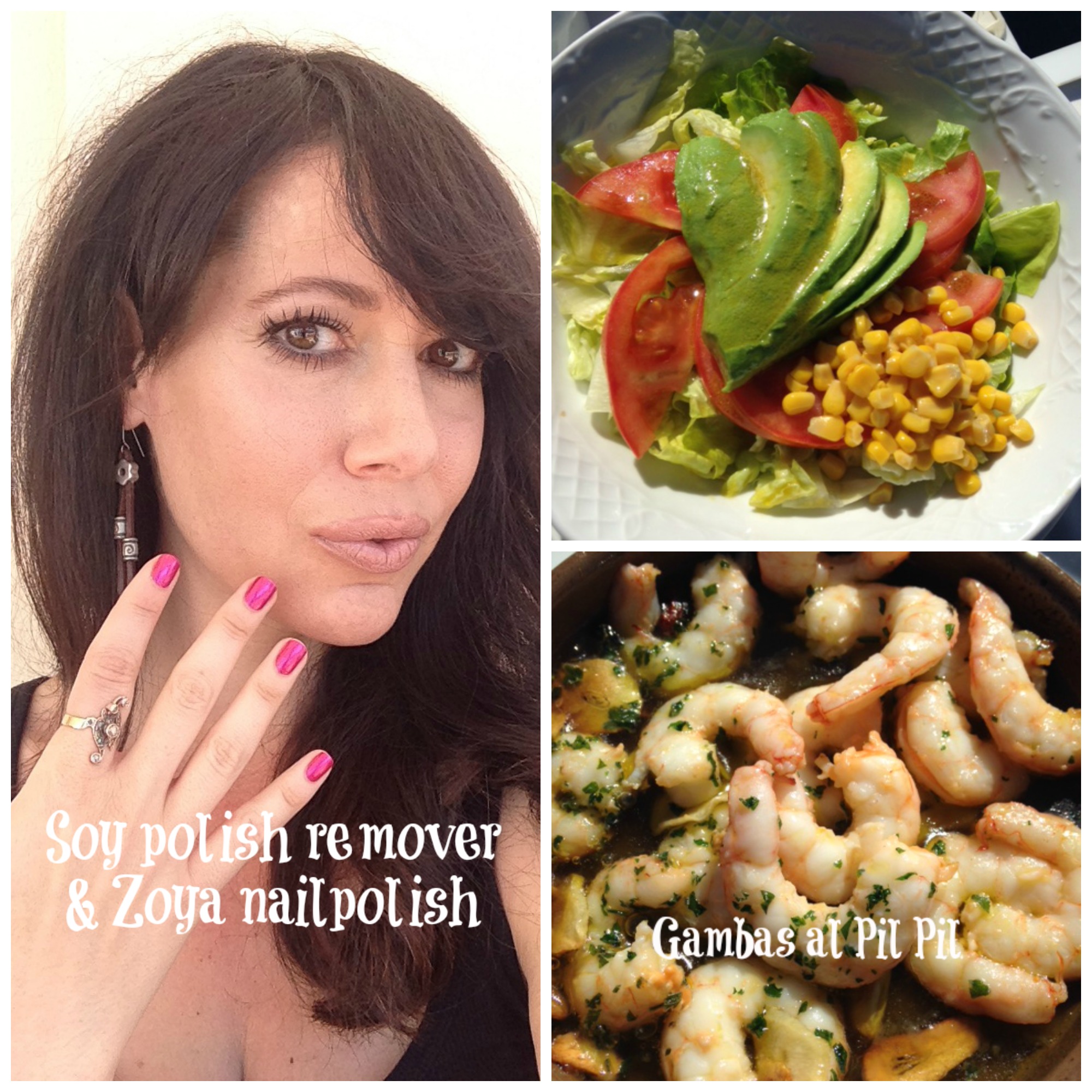
    http://www.psychologytoday.com/blog/the-moral-molecule/201311/my-favorite-ways-raise-oxytocin


  • Anti-inflammatory Mushroom Summer Rolls

    Anti-inflammatory Mushroom Summer Rolls

    IMG_0653

    Here’s an explanation of why I include higher histamine food in my personal diet (but not yet in my cookbooks!).

    Four years had passed since a mushroom graced my palate, when, on a whim, I bravely ordered up “Field Mushrooms with Parmesan and Arugula, in a Butter Garlic Sauce” in a small country pub in the unashamedly hippie English town of Hebden Bridge.

    My man feigned indifference at my order, but I imagined he was secretly excited.

    Maybe I was projecting, but I’m quite sure he had only half believed my declaration of a few months ago: “I’m going to eat whatever I want, no matter what *loody list it’s on, because I’m CONVINCED I’ve healed.”

    I then enlisted his help to make sure I didn’t slip into old patterns, by attributing any symptoms to food or beauty products. Easier said than done. Till I hit upon a little technique combining meditation, quietening what I believed to be an overactive amygdala, with just a pinch of neuro-linguistic programming. I’m still working on it, but will be sure to share when I can figure out how to, without anyone getting hurt. I’m actually hoping to interest a doctor in it so that it can safely be trialled.

    Why did I believe this would work? This year I came across some studies on pavlovian conditioning in allergic reactions. For those unfamiliar with the original experiments, dogs were given food every time a bell rang. Eventually they began to associate the bell with food, and so began salivating, even when no food was forthcoming. The studies I found showed a similar result in allergy patients who exhibited an elevation in tryptase (one of the markers of allergic reactions and mast cell disorders) and others, even though they weren’t actually exposed to the allergen they believed they were.

    To learn more about how our brain is involved in histamine reactions and inflammation click here.

    To be honest though, I also knew that Dr Fuhrman believes people with histamine intolerance should still eat mushrooms, but also a whole host of other foods rich in phytonutrients, in order to heal. Though I’ve always thought the man walked on water, and I believed whole heartedly in his dietary approach, I allowed my previous experiences with inflammatory foods when my body was in complete disrepair, which just so happened to also be high histamine, to taint my present relationship with food (for more on Dr Fuhrman’s thoughts on needing to eat more foods in order to heal histamine and salicylate intolerance as well as mast cell disorders, please read this).

    Anti-inflammatory mushroom summer rolls

    So, where does that leave Yasmina, about to indulge in some yeasty funghi, smothered in parmesan and butter? Well it left me hungry while they removed the buttery, cheesy mushies they placed in front of me, by mistake, as I had ordered them dairy free – I mean come on, I may be eating what I want, but what I want is still high nutrient and anti-inflammatory.

    You’ll find more recipes like this in my books Anti-Recipes and The Anti-Cookbook

    CLICK HERE TO CREATE YOUR OWN PERSONALISED HEALING HISTAMINE PLAN. 

    It would have been weird to try and use my re-introduction technique right there at the table. More boring than weird really, as this lunch took place in what seemed like nothing more than a stolen moment in between five hours of hard core meditation on my mindfulness meditation teacher’s course. So rather than go into a meditative state for the 20th time that day, I simply focused on the conversation, the roaring fireplace warming my stone floor cooled bottom, and dove into my gloriously garlicky, parmesan and butter free portabella mushrooms.

    I may have even, after shunning the lovely crusty white loaf in the direction of the waitress, had a split second change of heart and lunged for it after all, deftly nipped the very crustiest bit, before expertly mopping up the saucy dregs from my plate. It was the perfect heart warming, soul affirming experience, more than enough to buoy my spirits for the coming two hour meditation session, after my 5:45am wake up call.

    So, back to the present day.

    Thanks to my initial plunge into the fun-ghi pool in Hebden Bridge, I was pretty much over my fear of them. I had even higher expectations for my own creation – seeing as I planned to incorporate the usual high nutrient, antihistamine and anti-inflammatory bevy of ingredients to balance out the use of higher histamine ones.

    Nutritional breakdown

    Mushrooms: inhibit tumour growth (in animal studies) [1], beneficial to the liver [2], potentially prevent breast cancer [3], kill pain and are anti-inflammatory, particularly inhibiting prostaglandins (the stuff that causes brain fog!) [4]. Though they’re ok to eat on Dr Fuhrman’s list (cooked, not raw) and those of others, they do however appear on high histamine lists (though I have yet to understand the testing methodology), so please be aware that despite these benefits, they will be harmful to some. 

    Antihistaminic: turmeric, arugula, spring onions, chives, coriander, garlic [5].

    Anti-inflammatory: carrots, spring onions, olive oil, chives, arugula, turmeric, coriander, garlic, white pepper [6].

    CLICK HERE TO CREATE YOUR OWN PERSONALISED HEALING HISTAMINE PLAN. 

    Anti-inflammatory Mushroom Summer Rolls

    Prep Time: 20-30 | Cook Time: 0 | Servings: about 10 rolls | Difficulty: Medium

    Ingredients:

    4 cups chopped mushrooms

    1 bag arugula

    2 carrots, shaved

    4 spring onions, chopped

    chives for garnish

    turmeric (I used two pieces about the size of my pinky. I love the stuff but this might be too much for you)

    garlic (I used 2 cloves)

    salt

    white pepper (lower oxalate than black)

    olive oil

    coriander

    1 pack rice paper rolls

    1 cup boiled vermicelli or other thin white rice noodles (white because it’s lower oxalate)

    Optional

    Japanese Mirin rice wine for cooking (like for your partner or if you’re beyond the elimination phase)

    1 large fillet of salmon (I used one)

    Directions:

    In a large pan saute the garlic, spring onions and turmeric in a little olive oil, till fragrant. Add in the mushrooms, carrots and the salmon if using, seasoned with a little salt and white pepper, if you wish.

    If using mirin, drizzle it on.

    Toss in the cooked rice noodles and arugula and season again.

    In a kettle heat up some water till almost boiled. Pour into a shallow plate and then once cool enough (but not cold!) place a rice paper in it till soaked through but not mushy. Carefully withdraw from the water and flip over. This might take a little practice…

    Remove and place on a dry surface. In the middle of the roll lay down a couple of pieces of coriander and some of your noodled veggies.

    Fold the upper and lower parts of the roll over, then roll horizontally to seal up.

    Use two long pieces of chives to nicely tie up the rolls as in the picture.

    You’ll find more recipes like this in my books Anti-Recipes and The Anti-Cookbook

    CLICK HERE TO CREATE YOUR OWN PERSONALISED HEALING HISTAMINE PLAN. 

     Please don’t forget antihistamine, pain killing foods can still hurt us, so please always check with your doctor before adding new foods to your diet. 
    REFERENCES….

    [1] http://www.mushroomsandhealth.com/files/Files/Mushroom%20Varieties.pdf

    [2] http://www.mushroomsandhealth.com/files/Files/Mushroom%20Varieties.pdf

    [3] http://www.biomedcentral.com/1471-2172/10/12/

    [4] http://cancerres.aacrjournals.org/content/66/24/12026.short

    [5] The Anti-Cookbook, Yasmina Ykelenstam

    [6] The Anti-Cookbook, Yasmina Ykelenstam

GET STARTED HEALING HISTAMINE

WHAT YOU NEED TO KNOW ABOUT HISTAMINE DELIVERED TO YOUR INBOX