One of the questions I’m most frequently asked is: “What supplements do you take?”
So I put together a quick video on my top histamine intolerance, histamine lowering, mast cell stabilising supplements.
I explain the benefits of various antihistamine and mast cell stabilising supplements, how/why they work for me and how researching them led to the creation of my personal antihistamine and anti-inflammatory diet.
I’ll also share the miracle iron supplement that isn’t actually a supplement (thanks Nicola for the tip!). It’s ironic, but it took me years to work out that the iron supplements I was taking to combat vegan diet induced fatigue were actually causing narcoleptic episodes! At least pineapple tastes great and made me supremely happy before my head hit the table.
But….I’m excited to now be able to enjoy little bits of pineapple, kiwi and mandarins!
There’s plenty more videos in the works (with better audio – still working out the kinks, please bear with me as always) so please keep an eye out, but in the meantime I’d love to hear what supplements work for you.
You’ll find links to everything I talk about in the video here.
Please ALWAYS check with your doctor before trying supplements.
The Anti-cookbookand all liquid Anti-Detox Book, don’t treat any conditions, but are high in the high nutrient antihistamine and anti-inflammatory ingredients that have been instrumental in helping me feed myself on a limited diet. The Anti-cookbook features a six page list of antihistamine and anti-inflammatory foods and comes in regular and Paleo.
The Low Oxalate Cookbook features antihistamine and anti-inflammatory rich recipes.
Don’t miss the Low Histamine Beauty Survival Guide for non-toxic beauty tips, the skinny on histamine releasing (mast cell degranulating) beauty ingredients, antihistamine and anti-inflammatory beauty alternatives and the top brands natural brands I’ve found.
It’s high time I gave you all a big heartfelt thank you.
Writing this blog has been the single most consistently cathartic experience of my life. Sharing my experiences with you, learning from you, feeling that I’m fighting to heal not just for myself, but in order to share my findings with you, has inspired me beyond belief.
I fired up my first blog in Sept 2011, just days after my initial histamine intolerance diagnosis. I felt optimistic, that I had arrived at my answer, that everything would suddenly resolve and I would feel better. I mainly blogged desserts, based on the raw food principles I had previously tried to heal myself with (and failed – more on that here) as well as a few personal pieces of writing.
I was shocked to find that people were reading my blog. To this day I can’t believe how many have been on this journey with me since my incarnation as the biogenic amine woman.
Initially the blog was simply a way of vanquishing my demons.
Hatred I felt towards the doctors and psychiatrists who had subjected me to unnecessary operations, medical treatment and mind altering drugs that left me a vegetable, but also hatred towards myself, for the life that I had lived.
I’m not claiming that these histamine/mast cell conditions are the result of our lifestyle choices.
If only it were that easy.
It never is.
Yes, we are somewhat at the mercy of our genetics and some of us are dealt a bum hand. But even if we have been, I believe there’s room for improvement.
I’m not saying that lifestyle choices have caused others to become ill.
It’s what I say about myself.
Whether it’s true, or I’m just being too hard on myself I don’t know. What I am saying is that whether it began before conception, affected by our mothers’ dietary choices in the years before pregnancy (Dr Fuhrman/Super Immunity), or the moment we were conceived, with the genetic roulette wheel of the generations who came before us, with the chemicals and hormones our mother was exposed to while she carried us, the pollutants that assailed her as she nursed us – it doesn’t really matter.
All I emphasise is that no matter the cause, there’s always a chance diet and exercise will help.
While I still suffer from symptoms, I do not focus on them. I honestly believe that some people have an unrealistic vision of what real health is and will never be happy because it simply doesn’t exist. If you probe most healthy people hard enough you will discover they too have myriad ailments/symptoms that they simply choose not to focus on, because life is too good to sweat the small stuff. Sure, one day cancer might sneak up when they’re not paying attention, but they spent an incredible X years running around having fun and living life rather than living sickness.
The blog was my motivator. I was ill. I finally knew it for certain. And so I went about taking control of my life. Being someone who learns best by studying the written word, on paper, or screen, I immediately immersed myself in research. Having spent a decade delving into Lexis Nexis, the history of the Middle East, tracking down people who didn’t want to be found, and much, much more as an international television news journalist for CNN and the BBC (with a brief stint at FOX), I was certainly prepared.
In my mind the anonymity was necessary to shield my ego from ridicule from former colleagues and allowed me to continue being taken seriously in my day job. Having my health status (still precarious at the time) for all to see didn’t particularly make me employable. It was a surreal encounter with a seriously unhinged person in an online forum, who claimed I was not in fact me, but rather the person who diagnosed me, pretending to be a food blogger, that finally nudged me into revealing my identity (wooooo so dramatic! Lol).
I struggled with the idea. I’ve been terrified of being without insurance and yet I had let mine lapse (after an argument with BUPA about pre-existing symptoms). Though not seeking insurance for anything histamine/mast cell related, I wanted it for childbirth, cancer, that type of thing. I knew that would never happen if I disclosed any kind of previous symptoms, even if unrelated to either of those. Sadly once it dawned on me that I had a mast cell disorder I realised I was likely uninsurable.
After all, my mast cell disorder had blessed me with upwards of 50 symptoms, so there’s pretty much zero hope that an insurance company would ignore them should I be diagnosed with anything in the future (pregnancy complications, cancer, liver issues etc).
Somewhere along the journey I realised I wasn’t reaching enough people. My hyper research focused blog wasn’t doing it, and so I approached it from an angle we all love – food.
Food glorious food.
I haven’t always loved it.
I spent an incredible number of years fighting my need for it, starving my body of nutrition.
Because I feared it.
Developing a work relationship with food forced me to explore its selling points and explore its many gifts.
Photographing it meant spending hours examining it, working with natural textures to yield pleasing results.
I thank you for your reading of my work, your comments that provide valuable feedback and encouragement, your funding of this project.
See, I’m not rich.
I didn’t get into journalism for the money (lucky that, because there really isn’t any!) and the years of illness, being unable to work and paying doctors to slice me up unnecessarily and give me multiple cancer scares, totally wiped out my savings.
It was really touch and go there for a while. But thanks to my diagnosis, and my eventual adoption of a high nutrient antihistamine and anti-inflammatory diet, I’m now in the best health of my life (more on that here), despite dealing with a mast cell activation.
I went from being bed bound, completely unable to work and neatly destitute to running a small digital media consultancy in London in just over two years. Not only did this work put a roof over my head, it also allowed me to fund this histamine project for just over two years.
It might not look like it, but this blog takes up as much time as my real job (more at times), in addition to costing me quadruple to run.
Most recently, thanks to your support, cookbook sales have managed to plug little holes here and there.
Working 16 hour days has naturally impacted my personal and social life, so before it starts to affect my health, I’ve made the tough decision to scale back.
But , I will not be cutting hours devoted to this website, rather I am stepping back from the consulting that has sustained me over the last few years.
In order to do that – I need to get creative about how to generate more funds!
Having spent a long good while thinking about how to do it (and failing!), a wonderful friend whose wife is a masto buddy, helped me come up with some lovely ideas – that won’t cost my readers a cent!
I’ll tell you more about it in coming posts, but basically it involves affiliate commissions on products I’ll be adding to the site – ONLY products I use/have used and therefore endorse.
But there’s fun stuff coming up too. Believe me. We’ve been working hard on the new incarnation of the site and a bunch of cool things we think you’ll really enjoy!
I hope no one will take offense to these developments (again, they won’t cost you a penny), but please do let me know what you think.
In the meantime, coming up next week: an interview with Dr Ben Lynch of MTHFR.net on how methylation pathways affect histamine and mast cell disorders, and the most INCREDIBLE flatbread I’ve ever made! It’s not just low histamine, gluten free and grain free – it’s low oxalate and paleo too!! Don’t miss a word – sign up to my mailing list and get a 10% discount on my books.
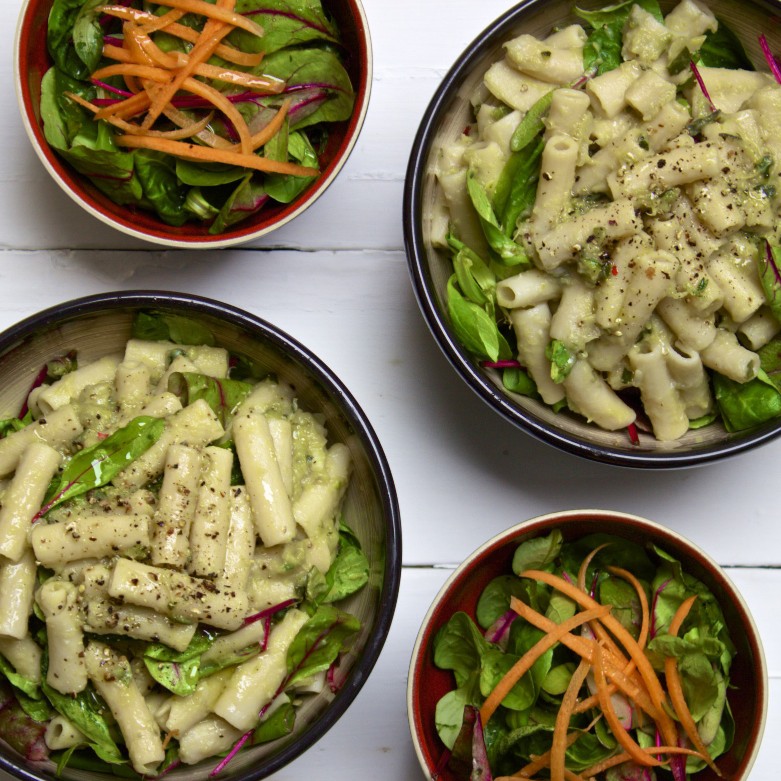
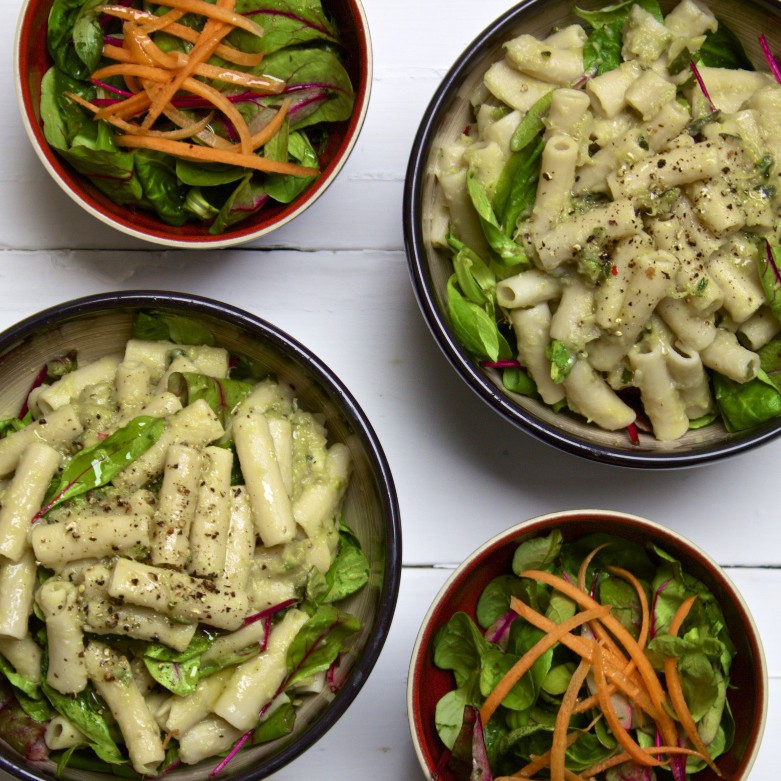
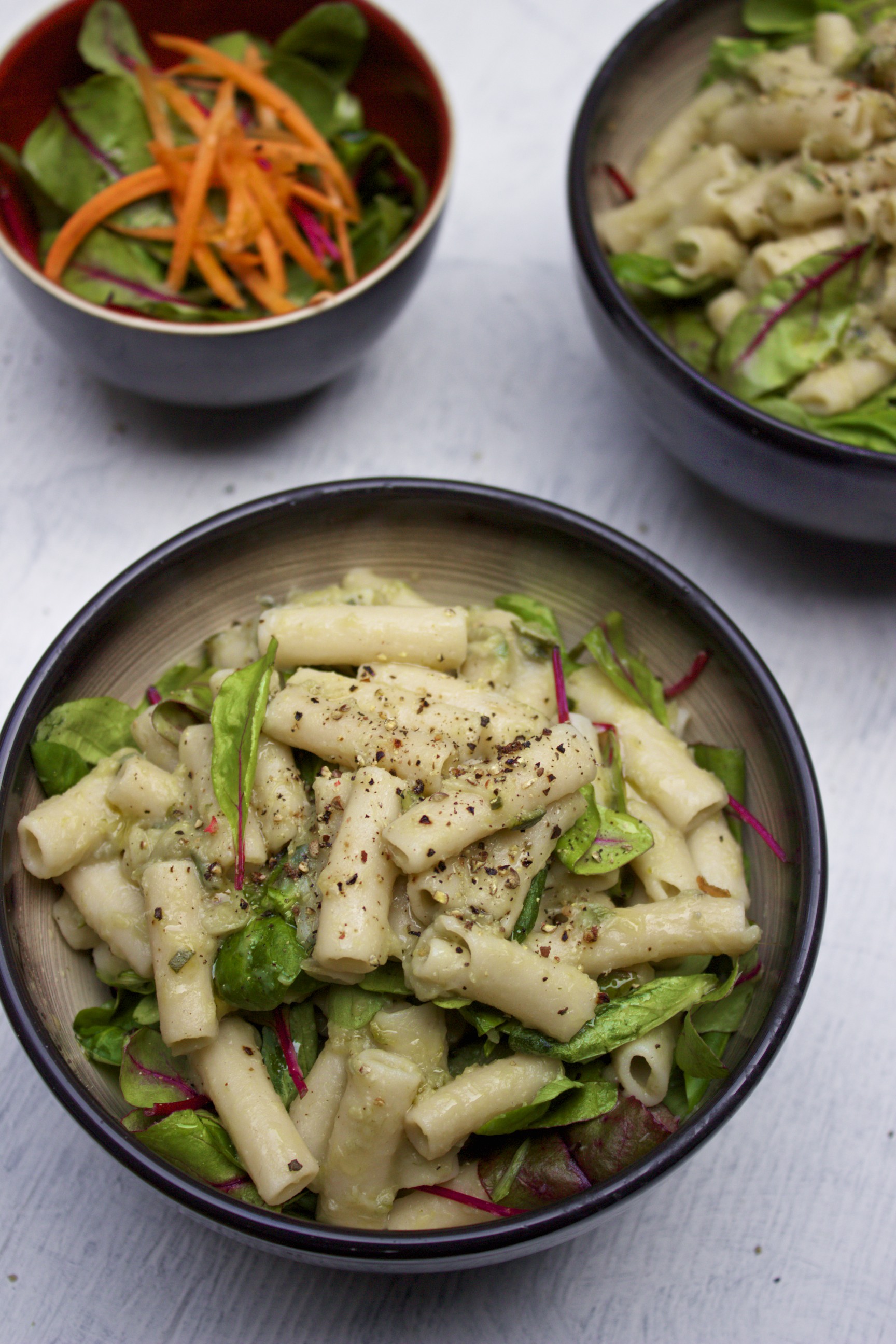
My man declared this incredibly creamy gluten & dairy free, anti-inflammatory artichoke and antihistamine herb pasta his new favourite dish!
I have to agree.
It’s the perfect lunch or dinner, to be enjoyed by two.
For those of you who don’t already know – my man doesn’t have histamine, dairy or gluten issues – he’s just often totally up for checking out whatever I’m eating, if not mostly totally happy for me to feed him my weirdo diet.
That’s not to say that he doesn’t get into all kinds of other treats…
For those of you still primarily cooking separate meals – I’ve found it’s all in the pitch. Don’t tell people what they’re eating – till they tell you how delish it is!
In particular, going on and on about the histamine thing isn’t doing us favours.
People don’t like illness, so they certainly don’t want to eat a “sick” person’s diet. Telling them it’s all about vibrant health, looking years younger (on the inside and out), and enjoying a life with less prescriptions, often yields better results. The fact is that most antihistamine foods (if not all) are also anti-inflammatory – inflammation causes/aggravates so many illnesses that it would be silly not to try and mediate inflammation.
So…even people who are totally “healthy”, who are looking to prevent any yuckiness down the line, might benefit from what’s on your plate.
I had a lot of fun “fooling” people back in my raw food days – the avocado chocolate frosting was a particular success.
One day my nutty green lovelies – I shall have you again!
Till then, I’ll enjoy my incredibly velvety artichoke pasta thank you very much.
Here’s the nutrient breakdown:
Did you know that quercetin is a more effective mast cell stabiliser than the most commonly prescribed medication for mast cell activation and mastocytosis? [1] (Meaning quercetin can prevent mast cells from releasing histamine into our bodies). That’s important news because artichoke is not only rich in mast cell stabilising quercetin, but also fellow histamine-lowering bioflavonoids luteolin and rutin. [2]
The zucchini family possess anti-inflammatory [3], anti-ulcerogenic and potentially antihistaminic properties [4].
Thyme is such a powerful antihistamine that it has been shown to inhibit anaphylaxis (in animals) [5], but some may react due to benzoates.
Basil is a potent H1 and H2 receptor antagonist (like Claritin & Zantac, respectively, for example), in addition to being highly anti-inflammatory [6].
Coming up soon: an interview with Dr Ben Lynch of MTHFR.net – we discuss methylation and how it relates to histamine, and, an antihistamine and anti-inflammatory, low oxalate, gluten free flat bread that I am SO incredibly excited about!
And finally, to the recipe!
Creamy Artichoke & Zucchini Pasta w/Thyme, Basil, Oregano & Parsley
Yes dear friends, the diet and lifestyle changes I’ve made in the last year are certainly working. Otherwise there’s no way I could have completed my first 90minute, level 2-3 (out of 3) ashtanga yoga class in over two years just last week. It might not sound like much, but when you consider my last experience…
To quote Dirty Dancing: “spaghetti arms”. Not ideal really when they’re the only thing keeping your face from smashing into the festively tinted puce yoga mat just inches from your nose. Bravely, or so I thought anyway, I had persevered through the level two ashtanga yoga class – migraine mounting, noodle like limbs attempting to keep me vertical through tree pose and side angle as I listed wildly from side to side, a tiny boat tossed about in a sea of misbehaving mast cells.
It all crashed to a halt, not with a swan dive into the artfully polished “reclaimed wood” yoga studio floor, but rather when the teacher kindly whispered in my ear: “there’s no shame in child’s pose”.
Was she talking to me??
Me, need a break in yoga class?
Me, the decade long practitioner?
Me, the first in my social circle to embrace the punishing, Madonna-as-Arnold-Schwarzenegger-in-Pumping-Iron-musculature-building ashtanga yoga style?
What???
I lunged wildly for my yoga mat, cheeks burning, eyes tingling in anticipation of letting loose; the largest organ in my body threatening to pound through its skull encasement as I fled the class, trying hard not to trip over the bronzed hardbodies (ok a bit of an exageration as I was in London), blessed enough not to be dealing with my horrible affliction.
“Damn them,” I thought as I sniffled my way past.
There was just SO much wrong with the way I approached exercise post-histamine intolerance/mast cell activation diagnosis. A ton of research eventually revealed that the kind of exercise you do affects your histamine level.
So I thought I’d share some of my roadblocks and how I overcame them.
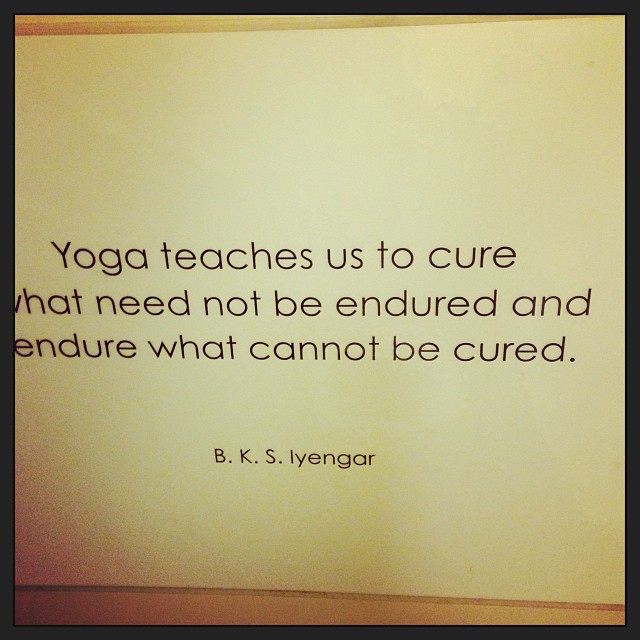
I took this picture in the yoga studio. Really hit home for me…
A “woe is me” attitude.
A biggie.
“Oh my goodness” (that’s the cleaned up version!) I thought, “I’m never going to exercise again. I’m going to become a ginormous canibalistic couch potato, devouring an endless supply of tasty bags of ‘tater chips ferried to me by online shopping services and emergency service workers wading through piles of McDonalds coupons and mice droppings.”
Ok, yes, always a possibility. That’s why I’ve spent the last year fighting to bring down my histamine level, stabilise my mast cells and bring down overall inflammation. So you can exercise (I hear you gasp)? Indeed – exercise has been on my mind throughout. It’s one of the most important pieces of this puzzle. Our bodies are made to move. I believe the hormones and chemicals released through exercise are necessary for me to heal.
I now understand that my body is healing. I know my limits – but more importantly I know when my brain is what’s standing in my way. It took time, but it comes. I recommend reading Dr David Hamilton’s excellent ‘How Your Mind Can Heal Your Body’ for more – you’ll find my interview with the bestselling author here.
Unwilling to deal with (temporary) exercise induced histamine increase.
(The Twinkie Defence)
Uh yeah. Ok, so at some point it just became silly that I was willing to hurt myself with a dessert rather than deal with some temporary spike in histamine due to exercise. The Twinkie isn’t doing a dammned thing for me, other than give me 30 seconds of pleasure. I will enjoy my muscles, increased bone mass, feel good chemicals, heart health, dementia free brain and toned abs in a bikini for decades to come. I mean really, I can’t say that exercise has ever made me feel worse than anything nasty I’ve eating.
And so I experimented – a little at a time. 10 minutes of light yoga. How do I feel? 20 minutes. 10 minutes in a hot room. 60 minutes in a cool room. Once I had a baseline of how I felt under ideal conditions, I was able to break free of my shackles and fear.
Copping out
(exercise makes me uncomfortable so I’m just not gonna do it).
Really? Just how uncomfortable was it making me? More so than watching a terrifying 3D movie? No.
More than allowing myself to have a nervous breakdown because the only shampoo I can use is sold out, again, in the UK? No.
More than letting work make me want to bang my head against a brick wall till I sprout a cartoon-like bump? No.
If I had answered yes to any of those questions I would have simply figured out a better way to exercise.
Pushing myself too hard (all at once).
Comparing myself to others.
Comparing myself to my pre-diagnosis performance.
(Take your pick).
I am an overacheiving, type AAAAA++++ type personality. I mean really. I don’t understand the meaning of “no”. If I did, I doubt I would have found it easy to be a journalist.
One of the many things I owe a debt of gratitude to this diagnosis for, is teaching me not to be so hard on myself. That I can still acheive great things, but that it’s not the end of the world if I don’t.
Psyching myself out.
When I see the halogen heaters blasting a few inches away from my face in the yoga studio where I practice, it makes me feel really hot and flustered, picturing how my mast cells are reacting (hint, they hate heat). Maybe because it’s hot right? And I’m doing yoga in the heat (more histamine release).
Here’s the rub though – my apt isn’t hotter than the yoga studio. But – my heaters at home don’t cast a neon glow reminicsent of a rising sun in Africa (or a thermonuclear mushroom cloud) onto my face as I struggle to pull off what must be my zillionth chattaranga dandasana. (That’s plank position to those of you not lucky enough to have a teacher speaking nothing but Sanskrit in class!).
Yes, it’s been a joy to identify all the irrational triggers relating not only to exercise but my life in general, but it’s getting easier.
Not focusing on the positives.
Yoga benefits: prevents asthma attacks [1], lowers histamine [2], lowers inflammation [3], boosts GABA in the brain making you less stressed/anxious [4], boosts cortisol levels (helping us stay calm – also great for those with fibromyalgia) [5], teaches you endurance.
Most of all? Yoga is an hour/hour and a half long meditation. No joke! In the same way my make up concealer is also a moisturiser (because it’s totally 100% pure cacao, coconut, argan and moringa oil), yoga is my two ‘fer.
So, you ask, what if yoga’s not my thing?
My recent interview with world renowned mast cell expert Dr Castells revealed that she believes that exercise (in addition to diet and stress management) are important.
“30-45 minutes of exercise a day like brisk walking, not running but jogging, swimming, and even dancing,” she said in my recent interview with her. “These (diet and exercise) are lifestyle changes that a patient with systemic mastocytosis needs to make in order to improve their quality of life.”
She even has patients who Zumba!
(For those unfamiliar with SM, it’s a type of histamine/mast cell disorder related to histamine intolerance and mast cell activation – check out my FAQ.)
Too exhausted to exercise?
Who isn’t?! I mean holy crap, some of us work two jobs, raise kids, look after the men in our lives (and yet they STILL refuse to lower the toilet seat), deal with a life altering affliction and still have the will to exercise. Tell you what, even when confined to a bed there’s a way to exercise.
Please, before you fire off an email to me stating why there’s no way that some people can exercise – because they’re exhausted, because they’re dizzy, because they go into shock just getting up from a chair, please watch a paraplegic basketball game, the para-Olympics, or travel to Lahore or Bangkok to watch the half body people on skateboards or check out Nick Vujicic, born without arms and legs but travels the world giving motivational speeches. I’m not saying illness isn’t tough – I’m saying it’s sometimes as tough as you make it.
Where there’s a will there’s a way. We’re just often not honest enough with ourselves about lacking the will to wrestle our doughy bodies out of the sofa.
“Fatigue doesn’t respond well to the medications we use, even the more sophisticated ones – fatigue responds to changes you make to your tissues through exercising or changes you make to your intestinal absorption by changing what you eat,” says Dr Castells. Click here to read the whole interview.
Last year I found a food diary app that offered almost everything I needed to track my symptoms. I emailed the developer to ask if he had any plans for a version two that included the things I was looking for – at that time, the answer was no. The answer now is a resounding YES!
As you can tell, I’m fairly excited about this app.
It tracks:
– Food, drink, meds and environmental factors.
– Records symptoms in detail.
– Energy, sleep and bowel movements (ick, but so necessary!).
– Intensity of symptoms
– It lets you export the diary!
What really blew my mind though is that it overcomes a BIG problem with food diaries in general: that it can take up to 72 hours for symptoms to manifest. This great little app has an adjustable symptom time frame and even more incredibly – it analyses which of the foods is the most likely culprit! It basically provides you with a list of possible triggers (based on the info you feed it).
There’s nothing quite like facing a kidnap threat in an Islamic country, being bombed/shot at, or thinking you’re going down in a chopper, to make you understand how stress affects you. In my case, as a journalist covering war zones for CNN and the BBC, in the short term, the lightening bolt of adrenalin made my senses razor sharp, appeared to slow time [1] as well as totally clearing my fogged up brain so I could flee the near death situations.
But what happens when the amygdala/stress response remains permanently activated, even in the absence of stressful stimuli? In non-mast cell folks, this can lead to depression, anxiety and more. In a recent interview, which I have yet to translate and post, renowned mast cell expert Dr Escribano shared that stress hormones can be our number one trigger, causing mast cells to activate/degranulate, releasing their cargo (histamine, heparin, prostaglandins, interleukins and more) into our blood stream and brain.
At the bottom of this post you’ll find a link to part two of my interview with mast cell expert Dr Mariana Castells. She shares her take on how stress affects mast cells.
The mast cell degranulation/histamine release due to stress hormones also messes with our neurotransmitters, affecting our mood and ability to handle stress (you know histamine is a neurotransmitter right?). In my case I began suffering from a chronic state of hyper arousal whereby I experienced the fight or flight response, on an hourly basis, for over a decade. As I was no longer working in war zones, and so didn’t require this massive boost to evade death, this excess had nowhere to go and my body was wracked with anxiety and even seizures. Eventually I believe that my body began to accept this state as the norm, and so began a destructive loop.
Now, while yes, absolutely, we do indeed have plenty to be stressed about healthwise, and goodness knows, eating is a minefield when you know one wrong bite can kill you, but there are a number of studies showing that an allergic reaction can be provoked in test subjects who wrongly believe they’ve been exposed to an allergen. How? Simply by recreating the environment in which the subject was previously exposed (just like in my favourite book A Clockwork Orange) – ie, same music, lighting, smells. Sounds like scifi right? Except I’ve experienced it. One study in particular [3] provoked mast cell degranulation and a resulting nasal tryptase increase in this manner! So am I saying this is all in our heads? Not really. But we do play our part…
There was certainly a time when my body was so sensitive that I responded to strong odours (perfumes, cleaning products, fabric softener), and foods (low, high, medium histamine), so violently that I wished I could live in a bubble. I bought masks to shield me from pollen and pollution, addressing the world from my command centre (ie nestled deep into my duvet); completely terrorised by this alien world so full of horrors. And so I became a recluse, convinced that one wrong move had the potential to kill me. Ironically, though I had dealt with my personal safety in war zones in a most cavalier way, always putting adventure and getting the story ahead of good sense; I suddenly saw myself as a helpless bunny rabbit in the jaws of life. But still I clung to my “victory”: after decades of trying to convince people that I was actually ill – that it wasn’t all in my head; I was finally vindicated.
It came at a price.
In my efforts to diagnose myself and convince others of my ill health, I had become so hyper focused on every tiny thing happening in my body, on the minutae that made my family’s (and my own) head spin like a plutonium powered dryer, that I lost sight of how wonderful life is and that I desperately wanted to be a part of it.
Because being ill isn’t a life at all.
And so it became impossible to break free of my self imposed prison. While my body healed by leaps and bounds (thanks to my high nutrient diet), my mind was locked in a battle of the inane.
I’m not pointing fingers at anyone, claiming we like to be ill. We are dealing with poorly understood conditions (histamine intolerance, mast cell activation, mastocytosis) and we’ve often dealt with decades of being told we’re: exagerating, that we’re not as sick as we are, that we just need to want to be healthy. Sadly, I was actually convinced that I did want to be well – despite the years of telling myself “I’m so sick I want to die” and “life isn’t worth living” and “I hate my life, please let me die”.
With thoughts like that it’s hard not to be ill. I now understand that I’m only as sick as I want to be. Don’t get me wrong, I’m not delusional, I am dealing with a medical condition, but we all are. Death is a medical condition. As my man often told me (trying to jolt me out of a toxic mindset), we are dying from the day we’re born, so why not make the best of the time we have?
And that’s ultimately what I understood. I had been dying to be sick, because I needed people to understand what I was going through. In the process, I lost myself to illness. It became a way of life, the only reality my body and mind knew. It’s only recently that a decent amount of soul searching turned up that being ill as a child was the only way to plead attention from a mother who rarely found it necessary to show her face at home. I can still remember the bottled emotions building up, threatening to overwhelm me as I watched her get ready for yet another fabulous party. I remember having my hearing tested in school and praying something was wrong. I remember the day I was beside myself with glee because my deteriorating eyesight meant my mother would have to accompany me to the doctor. Sadly it ended up with my having to sport a hideous pair of Chanel circa 1963 pink tinted glasses. Oy vey! Doctor visits became our twisted family outings as she struggled to keep up with my symptoms.
Thankfully I came to understand that it’s ok to be healthy, that I am no longer a child, and even when ill, I don’t need someone to look after me.
This whirlwind of realisations came to me one after the other as my body healed. With the brain fog steadily lifting, I soon realised that it was simply impossible that my body was just so sensitive for no apparent reason and I became determined to discover what was at the heart of my mast cell instability.
Which brought me right back to stress.
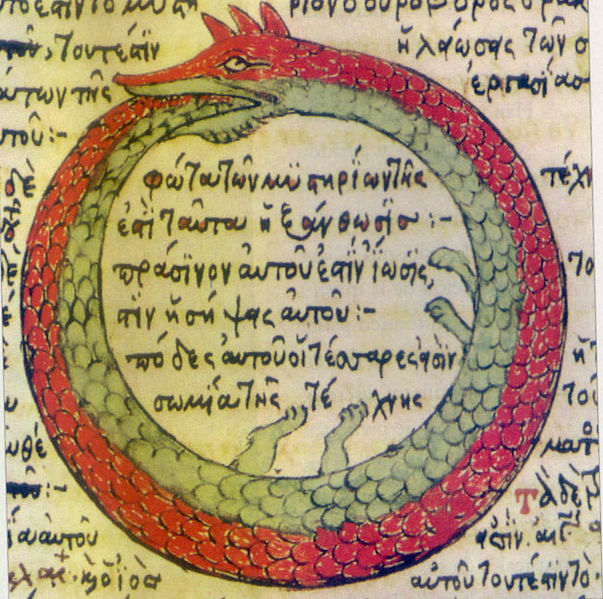
You know the ouroboros? It’s a snake/dragon chasing/eatingits tail, found throughout history, in various cultures. Some choose to look at it as a literal representation – that we’re chasing our tails/the chicken or the egg scenario bla bla. Kind of like the stress/mast cell thing.
But how about this:
“The Ouroboros has been said to have a meaning of infinity or wholeness. In the age-old image of the Ouroboros lies the thought of devouring oneself and turning oneself into a circulatory process…The Ouroboros is a dramatic symbol for the integration and assimilation of the opposite, i.e. of the shadow. This ‘feed-back’ process is at the same time a symbol of immortality, since it is said of the Ouroboros that he slays himself and brings himself to life, fertilizes himself and gives birth to himself.” – Carl Jung.
I have accepted the darkness and made it part of my light. I am dying. We all are. Some will do it sooner than others. Some will allow themselves to enjoy the years they have. I have understood there’s no point if every waking moment is to be spent searching for how to improve my life, at the expense of actually living it.
I’m sure there’s much more exploring, many questions to be answered, dead ends to come up against. But the big bang has happened for me and I’m ready to provide a calm, safe and supportive home for my mast cells. I’ve made hard choices: ending my journalism career, settling down in one (relatively boring) country where the weather is mild and there’s little threat of a coup; listening to the wisdom of those who surround me (and have my best interests at heart – I kick the others to the curb) and being good, true to myself.
I choose to see food as a partner in healing, rather than the force of darkness it once was.
I choose to understand my role in this illness.
I choose to get better, or die trying (just messin’).
Thanks to the research of Dr Theoharides [1] and others, we know stress hormones can cause mast cells to degranulate, thereby releasing histamine and other inflammatory agents into our bloodstream.
I’d love to know if this is the case just for those of us with histamine intolerance, mast cell activation and mastocytosis, or if it applies to the public in general. I’ll be sure to ask Dr Theoharides in our upcoming interview!
Having recently come to the realisation that my state of mind is linked to the intensity of my symptoms, I thought I’d see what her take on it is.
Yasmina:
How does stress, or our ability to successfully deal with it, impact our prognosis, or the intensity of symptoms we experience? Essentially, what’s our role in this this condition – are we really helpless bystanders at the mercy of our mast cells?
Dr Castells:
“I think really when the patient realises that, and in having a positive attitude about the disease, the impact is tremendous. But not everybody is prepared, not everybody wants to do that. So the recipe is to tell the patient: your disease can actually be treated or it can be managed in a way that you could have an almost normal life – it depends greatly on you, if you have an attitude towards that, to be convinced about this, and then to have less triggers in your life, whether physical, emotional stress, whether the impact of your job.”
Dr Castells went on to say that many of her patients change jobs (something I myself did), or their environment. Some have even had to make changes in family situations. And here’s where I heard one of the saddest stories of my life. Heartbreaking, but sadly, hardly shocking. Castells relayed the story of a woman committed to an institution by her family. She exhibited bipolar type tendencies and clouded thinking (Oh oh. I’ve experienced both, in spades!). By chance the woman fell over (not from a great height) and broke her collar bone. Someone was smart enough to wonder why such a young woman would break bones so easily (the majority of mast cell peeps have bone density issues), and so Castells was called in to consult. A quick round of testing revealed that her tryptase was elevated, in addition to her prostaglandins, which according to Castells are one of the reasons for brain fog, or “mixed brain syndrome” as she and her predecessor dubbed the condition 20 years ago.
I found what she said about prostaglandins very interesting. Though I noticed a huge difference with diet and quercetin, something else fell into place when I began taking amangosteen supplement. I had chosen to take masngosteen for precisely that reason, because of its anti-prostaglandin activity.
Back to mixed organic brain syndrome: “Those patients can have very clouded mentation, their memory is gone, their anxiety level is very high and they really can’t think straight,” she said. “And this patient, in addition to that, was having convulsions.”
Sound familiar?? Yes, you may go ahead and show this article to your friends and family now.
It was found that the poor woman was actually suffering from indolent systemic mastocytosis. She was released from the institution, and, unsurprisingly, the entire family is now in therapy to deal with the fallout of sending someone they love to what was undoubtedly a terrible experience.
“This is the extreme case in which things around you are so extreme that patients have to explain to their families and their community what it is to have mastocytosis: ie, there are some days that I may just end up on the floor because I have an anaphylactic mast cell activation event, but the rest of the time I am normal and I want you to help me to be completely normal. So that, like I said, the patients have the power to change how they interact with the environment because of the masto, but also the environment has to understand them. And this is really powerful when we start to understand,” Dr Castells told me.
I must agree. In my determination to prove I was ill to those around me – maybe so they wouldn’t have me committed to an institution because of my mixed organic brain syndrome (!), I became trapped in a world of illness, in large part created by my own mind. Sure, I was sick, but did it need to keep me confined to my bed, crying my eyes out 24/7, rendering me incapable of having any kind of conversation, even with strangers, that didn’t involve blurting out how crap I was feeling and that I was really so ill that everyone around me needed to change their behaviours? No. I NOW know that, but I wasn’t ready to accept it at the time. I thank my mast cell activation diagnosis for finally liberating me of those behaviours. Once I knew, and those around me knew, that I was dealing with something a little scary, something tangible, I was ready to throw off the shackles and soar. I wrote a little something about it here.
Yasmina:
At my sickest, I sometimes wondered if I really was that sick, or if it was my brain playing games with me. It seemed that stress (maybe by making me ill by causing mast cell degranulation/histamine release) was causing me to shut down, to run away from life. And illness was the most convenient explanation to help me hide. Your thoughts?
Dr Castells:
“The role of stress and emotional stress is very important. We have a lot of children, as an analogy with asthma, who when their teachers give them bad grades, or they have homework they don’t want to do, or they want to play and their parents say that they can’t, actually provoke their asthma symptoms.
They provoke their symptoms to the extent that they can kind of (a little bit) manipulate their disease. And that is normal, that’s human, and we kind of teach our brain to respond to those cues. In mastocytosis there is a lot of that component, so there’s a lot of symptoms that are truly mediated, by data, by mediators, then there’s the tremendous, what is called supratentorial component of how the impact of the disease is. And it’s a two way street – one is how much the disease impacts you, and how much the patient allows the disease to impact their environment. So kids, I have adolescents who want their parents to do what they want them to, (so for example in UP/urticaria pigmentosa) they think that with the flare ups they will achieve what they want, and in adult patients who also manipulate their environments.
“I’m a cell biologist by training in mastocytosis and mast cell diseases and then there are hematologists who don’t know a lot about mast cell symptoms and there are dermatologists who know a little but about skin, but who don’t know about systemic and so encountering each other at these meetings there’s like a multi-speciality that’s the best thing for the patient. The end result is that this multi system approach allows them to speak with multiple doctors and to integrate everything that they feel is probably due to the disease but can be tremendously managed either by medication or by changing their lifestyle or by changing the brain,” she added.
The cognitive changes consisted of diminished attention and memory, and the affective changes of anger, irritability, and, to a lesser extent, depression. These manifestations fluctuated with the level of disease activity, and appeared in some cases to respond to histamine antagonists and disodium cromoglycate, medications used to control the excessive mast cell activity. It is important for psychiatrists to be aware that mental status changes can represent psychiatric manifestations of mastocytosis, a readily treatable medical disorder.
Thanks to the research of Dr Theoharides [1] and others, we know stress hormones can cause mast cells to degranulate, thereby releasing histamine and other inflammatory agents into our bloodstream.
I’d love to know if this is the case just for those of us with histamine intolerance, mast cell activation and mastocytosis, or if it applies to the public in general. I’ll be sure to ask Dr Theoharides in our upcoming interview!
Having recently come to the realisation that my state of mind is linked to the intensity of my symptoms, I thought I’d see what her take on it is.
Yasmina:
How does stress, or our ability to successfully deal with it, impact our prognosis, or the intensity of symptoms we experience? Essentially, what’s our role in this this condition – are we really helpless bystanders at the mercy of our mast cells?
Dr Castells:
“I think really when the patient realises that, and in having a positive attitude about the disease, the impact is tremendous. But not everybody is prepared, not everybody wants to do that. So the recipe is to tell the patient: your disease can actually be treated or it can be managed in a way that you could have an almost normal life – it depends greatly on you, if you have an attitude towards that, to be convinced about this, and then to have less triggers in your life, whether physical, emotional stress, whether the impact of your job.”
Dr Castells went on to say that many of her patients change jobs (something I myself did), or their environment. Some have even had to make changes in family situations. And here’s where I heard one of the saddest stories of my life. Heartbreaking, but sadly, hardly shocking. Castells relayed the story of a woman committed to an institution by her family. She exhibited bipolar type tendencies and clouded thinking (Oh oh. I’ve experienced both, in spades!). By chance the woman fell over (not from a great height) and broke her collar bone. Someone was smart enough to wonder why such a young woman would break bones so easily (the majority of mast cell peeps have bone density issues), and so Castells was called in to consult. A quick round of testing revealed that her tryptase was elevated, in addition to her prostaglandins, which according to Castells are one of the reasons for brain fog, or “mixed brain syndrome” as she and her predecessor dubbed the condition 20 years ago.
I found what she said about prostaglandins very interesting. Though I noticed a huge difference with diet and quercetin, something else fell into place when I began taking amangosteen supplement. I had chosen to take masngosteen for precisely that reason, because of its anti-prostaglandin activity.
Back to mixed organic brain syndrome: “Those patients can have very clouded mentation, their memory is gone, their anxiety level is very high and they really can’t think straight,” she said. “And this patient, in addition to that, was having convulsions.”
Sound familiar?? Yes, you may go ahead and show this article to your friends and family now.
It was found that the poor woman was actually suffering from indolent systemic mastocytosis. She was released from the institution, and, unsurprisingly, the entire family is now in therapy to deal with the fallout of sending someone they love to what was undoubtedly a terrible experience.
“This is the extreme case in which things around you are so extreme that patients have to explain to their families and their community what it is to have mastocytosis: ie, there are some days that I may just end up on the floor because I have an anaphylactic mast cell activation event, but the rest of the time I am normal and I want you to help me to be completely normal. So that, like I said, the patients have the power to change how they interact with the environment because of the masto, but also the environment has to understand them. And this is really powerful when we start to understand,” Dr Castells told me.
I must agree. In my determination to prove I was ill to those around me – maybe so they wouldn’t have me committed to an institution because of my mixed organic brain syndrome (!), I became trapped in a world of illness, in large part created by my own mind. Sure, I was sick, but did it need to keep me confined to my bed, crying my eyes out 24/7, rendering me incapable of having any kind of conversation, even with strangers, that didn’t involve blurting out how crap I was feeling and that I was really so ill that everyone around me needed to change their behaviours? No. I NOW know that, but I wasn’t ready to accept it at the time. I thank my mast cell activation diagnosis for finally liberating me of those behaviours. Once I knew, and those around me knew, that I was dealing with something a little scary, something tangible, I was ready to throw off the shackles and soar. I wrote a little something about it here.
Yasmina:
At my sickest, I sometimes wondered if I really was that sick, or if it was my brain playing games with me. It seemed that stress (maybe by making me ill by causing mast cell degranulation/histamine release) was causing me to shut down, to run away from life. And illness was the most convenient explanation to help me hide. Your thoughts?
Dr Castells:
“The role of stress and emotional stress is very important. We have a lot of children, as an analogy with asthma, who when their teachers give them bad grades, or they have homework they don’t want to do, or they want to play and their parents say that they can’t, actually provoke their asthma symptoms.
They provoke their symptoms to the extent that they can kind of (a little bit) manipulate their disease. And that is normal, that’s human, and we kind of teach our brain to respond to those cues. In mastocytosis there is a lot of that component, so there’s a lot of symptoms that are truly mediated, by data, by mediators, then there’s the tremendous, what is called supratentorial component of how the impact of the disease is. And it’s a two way street – one is how much the disease impacts you, and how much the patient allows the disease to impact their environment. So kids, I have adolescents who want their parents to do what they want them to, (so for example in UP/urticaria pigmentosa) they think that with the flare ups they will achieve what they want, and in adult patients who also manipulate their environments.
“I’m a cell biologist by training in mastocytosis and mast cell diseases and then there are hematologists who don’t know a lot about mast cell symptoms and there are dermatologists who know a little but about skin, but who don’t know about systemic and so encountering each other at these meetings there’s like a multi-speciality that’s the best thing for the patient. The end result is that this multi system approach allows them to speak with multiple doctors and to integrate everything that they feel is probably due to the disease but can be tremendously managed either by medication or by changing their lifestyle or by changing the brain,” she added.
The cognitive changes consisted of diminished attention and memory, and the affective changes of anger, irritability, and, to a lesser extent, depression. These manifestations fluctuated with the level of disease activity, and appeared in some cases to respond to histamine antagonists and disodium cromoglycate, medications used to control the excessive mast cell activity. It is important for psychiatrists to be aware that mental status changes can represent psychiatric manifestations of mastocytosis, a readily treatable medical disorder.
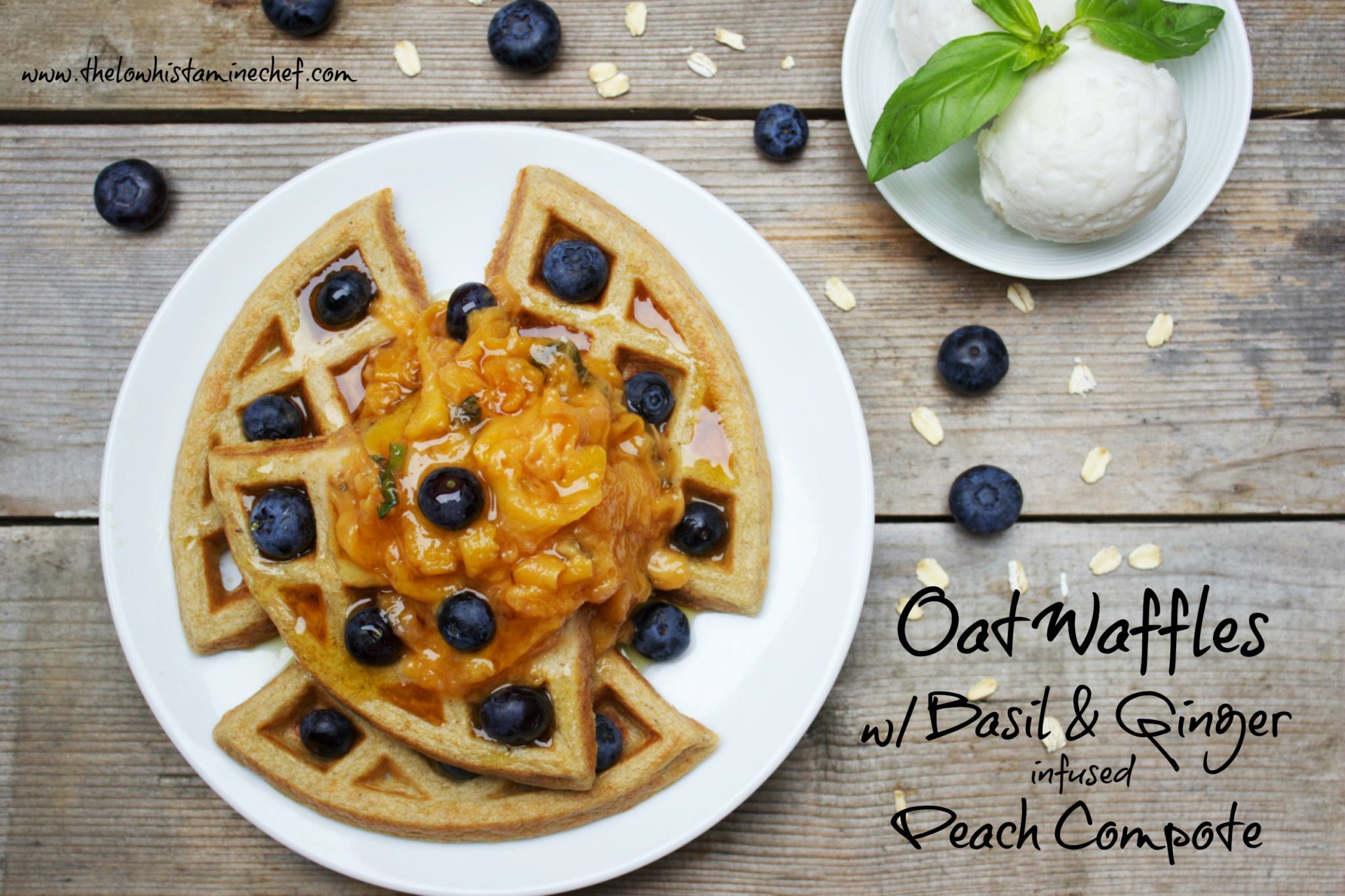
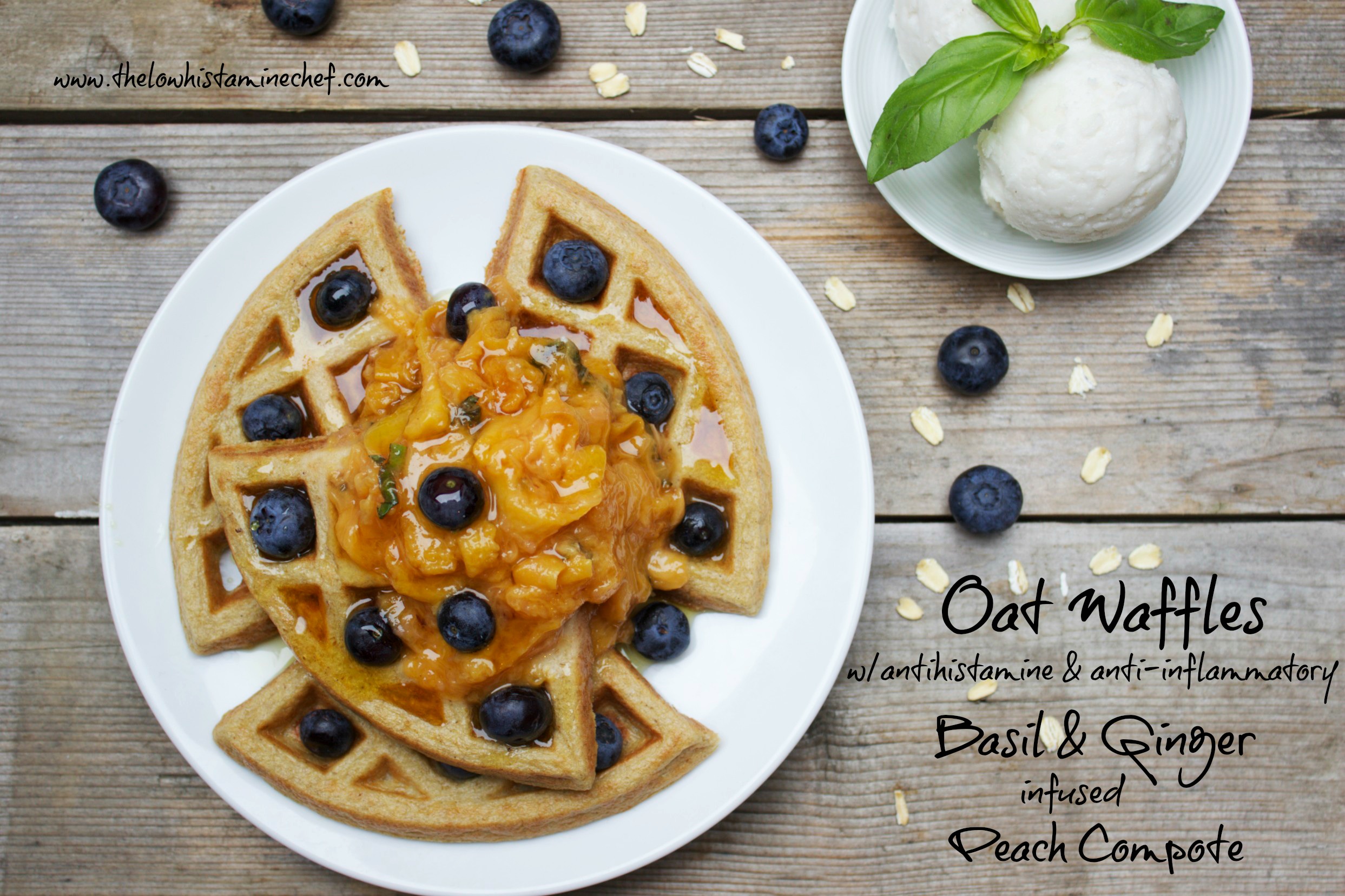
I should start out by saying that this recipe began with a simple request: a high nutrient baby food to help with indigestion.
But things spiraled out of control when I began fantasising about what else the compote would work for….
And so I was literally rubbing my hands together with glee when my waffle maker arrived just a few days ago. Rest assured, these can be made into pancakes too – but it’s so much more fun playing with waffles!
I may be a little over excited simply because I’ve only had waffles once or twice in my life.
Watch out for some seriously fun recipes in the next few weeks…
Nutritional highlights
Ginger is as potent an antihistamine as H2 receptor antagonist Zantac (ranitidine) [5] and as such, marvelous at dealing with stomach acid.
Peaches possess mast cell stabilising properties [1] but I know they are on some lists as high histamine though. Please use your best judgement – I have never had a problem with them.
Blueberries are rich in histamine lowering, mast cell stabilising quercetin [2].
Basil is a potent antihistamine with strong anti-inflammatory action (particularly against prostaglandins) [3].
Coconut is anti-inflammatory and also can help relieve pain [4].
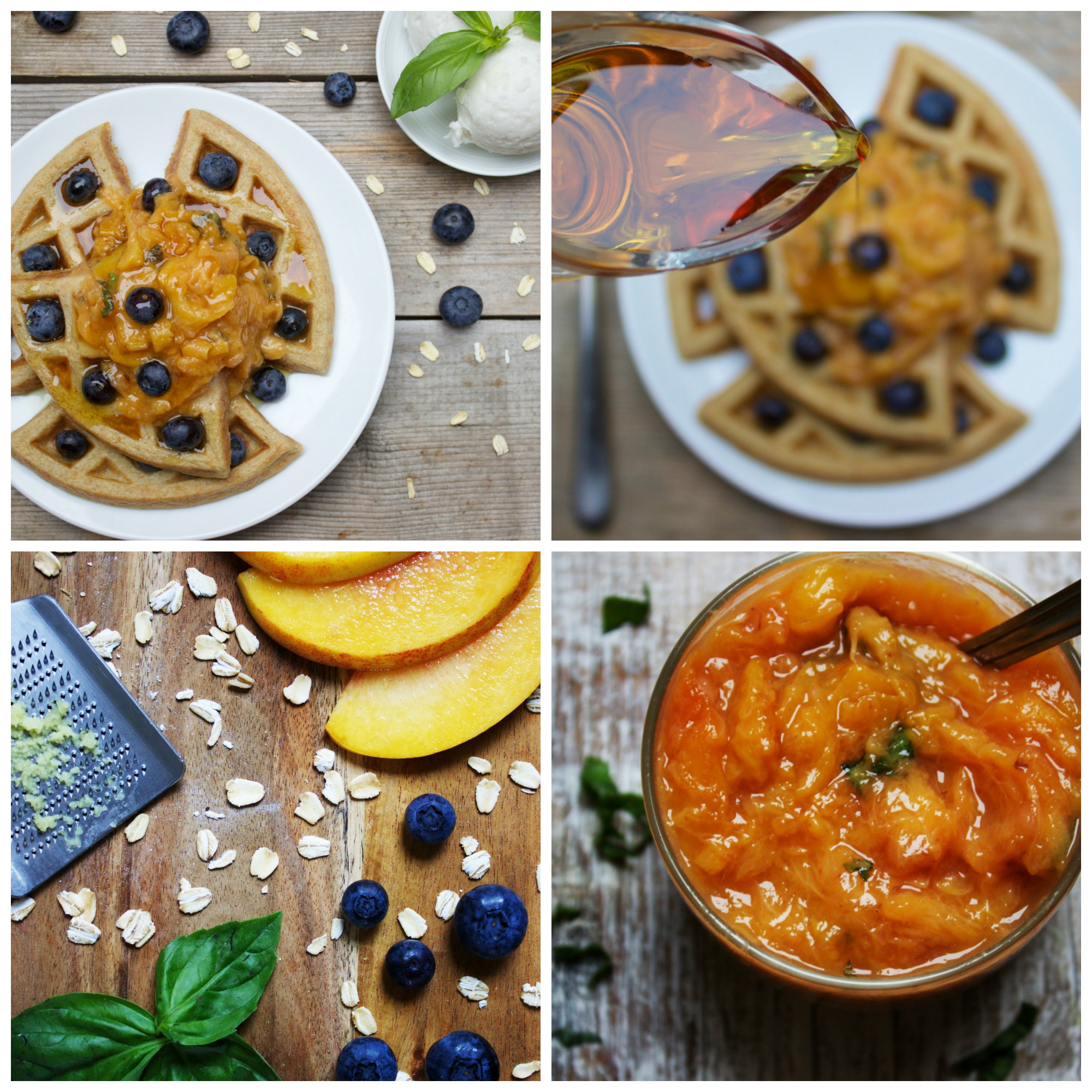
1 1/2 cups GF oat flour or 1/2 cup chestnut flour, 1/3 cup arrowroot flour, 1/3 cup tigernut flour and 1/3 cup, water chestnut flour
2 eggs or 2tbsp flax/chia seeds
1 cup coconut/almond milk or water
2 tbsp coconut oil/any oil tolerated
Pinch raw organic vanilla powder (optional)
Pinch sea salt
Blueberries (for garnish)
Compote
2 large peaches, peeled (or not) and chopped (or your choice of fruit)
2 tbsp freshly grated ginger
2 tbsp finely chopped basil
Fresh lemon juice (you may omit this)
Coconut cream
1 coconut (young or old)
Fresh vanilla
Pinch sea salt
Directions:
Waffles
Heat up the waffle iron.
Buzz the oat flour, eggs/flax/chia, coconut milk, coconut oil, vanilla and pinch of salt in the blender.
Pour into the waffle iron and proceed according to your machine’s instructions.
Compote
In a small saucepan combine the peaches (I don’t skin mine), ginger, basil and a squidge of fresh lemon juice. I also like to add just a tiny pinch of sea salt to help bring out the natural sweetness of the fruit.
Drizzle with a little water and bring to the boil ever so briefly.
Lower to a simmer and withdraw from heat once firmed up and sweetly fragranced (about 5 minutes).
Coconut cream
If you have a masticating juicer just crack open a mature coconut, pry out the flesh, then pass through the nut butter adaptor and then mix in the vanilla and a pinch of sea salt.
Otherwise, scoop out the flesh of a young coconut and quickly buzz (I use a Vitamix) a little with the vanilla, till mushy.
Then place in freezer for 20 minutes, or till firm. Mix up with a spoon and serve.
New to histamine intolerance, mast cell activation or mastocytosis? Wondering how to get started on low histamine/antihistamine & anti-inflammatory diet?
Fret not! I’ll be sharing my tips, tricks and survival strategies with you next month in my very first webinar!
Thanks to those who voted over the last few weeks, the topic will be: the Low Histamine Lifestyle 101.
We’ll cover:
– How to start the low histamine diet
– How to make your very own food list
– How to figure out what’s bothering you
– My list of DO eats
– How not to have a nervous breakdown in the supermarket
– Eating out and travel survival strategies
– Meditation strategies
– The exercise dilemma
– Low histamine beauty
– A day in the life
Not only is this webinar FREE, but you’ll receive a very special gift from me.
I’ll be keeping this first webinar quite small, so please sign up to my mailing list to be the first to know when I open registration!
If you can’t wait that long, check out my books for more information on how I stay meds free despite being diagnosed with mast cell activation disorder and the high nutrient antihistamine and anti-inflammatory diet I employ to stay healthy.
GET STARTED HEALING HISTAMINE
WHAT YOU NEED TO KNOW ABOUT HISTAMINE DELIVERED TO YOUR INBOX