Category: Eating & Cooking

  • (Supposedly) high histamine foods I still eat

    (Supposedly) high histamine foods I still eat

    The fact I’ve been including (supposedly) high histamine foods back into my histamine intolerance/mast cell activation diet has been a source of confusion, contention and downright anger to some of my readers. Some of the reasons I’ve worked hard to add some of the foods I eliminated over the years are:  I learned the hard way that removing foods from my diet left me (over years) depleted essential nutrients, ones that help fight inflammation over the long term, feeling I was a slave to my diet, I was inflamed from eating foods that were low histamine but cause inflammation anyway (more on that below), and histamine food lists can be downright wrong. The understanding that histamine intolerance and mast cell activation are inflammatory conditions and that histamine is only one of many inflammatory mediators involved, totally turned everything around for me. 

    The process of adding foods back is something that will be individual, but in my case it was basically just working things back a crumb or a drop at a time, over a long period of time. It was long and boring but eventually once my immune system became accustomed to dealing with a multitude of foods and supplements again, it calmed down and accepted things. I remember that adding vitamin B12 spray took months! At times I’ve gone way too fast and totally shot myself in the foot, and sometimes my immune system planted its feet in the ground and shouted “no”.

    Here’s a rundown of how I reintroduced eliminated foods back to my diet.

    This happened quite a bit when I was working my way up from the five foods I was down to (one of the many dangers of long term elimination is that the immune system becomes reactive to an alarmingly increasing number of foods) and it was hard to tell when to go for it and when it was just totally inadvisable to continue.

    While you should absolutely not try to push through symptoms of food reaction without your doctor’s consent and involvement (because it can be incredibly dangerous) here’s a post I wrote based on research showing that exposing mast cells to small doses of a trigger over a long period will eventually stop them from responding by leaking histamine and other inflammation into the blood stream. Please remember, research on animals is not the same as humans and certainly doesn’t account for our differing situations and co-existing conditions. 

    I turned 41 this year and decided to freeze my eggs.  Boy, that was not fun at all for my body. But you know what? I was so determined to do it that I somehow managed to make the daily shots, blood tests, stress, and surgery manageable by using a variety of stress relief techniques mixed with an incredibly anti-inflammatory diet to boot. My biggest concern was the anaesthesia, which, after consulting with a mast cell specialist, involved a massive dose of benadryl (my first antihistamine in years) and the post operative pain medications. I chose to forgo the latter in favour of a natural edible THC preparation extracted from organic leaves which managed the pain 100% for me.

    We’re all different and the most important thing to know is that what works for me might not for you. There’s just too many variables, and too many co-existing medical conditions that would make no two situations alike.

    That’s why I created an online workshop giving you the tools to create your own safe food list and healing plan. 

    What I can tell you is that the people who have managed it (that I have personally heard from) have generally had these things in common (before starting to add stuff back):

    They exercise regularly (lowers  inflammation)

    They’re meditating or practicing stress relief techniques daily and sometimes at the dinner table (more on that here)

    They have a generally positive outlook on life and healing

    They have realistic expectations regarding how long this is going to take (i.e. years not months)

    And, in my opinion, most importantly…

    They’re adding back very nutrient dense foods with lots of anti-inflammatory or anti-histamine benefits

    I would never, ever work to re-introduce a junk food, or any food that’s not significantly healing me in some way. I worked hard to be able to cheat on my diet (in the old days before embracing a more balanced approach) with dates, cacao and walnuts, rather than being happy that I can eat a Krispy Kreme once a month without issue (I can but don’t).

    Please remember, we’re all different and may be dealing with more than one issue. Those with mast cell activation or mastocytosis rather than a simple lack of the histamine degrading enzymes DAO and HNMT (what people call histamine intolerance) will often (if not always) require medications and may be told to avoid their triggers (very sensible if symptoms are bothersome).

    So, with all that in mind, here are some (not all) of the high histamine foods I still include in my diet (but not necessarily in my books).

    Turmeric

    This is a tricky one really. On the one hand turmeric may block the DAO and MAO enzymes  in the gut, but it has significant antihistamine and anti-inflammatory properties. How is it possible it can block the histamine degrading DAO enzyme and still be antihistamine? Well, DAO is one of the ways histamine is eliminated from the body, but blocking the H1 and H2 histamine receptors in various organs in the body is also useful as is preventing mast cells from dumping their histamine cargo into the body. There’s just so many factors with so many aspects of histamine disorders that I’m always wary of absolutes. Life and nature can be wishy-washy…Turmeric is highly cancer preventative, something of utmost concern to me since my father died of cancer at my age and I have no idea of cancer genes on that side of the family. While epigenetics is absolutely the way forward, genes do play a part.

    Mushrooms

    Super potent anti-cancer food, amazing meat substitute, highly anti-inflammatory, these are a mainstay of my diet. I remember tucking into an order of wild mushrooms in a garlic sauce after my first one week meditation retreat and gleefully dancing around in the street afterwards when I had absolutely no reaction to them. I had never actually bothered to test my reaction to them. I just cut them out the moment I read about the histamine intolerance diet and never looked back. Dr. Fuhrman, MD and bestselling author of Eat to Live has said that mushrooms should be fine for those with histamine intolerance as long as they’re well washed and cooked. I suspect the mushroom histamine designation may be the mold connection. As you may know, mold is a strong mast cell and histamine trigger.

    Nuts

    These are a bit of an annoyance. On the one hand I feel no issue with many nuts on a histamine level, but they do bother my bladder, which in my case is usually a problem with oxalic acid. I try to include as many as possible, on a long rotation, because of their nutrients. Almonds were my main source of calcium for a long time, till discovering they were the source of my excruciating vulvodynia.

    Sunflower seeds

    Vitamin E, vitamin B1 and copper.

    Lentils and chickpeas (fall under the legume section)

    High in folate, niacin, iron and anti-inflammatory vitamin K. They also contain lectins which can cause inflammation in some. Pressure cooking can greatly reduce them and make them more digestible. Most importantly to me once again, other than the valuable nutrients they contain, is the anti-cancer benefits.

    Eggs

    While I recently stopped eating eggs recently (only because I’ve rolled back to eating only fish again animal protein wise), I never stopped eating them because of histamine. I came across a study showing that organic eggs from hens that had only been fed organic high omega 3 seeds are not inflammatory. In fact, they now possess anti-inflammatory properties. I think this might have been the key to my not reacting to them over the years because this is exactly the type of egg I have always eaten. Also, duck eggs agreed with me quite a bit. I switched to them for a long time because of their vitamin B12 content (two eggs = over 100% RDA)

    Fish 

    I eat salmon and tuna that is on ice display in supermarkets. That is apparently a big no-no histamine-wise.  In an idea world I would see the fish come out of the water. I’ll admit, I do have second thoughts sometimes: I have a google alert set up for histamine poisoning in fish and they are not infrequent. What I have noticed however is that the fish is never from sources that supply Whole Foods and Erewhon supermarkets which is where I buy mine, even if I’m not doing the rest of my shopping there. I only eat these two fish because of their nutrient profile. I consider all other fish, though tasty, to be insignificant nutrient-wise.

    Avocado

    Ok so this one is a toughie. It falls on a few lists, which is something I try to avoid. The more  lists a food appears on, the less likely I am to keep it in regular rotation. That said, I will not turn my nose up at most of them if they are on a restaurant menu and my choices are limited, and I have been known to (quite frequently) throw caution to the wind and just make that avocado/cacao/date raw pudding I love so much.

    Coconut

    (Doesn’t appear on most lists but many are wary of it)

    So this one  is more emotional than logical. Having given up so many other things, especially the aforementioned  avocado-cacao pudding, I realised I could make excellent desserts with young Thai coconut and that the dry coconut was actually also pretty tasty. I learned the hard way that I could have the coconut once a week, but not more.  And that’s the trick. Within the histamine/inflammation bucket there’s lots of other little buckets like glutamine (coconut), salicylic acid, oxalic acid etc. I’ve found it only takes one of the little buckets within the big inflammation bucket to make me spill over symptom-wise. You can read more about that here. So learning how much I could put into the individual buckets allowed me to eat what I want (mostly) without experiencing the symptoms that plagued me for so many decades of my life.

    Cacao

    This is a tricky one. On the one hand, raw dark cacao has many health benefits, including supporting the thymus gland, which in turn fights inflammation by lowering histamine. But, it’s fermented and so impairs the histamine degrading DAO (diamine oxidase) enzyme in the gut and it is classes as a histamine liberator. Yet another example of the yin and yang of histamine. Foods that are not high histamine themselves can still cause histamine release in the body,  which might be great for people looking to boost their immunity,  but it’s generally not great for those already dealing with excess inflammation. Cacao  also appears on at least two lists – histamine and oxalic acid, so I compromised and began experimenting with cacao butter. The white stuff has been separated from the fermented bean and is wonderful as a raw chocolate, in baking and in England there’s a raw white chocolate bar available (The Raw Chocolate Company) that’s made with only four ingredients (dairy isn’t one of them thankfully). I’ve been fine with the raw white cacao.

    Lemon

    Ive never had an issue with lemon, thankfully, because it would have broken me. While there are herbs that do a great job like lemon thyme and basil, they’re just not as accessible. My advice is, as long as you don’t have moderate to severe reactions, is to try things for yourself. But bear in mind, if there’s a reaction today that doesn’t mean there’ll be one tomorrow or next week. It all depends on how full your histamine, salicylate, whatever bucket is on any given day. Really though, when you look at the few charts out there that compare the histamine content of foods, all fruit and vegetables are WAAAAAAAAAY on the bottom end of the histamine content spectrum.

    Mustard

    I found myself a wonderful organic four ingredient organic Dijon mustard, DeLouis, that has been an absolute revelation. As with all things, I initially made the mistake of thinking I could eat as much as I wanted of it. I now have it once a week or so, in moderation, and it’s been no trouble at all. I tried to make my own mustard. Way too labour intensive when something amazing like this exists. While mustard is listed generally as an allergen, and on some lists as moderately high in histamine (probably because of the fermentation), plants in the mustard family can have antihistamine properties and many of them (if not all) are highly anti-inflammatory and cancer preventing.

    It’s finally here! Man Food – a high nutrient antihistamine and anti-inflammatory ingredient filled book geared towards guys, women who love to work out, yoga like they mean it, or just load up on healing nutrients. Features my personal shopping list of antihistamine and anti-inflammatory foods.

    The Anti-cookbook and all liquid Anti-Detox Book, don’t treat any conditions, but feature a plethora of the high nutrient antihistamine and anti-inflammatory ingredients that have been instrumental in helping me feed myself on a limited diet. The Anti-cookbook features a four page list of antihistamine and anti-inflammatory foods and comes in regular and Paleo.

    The Low Oxalate Cookbook features antihistamine and anti-inflammatory rich recipes.

    Don’t miss the Low Histamine Beauty Survival Guide for non-toxic beauty tips, the skinny on histamine releasing (mast cell degranulating) beauty ingredients, antihistamine and anti-inflammatory beauty alternatives and the top brands natural brands I’ve found.

    Take a peek at my other low histamine and antihistamine cookbooks for more high nutrient recipes

    ——–REFERENCES——-

    Mahmoudi M1, Ebrahimzadeh MA, Pourmorad F, Rezaie N, Mahmoudi MA. “Anti-inflammatory and analgesic effects of egg yolk: a comparison between organic and machine made. European Review of Medical and Pharmacological Sciences. (2013) Feb;17(4):472-6.

    Ykelenstam, Yasmina. The Anti-Cookbook. N.p.: n.p., 2013. Print.

    Kulkarni, Sk, and A. Dhir. “An overview of curcumin in neurological disorders.” Indian Journal of Pharmaceutical Sciences 72.2 (2010): 149. Web.

    Song, Wei-Bing, Yuan-Yuan Wang, Fan-Su Meng, Qing-Hua Zhang, Jian-Ying Zeng, Li-Ping Xiao, Xin-Pei Yu, Dan-Dan Peng, Lei Su, Bing Xiao, and Zhen-Shu Zhang. “Curcumin Protects Intestinal Mucosal Barrier Function of Rat Enteritis via Activation of MKP-1 and Attenuation of p38 and NF-κB Activation.” PLoS ONE 5.9 (2010): n. pag. Web.
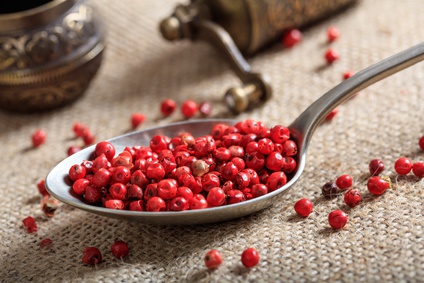
     

  • Pink peppercorns are actually antihistamine berries

    Pink peppercorns are actually antihistamine berries

    Dried red pepper spice on burlap

    UPDATE: I made an error, though I know perfectly well these are pink rather than red, I somehow ended up goofing. I’m also moving further up in the post that this tree is a member of the cashew family so care must be taken if allergic to nuts. 

    It turns out that my favourite pepper, isn’t a pepper at all, but rather a berry with antihistamine properties. This Brazilian tree fruit with a lightly spicy flavour is dried and sold  alongside with green and black peppercorns. As with tea,  green, black and white peppercorns are actually the same thing,  just processed differently.

    I’ve always wondered why I do better with white pepper than black, but pink peppercorns better than any of them.  Well, the antihistamine properties are a great explanation. A study published in the peer-reviewed journal International Pharmacology found that an extract of the Brazilian pepper tree significantly prevented mast cell degranulation induced histamine related swelling and allergic reaction.

    *Mast cell degranulation is the process  by which mast cells release histamine and other inflammation into the blood  stream. Histamine intolerance is generally attributed to a lack of  the histamine degrading DAO (diamine oxidase) enzyme, while mast cell activation can be triggered by a primary condition (i.e. infection, medical condition, chronic stress, mold exposure and many others) or to be one itself. Stress is a huge mast cell activation cause, as it was in my case.

    Interestingly this tree is a member of the cashew family, which means it may not be appropriate if you have an allergy.  You’ll have to check with your doctor. In a case like this, I won’t go out and consume a supplement of this every day, I’ll just combine it with other foods that have antihistamine and anti-inflammatory properties.
    The magic happens when all these amazing things come together.

    As for the rest:

    Green peppercorns are the raw product preserved in brine.

    Black peppercorns are dried green peppercorns.

    White peppercorns are just peeled black peppercorns.

    My issue with black pepper (in massive quantity anyway)  perplexed me for some time: it isn’t high histamine, it isn’t  inflammatory.  Then I learned about oxalic acid, a plant defence mechanism  (to deter predator insects) that can also work as an irritant to humans, and it all came together. White pepper is lower oxalate than black (but I have no idea about red, sorry).

    You can read my post on oxalic acid here.

    At the end of the day, there are very few foods I do not include in my diet. Some, which appear on more than one list, for example high histamine, high oxalate and high salicylate, have proven to be problematic and so I eat little of them, but they’re still in there. I’ll do this sometimes just on principle, because I don’t want to fall into the elimination mindset again that left me eating five foods only.

    Learn how I got out of the elimination mindset and how you can use this information to create your own histamine balanced diet and healing plan here.

    You’ll find recipes full of foods with antihistamine and anti-inflammatory properties my books Anti-Recipes and The Anti-Cookbook

    CLICK HERE TO CREATE YOUR OWN PERSONALISED HEALING HISTAMINE PLAN. 

    ——-REFERENCES——

    Cavalher-Machado, Simone Campos, Elaine Cruz Rosas, Fabiola De Almeida Brito, Alan Patrick Heringe, Rodrigo Rodrigues De Oliveira, Maria Auxiliadora Coelho Kaplan, Maria Raquel Figueiredo, and Maria Das Graças Müller De Oliveira Henriques. “The anti-allergic activity of the acetate fraction of Schinus terebinthifolius leaves in IgE induced mice paw edema and pleurisy.” International Immunopharmacology8.11 (2008): 1552-560. Web.

    Hill, Kathryn. “What’s The Deal With Green, Black, White, and Pink Peppercorns?” The Kitchn. N.p., 2009. Web. 30 Dec. 2016.

    “Schinus terebinthifolius.” Wikipedia. Wikimedia Foundation, n.d. Web. 30 Dec. 2016.

  • 7 BEST foods for histamine intolerance

    7 BEST foods for histamine intolerance

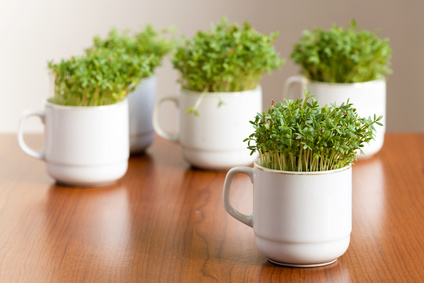
    Fresh watercress or cress growing in small cups at home.

    Start the new year right with these 7 histamine intolerance foods that fight inflammation, are histamine friendly and super healthy for the body overall. I guarantee that you’ll always find these foods in my fridge and cupboards because I leaned heavily on them for the last five years, before figuring out that I was able to reintroduce most of the foods I’d had to eliminate over the years. Here’s how I did it. 

    Arugula

    Benefits

    Researchers have found that arugula extract can protect us from stomach ulcers, probably through its effect on histamine and prostaglandins (both of which are released by mast cells in the body). Arugula is also high in vitamin K, which helps us fight inflammation and prevent osteoporosis. Sulforaphane found in arugula and other cruciferous veggies is being studied for its role in preventing or stopping the growth of cancer, particularly lung, breast and pancreatic. This compound is particularly concentrated in sprouts/young shoots so I’ll often use arugula shoots.

    Works well in

    I like to use mine in what I call juicies – which are basically just a juice that you then blend stuff into. I’m not a fan of knocking back massive quantities of raw fiber (it just can’t be good for the body to suddenly deal with that). It’s also great in salads and I sometimes quickly pop open a bag and sweat the leaves very quickly in a pan with a little olive oil. Doing so means that I can eat a lot more lightly cooked than raw.

    Watercress

    Benefits

    Research tells us that compounds extracted from this spicy plant can prevent histamine release from cells exposed to an allergen. Watercress is also high in anti-inflammatory bone building vitamin K and can help decrease neuropathy (nerve pain) in diabetics. It has also been shown to help fight high blood pressure.

    Watercress compounds are also linked to decreased cancer risk,  protection from the effects of radiation and chemotherapy.

    Works well in

    Juicies and salads. Don’t forget that it’s a spicy plant and as such care should be taken not to pair it with other spicy ones like arugula or ginger.

    CLICK HERE TO LEARN HOW TO CREATE YOUR OWN HISTAMINE BALANCED DIET AND HEALING PLAN. 

    Black rice 

    Benefits

    According to Dr. Axe the bran hull of back rice contains one of the highest levels of the antioxidant anthocyanin found in any food. Those of you following my instagram feed will have noticed I spend a lot of time eating and talking about this antioxidant purple miracle pigment. Anthocyanins are found in blueberries, raspberries, cranberries, and purple varieties of carrots, cauliflower and sweet potato. The absolute only inflammatory (pretty much nutrient devoid) potato I will eat is a blue/purple one.  Anthocyanins prevent cardiovascular disease, cancer and are anti-inflammatory and can help cleanse the liver of of toxic build up. Arsenic is a concern nowadays with all rice, but the Environmental Working Group tells us that cooking rice more like pasta will decrease the arsenic content by about forty percent. Rinse the rice then boil one cup of rice in twelve cups of water.

    Works well in

    I love adding rice to salads and I really enjoy black rice noodles (you can buy these online or in health food stores) as a wheat pasta substitute.  I’ll often just toss some noodles with sautéed veggies and onion as a meal.

    Artichokes

    Benefits

    This tasty vegetable is rich in the mast cell stabilising bioflavonoid luteolin. We want mast cells stable so they don’t leak histamine and other inflammation into the blood stream. Other members of the artichoke family have antihistamine properties and all are highly anti-inflammatory.

    Works well in

    My absolute favourite dairy free creamy pasta sauce is make from boiled artichoke hearts. You’ll find the recipe here. I also adore eating chokes lightly boiled and then paired with a apple cider vinaigrette. I’ve even been known to slip a bit of organic three ingredient Dijon mustard (look for Edmond Faillot mustard at Whole Foods), which is a higher histamine ingredient but also anti-inflammatory. Your results may be different. Artichokes can also be shaved using a mandolin and eaten raw in a salad, or you could quarter them, drizzle with a little oil and lemon and roast them.

    Ginger

    Benefits

    One of the best weapons in the antihistamine arsenal, ginger is a potent antihistamine, nausea inhibitor (histamine causes nausea and motion sickness!), and of course anti-inflammatory and cancer preventer. Also in the family, turmeric has an even more amazing profile but I can only do small amounts of it due to its very high oxalic acid, salicylic acid and MAO enzyme inhibiting properties. When a food appears on multiple lists, even if it’s classed as one of the world’s healthiest foods, I’m likely to avoid ingesting massive amounts of it.

    Works well in

    Smoothies, juices, soups (I add ginger and turmeric to all my soups), grated into salad dressing and onto sautéed veggies (especially great with noodles).

    Lentils

    Benefits

    Some lists tell us that lentils are high histamine. Once I realised that excluding nutrient dense foods willy nilly wasn’t working for me, I started slowly adding back foods that had lots of benefits. Lentils were at the top of the list. Given that my father died of lung cancer in his early forties, and friends developing breast cancer around me at an alarming rate, cancer fighting foods seem like a great idea. Lentils are also a great source of potassium, calcium, zinc (needed for the manufacture of the histamine lowering DAO enzyme), folate and iron. I’ve never noticed any kind of histamine reaction from lentils, ever, so as with many of these foods, your own reaction is best to go by.

    Works well in

    Pressure cooking lentils can inactivate lectins and other “anti-nutrients”. I love my lentils in salads, in soups like my absolute favourite lentil chard, and I make savoury waffles and flatbreads out of lentil flour (you can buy it online or make your own in a coffee grinder or a Vitamix). There’s also a few great brands of gluten free pasta made from lentils that can also be found online or at organic supermarkets.

    Chives

    Benefits

    Members of the allium family possess significant mast cell stabilising properties,  thereby preventing histamine release. My other favourite is red onion,  which is super high in quercetin,  the bioflavonoid usually responsible for the antihistamine activity. Red onions are of course a double whammy thanks to the anthocyanins in the skin. A caveat, don’t remove too much of the skin – that’s where the good stuff is. Chives are also full of red blood cell building chlorophyll.

    Works well in

    Pretty much everything! I use a pair of scissors to chop them into salads, soups, and onto pretty much anything I eat, raw or cooked.

    You’ll find recipes full of foods with antihistamine and anti-inflammatory properties my books Anti-Recipes and The Anti-Cookbook

    CLICK HERE TO CREATE YOUR OWN PERSONALISED HEALING HISTAMINE PLAN. 

    ——– REFERENCES ——-

    Alqasoumi, S. (2009). Rocket “Eruca sativa”: A salad herb with potential gastric anti-ulcer activity. World Journal of Gastroenterology, 15(16), 1958. doi:10.3748/wjg.15.1958

    Goda, Y., Hoshino, K., Akiyama, H., Ishikawa, T., Abe, Y., Nakamura, T., . . . Toyoda, M. (1999). Constituents in Watercress: Inhibitors of Histamine Release from RBL-2H3 Cells Induced by Antigen Stimulation. Biological & Pharmaceutical Bulletin,22(12), 1319-1326. doi:10.1248/bpb.22.1319

    What Are the Benefits of Eating Lentils? (n.d.). Retrieved December 25, 2016, from http://healthyeating.sfgate.com/benefits-eating-lentils-4547.html

    Anti-allergic effects of herbal product from Allium cepa (bulb). (n.d.). Retrieved December 25, 2016, from

    (n.d.). Retrieved December 25, 2016, from http://www.medicalnewstoday.com/articles/275009.php

  • Histamine Intolerance Christmas Desserts

    Histamine Intolerance Christmas Desserts

    low histamine gingerbread cookies on a parchment background

    It’s dessert time!

    This month I’ll be giving away my 110 page Happy Holidays ebook free with every purchase, this year I’ve added a slew of non-alcoholic drinks and canapés.

    There’s several full menus of nutrient dense and totally delicious festive foods in this ebook.  Don’t miss it, visit my online store to get it.

    Just place an order and you’ll get an email within the hour with the link to your freebie. If you don’t get it in 24 hours, please contact me through the website and I’ll send it right over (because sometimes things go wrong…).

    Hope  you enjoy this year’s menu! You’ll also find it in the freebie book.

    Gingerbread Cookies

    Prep Time: 30mins | Cook Time: 15-30mins | Makes: 10

     I like my gingerbread cookies to have a bit of crunch to them! If you’d like chewy cookies, please add some liquid sweetener, sub some of the coconut sugar with dates or a little apple puree and keep a close eye on these tasty little suckers to make sure they don’t dry out. 

    INGREDIENTS

    1/2 cup sorghum flour

    1/2 cup oat flour

    1/2 cup almond flour (or 1/4 cassava root and 1/4 tigernut for nut free)

    1/3 cup coconut oil

    1/2 cup coconut sugar

    2 eggs

    2-3 tbsp grated ginger or a few drops liquid ginger

    pinch of salt

    raw vanilla, to taste as tolerated

    PREPARATION

    Pre-heat your oven to 180C/350F.

    In a medium bowl mix the flours, oil, vanilla, ginger, pinch of salt eggs and ginger.

    Place in the fridge for 10-20 minutes, or till firm, so it’s easy to roll out later. Take out of the fridge. Lightly dust your work surface with some sorghum flour (or tolerated flour).

    Take your dough and knead for a bit till workable. But make sure not to touch it too much or it’ll become unmanageable.

    Roll it out quickly and then use a cookie cutter to work your way through. I made mine about half an inch thick. Lay down some baking paper onto a tray and carefully place the cookies on it.

    Bake at 180C/350F for about 20-30 minutes, till golden. Serve with eggnog.

    BENEFITS

    Antihistamine: ginger.

    Anti-inflammatory: vanilla, dates, sorghum, almonds,

    coconut, ginger

    Butternut Squash Streusel Pie with Caramel Sauce

    Serves 2-4 / Prep time: 15mins / Baking time: 45mins

    Ingredients

    1 medium butternut squash, peeled/seeded and oven roasted till soft

    1/4 cup (creamy) coconut milk

    2 eggs (I used duck eggs but you can use what you like)

    1/2 cup sorghum flour (paleo, medium oxalate)

    1/2 cup coconut sugar

    fresh raw vanilla, to taste (as tolerated)

    Streusel:

    1 cup almond flour (or sorghum flour, oat flour could also work)

    ¼ cup coconut oil

    ¼ cup coconut sugar

    Preparation

    Streusel:

    In a small bowl, combine all of your ingredients. Have some fun and mix it with your hands until crumbly.

    In a medium bowl mix the roasted butternut squash, creamy coconut, eggs, flour, sugar and vanilla.

    Pour into your pie shell. Top with the streusel and bake at 360F till firm, but cooked through. Should take between 45mins and an hour, depending on your oven.

    Coconut Caramel Sauce

    2 Tbsp water

    ¼ cup coconut sugar

    1 can of full fat coconut milk or same amount  of blended young Thai coconut cream (you can buy both online)

    1 vanilla bean split in half

    In a saucepan, over medium high heat, bring the coconut milk, coconut sugar and the split vanilla bean to a boil.  Stir frequently. When the mixture comes to a boil, reduce the heat to low and  Once boiling, turn the heat to low and continue boiling until thick, about 30-35 minutes. Remove from the heat. Remove the vanilla bean pod, making sure to scrape out any seeds of flavor that may be hanging on.

    Store the caramel sauce in a mason jar in the refrigerator for up to 2 weeks. If the sauce has been in the fridge, place the jar in a pan of water that had been brought to a boil to bring it to heat before serving over the pie.

    It’s finally here! Man Food – a high nutrient antihistamine and anti-inflammatory ingredient filled book geared towards guys, women who love to work out, yoga like they mean it, or just load up on healing nutrients. Features my personal shopping list of antihistamine and anti-inflammatory foods.

    The Anti-cookbook and all liquid Anti-Detox Book, don’t treat any conditions, but feature a plethora of the high nutrient antihistamine and anti-inflammatory ingredients that have been instrumental in helping me feed myself on a limited diet. The Anti-cookbook features a four page list of antihistamine and anti-inflammatory foods and comes in regular and Paleo.

    The Low Oxalate Cookbook features antihistamine and anti-inflammatory rich recipes.

    Don’t miss the Low Histamine Beauty Survival Guide for non-toxic beauty tips, the skinny on histamine releasing (mast cell degranulating) beauty ingredients, antihistamine and anti-inflammatory beauty alternatives and the top brands natural brands I’ve found.

    Take a peek at my other low histamine and antihistamine cookbooks for more high nutrient recipes

  • Wine: all the benefits without the histamine hangover?

    Wine: all the benefits without the histamine hangover?

    Red Wine Bottle with tissue paper wrapping on wood surface and light to dark warm background.

    Did you know that histamine causes hangovers? I used to tell people that living with histamine intolerance is like having a permanent hangover, one I actually dubbed the “histamine hangover”, because eating histamine foods left me feeling like I’d been run over by a truck. Thankfully some wineries have come up with ways to not only reduce or eliminate sulphites, sugars, and the awful additives you wouldn’t believe are the norm, but also to lower histamine to a negligible level.

    Best of all, how could you not convince friends to enjoy your choice of wine when you can pretty much guarantee they won’t get a hang over from indulging? I mean, if there’s anything that’d convince folks your diet really ain’t so bad, it’s this.

    Don’t get me wrong – there’s no place for alcohol when we’re horribly sick; not unless we want to get worse. I gave it up for nearly two years when at my worst, but sorely missed the social aspect of hanging out with friends and having a glass of red and was annoyed at missing out on an enjoyable way to ingest some beneficial nutrients.

    You’ll find recipes full of foods with antihistamine and anti-inflammatory properties my books Anti-Recipes and The Anti-Cookbook

    CLICK HERE TO CREATE YOUR OWN PERSONALISED HEALING HISTAMINE PLAN. 

    Yes, these and other lies we tell ourselves to justify diving into something that truly makes us happy.

    Low, or no, histamine wines aren’t new. What is new however is finding one that doesn’t make me feel horribly unhappy and unsatisfied in the way that carob chip cookies or alcohol free beer do. Try tempting your pals with a “mockulate” fudge cake.

    Yeah, good luck with that one.

    Thankfully I’ve only suffered the horror of Bud Zero (or whatever the heck it was) on assignment in Libya for CNN. It’s an indignity that won’t be tolerated nor repeated, histamine issues or not.

    My assignments nowadays are a lot more fun. Like meeting people who want me to spread the word about some great new product. Sometimes they’re great, others not so much. I’ve been sampling low histamine wines for the last few years but haven’t been inspired to share my findings on the blog till now.

    Dry Farm Wines are by far the best tasting, low/no histamine, sulphite, preservative free, GMO yeast and sugar free product I’ve enjoyed. Yes, I said enjoyed. Because a glass of wine is meant to be savoured without fear of flushing, throbbing head (in my case a pre-hangover hangover), acid indigestion and all the rest we’ve learned to hate.

    I had never looked into what goes into modern wines till a bunch of information was made available to me by Todd over at Dry Farm and also as reported by Abel James over at Fat Burning Man.

    Here’s a little taste:

    Sulphur dioxide: a preservative used in wine making. It can cause  dermatitis, hives, flushing, GI issues and more. It has been shown to cause symptoms of asthma by causing mast cells to freak out and dump inflammation (including histamine) into the blood stream.

    Ammonium sulphates: a preservative that causes nausea, vomiting and GI issues. It also causes histamine release in the body.

    Commercial yeasts: a known histamine trigger.

    Abel also points out that industrial farming practices mean wine often contains fungicides, mycotoxins and phthalates.

    These are all known mast cell triggers.

    Toss in that wine makers are allowed to use purple food colour and genetically modified yeasts and we’re getting to the heart of why red wine is such a mega trigger for most of us. Removing all of these isn’t a perfect solution however as all alcohol can impact the production of the histamine degrading diamine oxidase (DAO) enzyme, once that’s already potentially low in people with histamine intolerance and mast cell activation.

    I recently enjoyed a glass of Dry Farm’s light red wine (beaujolais) with a large green salad of (anti-inflammatory) mesclun greens, (antihistamine) fresh thyme and (antihistamine) oregano with shaved (anti-inflammatory and antihistamine) cucumber, and (antihistamine and anti-inflammatory) garlic, (anti-inflammatory) apple cider vinegar, (antihistamine and anti-inflammatory) coriander and (highly anti-inflammatory) olive oil dressing. And a nice juicy grass fed (anti-inflammatory) steak with (antihistamine and anti-inflammatory) butternut squash mash with (antihistamine and anti-inflammatory) ginger and (antihistamine and anti-inflammatory) turmeric.

    My point in pointing out the properties of these foods is that even in having a glass of wine, which I can now have without being consumed with guilt over doing something awful to my body, I take care to use my balanced plate approach. Not familiar with it? It’s the idea that higher histamine foods can be consumed as long as they’re counterbalanced with lower histamine, but more importantly, antihistamine and anti-inflammatory foods.

    I explain this concept as well as all the others that helped me heal here. 

    If DAO is a worry, I know some reply on supplements to make up for any shortfall.

    Dry Farm wines haven’t yet started lab testing their products for histamine content so I asked Dry Farm Wines founder Todd Whit what makes their wines low(er) histamine, and here’s his reply:

    “Histamine in wine is caused by yeasts and bacteria in the winemaking process, which begins with maceration and follows through the fermentation.
     Maceration is the process of skin contact with the juice of red grapes to produce the color and natural tannins from skin contact. The juice from a white grape and a red grape are both clear. Red wines get their color from juice contact (soaking) with the skins of the grape.
     Most people who suffer histamine responses experience it from red wines. While white wines also contain histamine, it’s usually in trace amounts. Red wines have 10-200% more histamine than whites.
     It is believed that the higher amount of histamine in modern commercial wines is due to two primary problems that our wines do not have:
     1. Longer macerations. This makes wine darker and more tannic. This is a winemaking style that is currently in fashion. Americans perceive that the darker a red wine is the better it is.  This is of course not true, but it does sell wine!  As a result, winemakers have been using extended soaking on the skins to drive darker color. This also drives higher histamine levels. Dry Farm Wines are naturally made and have short natural maceration periods.
     2. The use of genetically modified commercial yeasts.  All commercial wines use commercial yeasts. We don’t really understand the impact of these commercial factory yeasts, as there aren’t many studies on them. But we, along with other natural food and wine leaders, believe they are inferior, unnatural, and may be dangerous to health.  They are used in virtually all wines made in the world, as they are easier for the winemaker to work with. All Dry Farm Wines are made with natural native yeast that grew wild in the vineyard with the grapes.  Our wines use no commercial yeasts.
     Many people with histamine sensitivities have experienced our wines and we have NEVER had a complaint, as well as many positive emails from people who previously could not drink standard wines with histamine sensitivities.  We have a very simple 100% happiness guarantee: If you don’t like any wine we send you or you can not tolerate our wines for any reason, we will issue you a 100% refund and you keep the wine! No questions asked.”
    My view is that any wine that doesn’t use commercial yeast, that’s free of preservatives, dyes and all the rest of the nasty crud that goes into the average bottle, gets my vote and is something I’d personally go for. Having tried a number of these wines myself in Austin a few months ago, I can tell you that they certainly didn’t affect me the way wine (even the super expensive stuff) has in the past.
    Indulge responsibly, but hey, I enjoy living in the world and sometimes that involves a glass of red with dinner.

    You’ll find recipes full of foods with antihistamine and anti-inflammatory properties my books Anti-Recipes and The Anti-Cookbook

    CLICK HERE TO CREATE YOUR OWN PERSONALISED HEALING HISTAMINE PLAN. 

    ——- REFERENCES ——–

    http://www.ncbi.nlm.nih.gov/pubmed/6792956

    Yasmina The Anti-Cookbook

    http://www.tandfonline.com/doi/abs/10.1080/00039896.1975.10666706?journalCode=vzeh20

  • Roasted Butternut Squash Shallot & Saffron Soup

    Roasted Butternut Squash Shallot & Saffron Soup

    [trx_video url=”https://www.youtube.com/watch?v=7Q54nK6W7lM” show_image=”yes” autoplay=”yes”]

    From Yasmina’s last eBook – the all liquid Anti-Detox. This is a high nutrient soup with lots of her favorite antihistamine and anti-inflammatory ingredients. Sadly, we forgot to add the link to the recipe… You can find it here: https://dev.healinghistamine.com/video-roasted-butternut-squash-shallot-and-saffron-soup/

  • Dr Janice Joneja histamine intolerance interview: natural diamine oxidase from pea shoots

    Dr Janice Joneja histamine intolerance interview: natural diamine oxidase from pea shoots

    [trx_video url=”https://www.youtube.com/watch?v=gg5kVla6ePk” show_image=”yes” autoplay=”yes”]
    Yasmina Ykelenstam (dev.healinghistamine.com, formerly thelowhistaminechef.com) interviews immunologist Dr. Janice Joneja on how those with histamine intolerance can enjoy a natural source of diamine oxidase from the comfort of our homes.

  • The Low Histamine Beauty Survival Guide

    The Low Histamine Beauty Survival Guide

    [trx_video url=”https://www.youtube.com/watch?v=oNZ7c-yFP2o” show_image=”yes” autoplay=”yes”]

  • THE LITTLE (FREE) CHRISTMAS BOOK

    THE LITTLE (FREE) CHRISTMAS BOOK

    [trx_video url=”https://www.youtube.com/watch?v=dm6CvLpsZdM” show_image=”yes” autoplay=”yes”]
    Yasmina’s gift to you, with the purchase of any of her books. Features tips on how to take the stress out of Christmas and a full high nutrient dinner menu with sides, eggnog, cookies and two desserts. If you have already purchased all of her books (including the dessert book), please contact us at [email protected]. Dairy-free, gluten-free, low oxalate, and paleo options. All low or antihistamine and anti-inflammatory recipes for health.

  • HISTAMINE SUPPLEMENTS YASMINA TOOK PART 2

    HISTAMINE SUPPLEMENTS YASMINA TOOK PART 2

    [trx_video url=”https://www.youtube.com/watch?v=iiYJQ_Z-iNA” show_image=”yes” autoplay=”yes”]
    Part two – natural antihistamine and mast cell stabilizing supplements for histamine intolerance, mast cell disorders, and allergies.

GET STARTED HEALING HISTAMINE

WHAT YOU NEED TO KNOW ABOUT HISTAMINE DELIVERED TO YOUR INBOX