Wine: all the benefits without the histamine hangover?

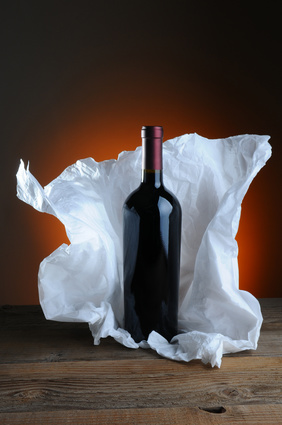
Red Wine Bottle with tissue paper wrapping on wood surface and light to dark warm background.

Did you know that histamine causes hangovers? I used to tell people that living with histamine intolerance is like having a permanent hangover, one I actually dubbed the “histamine hangover”, because eating histamine foods left me feeling like I’d been run over by a truck. Thankfully some wineries have come up with ways to not only reduce or eliminate sulphites, sugars, and the awful additives you wouldn’t believe are the norm, but also to lower histamine to a negligible level.

Best of all, how could you not convince friends to enjoy your choice of wine when you can pretty much guarantee they won’t get a hang over from indulging? I mean, if there’s anything that’d convince folks your diet really ain’t so bad, it’s this.

Don’t get me wrong – there’s no place for alcohol when we’re horribly sick; not unless we want to get worse. I gave it up for nearly two years when at my worst, but sorely missed the social aspect of hanging out with friends and having a glass of red and was annoyed at missing out on an enjoyable way to ingest some beneficial nutrients.

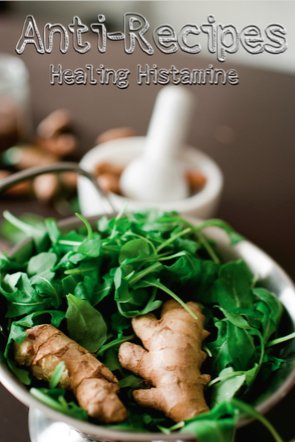
You’ll find recipes full of foods with antihistamine and anti-inflammatory properties my books Anti-Recipes and The Anti-Cookbook

CLICK HERE TO CREATE YOUR OWN PERSONALISED HEALING HISTAMINE PLAN. 

Yes, these and other lies we tell ourselves to justify diving into something that truly makes us happy.

Low, or no, histamine wines aren’t new. What is new however is finding one that doesn’t make me feel horribly unhappy and unsatisfied in the way that carob chip cookies or alcohol free beer do. Try tempting your pals with a “mockulate” fudge cake.

Yeah, good luck with that one.

Thankfully I’ve only suffered the horror of Bud Zero (or whatever the heck it was) on assignment in Libya for CNN. It’s an indignity that won’t be tolerated nor repeated, histamine issues or not.

My assignments nowadays are a lot more fun. Like meeting people who want me to spread the word about some great new product. Sometimes they’re great, others not so much. I’ve been sampling low histamine wines for the last few years but haven’t been inspired to share my findings on the blog till now.

Dry Farm Wines are by far the best tasting, low/no histamine, sulphite, preservative free, GMO yeast and sugar free product I’ve enjoyed. Yes, I said enjoyed. Because a glass of wine is meant to be savoured without fear of flushing, throbbing head (in my case a pre-hangover hangover), acid indigestion and all the rest we’ve learned to hate.

I had never looked into what goes into modern wines till a bunch of information was made available to me by Todd over at Dry Farm and also as reported by Abel James over at Fat Burning Man.

Here’s a little taste:

Sulphur dioxide: a preservative used in wine making. It can cause  dermatitis, hives, flushing, GI issues and more. It has been shown to cause symptoms of asthma by causing mast cells to freak out and dump inflammation (including histamine) into the blood stream.

Ammonium sulphates: a preservative that causes nausea, vomiting and GI issues. It also causes histamine release in the body.

Commercial yeasts: a known histamine trigger.

Abel also points out that industrial farming practices mean wine often contains fungicides, mycotoxins and phthalates.

These are all known mast cell triggers.

Toss in that wine makers are allowed to use purple food colour and genetically modified yeasts and we’re getting to the heart of why red wine is such a mega trigger for most of us. Removing all of these isn’t a perfect solution however as all alcohol can impact the production of the histamine degrading diamine oxidase (DAO) enzyme, once that’s already potentially low in people with histamine intolerance and mast cell activation.

I recently enjoyed a glass of Dry Farm’s light red wine (beaujolais) with a large green salad of (anti-inflammatory) mesclun greens, (antihistamine) fresh thyme and (antihistamine) oregano with shaved (anti-inflammatory and antihistamine) cucumber, and (antihistamine and anti-inflammatory) garlic, (anti-inflammatory) apple cider vinegar, (antihistamine and anti-inflammatory) coriander and (highly anti-inflammatory) olive oil dressing. And a nice juicy grass fed (anti-inflammatory) steak with (antihistamine and anti-inflammatory) butternut squash mash with (antihistamine and anti-inflammatory) ginger and (antihistamine and anti-inflammatory) turmeric.

My point in pointing out the properties of these foods is that even in having a glass of wine, which I can now have without being consumed with guilt over doing something awful to my body, I take care to use my balanced plate approach. Not familiar with it? It’s the idea that higher histamine foods can be consumed as long as they’re counterbalanced with lower histamine, but more importantly, antihistamine and anti-inflammatory foods.

I explain this concept as well as all the others that helped me heal here. 

If DAO is a worry, I know some reply on supplements to make up for any shortfall.

Dry Farm wines haven’t yet started lab testing their products for histamine content so I asked Dry Farm Wines founder Todd Whit what makes their wines low(er) histamine, and here’s his reply:

“Histamine in wine is caused by yeasts and bacteria in the winemaking process, which begins with maceration and follows through the fermentation.
 Maceration is the process of skin contact with the juice of red grapes to produce the color and natural tannins from skin contact. The juice from a white grape and a red grape are both clear. Red wines get their color from juice contact (soaking) with the skins of the grape.
 Most people who suffer histamine responses experience it from red wines. While white wines also contain histamine, it’s usually in trace amounts. Red wines have 10-200% more histamine than whites.
 It is believed that the higher amount of histamine in modern commercial wines is due to two primary problems that our wines do not have:
 1. Longer macerations. This makes wine darker and more tannic. This is a winemaking style that is currently in fashion. Americans perceive that the darker a red wine is the better it is.  This is of course not true, but it does sell wine!  As a result, winemakers have been using extended soaking on the skins to drive darker color. This also drives higher histamine levels. Dry Farm Wines are naturally made and have short natural maceration periods.
 2. The use of genetically modified commercial yeasts.  All commercial wines use commercial yeasts. We don’t really understand the impact of these commercial factory yeasts, as there aren’t many studies on them. But we, along with other natural food and wine leaders, believe they are inferior, unnatural, and may be dangerous to health.  They are used in virtually all wines made in the world, as they are easier for the winemaker to work with. All Dry Farm Wines are made with natural native yeast that grew wild in the vineyard with the grapes.  Our wines use no commercial yeasts.
 Many people with histamine sensitivities have experienced our wines and we have NEVER had a complaint, as well as many positive emails from people who previously could not drink standard wines with histamine sensitivities.  We have a very simple 100% happiness guarantee: If you don’t like any wine we send you or you can not tolerate our wines for any reason, we will issue you a 100% refund and you keep the wine! No questions asked.”
My view is that any wine that doesn’t use commercial yeast, that’s free of preservatives, dyes and all the rest of the nasty crud that goes into the average bottle, gets my vote and is something I’d personally go for. Having tried a number of these wines myself in Austin a few months ago, I can tell you that they certainly didn’t affect me the way wine (even the super expensive stuff) has in the past.
Indulge responsibly, but hey, I enjoy living in the world and sometimes that involves a glass of red with dinner.

You’ll find recipes full of foods with antihistamine and anti-inflammatory properties my books Anti-Recipes and The Anti-Cookbook

CLICK HERE TO CREATE YOUR OWN PERSONALISED HEALING HISTAMINE PLAN. 

——- REFERENCES ——–

http://www.ncbi.nlm.nih.gov/pubmed/6792956

Yasmina The Anti-Cookbook

http://www.tandfonline.com/doi/abs/10.1080/00039896.1975.10666706?journalCode=vzeh20

8 responses to “Wine: all the benefits without the histamine hangover?”

  1. HuldaBianca Avatar
    HuldaBianca

    This is amazing and so interesting!!! I really miss a glass of red wine ( haven’t had one in 5 years). I occasionally have a glass of white wine (organic if possible) and it works quite well if everything else is perfect… But red wine… oh I miss it. Must investigate if this brand is possible to buy in sweden.

  2. HuldaBianca Avatar
    HuldaBianca

    This is amazing and so interesting!!! I really miss a glass of red wine ( haven’t had one in 5 years). I occasionally have a glass of white wine (organic if possible) and it works quite well if everything else is perfect… But red wine… oh I miss it. Must investigate if this brand is possible to buy in sweden.

  3. Kerry Fyans Avatar
    Kerry Fyans

    I miss red wine so much I could literally kill for a glass sometimes. This brand does not ship to the UK. Is there any you would recommend over this side of of the pond?

  4. Colleen Avatar
    Colleen

    Thank you, thank you, thank you for this article! I’m fascinated as I haven’t been able to drink wine for the last 3 years. I would LOVE to have a glass of red here and there.

  5. nbrown Avatar
    nbrown

    Wine is one thing I have sorely missed and this article gives me hope! I checked out Dry Farm Wines and was sad to see they don’t yet ship to Canada. But I will start checking around some of the better wine stores around here and see if they have looked into wines like the ones at Dry Farm. I do agree that there is something to the idea that “clean” wines don’t produce the same effects as most typical ones. I do occasionally sip an organic wine I discovered that seems to be ok, but would love to find more.
    Thanks again for another great article!

  6. Alison Avatar
    Alison

    http://www.good wines online.co.uk have sulfite free wines and some really good info on organic and sulfite free wines.

  7. Kerry Fyans Avatar
    Kerry Fyans

    Thanks Alison. Good Wines are great aren’t they. My issues are with histamines and salicylates so even organic, bio dynamic, sulphur free is no good for me. I emailed the winery in this article though and am currently in the trail of finding something that does work for me here in Europe. If I find something I’ll let you know.

  8. Meghan Jensen Avatar
    Meghan Jensen

    I was so excited and headed straight to the Dry Farm Wines website, but now I’m slightly confused. Do they make their own wine, or simply locate and test wine from other wine makers that fit their standards? Is the club the only way to purchase?

Leave a Reply

Your email address will not be published. Required fields are marked *

More Articles from Healing Histamine

  • Best Outdoor Finger Foods

    Best Outdoor Finger Foods

    There’s nothing like light-hearted summer get-togethers in the backyard or out on the deck fueled by delightful and delicious finger foods. For the histamine intolerant guest, chips and salsa are…

    Read more

  • Best Histamine Intolerance BBQ Foods

    Best Histamine Intolerance BBQ Foods

    Summertime is BBQ time. There’s nothing like the smell of hot food fresh from the grill and an al fresco meal with friends or family to wrap up a hot…

    Read more

  • The Hay Fever-Histamine Connection

    The Hay Fever-Histamine Connection

    Hay Fever, otherwise known as allergic rhinitis (nasal allergies), or what most people refer to simply as “allergies” has an association with histamine intolerance and mast cell disorders. Have you…

    Read more

  • Histamine & The Pool or Beach

    Histamine & The Pool or Beach

    When it’s hot and sticky in the summertime, there’s nothing like a dip in the pool or a trip to the beach to cool you down. And since histamine intolerance…

    Read more

  • This Parasite Triggers Histamine Intolerance

    This Parasite Triggers Histamine Intolerance

    Could parasites be causing or contributing to your chronically high histamine levels? We know that imbalances in the gut microbiome can cause histamine problems, but how about intestinal parasites? It’s…

    Read more

  • 6 Summer Histamine Challenges and Solutions

    6 Summer Histamine Challenges and Solutions

    Summertime is a wonderful time of being outside, taking in the sunshine, mowing the lawn, and enjoying cookouts with friends and family. However, for those of us dealing with histamine…

    Read more

  • Boost Good Gut Bacteria Without Supplements

    Boost Good Gut Bacteria Without Supplements

    Most of us know that our gut plays an important role in our immune response. The levels of different species and strains of bacteria in the gut, and especially which…

    Read more

  • Exercising with Histamine Intolerance

    Exercising with Histamine Intolerance

    We all know exercise is recommended for a healthy body in the long run. However, with histamine intolerance, you’re probably finding that exercise can make you sick. Unfortunately, exercise over…

    Read more

Welcome!

Yasmina was an award-winning broadcast journalist with a decade of experience covering war zones for CNN and the BBC. She devoted her journalism skills to researching and writing about histamine. Click here to learn about her. Each post is carefully and fully referenced with the latest scientific research. Not sure where to start? Here’s a four week meal plan and overall Histamine Reset.


4 Week Histamine Reset


Recent posts


Anti-Recipes…Bioflavonoid Rich & Hearty Foods $18

GET STARTED HEALING HISTAMINE

WHAT YOU NEED TO KNOW ABOUT HISTAMINE DELIVERED TO YOUR INBOX