Citations can be found at the bottom of this post.
According to an article published in the British Journal of Pharmacology in 2013, mast cell stabilising compounds inhibit the release of allergic mediators (like histamine) from mast cells (a part of the white blood cell system).
These can be pharmaceutical or natural – I use the latter.
They’re used to prevent allergic reactions, but they are also prescribed to folks like me, who have mast cell activation. Mast cell activation syndrome or disorder (MCAS/D) is a fancy way of saying that the immune system is freaking out and dumping inflammation into the body, sometimes chronically. The research of Dr. Theoharides tells us that up to 1 in 200 in the US suffer from mast cell activation, while Dr. Afrin thinks it could be 1 in 6. It might be fair to say that rather than it being rare, it is simply rarely diagnosed because few doctors are aware of symptoms.
These include a baffling combination of bowel and gastrointestinal complaints, dizziness, fatigue, nerve pain, migraines, nausea and or vomiting, allergic-like symptoms (with negative testing), brain fog, memory problems, exercise intolerance, hives, rashes, chronic runny nose and hay fever like symptoms and more (you can find a full list here).
These symptoms may be diagnosed as Histamine Intolerance (HIT) instead, which is bigger in Europe than the states. Most doctors will laugh you out of their office for suggesting you may be intolerant to a compound produced by your own body, but as Dr. Castells’ research has shown us, we can be allergic or reactive to our own hormones, so why not histamine?
It’s thought HIT is caused by a lack of the histamine degrading enzyme diamine oxidase (DAO). I was initially diagnosed with this by a nutritionist/researcher but then with MCAS by a real doctor due to severity of symptoms, and my inability to compute that seizures could be caused by an intolerance (though I no longer rule it out). Histamine is one of the inflammatory players released by mast cells, which is perhaps why I was initially diagnosed with histamine intolerance.
Thankfully, in addition to pharmaceutical medications like the commonly prescribed sodium cromolyn, there are a number of natural compounds with mast cell stabilising properties which may be useful in preventing allergic reactions, and histamine release from mast cells.
I do not however recommend trying anything without the consent of a doctor – supplements and natural foods can have significant life-threatening side effects.
As histamine release from mast cells would no doubt aggravate a body already struggling to degrade dietary histamine, those with histamine intolerance may wish to ask their doctors if mast cell stabilisers may also be of use to them.
Please note, most of the studies on these natural compounds/foods was conducted on animals or in test tubes, so may not translate to humans. Additionally, just because a food has a certain property on paper, doesn’t mean it won’t cause a bad reaction. I’ve covered some of these before and many are already in my cookbooks, but if you see something you know, just go ahead and skip to the next because there’s quite a lot here.
Khellin is a plant-derived mast cell stabiliser from the Egyptian Amni visnaga (Khella) plant, research on which “inspired” the creation of sodium cromolyn, the aforementioned mast cell stabiliser. I have found Khella in liquid form – the wonderful Herb Pharm grows their own Khella and produces a tincture from it, but have yet to try it. I have however tried many of their other products, including the holy basil.
Quercetin is a bioflavonoid found in many brightly fruits and vegetables and is more effective that sodium cromolyn in blocking mast cell cytokine release (histamine is a cytokine). Quercetin also works prophylactically, so unlike cromolyn, it doesn’t need to be taken before meals. Also in the bioflavonoid family are luteolin and apigenin, the latter of which can be found in parsley, celery, rosemary, oregano, thyme, basil, coriander and artichokes. These foods and those high in quercetin and luteolin have formed the basis of my diet for many years now and I partially credit them with my recovery. Dr Theoharides at Tufts has led most of the bioflavonoid for mast cells research and ended up creating a supplement specifically for this. This supplement,Neuroprotek is what I take now.
I’ll share the other incredibly important techniques that worked for me further down in the post.
Foods and natural supplements containing mast cell stabilising, antihistamine and anti-inflammatory compounds form the basis of all the recipes in my cookbooks: the all liquid Anti-Detox, the Anti-Cookbook (regular and paleo) and my current favourite Man Food. More than that, these books feature a nutritional breakdown of the top vitamins and minerals in each recipe, as well as helping kitchen newbies figure out how to integrate these lovely ingredients into day to day cooking. What these books are not is any kind of medical treatment, they are simply healthy recipe suggestions.
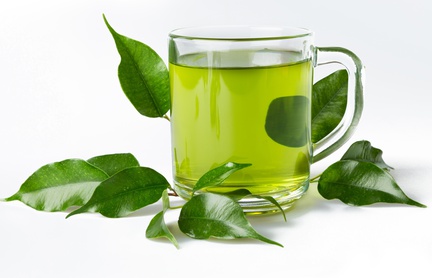
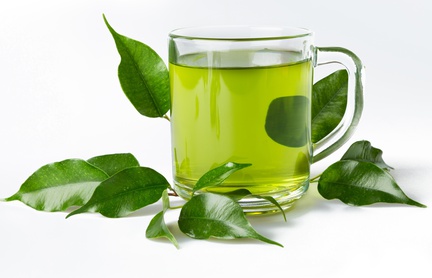
Epigallocatechin gallate: certain studies find that this green tea compound can inhibit the release of histamine from mast cells. I was told not to drink green tea initially, but eventually found that white tea, which is the same leaf but less fermented, went down really well and definitely did something good for my body. I’m not a caffeine person anymore, the days of waking up and knocking back two cans of Pepsi Zero to get by on a few hours sleep while in the field as a journalist are far behind me now, so I tend not to ingest caffeine often. I have considered decaffeinated, but studies suggest that it may have lost 15-25% of polyphenols.
Silibinin frommilk thistle prevents histamine release as well as other inflammatory cytokines from mast cells.
Ellagic acid in pomegranate and mango kernel (among others not considered low histamine foods) stops histamine and other pro-inflammatory agent release from mast cells.
Reservatrol found in grapes, pistachios, blueberries and other higher histamine foods, was found to suppress inflammatory cytokines linked to mast cell disorders, specifically tumour necrosis factor and interleukins.
Curcumin from turmeric presents with anti-allergic activity, mast cell stabilisation (thereby preventing histamine release and others),
Garcinia mangostana (mangosteen) is something I’ve taken as a supplement for years. I’m always more in favour of eating the whole food – but in this case the good stuff is found in the skin. It inhibits histamine release and also prostaglandin D2 sythesis which has been linked to hair loss.
Theanine is another win for green tea. This amino acid can prevent histamine release from cells at a “low concentration”.
You’ll find recipes full of foods with antihistamine and anti-inflammatory properties my books Anti-Recipes and The Anti-Cookbook
Finn, D. F., and J. J. Walsh. “Twenty-first Century Mast Cell Stabilizers.” British Journal of Pharmacology Br J Pharmacol 170.1 (2013): 23-37. Web.
Prieto-Garcia A1, Sloane DE, Gargiulo AR, Feldweg AM, Castells M. (2011) Autoimmune progesterone dermatitis: clinical presentation and management with progesterone desensitization for successful in vitro fertilization. Epub 2010 Nov 18. Mar 1;95(3):1121.e9-13. doi: 10.1016/j.fertnstert.2010.10.038.
“Cinnamic Acid.” Wikipedia. Wikimedia Foundation. Web. 01 May 2016.
Godman, Heidi. “Diet Rich in Resveratrol Offers No Health Boost – Harvard Health Blog.” Harvard Health Blog RSS. 2014. Web. 01 May 2016.
Weng Z, Zhang B, Asadi S, Sismanopoulos N, Butcher A, et al. (2012) Quercetin Is More Effective than Cromolyn in Blocking Human Mast Cell Cytokine Release and Inhibits Contact Dermatitis and Photosensitivity in Humans. PLoS ONE 7(3): e33805. doi: 10.1371/journal.pone.0033805
“Getting the Most Out of Green Tea? – Ask Dr. Weil.” Getting the Most Out of Green Tea? – Ask Dr. Weil. Web. 01 May 2016.
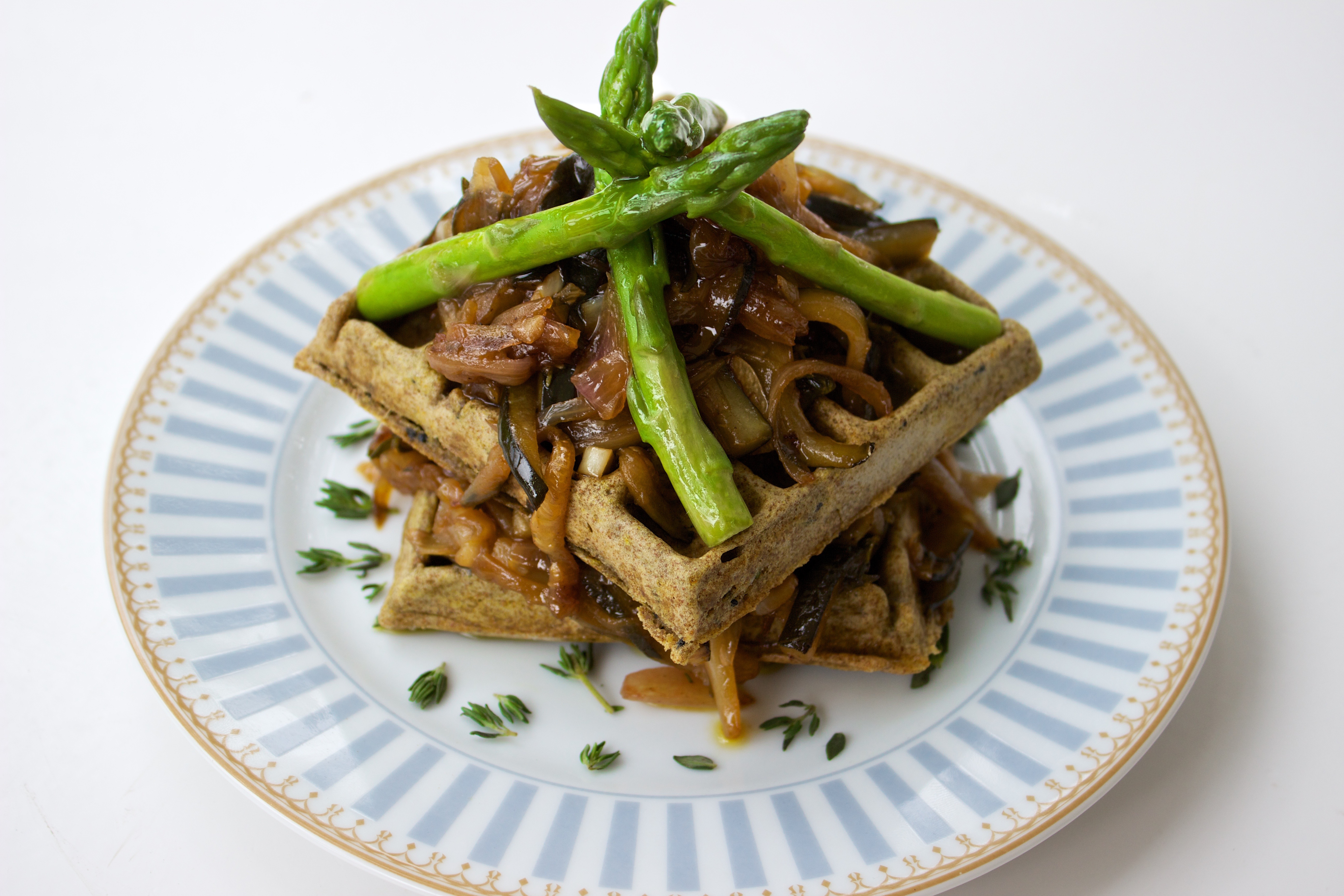
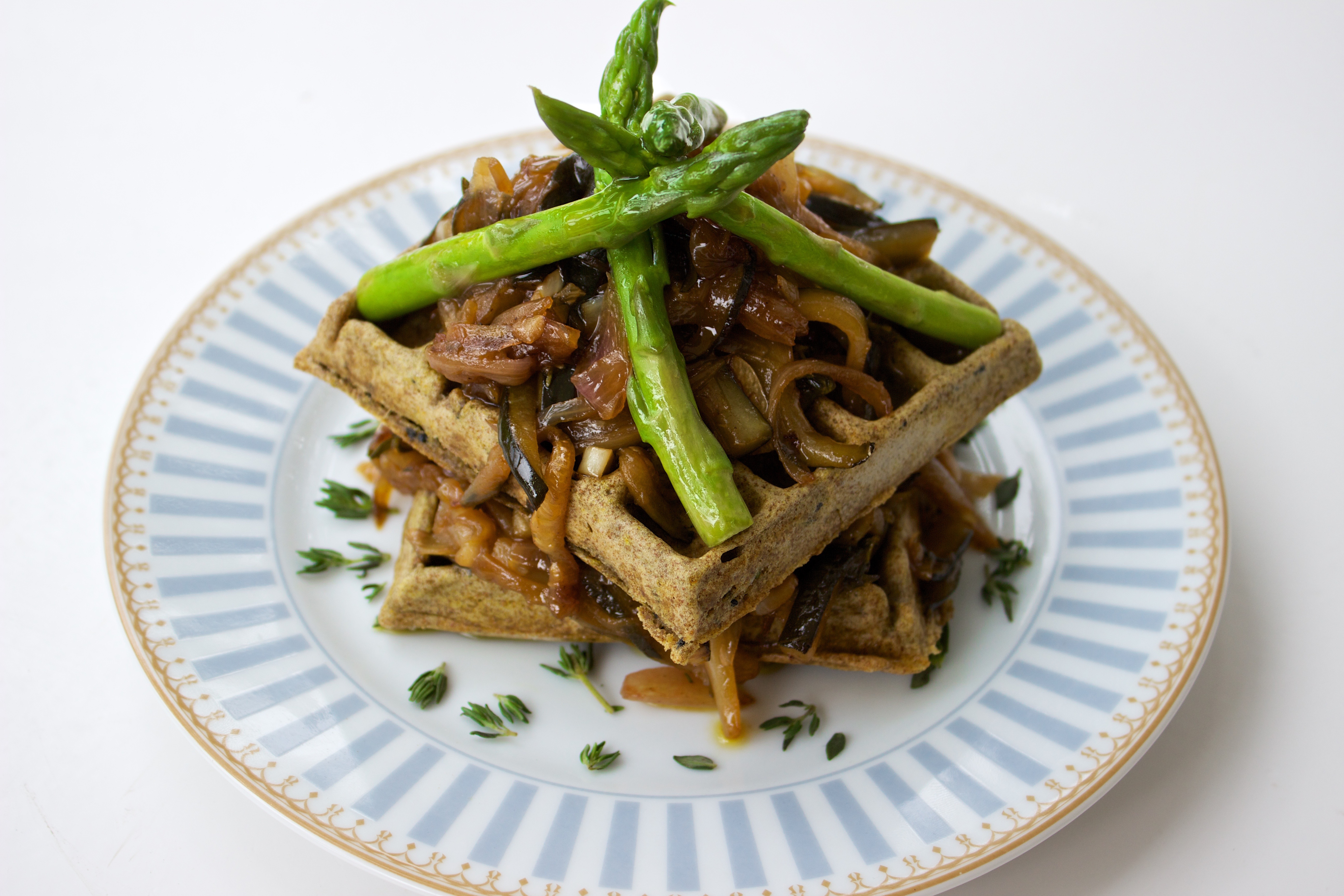
This is one of my favourite lunch recipes, taken from my latest book Man Food. This ebook is built on the same principles as the Anti-Cookbook and Anti-Detox, namely that there be little or no grains, dairy, soy or corn, but lots of ingredients with antihistamine and anti-inflammatory properties also dense in wonderful phytonutrients.
None of my books offer medical treatment, but rather a blueprint of what I’ve eaten over the last few years as I’ve worked to rebuild my health and heal my body.
You’ll find recipes full of foods with antihistamine and anti-inflammatory properties my books Anti-Recipes and The Anti-Cookbook
If you have problems digesting chickpeas I’d recommend letting the chickpea flour batter sit for 30 minutes to an hour. You can use any veggies or any flour you like for these. A chestnut/sorghum/water chestnut/rice flour combo works really well. Likewise pretty much any veggie works for the chutney.
INGREDIENTS
Waffles
1 cup chickpea flour
1 cup water
2 tablespoons olive oil
Handful coriander, finely chopped
Handful basil, finely chopped
Pinch salt
Optional
1-2 tablespoons protein powder
Chutney
2 cups zucchini, grated
2/3 cup shallots, chopped
2 cloves garlic, pressed
2 tablespoons turmeric, grated
2 tablespoons coconut sugar
2 tablespoons apple cider vinegar or lemon juice
Pinch salt
Half a cup steamed asparagus
Handful thyme leaves for garnish
PREPARATION
Waffles
In a medium bowl whisk together the chickpea flour, water, olive oil, coriander, and basil. Brush your waffle iron with some olive oil before heating, then pour batter into the waffle iron and cook for about 5-7 minutes or until they’re cooked through.
Chutney
Sauté the shallots in a little olive oil in a pan. Once soft, add in the zucchini, coconut sugar, apple cider vinegar and garlic. If you have time, bake at 180C/390F for 20 minutes instead of preparing in a pan. The flavours will be richer.
Place the chutney on the waffles, top with asparagus and garnish with thyme.
UPDATE: math is not my strong point so my apologies. I have changed the first graph to reflect verbatim the histamine reduction.
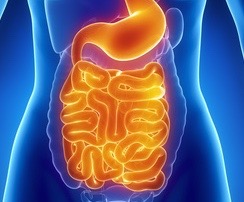
In the last few years research into causes of IBS have explored a link to foods high in fermentable oligosaccharides, disaccharides, monosaccharides, and polyols (FODMAPs) [1]. And now researchers believe a low FODMAPs diet may work in part because they found “an eightfold reduction of histamine in the low FODMAP group” of a recent IBS study [2].
IBS is a chronic, often disabling condition causing stomach pain and bowel issues. It’s thought that between eight and twenty percent in the US suffer from it, with IBS accounting for nearly half of all gastroenterologist visits [3]. Histamine intolerance and mast cell activation may initially have been misdiagnosed as IBS in the beginning (as mine were).
A number of the studies I read found food elimination diets as an IBS treatment have yielded conflicting results, except in subjects with diarrhea, or the histamine runs as I’ve been known to call it.
Temporary restriction of high FODMAPs foods which cause an increase in fermentable products in the small intestine and colon, resulting in distention and gas however, may provide relief for a subset of IBS patients [4].
A 2016 study in the journal Gut finds that a low FODMAP diet “may significantly improve IBS symptoms”. FODMAPs were shown to affect the histamine levels and microbiotia in some of the study participants. In the low FODMAP group there was an eightfold (800%) reduction of histamine and an increase in good bacteria [5].
While this is certainly interesting news, many of the FODMAPs foods appear on other lists, so it would be best to individually test foods rather than just exclude another entire list. Many of these foods are very healing: anti-cancer etc, and I’m all about eating a balanced diet of healing nutrients. I would also urge you to work with a nutritionist to ensure your diet doesn’t become restricted to the point of malnutrition – something highly probable if you’ve already eliminated high histamine foods and are now on a FODMAPs mission. My approach would rather be to continue as I am, including a smattering of nutrient dense healing foods overall (rather than focusing on histamine, FODMAPs etc).
I’ll be sharing the PDFs I used to help plan my recovery in my upcoming 90 minute online workshop. Because while there’s no point in blindly following lists, we sometimes need a coherent plan to share with nutritionists and doctors who aren’t up to speed with the issues we’re dealing with. You can read more about that here.
In that vein…the Stanford Medical Center points out that issues may arise when FODMAPs are eaten in excess [6]. And that’s my point exactly. When you have an inflamed body, either because your mast cells are generally programmed to be on high alert and constantly releasing inflammation/histamine, or if you have too little of the histamine-degrading DAO enzyme, or your diet is waaaaaaay high in FODMAPs, just dialling things down a little and putting extremist food views aside could be a better way forward. Just the mental anguish of following these incredibly restrictive diets is counter productive in that stress hormones can cause mast cells to dump more inflammation/histamine into the blood stream.
The Stanford Medical Center recommend a trial period of eliminating FODMAPs followed by adding high FODMAP foods back one at a time in small amounts to identify food triggers [7]. Interesting, sounds like my approach exactly: figure out what bothers you rather than eliminating an entire list. Something I’ll help you learn how to do in the online workshop.
Interestingly I’ve long advised those struggling with their health to limit sugar intake, because it can be inflammatory [8]. And so we come to a 2012 study in the journal Gastroenterology and Hepatology seeking to determine why a low FODMAP diet appeared to help IBS patients [9]. They discovered that fructose and fructans in the high FODMAP foods were the most problematic. When starting out on the standard low histamine diet I really read my list as gospel. So when I saw that sugar was fine, I gorged myself on sugary snacks to make up for the misery of the diet. At this point I was unable to tolerate many FODMAPs and salicylate rich foods. Once I eliminated the sugar, wheat (high FODMAPs, very inflammatory) and dairy (mast cell trigger, inflammatory) as well as processed foods (high in fructose and corn syrup which are high FODMAPs), for a good long while, I was able to tolerate previously bothersome foods. Things like garlic and onion which had caused severe flushing, headache and burning in my stomach, broccoli which along with the others induced ear splitting gas eruptions. Mango and other high sugar fruits meanwhile caused brain fog and sleepiness.
Garlic and onion sensitivity is something many of us struggle with at the start. But I’ve seen it time and again, that when the body starts to heal, by using stress relief and meditation techniques to fight stress induced mast cell degranulation and histamine release, while eating a balanced diet rather than a severely restricted one, everything falls into place. There will always be exceptions – but wanting to heal, being open to recovery, dealing with stress, resolving trauma, beginning to train mast cells through exercise (see my interview with mast cell specialist Dr. Castells for more on that), and making a concerted effort to make time to indulge in things that make you truly happy, gives us a fighting chance. Oh, and diet of course. Yes, in that order.
It’s time to move beyond the histamine elimination diet…
Are allergy-like symptoms preventing you from living the life you’ve always dreamed of?
Is your “safe” list down to single digits?
Are doctors telling you it’s all in your head?
I’m living proof it’s not, and that there is hope.
But it seems like just yesterday I was so sick, dizzy, fatigued and unrelentingly depressed that the bedroom became my whole life.
Bath products hurt me and so I scrubbed myself with sea salt and water alone. Make up brought me out in hives and migraines so I rocked the androgynous look. Crying over clumps of hair clogging the shower drain was a daily occurrence.
But worse than all that:
I was starving.
Literally.
I was terrified of food and felt life wasn’t worth living shackled in the low histamine elimination diet prison.
Suddenly I realised I was doing it all wrong. I did a 180 and now I eat what I want, go where I want and do whatever I want, and feel even better than I did in my teens.
And now I’d like to help you get here.
In this 90 minute webinar we’re going to cover a good chunk of the information that helped turn my life around, the key strategies I share in my private consultations at $150 an hour, for $45.
So for $45 you’re getting:
90 minutes of the best advice I wish someone had given me
50 page ebook Short But Sweet: A Nutrient Dense Approach to Histamine Intolerance and Mast Cell Activation
A symptoms PDF spreadsheet to help you work out what’s causing what
My personal antihistamine and anti-inflammatory shopping list to inspire your next pantry stocking
A weekly meal planner PDF to take the headache out of eating
My own personal weekly meal planner as a sample
A worksheet to help you prioritise food re-introduction
The online workshop covers:
The science
Histamine intolerance or mast cell disorder – which is it?
Diagnosis – nailing it down
Medical treatments
Scientifically proven supplements
Foods heal
How diet helps healing
The 4 week elimination diet (the right way)
Un-confusing histamine lists
The Anti-Diet vs the traditional low histamine diet
Why the histamine bucket theory is out of date
What my diet looks like (feeling like a champion)
Lifestyle
Pantry reboot: restocking for health
Kitchen hacking: less cooking more living
Don’t go for broke: spending your histamine allowance on a budget
Re-wiring the brain
Understanding how trauma can cause immune dysfunction
The role of the amygdala in food reactions
Brain reprogramming techniques
Beauty and body
The wrong exercise triggers histamine: here’s the work around
Beauty products that help lower histamine and inflammation
In addition to this wealth of information you’ll walk away with a number of documents to get you up and running*:
50 page ebook Short But Sweet: A Nutrient Dense Approach to Histamine Intolerance and Mast Cell Activation
A symptoms PDF spreadsheet to help you work out what’s causing what
My personal antihistamine and anti-inflammatory shopping list to inspire your next pantry stocking
A weekly meal planner PDF to take the headache out of eating
My own personal weekly meal planner as a sample
A worksheet to help you prioritise food re-introduction
I’m keeping this one small, just the first 100 attendees. There’s already over 2,000 people signed up to know when the course goes live, so don’t delay! Click here to go to online store and purchase.
How this works: you will receive an email confirmation of your purchase and then a weekly reminder. On the day of the online course you will receive a link to join the broadcast. If you can’t make it, don’t worry, there will be a recording available for one week after the event for you to access as you please.
*You will receive these documents via email right after the workshop ends.
What this is not
I am neither a doctor nor nutritionist so please understand I do not dispense medical advice nor tell you what to eat. Any information given in this workshop must be shared with your medical professional.
You’ll find recipes full of foods with antihistamine and anti-inflammatory properties my books Anti-Recipes and The Anti-Cookbook
I was recently forced to pin this post to a Facebook group:
“PHARMACEUTICAL SHAMING”: demonising pharmaceuticals and scaring people into thinking they will not heal if taking medications. While we are focused on natural healing via diet and other methods in this group, please refrain from the “pharmaceutical shaming” of folks taking prescribed medications. It is firstly dangerous to dispense medical advice but also very upsetting when people are told they will not heal if taking them. Therefore kindly please bear in mind that we all start somewhere and not everyone can just flush their meds down the toilet, nor should they. It goes without saying we are not qualified to advise anyone on tapering off meds.
I’ve probably just made a few heads explode right now. And a few more will pop off after hearing that: I’m not anti-medication when it comes to histamine intolerance and mast cell activation, or others for that matter. While it is true that for a time I became virulently anti-pharmaceuticals, in the same way I swore to never again touch my beloved Yves Saint Laurent mascara, or deign to be in the company of those who polluted my environment with perfume, I have realised that living in the real world requires some compromise, especially when both health and sanity are on the line.
You know those fanatical Facebook group members who attack anyone who dares stray from the party line on bodily purification of histamine? I was an ascetic, determined to be the purest of the pure, no histamine would sully my temple of a body. My majestic 114.5lb/52kg weighing sagging skin draped on whittling 5’10/1.78m frame bones. No, I was strong, pure, determined, I admonished those who dared dream of anything beyond the suffocating confines of the histamine list bequeathed to me. While I admit to still being a junk/processed food Nazi, I have mellowed in pretty much every other way.
Sure, perfume is made up of dozens of many harmful chemicals [1], but if I don’t want it to pollute my environment, I’m welcome to go back living under my duvet, completely terrified of the world around me.
That said, thankfully I no longer experience the very scary reactions to perfume that I used to…which I believe were caused by a hyper active amygdala in my case.
Those were fun years. I’m sure SO many people miss my nasty comments about their poison adversely affecting my health, the pamphlets kept on the ready for just these occassions. I’m certain folks really missed my dinner time haranguing when I (rarely) joined friends for a meal, resolutely nursing my glass of water (after demanding the waiter rinse it again and then going to the bathroom myself to rinse it yet another time because everyone knows dishwashers leave toxic residue on the glass), bitching because they only have tap water and I can smell the chlorine in it. I’m sure the FB group members on whose lovely recipes I left a barrage of “you’re so lucky you can eat that” and and “you’re eating poison” comments, truly felt my presence lacking in the brief stint where I became intensely convinced that computer EMF waves were causing my mast cells to degranulate.
I’m not getting into any discussion about whether this is true or not, just sharing my thoughts at the time.
“Wow – you can eat cherries? You’re SO lucky – I’d puke my guts out if I did – they’re SO high histamine, they’re on every list, not just mine. Enjoy the cherry pie though!!!!!”
You’ll find recipes full of foods with antihistamine and anti-inflammatory properties my books Anti-Recipes and The Anti-Cookbook
Ok so I’m slightly embellishing there but that was the gist of many a comment I left in the early self-righteous days.
The reasons for not being anti-meds is simple:
1. Though there’s very promising natural research out there, I don’t know of any doctors yet willing to inject us with garlic or turmeric to treat cancer.
2. The treatments we so often read about are mostly tried on animals and we don’t know if that will translate to humans.
3. The concentrations used in studies are far beyond what we can absorb naturally from these foods.
4. Safety – I take care to buy from only certain companies, but who knows what we’re really being given in most cases.
5. Most supplements and natural treatments have not gone through the same testing and safety procedures as medicines. So while meds can have very nasty side effects, at least we know about many of them and can watch out for them. Not so much with supplements.
6. If I was unable to control my symptoms naturally, I would surely want something to help me do so. If you’d like to learn more about how I used diet to turn my life around, check out this online workshop.
7. I do not rule out a future where a life event comes to pass that would require medication. In this case I would seek a balance between a natural and medical approach.
The simple fact is that if medication had been offered to me in the years I was desperately trying to nail down a mast cell activation diagnosis, I would have taken it. I did take antihistamines for decades without knowing what was wrong with me. But by the time I was finally offered sodium cromolyn, one of the most commonly prescribed medications for mast cell activation, I had discovered that I could control my symptoms through diet and lifestyle changes alone.
I do however take Neuroprotek, a quercetin supplement created by mast cell researcher Dr. Theoharides at Tufts. His research shows that quercetin is at least as powerful a mast cell stabiliser as sodium cromolyn. Please do not try any supplement without checking with a doctor.
While I do believe there is a time and a place for medication, I don’t necessarily think it’s forever in all cases. But my belief that (over)medication so that one can continue to engage in detrimental behaviours is in many cases unwarranted. If we need medication so that we can eat anything at all, to use anything at all on our bodies, so be it. But it’s my hope that in these cases exercise, psychotherapy, dietary changes, meditation and a concerted effort to find happiness in life, despite the horrific health situation, are employed in an effort to change what’s going on in the body overall. I’m very excited whenever I get emails from folks who have achieved a balance in life between the natural and medical and especially if they go all natural, safely.
I’m not saying a positive attitude can heal us of everything, but if we manage to make our peace and find some happiness then maybe we can be alright with wherever. How joyous to make the most of whatever we have and spend it enjoying family and friends. I was the most negative, depressed, angry sick person I have ever known. I rained down pain on myself and those who loved me.
My lowest point came when I ceased to be able to communicate with people on a human level. I became so wrapped up in my own pain that I had to drag them to my level to stay connected. And so one day in an ambien, mood stabiliser, xanax, antidepressant, and histamine daze, I busted my lady shave razor open and carved into my legs. I then walked into my best friend’s room, bleeding all over her carpet.
“Understand me” I begged in my mind. Her response was the best I could have hoped for. I don’t know what would have become of me if she had screamed and cried and begged me to get to a hospital. Realising it was a superficial cry for help, she just looked at me, silently communicating to me the futility of trying to drag her to my level. And I understood. I could either continue my descent into hell, finding new companions on the way, or I could try following the (gluten free) breadcrumbs back to friends, family and sanity.
I know she was distraught and fearing for my sanity, but once again, she was the voice of reason and I am still upset with myself for this encounter.
And so I end this post with a piece of gentle advice. Because a lot of this illness is feeling sorry for ourselves and making everyone around us as miserable as we are, try to maintain relationships with at least a few who love you but won’t take your crap. Though it’s painful to be with the carefree or militantly happy souls when we’re in the doldrums, slipping free of the anchor dragging us into the murky depths of despair, for even a moment in their company, we may come to accept things aren’t as bad as we think. Or it simply doesn’t matter that they are.
To that end I’ve created an online workshop to share the techniques I used on myself to help retrain my brain not only for healing, but also to accept that some days it doesn’t matter if I can’t accomplish all that I would like to. Some days it’s just ok to be.
You’ll find recipes full of foods with antihistamine and anti-inflammatory properties my books Anti-Recipes and The Anti-Cookbook
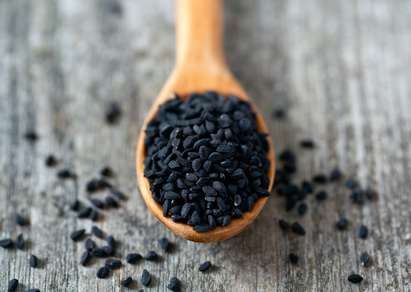
Nigella sativa and its active constituents have been shown to possess antioxidant, anti-parasitic, antimicrobial, anti-inflammatory, pain killing, and fever lowering properties, in addition to treating coughs, slowing the growth of some cancers, as well as inducing cancer cell death in cervical, liver, colon, lung and certain types of breast cancers [1].
Please bear in mind these are usually highly concentrated formulations involving various forms of chemical extraction and usually tested on animals.
A 2012 review published in the journal of Evidence-Based Complementary and Alternative Medicine, outlines how nigella sativa is believed to work to prevent osteoporosis. The article shares that inflammation is mediated by two enzymes, cyclooxygenase and lipoxygenase, which generate prostaglandins and leukotrines from arachidonic acid [2]. Thymoquinone, nigella sativa’s active constituent, inhibits both in a dose dependent manner. The study proposes that nigella sativa or thymoquinone works to prevent osteoporosis in two ways:
1. By inhibiting cyclooxygenase and lipoxygenase
2. By neutralising free radicals
Thereby preventing inflammation from contributing to increased bone reabsorption and loss.
In 2014 a study in BMC Complementary and Alternative Medicine notes that lack of oestrogen is linked to osteoporosis and that in their animal study nigella sativa reversed low oestrogen induced changes on bone density [3].
A 2010 study published in the American Journal of Otolaryngology – Head and Neck Medicine and Surgery found nigella sativa to be effective in alleviating nasal allergy symptoms. Particularly nasal congestion, itching, runny nose, sneezing attacks, and that it should be considered for treating allergic rhinitis “when the effects of other antiallergic drugs need to be avoided.” [3a].
A placebo controlled study published in the journal Phytotherapy Research noted significant improvements in how patients graded their allergic symptoms when treated with nigella sativa oil versus the placebo group. Symptoms included allergist rhinitis, atopic eczema, bronchial asthma. Adverse effects in children were mainly related to gastrointestinal complaints when the oil was taken on an empty stomach [4].
Please do not administer nigella sativa or any other natural supplement to a child without the consent of your doctor, and even to yourself. Like medication, supplements can have significant adverse effects.
Wikipedia tells me that the gastric mucosal barrier is “a property of the stomach that allows it to contain acid” and that if compromised, by aspirin for example, acid can leak and damage the stomach. Like in gastritis for example. In this 2006 study published in the Archives of Toxicology, rat gastric mucosal damage was confirmed by the significant increase in mast cells and gastric erosions. Treatment with nigella sativa significantly lowered the number of mast cells and reduced the size of gastric erosions. Using thymoquinone, nigella’s active constituent alone did not yield as significant healing [5].
I always try to eat the whole food rather than rely on extracts.
You’ll find recipes full of foods with antihistamine and anti-inflammatory properties my books Anti-Recipes and The Anti-Cookbook
Staying with all things gastric…in a 2011 study in the Journal of the College of Physicians and Surgeons researchers revealed that nigella sativa healed aspirin induced ulcers in rats as effectively as the antihistamine Cimetidine [6]. This antihistamine is known to negatively impact the histamine lowering diamine oxidase (DAO) enzyme [7].
Honey also had this effect on the ulcers, but I would choose nigella sativa over a highly processed, sugary treat any day. Manuka honey is something I apply topically due to its antibacterial properties (though the jury is still apparently out on whether that’s effective), or sometimes I’ll suck on the lozenges, but I go for a seriously high methylglyoxal content.
Interestingly nigella has been shown to be effective in flatulence [8], something I can attest to first hand. Yes, I did just admit to that, but in the grand scheme of things I’ve shared on this blog it doesn’t seem like a biggie. Having spent decades nursing a basketball stomach so bloated that I often could neither pass wind nor belch, the discovery (by chance) that nigella relieved me and my loved ones of fumes so noxious they made dung beetles run for cover, was a huge blessing. There’s only so much control one can exercise during the daytime, and it’s many a time that the machine gun patter of my swollen tubes finally exhaling startled me awake from deepest sleep.
I’ve been using nigella sativa in my cooking since embracing a nutrient dense antihistamine and anti-inflammatory rich diet rather than a standard low histamine one. I’ll be sharing the basics of the diet and explaining how to work nigella sativa and other ingredients into your diet in my upcoming 90 minute online workshop. Sign up here to learn when the course is going live. [convertkit form=4845764] There’ll be limited space so don’t miss out!
You’ll find recipes full of foods with antihistamine and anti-inflammatory properties my books Anti-Recipes and The Anti-Cookbook
Antigen: any substance that causes your immune system to produce antibodies against it. This means your immune system does not recognize the substance, and is trying to fight it off. An antigen may be a substance from the environment, such as chemicals, bacteria, viruses, or pollen. An antigen may also form inside the body [1].
The traditional histamine intolerance or low histamine diet saved my life initially. Whether my anti-diet, one that’s high in the mast cell stabilising and antihistamine bioflavonoids quercetin, luteolin and rutin, would have done the same had I done my research earlier on in the game, remains to be seen. All I can do is speak of my experience. Eliminating one food after another in an effort to heal my symptoms, ended up starving me of nutrients (as well as nearly physically starving me) and creating severe psychological damage that’s taken years to unwind.
Through it all I’ve been working on observation, medical research that helped me create my particular nutritional approach – which incorporates the findings of a number of MDs specialising in diet; I didn’t re-invent the wheel here, and self-guinea pig-ism. In my case in particular (this will not be the case for others), I initially experienced relief from cutting foods before falling down the rabbit hole of ever increasing symptoms despite continued food cutting. It was all so confusing: I’d identify a problem food, eliminate it and experience near immediate relief for a few days or weeks, before the symptoms intensified. I ended up feeling that the more I removed from my diet, the more sensitive I became to smaller amounts of the foods I suspected of hurting me.
This is the norm. I was certainly not the exception.
You’ll find recipes full of foods with antihistamine and anti-inflammatory properties my books Anti-Recipes and The Anti-Cookbook
So what gives? Why does a traditional low histamine diet create so many eating disorders, chronically starved, fatigued people, who suffer increasing symptoms to smaller amounts of foods?
My responses till now have primarily centred on:
The removal of nutrients from the diet may cause further breakdown of the body overall, but especially the immune system.
If we do not get histamine from our diet, our body may release more histamine from mast cells to make up for the short fall. Histamine from mast cells doesn’t come equipped with the nutrients that may mitigate its inflammatory effect on the body.
The food isn’t the problem. Underlying inflammation is. The foods we choose may aggravate the issue, but unlike in allergies where there’s a specific immune response to neutralise the allergen, certain foods with inflammatory profiles such as high in histamine, members of the nightshade family, traditionally allergenic foods, may aggravate pre-existing inflammation or the body’s predisposition to mast cell activation/histamine release.
The traditional low histamine diet is very stressful to follow. Stress causes histamine release and inflammation generally. Stress is a primary cause in my case, following the low histamine diet provoked a massive stress response leading to more symptoms of histamine release and inflammation.
But now we have another nugget of information on why long-term removal of problem foods may result in increasing or never ending reactions. According to a 1996 study published in the Journal of Gastroenterology, long-term exposure to antigens led to “diminished mucosal mast cell degranulation” in rats [2]. (Thanks KV for sending this my way!). The study authors explain that while short-term exposure led to increased mast cell degranulation, long-term exposure had an opposing effect. In short, the system adapts. While this study is animal based, I have have certainly experienced this myself. I don’t know that this would have worked for me early on, but I do think that once I was out of the anaphylaxis zone, had I attempted adding foods in very low doses, it would have made a big difference long term.
I do not believe this should be tried at home. An immunologist or allergist with a knowledge of mast cells (preferably) is the person to help you with this. Because I had no one to help me I had to muddle through this all alone and I really absolutely do not recommend it.
This isn’t a new concept. Doctors have been using immunotherapy for allergies for quite some time now. Even in those with mast cell activation disorder who present with allergies as a mast cell/histamine trigger resulting in anaphylaxis, immunotherapy may be considered “with recognition of possible risks” [3].
In my case, I approached food in a similar spirit. Foods that bothered me were dipped quickly in boiled water for a second and then discarded. I’d then use that water to cook with. Drinking it on its own had triggered an immune response.
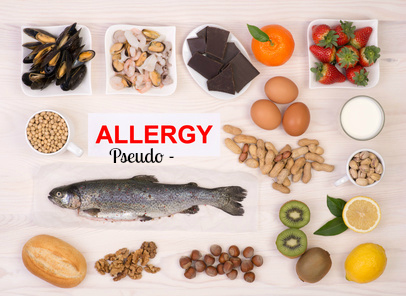
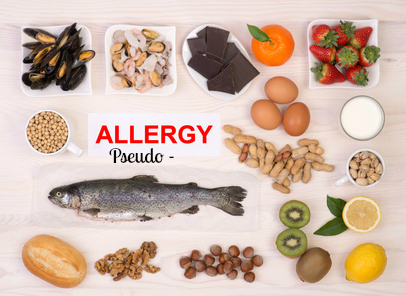
Urticaria is something many of us with histamine intolerance or mast cell activation have come to know as our nemesis: hives. Most doctors (non specialists) may not yet know that if allergies are not present, as diagnosed by IgE or RAST, excess histamine has been found to play a key role in chronic idiopathic urticaria/hives. In these studies high histamine foods and other pseudo allergens, appear to be the main suspects for adults presenting with urticaria/hives, while in children, food dyes, preservatives and others were more of a trigger than fruits and vegetables. A number of studies not only find a link between high histamine foods and other pseudo allergens and urticaria/hives but also show that dietary changes can resolve them and you may wish to print these out for your doctor. You’ll find links at the bottom of this post.
A 2013 study published in the Annals of Dermatology found histamine plasma levels to be “significantly higher” in the chronic idiopathic urticaria participants. They did not however find much correlation to levels of the histamine degrading diamine oxidase (DAO) enzyme. I do always tell people that DAO levels aren’t a very good indicator of much to do with histamine conditions. We still don’t have much data on their relationship [1].
In this 2000 study published in the European Journal of Clinical Nutrition, conducted on a small sample of ten people suffering chronic urticaria who were placed on a “histamine free” and oligoantigenic diet for 21 days. The latter is basically the strictest version of the food sensitivity diet that you can find. You’ll find a link to it here. This was followed by a seventy day re-introduction phase. The study authors’ findings suggest “histamine plays a major role in chronic idiopathic urticaria” [2].
A 1998 study in the journal Experimental Dermatology finds that on a diet free of pseudo allergens (high histamine foods), dyes and preservatives, seventy three percent of patients experienced a remission of more than six months [3].
As always though in science, we get conflicting numbers. This could simply be down to which pseudo allergen/high histamine food list is being used but there are obviously many other factors. A 2010 study published in the journal Allergy finds that a pseudo-allergen free diet helps one in three suffering from chronic “idiopathic” urticaria. The pseudo allergenic foods eliminated included food additives, histamine, and certain fruits and vegetables [4].
In 1998 a study in Allergy found that in children presenting at their clinic with chronic urticaria lasting longer than six weeks, who did not have allergies, seventy five percent (of an admittedly small sample of twelve cases) of cases were found to have pseudo-allergen induce hives/urticaria. Their double blind, placebo controlled food challenge findings indicate that in children the urticaria and hives were more likely to be triggered by food colouring, preservatives, monosodium glutamate (MSG) and saccharin (food additives generally) rather than fruits and vegetables [5].
This may not be news to those of us diagnosed with histamine intolerance/mast cell activation, but thankfully a number of specialists are now recognising the role of histamine rather than allergies in the diagnosis and treatment of urticaria (hives).
As I got up to depart a lacklustre appointment with Dr. X., the UK’s top mast cell specialist, after waiting nearly a year, I was interested to spot a document titled “Urticaria Diet” on his shelf. Dr. X. Confirmed that it was believed that diet could resolve urticaria/hives. I was a little confused given that not 10 minutes ago he had brushed aside my MCAS diagnosis (given to me at the Virgen del Valle Hospital in Spain, one of the most recognised mastocytosis centres globally), saying that if I refused to take sodium comoglycate, there was no way for him to confirm it. This put me in an uncomfortable spot – by that point my symptoms were pretty much under control, thanks to my emerging theory on an antihistamine and anti-inflammatory rich diet versus a standard (unhealthy) low histamine one. And so I was not comfortable with taking a pretty heavy duty pharmaceutical just to prove to the National Health System in the UK that I was in fact sick.
My reason for wanting the diagnosis recognised by the NHS was that, in case of emergency hospitalisation, I wanted my MCAS status recorded so that appropriate specialists would be called and the anaesthesia protocol for mastocytosis followed. Otherwise, if unconscious when brought in, and even if not, I would possibly be gravely injured.
Dr. X’s reasoning was this: if I was able to manage my symptoms of mast cell activation/excess histamine through diet alone, it was not MCAS and he would refuse to add my diagnosis from Spain to my records. If I refused sodium crom there was definitely nothing he could do for me. I tried to argue that I had been taking quercetin, a bioflavonoid found by Dr. Theoharides at Tufts to be even more effective than sodium comoglycate at preventing mast cell degranulation, the process by which mast cells release histamine into the body, from causing hives and other nastiness. To no avail.
You’ll find recipes full of foods with antihistamine and anti-inflammatory properties my books Anti-Recipes and The Anti-Cookbook
Though Dr. Theoharides has published nearly 400 peer reviewed studies, is in the top five percent of authors quoted in studies, is a world-renowned mast cell researcher and M.D., the information was not taken into account. It was suggested to me that the supplement I was taking was unlikely to be doing anything productive. It was of course unimpressive to him then that I consumed a diet made up solely of foods high in quercetin and the other mast cell stabilising bioflavonoids (which can be found in Dr. Theoharides’ Neuroprotek supplement here), my explanation for why my diet was healing me.
You can now understand my confusion over the urticaria diet sheet I was now clutching and waving in his face quite excitedly. A quick read revealed that this was basically a LOW HISTAMINE DIET. A really horribly unhealthy one (yes, soda is permitted, junk food without the forbidden ingredients was fine, dairy, wheat, processed sugar all good), but a low histamine diet none the less.
So, let me get this straight: histamine excess causes urticaria/hives and a low histamine diet can help. But diet, any kind of diet changes, will not help at all with MCAS? I could have understood if he said a low histamine diet. But his assertion was that NO dietary changes at all would help. I take issue with that simply from the perspective of the fact that we live an era where we know that diet is implicated in the onset, progression and prevention of heart attacks, dementia and cancer, to name just a few.
I’m not saying we can cure histamine intolerance and mast cell activation through diet, nor that medication should be abandoned in favour of it. Diet has been an integral part of my healing process along with many other components including meditation, yoga and re-wiring my brain for health. For more on the latter, you can check out the exact training I did here.
You’ll find recipes full of foods with antihistamine and anti-inflammatory properties my books Anti-Recipes and The Anti-Cookbook
[1] Cho, H., Cho, S., Kim, H., Park, C., & Lee, C. (2013). Lack of Association of Plasma Histamine with Diamine Oxidase in Chronic Idiopathic Urticaria. Annals of Dermatology, 25(2), 189-195.
The cognitive hypnotherapy course has begun and already I’m feeling the stress relief kicking in. I don’t know about you, but I trace my histamine intolerance problems back to stressful life events. From refusing to eat when under great stress, to increased symptoms generally. Interestingly though, my histamine symptoms were under control for the most part while covering war zones as a journalist. At least in the short term anyway. I would collapse into a puddle after a few weeks but pop another handful of Xanax, Ambien and various mood stabilisers and somehow convince myself to power through to the inevitable collapse.
Funny thing though when you’re sick and people try to convince you it’s all about the stress. My usual response was denial, bursting into tears and calling them heartless bastards who don’t understand I’m ACTUALLY sick, or blowing them off and going to punch a wall repeatedly (or worse self infliction of pain to let off steam).
Eventually I accepted the link and the true healing began.You know this already: keeping the body in a constant state of high arousal, fight or flight, wears it down and causes it to go haywire. The body has an amazing wellspring of healing to tap into normally, but when it’s convinced that all systems are on alert because we need to flee, it’s not going to have the resources to run things in a way that’s geared for long term survival.
This became all too apparent recently when my hair began falling out after a fast and then a stressful event pretty much at the same time. Some reading into the matter revealed that in times of famine, the body will reroute vitamins and minerals to running the body for immediate survival. In my case, the sudden reduction in calories may have prompted my body to take the minerals and nutrients from my hair and eyebrows, to feed my vital organs instead.
I sat down and had a long, hard think about how my entire life had been spent in a similar state of stress. Thankfully I’ve had the opportunity over the last few years to try out various stress relief approaches. When combined with neural retraining to help de-condition my negative responses to the act of eating (histamine-induced projectile vomiting every time you eat over a few years will do that to you) it’s been nothing short of a miracle. My problem has been finding a brain re-training system that does it in less than an hour a day. That’s where the cognitive hypnotherapy has stepped up to the plate.
In 15 minutes daily I have been able to effectively re-learn how to manage stress, disassociate food from past negative outcomes, and truly convince myself that recovery wasn’t just something that happens to others.
In week one we work to identify how past events are impacting our present health. We then create an “anchor” connected to something that calms us and we learn to trigger it every time we’re experiencing any kind of stress. I initially dropped my anchor every time I sat down to eat. Doing it isn’t a cure. Hypnotherapy isn’t curing anything, but it is removing stress surrounding every day events that my body has been conditioned to respond to in a certain way.
Conditioning has been around for a really long time. In this postI cover studies showing that negative conditioning can cause increases in nasal tryptase, an inflammatory mediator released along with histamine when mast cells break open in a process called degranulation. Another study in my post points out that the ability to avoid foods that have previously caused us a negative outcome is of benefit to survival. But I don’t live in the jungle or wrestle tigers over food, and there’s now a number of iPhone apps to help me identify edible plants (vs. those that kill). So it’s time to decondition. That’s where this course comes in. It’s not too late to join. Hazel and I are keeping it rolling for a little while longer till we reach a number we can’t comfortably manage in the Facebook Group for course members.
It’s simple: if you have a negative outcome when eating, how many times does it take before fear triggers your stress hormones every time you eat? And then every time you think of eating. Not too long in my case.
It’s finally here! Man Food – a high nutrient antihistamine and anti-inflammatory ingredient filled book geared towards guys, women who love to work out, yoga like they mean it, or just load up on healing nutrients. Features my personal shopping list of antihistamine and anti-inflammatory foods.
The Anti-cookbook and all liquid Anti-Detox Book, don’t treat any conditions, but feature a plethora of the high nutrient antihistamine and anti-inflammatory ingredients that have been instrumental in helping me feed myself on a limited diet. The Anti-cookbook features a six page list of antihistamine and anti-inflammatory foods and comes in regular and Paleo.
The Low Oxalate Cookbook features antihistamine and anti-inflammatory rich recipes.
Don’t miss the Low Histamine Beauty Survival Guide for non-toxic beauty tips, the skinny on histamine releasing (mast cell degranulating) beauty ingredients, antihistamine and anti-inflammatory beauty alternatives and the top brands natural brands I’ve found.
This course will relaunch. Sign up to my mailing list to know when it does.
My research into neural re-training convinced me that beliefs I was holding onto regarding my ability to heal, past negative food outcomes and exposure to stress were torpedoing my progress. Finding no practical approach to the problem, I tried cognitive hypnotherapy. It’s essentially a way of hacking into your belief system and re-wiring the brain for health. This four week course, created by my friend and cognitive hypnotherapist Hazel Gale, features the same techniques we’ve employed to further my recovery.
Science backs hypnotherapy’s effect on histamine (read all about it in this post) but we’re not claiming this course will heal any condition. I do believe, and have experienced first hand, that these techniques will help open us up to the possibility of healing.
In 4 weeks you’ll learn how to:
Master your stress response* Re-wire your brain for health and happiness Let go of negative dietary beliefs Accept healing is truly possible
PDF materials Downloadable audio Personalised attention from Hazel and myself in a private Facebook Group Purchase this course today and you’ll receive an email directing you to the first week’s course materials and an invitation to join the Facebook group. Every seven days you’ll get a new email with that week’s link.
Ready to open up a whole new healing mindset?
Here’s an interview with Hazel on how cognitive hypnotherapy works.
*Stress is a known mast cell and histamine trigger.
Yasmina: I’m here today with Hazel Gale, cognitive hypnotherapist, my cognitive hypnotherapist. It’s a really interesting field, which has only appeared, to my knowledge, in the last couple of years, and I can say that I have been using it with great success for about 6 months now, I think it was. How long has it been, Hazel, since I’ve started working with you?
Hazel: Yes, not that long. Maybe a little longer, but yeah, not far off that.
Yasmina: Okay, well, whatever it is it’s been working really well. I’m really excited to be interviewing you here today for my readers, and also to talk about this great course that you have I have come up with together. Well, you, really, with a little bit of help from me. I think it’s going to do a lot of good for a lot of people. Can you please, Hazel, explain a little bit about what cognitive hypnotherapy is and how you tend to apply it and in what situations you apply it.
Hazel: Sure. Okay, so, basically cognitive hypnotherapy is an amalgamation of other styles. It’s a little like cherry picking from many different therapy styles and finding the ones which seem to be most appropriate for the individual client in the particular moment that you’re talking to them. So we’re completely against anything that happens with a protocol or set procedure, or anything which labels people with a particular problem and says, “Because you have anxiety or depression or whatever it is, you will be treated in this way.” So it becomes a really fluid way of working. The main areas that we work within are – there is influence from traditional hypnotherapy, of course – but actually it’s quite different from traditional hypnotherapy. We’re grounded in a lot more technical and rational sort of stuff which comes from NLP, positive psychology and there are elements of psychotherapy in there, and Gestalt therapy, all of which comes together in this package, which means that you can move between the styles in any given session.
The things that people see a cognitive hypnotherapist are really quite diverse. You could be seeing somebody for really emotional stuff like anxiety or confidence issues, or you could be seeing people for quite physiological presenting issues, which you recognize have an emotional connection, which I believe we’ll be talking a little bit about later on. It’s very diverse, the amount of things that you will see in a regular week of practice. Personally I specialize in working with people who have confidence and self-esteem issues, and particularly those who are struggling with performance stuff and chronic fatigue, because I have both suffered from chronic fatigue badly in the past and have overcome it with cognitive hypnotherapy, and I did that through being a full time athlete, so I’m well aware of the pressures that one can put themselves under by being in a performance job.
Yasmina: What I found interesting about our sessions together and continue to find interesting about our sessions together is I have tried hypnosis in the past. I tried a session once with somebody and I’ve been doing self hypnosis on and off for many years, which I thought would be really great, because the book that I used helped you come up with your own script, you being the best person to really get into your brain and fish it all out. What I loved about working with you was I felt that the process of getting at the root of what was going on was much easier, because you really got in there and you asked the really important questions that made me think really hard about the genesis of the issue that I am dealing with. We spend a really long time talking about it before we actually get to the hypnosis part.
Hazel: Yeah, I think that’s one of the main differences between cognitive hypnotherapy and the more traditional stuff. Which is not to put down any of the traditional hypnotherapy at all, because it absolutely can be brilliant for people. It’s just not the way we tend to work. In cognitive hypnotherapy, rather than thinking of the trance state, or hypnosis, as this spacial state which one gets put in by a therapist in order to fix their problem. Instead we look at trance state as something that we get in an out of every day, and that being positive and negative versions of it. A positive trance state, for example, would be being completely in love with somebody and absolutely absorbed in what they’re saying, or watching a great film, or being in flow state in sport.
The negative trance state would be being hijacked by a negative emotion like anxiety. If you imagine a spider phobia, then the fear that comes on upon seeing a spider is a negative trance state. In many ways it’s the way that I see my job, rather than being to hypnotize people in order to fix them, it’s actually about looking into the thought processes behind the negative trance states in order to disrupt those processes, which is more about de-hypnotizing them out of the problem state than putting them into some special state which fixes it. And so you need to know exactly what the brain is doing in those moments, when it sees a spider and produces the anxiety. A lot of the time that will be to do with memories and things that have been experienced in the past, logged as dangerous and therefor anything that looks remotely similar to them in the present moment triggers an emotion, so that anything with a phobic pattern will work like that.
There’s many other ways to work out what equations, basically, the brain is running and how to interrupt them so that you get these little pockets of awareness where you would usually just be going off on a negative spiral. Those pockets will act as windows of opportunity if you like, and are essential, because they don’t just mean that people can get better, they mean that people can get better in a way that feels that they’re in control of their own progress, which is enormously empowering, and also means that when they learn these processes they can apply in them to other areas in their life on their own, without having to go and see a hypnotherapist for another session for each time something goes wrong.
Yasmina: Absolutely. I mean, something I found very interesting over the last couple of years is the greatest strides I’ve made in healing is by understanding the negative feedback loop that exists in my brain. I honestly believe that many of us were sick at some point, or continue to be sick in some way, but that our brain has sensitized us to becoming fearful of food, in this example, or certain triggers, because in the past when we were very sick we had a very, very bad reaction, but that is not necessarily the reality of today, and it’s not necessarily the fact that we need to have this incredible response.
It’s partially, at least for some of us, dealing with mast cell and histamine issues. It’s the immune system misidentifying or exaggerating a response to otherwise harmless foods and situations. This is where a lot of the new brain retraining programs have come into play, the Gupta Programme, the DNRS, which I found very interesting but wholly impractical to put into practice on a daily basis. That’s why I love the work that we have done together. After that one hour that we spent together, it’s 15 minutes a day to rewire the brain for that new, I hesitate to use the word because it sounds really new agy, but paradigm. Just really quickly, I just want to tell people a little bit about some of the research that we’ve found.
Sadness can intensify your histamine reactions, and that was discovered through hypnotizing people to be sad or be happy or be mad. Hypnosis can decrease the size of skin histamines reactions, so the wheel or the hive. Hypnotherapy for migraine lowers tryptase and histamine levels, tryptase being one of the mast cell mediators released along with histamine with mast cells. It’s involved along with allergies and also anaphylactic shock. Hypnosis and visualization can prevent mast cell de-granulation, thereby preventing the mast cells from dumping histamine and other inflammatory molecules into the body. These studies are linked to in my blog post, so you can check that out for yourself.
Hazel, how does the process work for somebody like me. Can you explain a little bit about how you address what’s going on with people who are dealing with mast cell issues and histamine. We do understand you are not a doctor and I always say, “I’m not a doctor.” We’re not treating an actual condition. What we’re doing is we’re trying to reframe the way that the brain approaches a situation.
Hazel: Absolutely. It should never be viewed as a cure. That’s not to say that you can’t have dramatic effects from it, but it’s not about physically curing the problem as such, although the results can be so diverse that you don’t know whether people could go completely into a place where the problem isn’t actually a physiological issue anymore. Nobody really knows exactly how that comes about through the psychological means of treating it. It’s possible.
Yasmina: Hazel, for my listeners, it would be great if you could outline what happens in a typical session. I’ve booked an appointment with you, if I’m in London I can come to your office and have the session with you in person. Otherwise we do it by Skype. So what can we expect in a session.
Hazel: The first thing that we need to do would be to talk about the problem and to work out what it is that your brain is connection to the issue. One of the things we really want to look out for are strong emotional feelings, especially ones with that are quite self referencing. Negative personal beliefs like, “I’m not good enough”, “I’m not lovable”. These sound dramatic, but the thing is that when somebody is suffering with debilitating physiological condition, it could be that one of those types of negative beliefs feed off it. So just part of the unconscious mind believing that has stimulated these ailments in the first place.
It could just be that when they have an illness those emotions are chucked up and made more painful by the symptoms themselves, so that when they’re having a bout of illness it causes them to feel particularly negative about themselves. It’s those negative feelings that we’ll trace. If there is something in their past which is causing them to be particularly sensitized to that issue then that might be addressed. Or there may be any number of other processes that we might use to help them get in touch with and understand the root of those emotions and how their brain organizes them, and then to find ways to divert them and create these windows of opportunity where they can have a different choice. To develop a more conscious understanding of their behavior at that point, which could change the way the body manifests the problem.
Yasmina: One particular session really sticks out in my mind, and that’s when I asked you for some help with my sleep. Now, my insomnia has improved tremendously over the years, but histamine does keep you awake. It messes with the circadian rhythm and it can make you feel quite tense and anxious at bedtime when the inflammation of all that you’ve eaten throughout the day catches up with you. You took me through this process whereby we discovered that I had some serious childhood fears that were working with the histamine and creating this negative feedback loop where I was actually scared to go to sleep.
Once we identified that problem you gave me a method on this 15 minute hypnotherapy audio that you gave me, to deal with that fear and to slowly desensitize myself to that fear and just let it go. It was tremendously successful. I used it for a couple of weeks and I just started falling asleep without even trying. It was just absolutely insane because I’ve never been able to do that. Now I haven’t used the audio for, I don’t know, maybe a month or two, and I started having some problems sleeping again because I’ve been hyper dosing with vitamin B12, which is problematic for a lot of us, because my body needed it. I started having problems sleeping again and so I did the audio, and, bang, within two nights I was sleeping normally again. It was great.
Hazel: That’s fantastic. The thing about the audios, what they do, if you have a session what they do is condense hours worth of conversations and associations made into 15 minutes. Even the ones that we’re going to be putting out in this process, what they do is they cause you, in a relaxed state, to make new associations with things that were once tricky. With the sleep type of issue, what we have done is we’ve created and imagery, with you you have imagery but it wouldn’t necessarily be the visual imagery with everybody. It might be a certain sound, it might be a certain feeling, but connecting positive associations to the old negative triggers like sleep or like a type of food which causes people a certain amount of fear. All sort of other areas could be dealt with in this way. It’s just repeating. That positive association teaches your brain to think about it in a different way.
Yasmina: Absolutely. Just another quick example, when I failed my driving test the first time and I called you in a panic the next morning and I said, “I think I’m going to fail again and it’s a problem because I really need to pass this thing.” We did this great session where you had me visualize doing my yoga, which is where I feel completely in control and just very at peace with myself in a handstand or a headstand or whatever, and that positive association, I still think of it now. You’ve given me something great to work with, which is when I’m facing a situation that I think is just overwhelming, I just visualize myself in a headstand or doing an impossible back bend or balancing on one hand, and I think, yeah, I can deal with this.
Hazel: Excellent. Yeah, you have this go-to symbolism for your own personal resources. The fact that we all have everything within us that we need to overcome our problem. This is particularly pertinent with things like histamine issue, because they are the body producing a reaction that is not necessarily needing to make. It’s all coming from inside. The body does know how to do what it needs to do, it just that it’s not necessarily doing it right at the time. If we’re working on the principle that we already have everything within us that we need to overcome the problem, and then it’s just about unlocking those things and organizing it in your mind in a way that means you can access it and use it, either consciously or just unconsciously and you can start to feel better without really necessarily knowing why.
Yasmina: Absolutely. Why don’t you tell us a little bit about this course that you and I, but mostly you, have put together, because I really wanted to shout with happiness at the amazing progress that I have made since I’ve been working with you. I spoke with you and you very kindly offered a way so that could make it more cost effective for people. Tell us a little about the course and how it was put together and what people can expect on it.
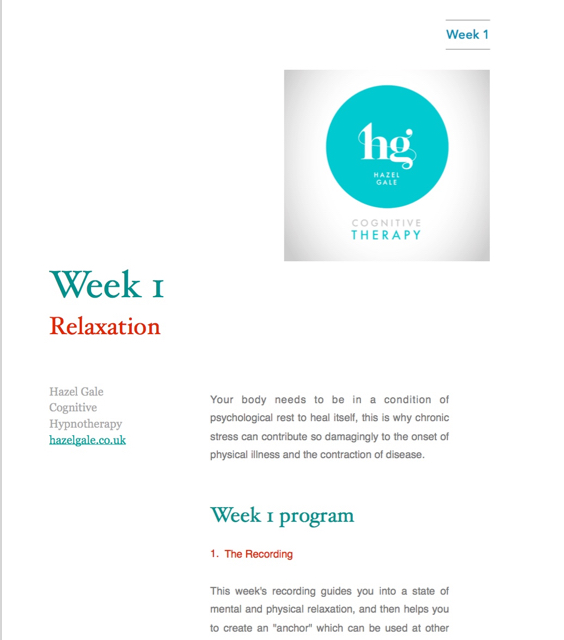
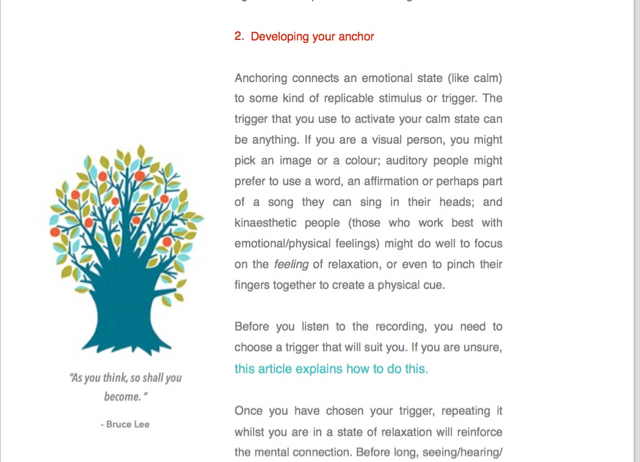
Hazel: What we wanted to do was really break it down in to easy stages. We’ve gone with a four week course. With each week there are easy assignments and a recording to listen to. The first thing that you are doing week one is just about relaxation, but learning how to relax. I’m not just talking about imagining sitting on a beach and breathing. It’s about really getting in touch with that your body feels like when it relaxes and then anchoring it. Anchoring is an NLP term, which basically means positive associations. You can create some kind of anchor, usually connected to a physical movement, like pinching your thumb and forefinger together would be an easy one.
In the recording you’re guided into a relaxed state and then you create this physical anchor. The more times you repeat that the stronger the association becomes. It gets to the point where you can really depend on using, just in the same way you could use the image of yourself in the headstand, to access the state of calm control. This will allow you to create either a visual or a trigger word or physical movement that can bring you quickly back into a relaxed state, which is essential for any kind of healing work because your body must be in a place of psychological rest before this healing functions of the body can actually work, can actually do their job. So that’s week one.
Week two we move into more specific healing suggestion work. There’s a new recording for week two, which is about coming up with metaphorical imagery, your own personal metaphoric imagery. Nothing is imposed on anybody, which you develop in order to tackle your issues. If you had one particular symptom the first time you do this course you might focus on that. You might come back to the recording which, of course, you can keep, six months later when you have a different symptom and then apply it to that and come up with different imagery.
The third week stays with the guided imagery but it works specifically on the histamine stuff. We’ve got suggestions which have been designed to boost levels of DAO and HNMT, which help you break down the histamine in the system in a way which is really targeted for these problems. Again, you’ll be coming up with imagery. All of this imagery will be stuff that you can use throughout the say just to bring to mind in a matter of seconds the work that you’ve been doing the previous night by listening to the recordings so it becomes a part of your day, it becomes a part of your life.
Yasmina: I have a question about the DAO, HNNT thing. I mean, we’re not actually saying that we’re boosting the levels. My understanding is we’re offering the brain a way to resolve what’s going on with us in a way that’s logical, but it’s not necessarily that we’re telling the body to produce more. Could you elaborate a little bit on that? Am I right?
Hazel: Yeah. I mean, again, it’s all done through suggestions and symbolism, so it’ll be different for every person. But it’s about coming up with images that encourage your body, usually in quite a metaphorical way, to heal itself. Now, we can do this under the assumption that your body knows what needs to happen more than we do. It’s not that we’re giving you a drug for boosting a particular hormone. It’s not as obvious, it’s not as basic. It’s much more complex. It’s trusting the unconscious mind would hopefully do that for you.
Yasmina: There’s a great book if people want to read a little bit more about this. Dr. Lissa Rankin, that’s Lissa with two s’s, Mind Over Medicine, and also Dr. David Hamilton, How Your Mind Can Heal Your Body, and Bruce Lipton’s, was it Bruce Lipton? The Biology of Belief. I’ll have to check on that, but I’m pretty sure that’s the title. Okay, and so week four?
Hazel: Week four joins everything together where week four, there’s really no specific recording for week four. The idea is that you go back and you use all three of the recordings from before, because obviously you’re going to be going through this process through the entire, so you don’t want to let go of them even though you have their important points. You pick one according to how you feel each day and you use this program to create some positive habits and explore the things that you can do personally to improve your condition. It might be that there are practical measures that you can take. It might be that using some of the cognitive processes to overcome the negative emotions is going to be one of the most effective things for you. What I really want people to have a sense of agency in all of this, because that’s the most empowering way to be able to get better. It’s not about lying back and hoping everything gets fixed. It’s about being at the heart of it yourself.
One of the things I encourage people to do in week four, and actually I would encourage them to do it for a few weeks after, is a technique called Three Gifts, which was originally designed as a part of the positive psychology approach. What this asks you to do is every day, at a certain point in the evening, you look back on your day and you write down three positive things that happened to you in that day. It’s enormously powerful. Actually, it’s been shown to be more powerful than antidepressants over a twenty-one day period for people with quite severe depression. What it does is it causes the brain to anticipate this task of writing down three things at the end of the day, especially if that’s relatively difficult for people, of course with depression it would be. Then it goes about looking for things to be able to put in this category of “positive” through the day. Of course what they end up doing is creating more positive things, find more positive things, so that after just a few days of doing this your mind is trained to see the brighter side of things. It sounds extremely simple, but it’s enormously effective for changing your perspective on life.
Yasmina: It absolutely is, yeah. Hazel, I wanted to get your personal story, because it’s interesting, and I had told you this before, I had actually tried to book in with another hypnotherapist who I had seen mentioned in a newspaper article by chance on day when I was sitting on the tube, and I called his office and he was booked out while I was in London, but his secretary said that you are the person that this very well know hypnotherapist, you are the person who gives him his hypnotherapy and that I should definitely go see you. I checked out your website and your story really hit home for me because I saw that you had been through something really similar and I knew immediately that you would understand what I was going through. Please tell everybody a little bit about how you came to this and what your experience was.
Hazel: For the last 10 years I was competing as a, first off, a kick boxer and then a boxer, which is obviously a very demanding sport. It’s got a fear factor that not necessarily every other sport will have. On top of that it’s something where your diet is enormously important because you have to make weight for competitions. It’s really, really stressful in many, many ways. I was over training. I pushed myself into a state of chronic fatigue by just over doing it and ignoring the signals from my body in the way that I’m sure that many people that are listening to this are going to sympathize with. It got to the point where I was really struggling with my training. Actually, instead of thinking, “Well, now I have to stop,” that was when I pushed myself even harder. Feel like I was lagging on my training so I should go for runs in the middle of the night. I just wore myself down into a complete state, really.
Then I went to see all these medical doctors who weren’t able to help much. I exhausted Western medicinal options. Went to see a lot of different Eastern medicine practitioners. I made big changes to my nutritional program. All those things helped a little bit, but nothing really, really managed to shift it, and I was getting quite desperate. In the end the person who managed to make the big change for me was when I went to see Trevor Silvester, who’s the person who taught me aCognitive Hypnotherapy. We did a timeline regression process looking into the emotions that were attached to my illness. My illness made me feel disconnected, it made me feel like I couldn’t be the best of myself which made me feel like I wasn’t a good enough person for other people. I felt like I needed to get approval from other people by means of getting big titles and things like that. This was the way that I made myself feel attractive and worthwhile as a human being. So this illness was making that feel like it was taken away from me, which was the root to all of it.
When we did – for me it was a reframe – it all went back to a really young sports day and my little brain made some silly conclusions about needing to win in order to be lovable with my dad, who was often away in those days. He happened to be at this one. It all came down to this really simple 5 minute interaction between my father and I when I was younger, and re-framing that, again I can’t say concretely with proof that this was the thing that made me better, but I know in my heart that it was. This was the point around doing this time that everything started to shift. Yeah, re-framing that, and then working with my recordings and opening my mind up to the connection between my body and my emotions solved everything. When it was that effected, I absolutely had to study in it, because I needed to get this out to other people, particularly sports people at that time.
Yasmina: Wow. That’s wonderful. I’m so glad you decided to pursue this, because your helping me and a bunch of other people. I know a lot of people that I have talked to about you have scheduled sessions with you and, of course, you are available for private sessions at hazelgale.co.uk. That’s . co . uk. The link will be in the post accompanying this audio.
The course is going to be structured in a way that I will be there answer questions on the weekly offerings, so there will be interaction on the site itself and also the supplemental Facebook group with Hazel and I answering questions. It is going to be hands on. It’s not like we are signing you up to a course and that’s it. You are going to have the opportunity to talk to us, to talk to other people on the course, if you wish, or you can sign up anonymously so you don’t have to share your name with anybody.
Thanks so much for joining us here today, Hazel. That’s hazelgale, G-A-L-E, hazelgale.co.uk.