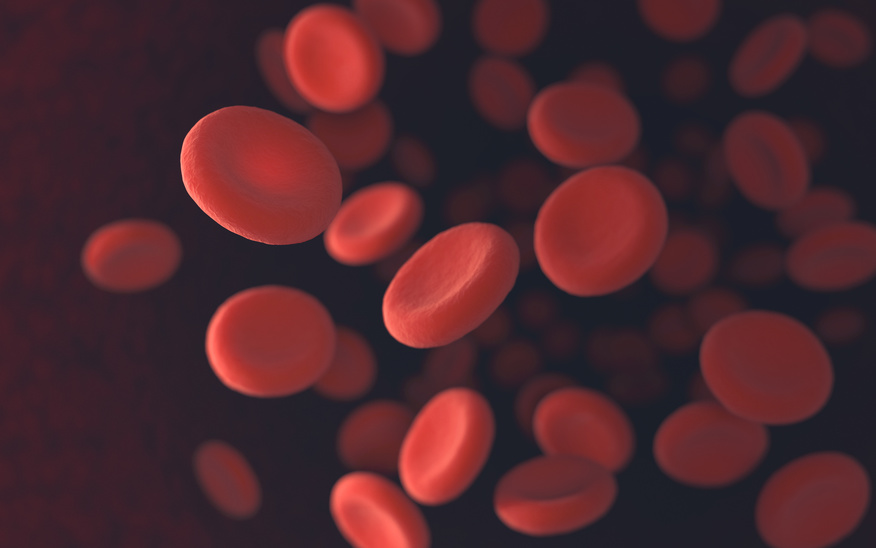
Hypoxia, or a state of low oxygen in the body, causes histamine to be released from mast cells. If we’re already dealing with an excess of histamine due to low levels of the histamine degrading diamine oxidase (DAO) enzyme, exposure to high histamine foods, stress, chemical exposure, or illness and injury; avoiding this lack of oxygen to cells is paramount. Read on to learn more about hypoxia’s role in histamine intolerance and mast cell activation, and what steps we can take to reverse it naturally.
All references at the bottom of post.
LOW OXYGEN
Low blood oxygen has many causes, including lack of nutrients, stress, not breathing correctly (while awake or asleep), and inflammation.
Symptoms include:
Shortness of breath
Rapid breathing
Fast heart rate
Low blood pressure
Confusion
According to Joe Cohen at Self Hacked, our mitochondria require oxygen, and hormones are affected by a lack of it. He tells us that low oxygen can be caused, at least in part, by inflammatory cytokines which prevent oxygen from reaching the tissues.
There are four types of hypoxia
Hypoxic: where there’s not enough oxygen available
Hypoxemic: where cells in the body are unable to carry enough oxygen
Histoxic: where cells are unable to carry enough oxygen because they’re impaired by alcohol or chemicals/drugs
Stagnant: too little oxygen due to external forces (like being in a fighter jet)
A voluminous amount of research tells us that hypoxia is a driving factor in many cancers, including triple negative breast cancer (the one I’m now in remission from). Cancer cells thrive in a low oxygen environment; though the tricky buggers can also proliferate in high oxygen states too.
Interestingly, a study published in the journal Frontiers of Immunology found that the release of histamine in states of low oxygen actually prevents “uncontrolled degranulation” of mast cells (the process by which they release histamine). This stops the body from descending into a state of all out inflammation.
But there are less extreme ways to address low oxygen.BOOSTING OXYGEN LEVELS
Breathe
Unsurprisingly perhaps, breathing properly helps. There are some wonderful YouTube videos explaining very easy breathing exercises. I manage quite well, until I don’t. Try setting an alarm every hour while you’re awake to remind you to stop what you’re doing and check in with your breath. This comes naturally to me now. I often find that I’m holding my breath tight while I’m writing or becoming increasingly irritated with my upstairs neighbour stomping around like a paratrooper on the hardwood floor.
Iron
This is a tricky one. On the one hand we certainly need a good supply of it, but it’s linked to increased inflammation. On the flip side, inflammation can prevent the body from absorbing and using iron efficiently. One of the symptoms of mast cell issues can be unexplained anemia. Mast cell researcher Dr. Theoharides has told me that I should stick to “organic” iron, meaning to find my sources from animals or plants. The curry plant is an excellent source of non-heme iron, but it’s high in oxalic acid. You could experiment with cooking in cast iron or ask your doctor about iron supplementation. Please note, an excess of iron is linked to many chronic diseases, including cancer. I never supplemented iron in my life, until a year before my cancer diagnosis. I am no longer taking any, but I do eat a small amount of grass fed beef liver once a week.
B12
This vitamin is a known histamine trigger, which may be because it’s often of bacterial origin, as many of the b vitamins are. Other issues can be the fillers and colouring, both of which are problematic for mast cells. That doesn’t mean we shouldn’t take it. I had a very strong reaction to B12 for many years before settling on a clean spray with no fillers. There’s many brands that make this available online. B12 is essential for proper oxygenation of the blood.
Hyperbaric Oxygen Chamber
It’s supposedly great for inflammation and has been shown to help us heal faster and prevent mast cell degranulation and histamine release. If you don’t have mast cell disorder that is. Pressure is a known mast cell trigger, so it’s unclear whether the anti-inflammatory benefits of the hyperbaric treatment would be the same for us.
I may find the courage to try it out one day, but I know that pressure isn’t great for me.
Though I will scuba dive again, but not so deep as I have in the past. I had some very unpleasant experiences at 30m that left me confused about what I should be doing and where I was going. At one point I felt like I just wanted to lie down and take a little nap. In the water!
So overall not a good look when you’re in a very beautiful but ultimately hostile environment where not having your wits about you leads nowhere good.
The bottom line is, hypoxia triggers inflammation. Speak with your doctor if you suspect it.
——–REFERENCES——-
Uygur, Fatih, Nurettin Noyan, Celalettin Sever, and Tuna Gümüş. “The current analysis of the effect of hyperbaric oxygen therapy on the frostbitten tissue: Experimental study in rabbits.” SpringerLink. SP Versita, 11 Sept. 2008. Web. 26 July 2017.
There’s a few studies floating around out there that, to the untrained eye, appear to implicate the antihistamine and mast cell stabilising bioflavonoids quercetin and luteolin, in excess estrogen. According to National Institutes of Health funded mast cell researcher Dr. Theoharis Theoharides, that’s totally false. Here’s why.
Let me start this off by addressing that Dr. Theoharides is linked to a company that sells a bioflavonoid supplement called Neuroprotek, and that I am taking it. The reason why he is, and I do, is simply because it’s a great help to many of us with histamine and mast cell issues.
I’ve seen many people in online support groups quoting the study and spreading the idea that these bioflavonoids raise estrogen, so I reached out to Dr. Theoharides for a response.
The long and the short of it is that a couple of studies have concluded that luteolin has estrogen boosting activity and that it stops progesterone from binding to its receptor, which has a “detrimental” effect on the hormonal system and may be linked to breast and endometrial cancer.
Dr. Theoharides, who is in the top five percent of most cited study authors in medical studies, who has spent decades studying mast cells and hormones, points out that the study authors used cells in their research that do not adequately represent those typically used for this kind of research, and that studies other than this one, using the standard materials, say the opposite.
It’s more likely that these bioflavonoids lower estrogen, which is a good thing when trying to avoid breast cancer. As you may have already read, we’re bombarded with synthetic estrogen from all sides, which is a contributing factor to rising breast cancer rates.
The cancer I’m in remission from was estrogen negative, meaning that it played no role in the development of triple negative cancer – so name because it has no estrogen, progesterone or HER2 receptors.
According to Dr. Theoharides it’s unlikely that these bioflavonoids will significantly raise or lower estrogen, because the consumption of luteolin and quercetin found in 200mg-400mg supplements would never reach the concentrations used in studies. That’s because, according to him, oral absorption of the bioflavonoids is less than ten percent. So these supplement amounts would be 10 to 100 times smaller than what was used in the aforementioned study.
Dr. Theoharides says that if there’s any concern regarding bioflavonoid intake, we should avoid a total daily consumption of less than 2000mg of curcumin, pycnogenol, and concentrated berry extracts.
At the end of the day, we must decide what’s worth any potential downfall. Quercetin and luteolin have been shown to prevent the formation of the brain plaque linked to Alzheimer’s, may help symptoms of autism, could potentially alleviate symptoms of histamine linked anxiety, prevent cancer, act as an antihistamine and mast cell stabiliser, and others.
But if you have low estrogen, it might not be a good idea for you.
In either case, as you may be tired of hearing me say by now, please always consult with a doctor before adding anything new to your diet. We can react to absolutely anything, even antihistamines. Just because they’re natural, doesn’t mean they can’t be harmful.
In my personal experience of having the COMT mutation (we’re “supposedly” not ok with quercetin) and cancer, the latter won out in terms of worrying about increasing dosage. I tripled my dose of Neuroprotek to get through my cancer treatment and deal with my nerves. Yes, though I am a fighter and had an amazingly different chemotherapy experience thanks to a fasting mimicking diet, I struggled to keep anxiety at bay. Because anxiety is linked to histamine and mast cells, sticking to my histamine balanced diet and taking a high dose of quercetin and luteolin managed to control it. And luteolin in particular has been shown to stop cancer from spreading beyond the initial tumour, and preventing cancer to begin with, which is the main reason I switched to a higher dose.
But I was having regular blood tests and was under the care of a number of doctors.
I’m now back to my normal dose.
My take away from THIS…
Be moderate in your intake of supplements
If in doubt, regular blood tests when taking this, or any other supplement, is a good idea
Worried about breast cancer? Consult an oncologist before taking this or any plant based supplement
In particular, check for any fluctuations of…
Liver enzymes
Kidney function
Thyroid function
Estrogen/progesterone/testosterone
Or eat a diet rich in quercetin and luteolin instead
Red onions
Blueberries
Apples
Blackberries
Cherries
Chamomile
Broccoli
Celery
Asparagus
Thyme
Cabbage
Kale
Artichoke
In other words, all the foods that are already a regular part of your diet if you’re reading and following my work!
Raising Estrogen Naturally
If low estrogen is a concern, low-medium histamine foods high in phytoestrogens might be worth looking into.
Yams
Rice
Flax seeds
Alfalfa
Mint
Sesame seeds
Mung beans
Ginseng
Apples
Pomegranates
Fennel
Oats
Anise
Red clover (not sure of the histamine status of this one)
Kudzu
Lentils
Article References: Theoharides, Theoharis C., Pio Conti, and Marina Economu. “Brain Inflammation, Neuropsychiatric Disorders, and Immunoendocrine Effects of Luteolin.” Journal of Clinical Psychopharmacology 34.2 (2014): 187-89. Web.
Antioxidants found in the Camellia Sinensis (tea) plant are powerful antihistamine allies in the fight against inflammation. Unfortunately, fermentation of the plant can be problematic for those with excess histamine. A recent discovery of mine could help remedy that. All references at the bottom of post.
Hands up if you’re tired of finding out that healing foods could mess with histamine levels.
*I’m holding both up*
Here’s the thing, there’s often a hack, or a way of figuring out how to add it back. Which is something I explain here.
The bee in my bonnet these last few months was tea.
For most of us dealing with histamine, anxiety may be a problem. Histamine was recently directly linked to anxiety in a study I cover in this post. So my primary issue with tea was the caffeine.
According to my 23 and Me genetic testing, I’m a slow metaboliser of caffeine, which means that I’m probably best off drinking it before bed so it kicks in by morning (only I’m not brave enough to try that!). It also means that it probably accumulates in my system, which is why I’ve found I can drink it for a few days only, before dissolving into a puddle of nerves.
Starting my morning with two diet Pepsi’s when working for CNN obviously did me no favours.
The second problem with tea for me was the fermentation issue and that it supposedly blocks the histamine degrading diamine oxidase (DAO) enzyme.
That’s why I was absolutely tickled to find out about camellia blossom tea, which is made from just the tea plant flower.
It’s low to no caffeine, and has all the antihistamine antioxidant benefits of tea…
Wait, did I lose you here?
Just because tea is believed to block DAO, and is fermented, doesn’t mean it’s high histamine.
Because it also contains a plethora of antihistamine compounds like epicatechin, catechin, epigallocatechin, epicatechin, and epicatechin 3-gallate, which are shown to now only prevent histamine release, but also stop mast cells from leaking other inflammation into the blood stream.
This tastes great as iced tea…
Just brew a cup and then cool. Add in a quarter of a cup of pomegranate juice and enjoy! Talk about an antioxidant boost!
An interesting study I came across tells us that cancerous changes can trigger some cells that don’t normally create histamine into producing it, thereby creating more inflammation and speeding up the progression of cancer. This is true for melanoma, small cell lung cancer and some neuroendocrine cancers.
What we need to do is keep in mind that foods can have opposing properties, which is important when deciding which foods to eliminate. I explain that in my online workshop here.
If you’re not a tea person, you can find the same antihistamine properties in the ingredients my diet is made up of:
Blackberries
Peaches
Cherries
Apples
Pomegranates
Pecans
Pistachios
Lentils
Beans
Green beans
Peas
While drinking tea has the added benefit of the amazing L-Theanine, an amino acid shown to boost GABA and dopamine in the brain. Both are wonderful at combatting anxiety and depression. Theanine in particular is found to “chill out” the nervous system and improve memory.
So the Brits have it right after all.
The logical first step in trying times might just be to brew yourself a cup of tea.
It also fights cancer.
Theanine has been shown to lower blood pressure, so please keep this in mine if you have POTS. Drinking tea versus taking it in high dose supplement form may make a difference.
While I’m confident my diet is already high in many of the wonderful compounds found in tea, I definitely could do with a source of theanine.
I try to get my healing compounds from foods were possible, rather than supplements, so I’ll be keeping this tea. I’ve been drinking it daily with no problem for the last few weeks.
Out of curiosity, I opened up one of the bags to inspect the contents. I didn’t see or smell much/any fermentation. Tea has always bothered my bladder after a few days, but camellia blossom tea hasn’t had that effect in the slightest.
You can find many types of this tea online.
If you’re not keen on the tea option, check with your medical practitioner about L-Theanine as a supplement and try adding the antioxidant rich foods from the list above. If you’re struggling with adding foods back to the diet, check out my online workshop on food re-introduction here. There’ll be a live Q&A with me on August 1st where I’ll be answering all your questions. If you’re not sure which foods to eliminate or re-introduce, check out this online workshop to get started.
——-REFERENCES——–
Fujimura, Y., H. Tachibana, M. Maeda-Yamamoto, T. Miyase, M. Sano, and K. Yamada. “Antiallergic tea catechin, (-)-epigallocatechin-3-O-(3-O-methyl)-gallate, suppresses FcepsilonRI expression in human basophilic KU812 cells.” Journal of agricultural and food chemistry.U.S. National Library of Medicine, 25 Sept. 2002. Web. 22 July 2017.
Melgarejo, E., M. A. Medina, F. Sánchez-Jiménez, and J. L. Urdiales. “Targeting of histamine producing cells by EGCG: a green dart against inflammation?” Journal of physiology and biochemistry. U.S. National Library of Medicine, Sept. 2010. Web. 22 July 2017.
In October 2016 I was diagnosed with a rare, highly aggressive, and very deadly breast cancer. I beat the heavily stacked odds against me by throwing everything but the kitchen sink at it, combining ancient medicine with a cutting edge update, and modern medicine tempered with a holistic touch. I am now in remission. This is my cancer story.
Till my diagnosis with Triple Negative Breast Cancer (TNBC), I was oblivious to the growing trend of otherwise healthy women in their 30s and 40s parting ways with their female bits.
We live in an era where we’re exploring Mars, but one in eight women will develop breast cancer in their lifetime.
85 percent of women with breast cancer have no family history of it, and 40 percent of 40 year old women are unknowingly living with breast cancers too small to be spotted by mammogram.
The most extensive genetic testing available (far beyond 23 and Me) yielded not one mutation linked to any cancers, and so I came to realise my career as a broadcast journalist in war zones may have been the driving factor: exposure to to chemical agents used in warfare, radiation, phthalates in water bottles heated in extreme temperatures, military burn pits in Iraq, and of course, extreme stress.
Stress was recently concretely linked to breast cancer. A study following over five thousand women found that just one episode of major stress lasting a month or more, doubled breast cancer risk.
“Everyone thinks of cancer patients as old, sickly, 10-pack-a-day smokers, but many are super healthy. Cancer blindsides you — one day you’re healthy, and the next day you’re not,” Dr. Joanne Wiedhaas (who discovered the KRAS mutation linked to multiple cancer progression).
According to Michael Greger, M.D., author of the New York Times bestseller How Not to Die, breast cancer can start in the womb. What our mothers ate, or stress they were exposed to (a civil war in my mother’s case), can get the process started. By the time doctors find it, a tumour could have been growing for 40 years or more. But once they pick up steam, they can double in size in as little as twenty five days.
It’s a weird position to find yourself in…
Being a super healthy lifestyle advocate diagnosed with a rare and terrifying cancer.
I delayed treatment (which I now regret) for nearly three months to research and try alternative healing, scouring the many amazing online stories of those who fought naturally and won.
It was later revealed this delay may have halved my five year survival rate.
I consulted naturopaths, acupuncturists, healers, integrative practitioners, and hypnotherapists.
My extensive, obsessive, all encompassing, research and incredibly exhaustive genetic testing revealed many subtypes of TNBC, nearly 20 so far that we know of, plus many genetic markers that the average patient wouldn’t know of.
The right genetic testing can tell us if a breast cancer patient needs, or would even benefit at all, from treatment after surgery. I fell within the fastest growing and most aggressive type, of the most aggressive type, of aggressive breast cancer, and surgery alone didn’t look like much of an option.
My father died from lung cancer (not genetic) at my current age, and my mother had spent her entire life panicked she would lose me the same way. So I chose to keep the turmoil to myself as I struggled to come to a decision.
It was important to me to protect my mother, now in her eighties and in poor health, from the news, till I knew for sure it was either the very end, or that I would make it through.
I finally chose to go with the plant based chemotherapy, but I would do it alone in California, far from my mother and family.
But I had an ace up my sleeve.
I had just found out that Dr. Valter Longo, head of the University of Southern California Longevity Institute, creator of the Fasting Mimicking Diet, was running a breast cancer trial. Women on chemotherapy, for the most part with my crazy aggressive cancer, were testing his Chemolieve fasting mimicking diet program.
Naturally I joined.
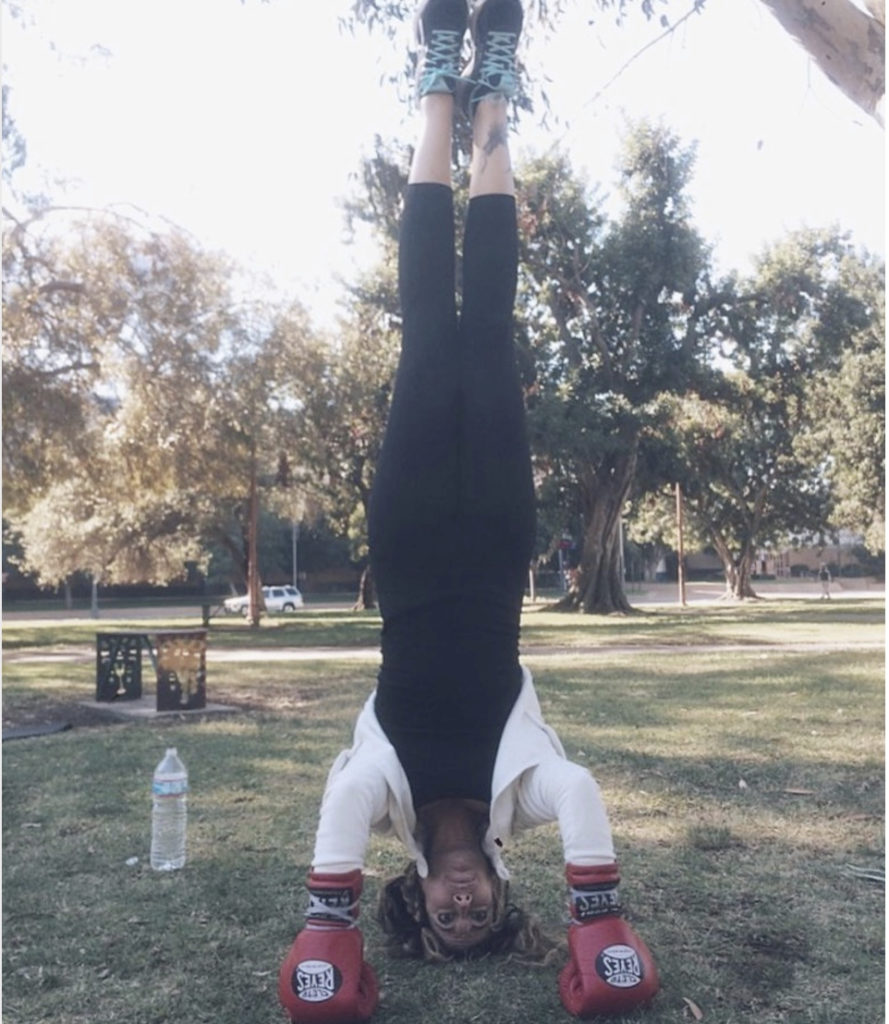
Here’s me doing a headstand after an hour of kickboxing right after my first round of treatment…I’ve switched to water in glass bottles now because phthalates found in plastic are strongly linked to triple negative breast cancer.
The five day plan consists of meals that mimic the effects of water fasting and enhance chemotherapy, empowering the immune system to join in the fight against the tumour. All this while minimising side effects, and sparing healthy cells from damage. Combining fasting and chemotherapy makes the treatment up to 40 percent more effective (according to European trials).
I’ve interviewed Dr. Longo in the past about the higher calorie version of this fast is already commercially available here.
Fasting started three days before treatment and day four was infusion day.
Living on about 300 calories for three days every three weeks, and then every two weeks, wasn’t too much fun, but you know what was even less fun? Doing a treatment without fasting.
I did it once, due to a hospital scheduling mess up.
Yes indeed, I felt the difference, and it was awful. Really and truly just a terrible experience.
How fasting with chemo is different from traditional treatment:
I effortlessly maintained my weight throughout
None of those terrifying head in the toilet moments we’re all too familiar with from films, not even once
White blood cell counts immediately bounced back
No major infections
No mouth ulcers or nail issues
No complications whatsoever from treatment
Protection of the immune system from long term damage (40% of the immune system is regenerated in just 4 days of the fasting mimicking diet)
Less exhaustion (but the exercise was also a factor in this)
I required almost no medications for side-effects of treatment (but I did need some antihistamines because I was asked not to take many blood thinning supplements)
Here’s me doing a complicated modified tripod headstand a few days after my fifth round…I can’t begin to tell you how shocked people were by how I looked, and the amount of exercise I was doing.
Fasting has been researched for cancer and other ailments for years…
Most recently Valter’s team found it minimises multiple sclerosis symptoms by killing off faulty autoimmune cells and then creating new ones, leading to a 70 percent remission in symptoms. Valter has also shown that diabetes 1 and 2 symptoms are treatable with this fasting mimicking diet. You’ll find all those studies on the L-Nutra website.
Though I had used the fasting mimicking diet while living in France a few years earlier, I had failed to be consistent with it. I’m now fasting religiously every month, as well as overnight for a minimum of 13 hours.
I was an incredibly unhealthy eater for much of my life till my histamine symptoms forced me to change. I know that the dietary and lifestyle change in direction gave me precious years free from a cancer that is diagnosed as early as 25. And I know that this diet, along with the fasting, is what helped me power through eight rounds of chemo while running and doing yoga six days a week, and living a normal life without serious incident, infection, or gastrointestinal problems.
My doctors were Dr. Hoffman at Cedars Sinai, Dr. Kristi Funk at the Pink Lotus Breast Center and Dr. Edward Ray at Cedars Sinai
But it was certainly a shock to be diagnosed just days after getting my US work visa to move to California.
I had first lived in California at 17, when I was scouted by a major modeling agency. Before I was able to get my portfolio together, I broke out in chronic hives. Heartbroken, I left for Europe.
This time I put my foot down and refused to leave California.
I might have cancer, but it wasn’t going to beat me, even if it killed me.
Having few friends and no family here wasn’t the easiest thing I’ve ever done.
But I quickly realised chemotherapy side effects involve histamine and mast cells, so foods and supplements I’ve been using (plus the scores I discovered in the last year), and all the dietary changes, helped me have a most remarkable treatment experience.
I beat a cancer that isn’t all that treatable, even with chemotherapy and radiation, or naturally. My heart has not been damaged, and unbelievably, all my blood tests and organ function returned to normal less than a month after finishing treatment.
Here’s me two weeks after round eight of treatment…
I went to chemotherapy alone, picked up prescriptions, cooked, cleaned, and worked, on my own. I came up with strategies like putting a stool in the kitchen so I could cook while sitting down, using an Instant Pot, into which I’d literally dump mixtures of vegetables into for meals, and running/walking using intermittent training protocols.
My breast surgery was tricky because I couldn’t raise my arms and I wasn’t happy to take pain meds for more than a few days (they make me feel funny). So I moved the Instant Pot to the floor before surgery so I could drop frozen veggies and rice into it. I tied string to my freezer door so I could open it with my arms at hip height, trained my core to get in and out of bed, practiced opening the fridge door with my foot, and also getting in and out of my car without using my arms (I have a very low car!). My OCD planning masterpiece culminated in my placing two weeks worth of plates, glasses, and cutlery at waist height on kitchen counters and buying circus clown like foot long bendy straws because I wouldn’t be able to pick up water bottles.
I approached my illness and recovery with the same military-like precision I have my histamine disorder and time as a journalist in war zones.
And it worked.
I’m now in remission.
I don’t know how long for; there are no health guarantees in life.
You’ll find me here plugging away till they literally pull the cord.
As I lay in my treatment chair for round five, trying to block out the sounds of despair around me…
I realised that cancer would beat me if I let it.
I needed to reach deep within to find the warrior I might have been if I’d been born in a different place, time, or gender.
It’s terrifying and hateful, and I know I’ll be criticised for saying this, but really it’s just another obstacle to be overcome, till it’s time to find peace and acceptance that I’ve done all I possibly can.
Or, to quote Monty Python, till I’ve shuffled off my mortal coil, run down the curtain and joined the ble@!ng choir invisible.
And so I leave you, for now, with the Dead Parrot sketch.
In my previous workshop Beyond the Low Histamine Diet we explored histamine intolerance, mast cell activation, diagnosis and supplements. We also learned about different types of supplements and how exercise and happiness affect histamine, and our lives in general. And in the Healing the Brain to Heal the Body we learned ways to fix negative beliefs and emotional baggage that could be causing stress related mast cell activation and histamine release.
But I purposely left out my food re-introduction techniques.
Why?
Because there’s much work to do before we can begin thinking of re-introducing foods. It’s essential that we understand the role that the brain and stress play in the healing, and sickness process.
The low histamine diet wasn’t mean to be a way of life. It was created as a four week elimination diet to help reset the system and figure out what’s bothering us, before re-introducing foods one by one at the end of it.
The problem is that so few of us are able to go back to eating the way we did before, or are just unwilling to once we experience the relief these four weeks brings.
(In my case by the way it took longer than a month.)
So we keep on going, and going and going, till like me, you’re left with four or five foods that are tasteless and not particularly nourishing.
Till anger and devastation destroy the soul.
People not familiar with this condition, with the doggy in the window syndrome it triggers, think this is an exaggeration.
I’d like to see how they’d feel if sentenced to spend the next five years eating the same bland foods day in day out while watching everyone around them indulging in all their favorite foods, seemingly with not a care in the world, while those they lean on for support tell them they’re out of their mind and nothing’s wrong with them.
Thankfully I came up with an approach that’s worked for me, and thousands of others. There’s no guarantees but approaching this in a common sense way, with the collaboration of your doctor, is a good place to get inspiration.
In the last few years I’ve not only worked my way up from the four or five foods I could eat, to eating pretty much what I want (in moderation and well timed), as long as it’s healthy.
That’s included such notoriously high histamine foods as fish (only if not super fresh), shellfish, iodine and B12 supplements, pineapple, strawberries, cacao, and much more.
We’ll lean on meditation, neural retraining techniques and plain old common sense (that’s so hard to maintain when malnourished and desperate).
This workshop is for informational purposes only. You must share its contents with a medical practitioner if you plan to try any of the methods contained within. It’s not meant to be a “how to” but rather offer ideas to be explored under supervision.
2 hour live Q&A at 3pm Pacific/12pm Eastern on August 1st 2017
I’ll be taking all your questions. Can’t make it live? Submit your questions via email and I’ll make sure to answer it. A recording will be available to you after the event.
Dinner table meditation Mp3
A 20 minute meditation audio that can be practiced at the dinner table. I used this mindfulness technique to reduce my mealtime related stress.
Beach visualisation Mp3
A 20 minute visualisation I’ve used for years to help chill out my inflammatory stress.
32 page Food Re-Introduction PDF
A quick reference guide for the food re-introduction techniques discussed in the workshop.
Workshop transcript PDF
Because sometimes you just want it in hard copy so you can go to town on it with a highlighter pen (am I the only one who does that?).
I do not dictate frequency of foods or amounts – no one can tell you this, if they say they can they’re lying! How you feel will guide this. Please note, you will have to consult with a doctor if you wish to try any of my techniques. I am not a doctor and this workshop is not suitable for anyone who has had mild to significant reactions to food.
Please note, you will have to consult with a doctor if you wish to try any of my techniques. I am not a doctor and this workshop is not suitable for anyone who has had mild to significant reactions to food.
Research tells us histamine is linked to a number of compulsive behaviours that depend on dopamine reward. That’s alcoholism, drug abuse, and although it’s not mentioned in the studies I’ve read, possibly gambling. References always at the bottom of post.
According to the UN world drug report, over 200 million people use illegal drugs yearly, and 200 thousand of them will die from it. An additional estimated 18 million suffer from alcohol addiction.
Histamine is involved in a number of brain functions like arousal, sleep regulation, body temperature, pain perception and appetite. Histamine can contribute to, or cause symptoms of, depression, anxiety and schizophrenia.
Histamine receptors are found in the brain, heart, stomach, breasts, and all over the body. Receptors allow histamine to “bind” to that area. It’s this binding that allows the body to maintain a number of needed functions, but it’s also what causes symptoms.
There are four histamine receptors we know of. Activating the H3 receptor regulates the release of histamine (this is good) but it also inhibits the release of neurotransmitters including acetylcholine, glutamate, GABA (the chill out chemical), noradrenaline and dopamine.
Researchers have long known that the abuse of drugs or alcohol can affect brain dopamine levels, and there’s now a growing understanding that histamine plays a role in addiction.
A number of studies have shown that the brain histamine content of rats that liked to drink alcohol was higher compared to controls. Alcohol consumption of these rats was reduced by giving them a medication that blocks the H3 receptor.
Studies also tell us that both cocaine and methamphetamines (MDMA is one of the latter) significantly raised brain histamine levels in animals, especially in the amygdala.
Though I’ve long known of this link, I was surprised to read today that women have higher brain histamine levels, which is actually not that surprising given that one of histamine’s roles is to regulate the stress response.
Other scientists have discovered that histamine is involved in appetite and food anticipation responses, as well as in how we consume food. Which would be why histamine can control appetite in times of stress, or adaptive anorexia as the researchers call it, which leads us to the finding that anorexia patients have also been found to have higher brain histamine levels.
This doesn’t mean that high histamine levels make you crave alcohol and drugs. It’s not that clear cut despite all the latest findings.
I’ve certainly noticed in the past that once I eat higher histamine for a few days I feel like I’m on a high of sorts and I wanted it to continue, by ingesting more histamine. That no longer happens thankfully. It was difficult putting myself back together physically and emotionally after a three week histamine bender.
But it’s not just that. Before sorting out my diet, my appetite knew no bounds, and I put on an incredible amount of weight because I just couldn’t stop myself. The hunger was so awful that I would wake up a number of times and head to the fridge to gorge myself. I’ve even woken up to find food in bed with me (but that’s probably more to do with the Ambien I was prescribed for years before understanding the role of histamine in my psych misdiagnoses).
Even worse is that while not an alcoholic, I did grow up in a resort town (think something like Cancun) where my friends and I began ingesting copious amounts of alcohol nightly for the three months of summer vacation and then every weekend till I became a journalist. Unfortunately covering war zones makes for heavy drinkers but I finally cut alcohol down to a reasonable amount once I left journalism and buckled down to get healthy.
Once my moods stabilised thanks to the diet changes and presumably less histamine driving my compulsive reward seeking behaviour in alcohol, it seemed that the perpetual hangover was no longer worth it.
So how do we get a boost from the feel good brain chemical dopamine without engaging in addictive behavious?
Boosting dopamine naturally
Eat protein rich foods. I would go for grass fed and finished proteins if possible to minimise inflammation
DHA rich frozen at sea or fresh salmon or a good vegan DHA/EPA supplement
Oregano
Magnesium can help increase dopamine
Folate rich foods (like greens) are needed to produce dopamine
Blueberries
Almonds
Eggs: uncooked egg white is considered high histamine, some who can’t tolerate chicken eggs do well with duck (please check with your doctor)
Lifestyle
Meditation, exercise, massage and stress relief all work wonders
Avoid
Alcohol
Caffeine
Processed sugar
—-REFERENCES—-
Ellenbroek, B. A. “Histamine H3receptors, the complex interaction with dopamine and its implications for addiction.” British Journal of Pharmacology 170.1 (2013): 46-57. Web.
“Histamine Affects Alcohol-related Behavior.” ScienceDaily. ScienceDaily, 29 June 2009. Web. 16 June 2017.
White, T. “Histamine in the Brain.” Histamine and Anti-Histaminics (1966): 789-96. Web.
Ito, Chihiro, Kenji Onodera, Eiko Sakurai, Mitsumoto Sato, and Takehiko Watanabe. “Effect of Cocaine on the Histaminergic Neuron System in the Rat Brain.” Journal of Neurochemistry 69.2 (2002): 875-78. Web.
“Histamine and motivation (PDF Download Available).” N.p., n.d. Web. 16 June 2017.
Jabr, Ferris. “How the Brain Gets Addicted to Gambling.” Scientific American. N.p., n.d. Web. 16 June 2017.
“54 Natural Supplements, Agonists and Drugs to Increase Dopamine (and 12 things to AVOID).” Selfhacked. N.p., 31 May 2017. Web. 16 June 2017.
We’re told that diamine oxidase’s (DAO) job is to make sure histamine is broken down when it’s no longer needed for things like healing, digestion, and wakefulness. Studies show its activity varies more in women that men, possibly due in part to histamine’s role in causing uterine contractions and miscarriage. While DAO production does decline as we age (especially in women), there are nutrients proven to give it a boost. Read on to find out what they are and how we can get them from whole foods rather than supplements.
Research tells us that DAO is highest during the luteal phase that is right after ovulation and up to menstruation, which is why low serum DAO levels in post menopausal women “should be interpreted with caution”.
While there remains some controversy as to how diamine oxidase is linked to excess histamine, for the purposes of this post I’m just looking at studies speaking of how we can boost this enzyme.
A recent study confirmed what I’ve been writing about for the last few years regarding DAO and nutrients,
and because I’m a fan of getting as many nutrients as possible as food rather than supplements, I created my nutrient and antioxidant dense histamine reset.
DAO boosting nutrients
Please bear in mind that some foods are only high histamine because of bacteria contamination or spoilage. Any kind of virus or bacteria will stimulate an inflammatory release of histamine. This is why fermented foods are so problematic for us.
Vitamin B12
Liver (I also suggest grass fed – this appears as high histamine on some lists)
Salmon (fresh gutted fish or flash frozen at sea is not considered high histamine)
Grass fed beef (you can do regular beef but that would be inflammatory, the grass provides the animal with omega 3 fatty acid)
Eggs (duck and chicken, but they can also be inflammatory. I buy flax seed or pastured chicken eggs only)
Chicken (inflammatory so I don’t eat it, pastured may be less so)
Phosphorus
Sunflower seeds (some websites list these as high histamine)
White beans
Mung beans
Grass fed beef
Almonds
Brown rice
Broccoli
Eggs (uncooked egg white is a histamine/mast cell trigger. Ask your doctor if duck eggs might be alright for you)
Long chain/Omega fatty acids
Olive oil is an excellent source of long chain fatty acids. It’s also higher in the monounsaturated fat than vegetable oils, which means it’s less prone to oxidation (we don’t want that which is why we eat antioxidant foods like blueberries).
I eat about a pound of salmon a week for the omega 3 fatty acids. I prefer not to take supplements due to the oxidation of the oil. If you take them, make sure to add in an antioxidant or buy one that comes with it in the capsule.
Calcium
I’ve left out dairy because it’s highly inflammatory and casein is a mast cell trigger
Sesame seeds (listed on some sites as high histamine)
Collared greens
Mustard greens
Beet greens
Broccoli
Chard
Salmon (wild caught is best if possible because farmers sometimes use antibiotics and food dye pellets to colour the salmon)
Sardines (I eat them fresh only, and I mean really fresh because they are rarely gutted)
Conditioned taste aversion is a survival mechanism whereby animals learn to associate taste with a food that has made them sick; usually because it’s toxic or spoiled. In some cases the conditioned association between a food and sickness is so strong that the amygdala, the primitive part of the brain whose role it is to identify whether something is dangerous, can send the danger signal based on just the smell of a food alone. Sound familiar? Read on…references always at the bottom of post.
Chemotherapy has taught us a lot about taste aversion. Patients undergoing treatment who experience extreme nausea or sickness during it may develop a long term aversion to foods eaten during those months.
Granted, that’s an extreme example, but some of us (myself included) have experienced years, if not decades of nausea (and worse) as a result of excess histamine or negative food reactions.
Histamine, dopamine, acetylcholine and serotonin are involved in the control of nausea and vomiting.
I stashed Motilium, a dopamine agonist that prevents nausea/vomiting in my handbag, by my bedside, and in my car for years. Really years. Took it pretty much every day.
As a kid I projectile vomited regularly. As an adult too really. Most memorably it’s happened while walking down the street, behind a curtain at a black tie function (while sober), and many others.
I think I may have, like chemotherapy patients, developed a conditioned taste aversion to foods (which triggered major nausea every time I ate), or my inflammation bucket was so very full (read more about the bucket theory here) that it kept spilling over no matter what I ate.
So how does behavioural conditioning like taste aversion actually work?
Exciting research by scientists and those studying behaviour have shown that our beliefs affect the immune system. For example, they have found that placebos work (when they do) because people believe their doctor. They have faith that the medicine will heal them.
But a more exciting discovery was made in the last few years: that the immune system can be conditioned to respond in a certain way by association with a subconscious stimulus. In her fascinating book CURE, investigative reporter Jo Malone interviews doctors and researchers at the cutting edge of the field of psychoneuroimmunolgy. They believe, and have proven, that behavioural conditioning can reproduce the effect of certain medications on the immune system, regardless of whether the patient believes it will heal them.
The scientists came up with variations on: giving an open placebo pill to patients (that’s there someone knows the pill is sugar/an inert substance), with a real medication, paired with a certain piece of music, and a liquid with an incongruous taste (ie a red drink that tastes like banana), at the same time in the same place. A few weeks and the medication would be reduced (or eliminated depending on the severity of the patient’s condition) but the rest would continue (music, drink, open placebo). They found that the immune system continued to behave as it did when given the full dose of the real medication.
So despite the patient being fully aware that the medication was removed, their immune system had been conditioned to behave in a certain way.
Researchers have proven this in particular with asthmatics and measuring histamine released when the patients were stressed by believing they were being exposed to an allergen.
That’s how powerful conditioning can be.
That’s also how negative conditioning could be tripping us up.
If our immune system has been conditioned to respond to certain foods by releasing massive amounts of histamine, then this could keep going on even if the original issue has resolved.
Let’s say you were going through a time of immense stress, or eating while stressed at your desk always, or struggling to keep your cool with kids at your hem while cooking and eating, or had unpleasant family meal times, or were sick for a time, whatever, and your immune system came to associate stress with food and sickness.
That’s why when people ask me how I’ve managed to add so many foods back to my diet, including higher histamine ones, I attribute most of my gains to getting my diet right, but also fixing how my brain processes my body’s response to food and stress. I discuss my approach to healing this here and here.
Don’t forget to check out my favourite book Anti-Recipes – a nutrient dense cookbook full of ingredients with antihistamine and anti-inflammatory ingredients. It’s dairy/nut/gluten free, with grain free options.
The Anti-cookbook and all liquid Anti-Detox Book, don’t treat any conditions, but feature a plethora of the high nutrient antihistamine and anti-inflammatory ingredients that have been instrumental in helping me feed myself on a limited diet. The Anti-cookbook features a four page list of antihistamine and anti-inflammatory foods and comes in regular and Paleo.
—-REFERENCES—
“Conditioned taste aversion.” Wikipedia. Wikimedia Foundation, 21 May 2017. Web. 15 June 2017.
“Classical Conditioning (Pavlovian Conditioning).” SpringerReference (n.d.): n. pag. Web
Bernstein, Ilene L. “Conditioned food aversions as a consequence of cancer and its treatment.” PsycEXTRA Dataset (n.d.): n. pag. Web.
Bernstein, Ilene L. “Conditioned food aversions as a consequence of cancer and its treatment.” PsycEXTRA Dataset (n.d.): n. pag. Web.
“Domperidone.” Wikipedia. Wikimedia Foundation, 12 June 2017. Web. 15 June 2017.
Dark, Kathleen, Harman V. S. Peeke, George Ellman, and Mary Salfi. “Behaviorally Conditioned Histamine Release. Prior Stress and Conditionability and Extinction of the Response.” Annals of the New York Academy of Sciences 496.1 Neuroimmune I (1987): 578-82. Web.
“Chemoreceptor trigger zone.” Wikipedia. Wikimedia Foundation, 13 June 2017. Web. 15 June 2017.
Wager, Tor D., and Lauren Y. Atlas. “The neuroscience of placebo effects: connecting context, learning and health.” Nature Reviews Neuroscience 16.7 (2015): 403-18. Web.
Two important questions regarding fasting for those with histamine intolerance are: does not eating affect the function of the histamine degrading diamine oxidase (DAO) enzyme, and is the stress of not eating so extreme as to negate the benefits of it?
All references at the bottom of post.
Why a post on fasting? I’ve long used fasting as a tool for dealing with histamine related inflammation. A history of eating every few hours, even getting up from bed in the middle of the night to do so, had left my body in a constant state of excitability and chronic histamine release.
The reasons for this is very simple: histamine is involved in the digestive process and eating triggers generalised inflammation, regardless of whether you have histamine intolerance or mast cell activation.
University of Southern California Longevity Institute director Dr. Valter Longo has created a fasting mimicking diet that has the benefits of water fasting while allowing about 800 calories a day. My interview with him revealed that up to 40 percent of the immune system can be regenerated in just five days. Longo told me that would include “faulty” mast cells that are leaking histamine indiscriminately. Read the post here.
I’ve long experimented with and written about fasting for my histamine intolerance and mast cell activation because I discovered early on, even before I was diagnosed, that very short bursts of it made me feel better.
PLEASE NOTE – there is a difference between fasting for health once in a while and anorexia. Don’t even think of trying it if you have ever had repeatedly negative thoughts of food, negative body image or any kind of eating disorder, no matter how long ago it was. Either way, a doctor needs to be involved.
But there’s still an unbelievable lack of research on fasting’s effect on the histamine degrading diamine oxidase (DAO) enzyme. Residing in the gut, where histamine is released every time we eat (or even think of food), DAO’s job is to break down histamine once it’s not needed anymore, or presumably when there’s just too much of it for us to handle. DAO relies on a number of nutrients to function normally – things like magnesium (a lack of this can cause major histamine release), copper, vitamin B6 and others. It’s at its peak during pregnancy where it helps prevent uterine contractions that could end in miscarriage (read more here).
Histamine intolerance is considered to be an excess of histamine caused by or coupled with a lack of DAO. Genetic testing can reveal if we’ve inherited genes that predispose us to low DAO production, but a lack of it may simply be triggered in women as we age and hormones decline because we no longer need DAO’s help in preventing miscarriage.
A study published in the journal Digestion found that levels of the histamine degrading DAO enzyme in starved rats did not decrease during fasting. (I can’t find any human studies).
That’s a start.
But what about the very valid concern regarding fasting increasing histamine levels?
Well, that could depend on a number of factors.
We know for sure that stress causes histamine release from mast cells. These white blood cells contain not only histamine but also a number of other inflammatory agents that you really don’t want to have dumped into the blood stream unless needed to fight infection or heal you from injury.
It’s also known that fasting in animals has been shown to cause stress, which in turn causes histamine release.
In my case, water fasting has been hugely stressful in the past. The fear I’m doing something stupid, the fact that it was done in a haphazard fashion when my histamine rose to intolerable levels, and basically being too weak to move or do anything other than lie around obsessively tracking every minute (or scary) symptom.
Juice fasting/feasting was more successful because it took the stress away, but I still had the energy problem (and I was using too many fruits).
My approach and mindset (ie my stress level) going in to the fast dictated how successful it would be. In other words, we’re not the animals in the studies. We choose to fast rather than being starved, we are not held in restraints or have scientists devising ways of freaking us out.
That’s all good and well, but yes, we can be just as stressed as the animals, because let’s face it, dealing with these health issues can create a lot of anxiety.
I came to realise a few things could made for a successful fast:
(Please note, these are my observations and should not be a substitute for medical advice.)
– Liquids put less stress on the body and (according to Dr. Fuhrman) were less demanding of my stomach enzymes
– I stopped fasting when I was at my sickest. Planning fasts and being mentally prepared for them was essential
– Meditation is an essential component
– Reading materials or motivational documentaries and films should be planned in advance
– Getting in touch with nature is really helpful for lowering stress levels
– I didn’t need to starve myself. A cut of about 20-30 percent of my usual calories sufficed
– Focusing on nutrient dense foods with antihistamine and anti-inflammatory soups and low fruit juices regardless of calories was extremely healing to me
You’ll find most of the recipes I used in the Anti-Detox.
My (non-medical but totally been there myself) advice is, if you’re experiencing a moderate to significant amount of stress, then fasting probably isn’t a great idea.
There are exceptions of course, but really, there’s a good chance that getting the stress under control might reverse much/most of the histamine symptoms anyway and you might not need to fast!
Irie, Masahiro, Shoji Nagata, and Yutaka Endo. “Effect of isolation on classical conditioned histamine release in guinea pigs.” Neuroscience Research 44.1 (2002): 31-35. Web.
Irie, Masahiro, Shoji Nagata, and Yutaka Endo. “Fasting stress exacerbates classical conditioned histamine release in guinea pigs.” Life Sciences 72.6 (2002): 689-98. Web.
Erdman, Steven H. “Effects of Starvation and Difluoromethylornithine (DFMO) on Diamine Oxidase Activity in Rat Ileum.” Digestion 46.2 (2009): 396-402. Web.
“Digestion itself is a histamine trigger | Healing Histamine.” Healing Histamine | Histamine Intolerance Diet Foods Recipes. N.p., 04 Apr. 2014. Web. 13 June 2017.
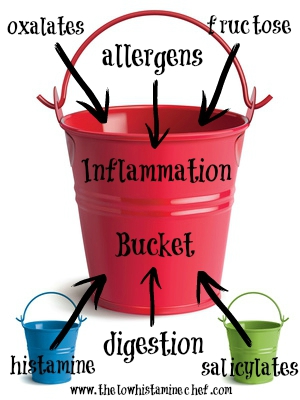
You may have heard of the histamine bucket: the idea there’s only so much histamine we can put into the body before we spill over into symptoms. I favour the inflammation bucket model, where we work out what inflammation-causing foods and lifestyle issues (stress, lack of exercise, low histamine foods that cause inflammation) are making us spill over. New research appears to confirm this by revealing that those with histamine issues are often dealing with concurrent inflammatory issues. References always at the bottom of post.
The inflammation bucket model is not one I came up with but it’s certainly one I’ve come to accept is the best working theory to explain what’s going on for many of us. While the traditional approach to healing histamine intolerance (or at least getting through it) has focused on limiting histamine containing foods, my method has been to prevent the inflammation bucket from filling up by using antihistamine and anti-inflammatory foods (even nutrient dense ones appearing on high histamine lists: mushrooms, chickpeas, lentils, radishes for example more on that here), stress relief and meditation (both of which have been proven to lower inflammation levels).
All of this rests on the understanding that not only is histamine found in foods, but that it’s also found in mast cells in the body. Mast cells are an integral part of the immune system. These white blood cells are kind of an army barracks in which live inflammatory soldiers like histamine, prostaglandins, interleukins, leukotrienes and more. These are all healing agents in the fight against bacteria, viruses and more.
Histamine is the first responder.
It gets to the problem site, or somewhere we need healing, creating inflammation so the other inflammatory agents can penetrate and do their job.
In my original post a few years ago on the subject I explain that I believe that for many of us the big inflammation bucket is made up of little ones contained within it.
Rather than looking at this as separate issues, I had found that filling up just one of the little buckets contained within the big one was enough to make the whole thing spill over and cause symptoms.
And now it seems researchers are finding the same.
A study published in the Canadian Journal of Gastroenterology and Hepatology found significant overlap in the diagnosis of histamine intolerance, lactose, fructose and carbohydrate malabsorption in a sample of test subjects with unexplained gastrointestinal problems.
Now, a couple of things here. Histamine’s role in digestion means that having an excess of it can compromise the intestinal barrier. Yes, that means leaky gut. So it’s not surprising that histamine intolerance goes hand in hand with gut issues. Thankfully the bioflavonoid quercetin (which is in pretty much every food in my diet) has been shown to heal leaky gut.ELIMINATION RARELY BRINGS RELIEF
Not surprising at all to me given that I started out thinking I had a histamine intolerance, but when I eliminated those foods it suddenly seemed I was also reacting to salicylic acid foods. And once those were gone I was struggling with fructose foods and so on till I was down to a handful of foods.
That’s why I advocate making your own list of safe foods regardless of lists, and also prioritising certain nutrient dense foods when re-introducing foods. Learn how to do both here.
Research like this study really brings home that it’s important to look at the body as a whole and our food intolerance as more than just histamine related.
Though I started out hardcore low histamine for years, which no doubt starved my body of the nutrients it needed, most of all omega 3 (I now eat salmon a few times a week and take a vegan EPA/DHA supplement), I eventually realised that the goal wasn’t no symptoms at all, but rather very manageable ones.
For whatever reason my body is just highly sensitive and eating a well balanced diet rather than going gonzo with the elimination was instrumental to my healing.
It took years to add things back, a little at a time. Sometimes literally just a drop of something.
But addressing my stress, moving, walking away from a toxic relationship and reconnecting with meditation turned it all around. More on that here.
You’ll find recipes full of foods with antihistamine and anti-inflammatory properties my books Anti-Recipes and The Anti-Cookbook
Enko, Dietmar, Andreas Meinitzer, Harald Mangge, Gernot Kriegshäuser, Gabriele Halwachs-Baumann, Eva Z. Reininghaus, Susanne A. Bengesser, and Wolfgang J. Schnedl. “Concomitant Prevalence of Low Serum Diamine Oxidase Activity and Carbohydrate Malabsorption.” Canadian Journal of Gastroenterology and Hepatology2016 (2016): 1-4. Web.
GET STARTED HEALING HISTAMINE
WHAT YOU NEED TO KNOW ABOUT HISTAMINE DELIVERED TO YOUR INBOX