Category: Interviews

  • Dr Joneja: natural diamine oxidase for histamine intolerance

    Dr Joneja: natural diamine oxidase for histamine intolerance

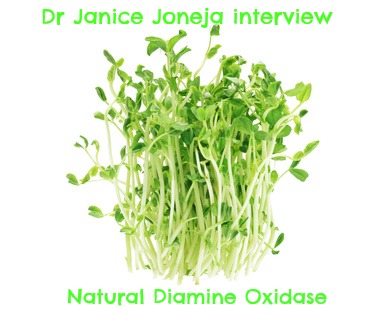
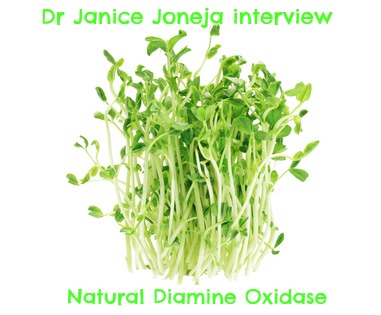
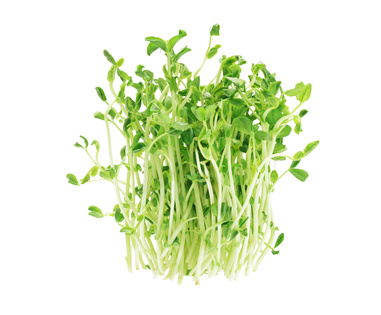
    Bundle Of Fresh Pea Sprouts On White Background

    A number of years ago immunologist and researcher Dr Janice Joneja had a brilliant idea: to extract the histamine-lowering diamine oxidase enzyme from natural (vegan) sources, to help those of us with histamine intolerance to lower histamine naturally.

    (Check out my incredibly comprehensive “everything you’ve ever wanted to know about” histamine intolerance interview with her here.)

    This was such a long time ago, a time when histamine intolerance and other related histamine/mast cell disorders were even less diagnosed and understood than they are now, and so she wasn’t able to interest anyone in funding research.

    (She does tell me though that in 2006/7 an Italian group applied for a patent on a DAO extraction process, but they never did anything with it. The person who diagnosed me was also working on a pea based DAO supplement that never came to market.)

    Just recently I was lucky enough to receive an email from her, detailing how those of us at home, who are unable to tolerate commercially available diamine oxidase (DAO), can come up with our own DIY diamine oxidase supplement from natural sources. (You can read it here).

    Basically, a number of legumes have especially high levels of diamine oxidase (DAO). According to Dr Joneja (and my own experience) home sprouting and consuming these is a really easy way to get a natural diamine oxidase fix, without the exorbitant cost. Not to mention not having to ingest a bunch of nasty fillers. In my case, I always try to get my medicine from food, so I can was totally over the moon to hear about this.

    What Dr Joneja would like to do is get enough feedback from a group of us (ideally at least a thousand), in order to put together a study so that we can try and get some accurate statistics on dosage and growing methods. If you’d like to be part of this exciting project, please join a lovely little Facebook group I put together here. It’s a closed group so all postings are private and we’re all sharing our results and methodology there.

    Many of you had questions about the process, so I put them all together and scored another interview with the lovely doctor of infinite patience.

    Read the transcript below…

    Listen to the interview here.

    Right click here to download the interview mp3 (opens in iTunes).

    Which other peas or beans would also have diamine oxidase? Is it just the green peas?

    Legumes. And the legumes are different from each other. It would be the seedlings in each case, because the diamine oxidase is actually functions in helping the plant to make its structural components, like the stem, when the seed is developing, so that’s the function of diamine oxidase in the plant. The other ones that one could try are lentils, and chickpeas. The diamine oxidase seems to be produced, from the literature, about three days into the development of the pea or seedlings, and then goes on and reaches a maximum at about 10 days and then it will decrease because it’s no longer needed. We find, from the literature, that diamine oxidase, is a protective enzyme, both for the human (that would be in the placenta of course) and in the plant, so when the plant is under stress, it produces more diamine oxidase. So if a plant develops under stress, in darkness for example, rather than the light, it becomes what we call etiolated, but the diamine oxidase is about five times higher, if not more, than the concentration you would find in a seedling developing in the light.

    So actually, if a person wanted to go that route themselves, what I would recommend is to grow the seedlings yourself, in the dark, so put it in a seed bag or whatever and put it in the dark, for about 10 days, no later, then harvest the seedlings and use them more or less in the same way, as a smoothie, rather than eating them as they are because the diamine oxidase is attached to the cell wall. It’s there to help the plant make the cell wall, if you put it in a blender and blend up these seedlings, you will find that it is much more readily available to you.

    So that would be five times, if not more, the diamine oxidase content of the seedlings than if it had just been grown in.

    Does it matter if they’ve been soaked and sprouted or grown in soil?

    You can grow them in soil of course but it’s much easier to do it in water, and much cleaner too.  You don’t want to have bacteria, contamination from the soil, because you do not sterilise them. If you do, if you heat them, you’re deactivating the diamine oxidase enzyme, which is a protein. So I would definitely not recommend growing in soil.

    I’ve got a three level sprouter, you add a layer of sprouts, a layer of water, but actually you can buy mechanical sprouters where the water filters down automatically.

    Ready bagged sprouts I know have varying histamine levels, is buying those something you would think is ok?

    Those would be ok, but ideally, one that was grown in the dark, commercially to have a higher level of diamine oxidase, would be better.

    How about pea sprout powder? Does quantity mean more DAO?

    Well, when you buy sprouts commercially, you’ll see they’re nice and green and healthy looking, the ones you’d want to put into your salad – they have a much lower concentration of diamine oxidase, they just have what’s needed to help them grow to that level. When they’re in the dark and struggling to grow, they’re not green, they don’t look healthy but they have a much higher level of diamine oxiase because the plant’s trying to grow.

    Are we talking about spoons, cups per day? What kind of “dosage” are we looking at ideally?

    It’s very hard to say exactly how much is actually in that plant. The research indicates that up to 4% of the total protein content of the seedlings can be diamine oxidase. Being a protein, it’s also subject to digestion and then of course the diamine oxidase itself will be broken down in the process of protein digestion, so it’s a matter of seeing how much can be absorbed and how much of it is still active. But it is still absorbed in the small intestine, so it doesn’t have the entire length of the digestive tract to exposed to digestive enzymes.

    It’s hard to say you need a cupful a day, but if one could try that, and then that could be our experiment, to find someone who does well with one cupful a day, and see what they measure as their optimum amount.

    Well, I can tell you we’ve already had a few successes, in what, just over 10 days or so.

    That’s great news because in my practice I’ve always told people to avoid supplements as much as possible, to use real foods as much as you possibly can, because the human race has for millennia survived on real foods and I don’t like supplements.

    Absolutely! The people who have done really well, one of them has been juicing them, she said that as soon as she started juicing a cup full a day, she’s noticed an incredible improvement.

    That’s exactly right – juicing, because then you get the diamine oxidase away from the stems and it will be much more readily available.

    And we have another person reporting an incredible upsurge in energy and a few other positive reports coming in.

    I’m so happy to hear that, because it’s so much better than waiting for some commercial operation to put it on the market.

    I know, that for a lot of people, the problem is that the supplements are derived from pork, which is either a religious issue or a health one, but those who are salicylate intolerant have been asking me if they find the DAO in meat rather than high salicylate sprouts.

    Diamine oxidase is concentrated in certain organs. So it won’t be in the muscle meat, it would be in organs like the kidneys, the intestines, which is where human diamine oxidase comes from, and that’s the same with most animals too, placenta is very high, which is why many pregnant women experience relief from their allergy or histamine symptoms during pregnancy, but then of course, after the baby is born, the placenta is no longer producing the diamine oxidase, which is actually there for protection of the foetus. So it’s very specific to organs, you won’t find it in the muscle meats that we can usually easily find in the supermarket.

    A few people wrote in to me who do have access to organ meats, would that work for them if they’re unable to tolerate the sprouts?

    Possibly. The only thing they would actually want as far as the organs are concerned is the kidneys.  As you know in England we tend to eat the kidneys, but not so much in America. But yes, that is a possibility.

    Don’t forget to sign up to my newsletter to make sure you don’t miss information about upcoming histamine wellness retreats and workshops in Europe and the United States, to get great freebies like antihistamine and anti-inflammatory recipes and lifestyle tips. 

    The Anti-cookbook, while it doesn’t treat any conditions, due to its high nutrient, antihistamine and anti-inflammatory ingredients, has been instrumental in helping me feed myself on a limited diet. It features a six page list of antihistamine and anti-inflammatory foods. It comes in regular and Paleo. 

    The Low Oxalate Cookbook features antihistamine and anti-inflammatory rich recipes. 

    Don’t miss the Low Histamine Beauty Survival Guide for non-toxic beauty tips, the skinny on histamine releasing (mast cell degranulating) beauty ingredients, antihistamine and anti-inflammatory beauty alternatives and the top brands natural brands I’ve found.

    Take a peek at my other low histamine and antihistamine cookbooks for more high nutrient recipes.

    If you’ve found this information useful I’d appreciate your support (at no extra cost to you!) – please check out my online store for your health foods, supplements, kitchen items and beauty product purchases. Affiliate sales through my online store go towards maintaining the website, funding travel to interviews and purchasing all the lovely foods for my free online recipes. You’ll find these items in the “Shop with us” drop down menu on my homepage.  

    Please don’t forget antihistamine, pain killing foods can still hurt us, so please always check with your doctor before adding new foods to your diet.
    Natural DAO diamine oxidase source

  • DR JONEJA: NATURAL DIAMINE OXIDASE FOR HISTAMINE INTOLERANCE

    A number of years ago immunologist and researcher Dr Janice Joneja had a brilliant idea: to extract the histamine-lowering diamine oxidase enzyme from natural (vegan) sources, to help those of us with histamine intolerance to lower histamine naturally.

    (Check out my incredibly comprehensive “everything you’ve ever wanted to know about” histamine intolerance interview with her here.)

    This was such a long time ago, a time when histamine intolerance and other related histamine/mast cell disorders were even less diagnosed and understood than they are now, and so she wasn’t able to interest anyone in funding research.

    (She does tell me though that in 2006/7 an Italian group applied for a patent on a DAO extraction process, but they never did anything with it. The person who diagnosed me was also working on a pea based DAO supplement that never came to market.)

    Just recently I was lucky enough to receive an email from her, detailing how those of us at home, who are unable to tolerate commercially available diamine oxidase (DAO), can come up with our own DIY diamine oxidase supplement from natural sources. (You can read it here).

    Basically, a number of legumes have especially high levels of diamine oxidase (DAO). According to Dr Joneja (and my own experience) home sprouting and consuming these is a really easy way to get a natural diamine oxidase fix, without the exorbitant cost. Not to mention not having to ingest a bunch of nasty fillers. In my case, I always try to get my medicine from food, so I can was totally over the moon to hear about this.

    What Dr Joneja would like to do is get enough feedback from a group of us (ideally at least a thousand), in order to put together a study so that we can try and get some accurate statistics on dosage and growing methods. If you’d like to be part of this exciting project, please join a lovely little Facebook group I put together here. It’s a closed group so all postings are private and we’re all sharing our results and methodology there.

    Many of you had questions about the process, so I put them all together and scored another interview with the lovely doctor of infinite patience.

    Read the transcript below…

    Right click here to download the interview mp3 (opens in iTunes).

    Which other peas or beans would also have diamine oxidase? Is it just the green peas?

    Legumes. And the legumes are different from each other. It would be the seedlings in each case, because the diamine oxidase is actually functions in helping the plant to make its structural components, like the stem, when the seed is developing, so that’s the function of diamine oxidase in the plant. The other ones that one could try are lentils, and chickpeas. The diamine oxidase seems to be produced, from the literature, about three days into the development of the pea or seedlings, and then goes on and reaches a maximum at about 10 days and then it will decrease because it’s no longer needed. We find, from the literature, that diamine oxidase, is a protective enzyme, both for the human (that would be in the placenta of course) and in the plant, so when the plant is under stress, it produces more diamine oxidase. So if a plant develops under stress, in darkness for example, rather than the light, it becomes what we call etiolated, but the diamine oxidase is about five times higher, if not more, than the concentration you would find in a seedling developing in the light.

    So actually, if a person wanted to go that route themselves, what I would recommend is to grow the seedlings yourself, in the dark, so put it in a seed bag or whatever and put it in the dark, for about 10 days, no later, then harvest the seedlings and use them more or less in the same way, as a smoothie, rather than eating them as they are because the diamine oxidase is attached to the cell wall. It’s there to help the plant make the cell wall, if you put it in a blender and blend up these seedlings, you will find that it is much more readily available to you.

    So that would be five times, if not more, the diamine oxidase content of the seedlings than if it had just been grown in.

    Does it matter if they’ve been soaked and sprouted or grown in soil?

    You can grow them in soil of course but it’s much easier to do it in water, and much cleaner too.  You don’t want to have bacteria, contamination from the soil, because you do not sterilise them. If you do, if you heat them, you’re deactivating the diamine oxidase enzyme, which is a protein. So I would definitely not recommend growing in soil.

    I’ve got a three level sprouter, you add a layer of sprouts, a layer of water, but actually you can buy mechanical sprouters where the water filters down automatically.

    Ready bagged sprouts I know have varying histamine levels, is buying those something you would think is ok?

    Those would be ok, but ideally, one that was grown in the dark, commercially to have a higher level of diamine oxidase, would be better.

    How about pea sprout powder? Does quantity mean more DAO?

    Well, when you buy sprouts commercially, you’ll see they’re nice and green and healthy looking, the ones you’d want to put into your salad – they have a much lower concentration of diamine oxidase, they just have what’s needed to help them grow to that level. When they’re in the dark and struggling to grow, they’re not green, they don’t look healthy but they have a much higher level of diamine oxiase because the plant’s trying to grow.

    Are we talking about spoons, cups per day? What kind of “dosage” are we looking at ideally?

    It’s very hard to say exactly how much is actually in that plant. The research indicates that up to 4% of the total protein content of the seedlings can be diamine oxidase. Being a protein, it’s also subject to digestion and then of course the diamine oxidase itself will be broken down in the process of protein digestion, so it’s a matter of seeing how much can be absorbed and how much of it is still active. But it is still absorbed in the small intestine, so it doesn’t have the entire length of the digestive tract to exposed to digestive enzymes.

    It’s hard to say you need a cupful a day, but if one could try that, and then that could be our experiment, to find someone who does well with one cupful a day, and see what they measure as their optimum amount.

    Well, I can tell you we’ve already had a few successes, in what, just over 10 days or so.

    That’s great news because in my practice I’ve always told people to avoid supplements as much as possible, to use real foods as much as you possibly can, because the human race has for millennia survived on real foods and I don’t like supplements.

    Absolutely! The people who have done really well, one of them has been juicing them, she said that as soon as she started juicing a cup full a day, she’s noticed an incredible improvement.

    That’s exactly right – juicing, because then you get the diamine oxidase away from the stems and it will be much more readily available.

    And we have another person reporting an incredible upsurge in energy and a few other positive reports coming in.

    I’m so happy to hear that, because it’s so much better than waiting for some commercial operation to put it on the market.

    I know, that for a lot of people, the problem is that the supplements are derived from pork, which is either a religious issue or a health one, but those who are salicylate intolerant have been asking me if they find the DAO in meat rather than high salicylate sprouts.

    Diamine oxidase is concentrated in certain organs. So it won’t be in the muscle meat, it would be in organs like the kidneys, the intestines, which is where human diamine oxidase comes from, and that’s the same with most animals too, placenta is very high, which is why many pregnant women experience relief from their allergy or histamine symptoms during pregnancy, but then of course, after the baby is born, the placenta is no longer producing the diamine oxidase, which is actually there for protection of the foetus. So it’s very specific to organs, you won’t find it in the muscle meats that we can usually easily find in the supermarket.

    A few people wrote in to me who do have access to organ meats, would that work for them if they’re unable to tolerate the sprouts?

    Possibly. The only thing they would actually want as far as the organs are concerned is the kidneys.  As you know in England we tend to eat the kidneys, but not so much in America. But yes, that is a possibility.

    Don’t forget to sign up to my newsletter to make sure you don’t miss information about upcoming histamine wellness retreats and workshops in Europe and the United States, to get great freebies like antihistamine and anti-inflammatory recipes and lifestyle tips. 

    The Anti-cookbook, while it doesn’t treat any conditions, due to its high nutrient, antihistamine and anti-inflammatory ingredients, has been instrumental in helping me feed myself on a limited diet. It features a six page list of antihistamine and anti-inflammatory foods. It comes in regular and Paleo. 

    The Low Oxalate Cookbook features antihistamine and anti-inflammatory rich recipes. 

    Don’t miss the Low Histamine Beauty Survival Guide for non-toxic beauty tips, the skinny on histamine releasing (mast cell degranulating) beauty ingredients, antihistamine and anti-inflammatory beauty alternatives and the top brands natural brands I’ve found.

    Take a peek at my other low histamine and antihistamine cookbooks for more high nutrient recipes.

    If you’ve found this information useful I’d appreciate your support (at no extra cost to you!) – please check out my online store for your health foods, supplements, kitchen items and beauty product purchases. Affiliate sales through my online store go towards maintaining the website, funding travel to interviews and purchasing all the lovely foods for my free online recipes. You’ll find these items in the “Shop with us” drop down menu on my homepage.  

    Please don’t forget antihistamine, pain killing foods can still hurt us, so please always check with your doctor before adding new foods to your diet.
  • Buy, borrow or steal this book. Your body & brain will thank you!

    Buy, borrow or steal this book. Your body & brain will thank you!

    last-best-cure-home1

    “…what you really need to translate for people — those for whom Western medicine has done all it can — is this: all the science is pointing to the fact that your brain is your last best cure.” – Anastasia Rowland-Seymour, MD, Assistant Professor of Internal Medicine, Johns Hopkins (in a quote to author Donna Jackson Nakazawa). 

    Have you reached the limits of what conventional medicine has to offer you? Then, as it was for award-winning journalist and author Donna Jackson Nakazawa, your brain might be your last best cure.

    It certainly was for me. I was doing everything right but still my recovery had stalled. I had made so much progress, but something was holding me back.

    Me.

    Or to be more precise, my past, and my inability to navigate the present without an overwhelming stress response to everyday, unremarkable, events.

    I noticed something odd…

    I wasn’t the only one. It seemed that almost ALL the women I came across in forums and those who wrote to me for help, had some kind of trauma in their past. While common sense tells us that trauma and stress can cause illness, I wanted to know the why of it. And then Donna’s book dropped into my lap. She not only serves up the science behind the trauma/immune disorders in women (and men), but offers well researched, irrefutable scientific evidence, showing us that we can change our brains and take charge of the course of our illness, or at the very least, how to tune out of the “pain channel” and into the “joy channel”.

    Since reading this book, the dietary changes I have made (lowering my inflammation bucket) have had all the more impact on my overall health and I feel better than I ever have before. 

    If you are only going to read one book on healing or just one book this year, please make it The Last Best Cure.  It will change your life. 

    Donna’s book, the Last Best Cure, documents her year-long quest to heal herself, aided by Anastasia Rowland-Seymour, her wonderful MD at Johns Hopkins, and shares the groundbreaking neuroscience on how mind-body therapies such as meditation, yoga and acupuncture awaken the healing potential of our brains, change our biology, and revitalize our cells and our health.

    Listen to the interview…

    Download the podcast to your mobile device or desktop here.

    Read the transcript…

    Thank you very much for joining me today.You are an award-winning science journalist and author of The Last Best Cure, a chronicle of your year-long journey to investigate the ground-breaking neuroscience on how meditation, yoga, and acupuncture awaken the healing potential of our bodies.  Just a little bit more information on you: Donna has appeared on The Today Show, NPR, ABC News, and her work is featured in Time Magazine, USA Today, Psychology Today, The Washington Post, Glamour Magazine, and many others.  The question is, where do you find the time?

    Do you want to include in there raising two teenage daughters?  Where do I find the time?  I think I spoke to this before you were recording.  One, I might turn around and say the same to you.  The truth is that twenty years of working with women and chronic illness, writing books, I’ve come to find that women in this community who have been impacted through family, be it parents, children, spouse, and so very often themselves since autoimmune diseases affect women at three times the rate as men, are blazing forward to change the world on eight cylinders and often we function on fewer than your average person, but we are out there trying to make change and do more.  And often, why is that?  I’ve thought about this and I think there is a particular spunk in the woman who has been felled by autoimmune diseases and gotten up to fight another day, even if she can only get up to fight every other day.  I have a phrase for it.  I call it, “women not interrupted”.

    Excellent; love it!

    So I am a woman not interrupted and you are a woman not interrupted, and what gives us the fuel to do that may be a little bit of what we often hear…Life is touched by suffering for all of us at sometime in our lives and when you are a woman who meets suffering sometimes inside your own body that may keep you from living to the fullest of your potential in mid-life and in the best years of life, you can begin to question that in a really profound way.  Women are impacted by autoimmune disease often in the prime of their lives.  In their prime living, loving, child-making years.  At a time in our history when so much is available to women to do so much more than fifty years ago, so it doesn’t surprise me that women who have something to say passionately find themselves touched by this unique form of suffering in their own bodies in the prime of life would not want to be interrupted.  So it isn’t to me so much a matter of time, as it is a matter of using the time that I have well.

    Hmmm.  Absolutely.  Do I sense that there is a book in the making on this?  I’d love to read it.

    There’s no book called “Women Not Interrupted”. I could be sitting there five years ago quite ill and had read some woman giving that answer and said, “Oh well, excuse me!  I just guess I don’t have your energy.”  The truth is, there is so much that I don’t get done.  For instance, I hear from hundreds of people who want me to do little interviews or write blurbs or do a press guest blog.  I can’t do all of that.  I hear from my publisher that I should be traveling around the country and speaking to everyone who will gather two or more and converse and blogging and tweeting and I can’t do all of that.  I can write, I can advocate, and I can raise my family.

    I think that’s more than enough and thank you very much for doing all of those.  I can’t tell you how much this book has impacted my life.  I advise absolutely everybody that I come into contact with to read this book.

    Oh, I love you.  Thank you.  As I’ve just said, I’ve failed miserably on the PR end and I do hear about it, so when I meet someone who says that, I feel so much gratitude because I cannot be the legs on the ground carrying the word.  I can’t.

    For those who haven’t read your book, and for those, I recommend that you run out immediately following this interview and buy the book.  Please tell us a little bit about your condition and what you did when you reached the limits of what conventional medicine had to offer you, if you did.

    So, I have had, luckily, the greatest doctors.  I say that because the work I did on “The Autoimmune Epidemic” which is the book that I did before “The Last Best Cure”, I worked with so many women who had the worst of care.  For those who know the statistics, the average woman spends four years seeing six doctors before she gets an autoimmune diagnosis despite the fact that autoimmunity has increased three times in the past 20 – 30 years, especially among women.  It also affects women three times as often as it affects men.  So, there has been a big disconnect in the medical community.  I’ve been working really hard on that as have so many of my peers to bring an awareness to that.  With that said, because I am a medical journalist, a science journalist, and a health/science advocate, who lives near Johns Hopkins and has friends there, I was able to get a pretty good diagnosis pretty quickly, fortunately for me, through a neurologist to save my life.  This was a really incredible physician that said there was just so much that could be done when one has face paralysis and demyelination which is the loss of the nerves, the wrapping, the myelin sheath that wrap around the axonal nerves.  When that re-grown several times we are not exactly like our peers; we’re different.  Each time I was less able to recover fully and I found myself at a point where despite having had the best care, I really was having trouble functioning and just getting up the stairs.  So I have a husband and two children, an aging mom, and aging in-laws and a busy life and I just couldn’t keep up with the normal day-to-day.  There was really just a moment as I think there so often is when we make a decision in life to try to live differently.  I was just lying down at the top of the stairs.  It had taken me a good amount of time to get up there.  I would often just get halfway up, sit down, take a rest.  I had gotten the laundry basket up in between doing some interviews and doing some writing.  I was just lying at the top of the stairs and watching my family run around me as if this was the most natural thing in the world.  My daughter was calling for a piece of clothing and I was telling her it was in the laundry.  My husband had lost his wallet which is not that unusual frankly, and I did everything that a  woman does from the floor.  That was just as far as I could get in a moment.  No one thought anything of it.  That’s what my life had become.  It had become pushing too hard on the cylinders that I had, but also living in a place where everything was about kind of grinding forward rather than living with joy and I began to feel that illness had become what I termed in my mind as “the joy thief”.  I had another way of looking at that; that I was so busy managing and monitoring “will my leg get up this step, I can’t really make it up this step, I need to lay down before I fall down in front of people and that won’t be good”, the sheer fatigue, pain, and fear… you know, fear… how long can I go on like this.  What’s coming next?  When will the other shoe drop?  I had spent seven years in and out of hospitals and I began to feel that my whole life was on what I called “the pain channel” constantly, the little bleating fears coming in, you know “oh gosh, my left leg is twinging up and down.  Do I need to call my doctor?  Is that going to be gone in the morning”, to “wow, my son is in this incredible event tomorrow and I don’t know if I’m going to be able to go or will I be too busy throwing up because one of the ramifications of Guillan Barre were a lot of bowel issues that made it very difficult for me to judge where I could be day-to-day.  I wanted to get on “the life channel” and I just so deserpately wanted to taste that sweetness.  It seemed I could only tune into it in very small moments and I had a moment where shortly after lying down on the floor, I was braiding my daughter’s hair and it was wet and she smelled so sweet and she was chatting on about her day.  Some part of me was aware of research that had come up on my work in the autoimmune book about a new field called “psychoneuroimmunology”.  That is really the relationship between our thoughts, our neuro or brain immune function and that the two are really inextricably linked.  I wanted to find out more about it.  I guess that’s really the instant that this book was really born, but then serendipity stepped in.  Within a few days, I was in the office of a new doctor which I had not asked for.  Mine had moved to Massachusetts to go to Mass General and she had put me in the hands of another doctor at Hopkins with my internist.  When I met her, she asked me a question and that question pretty much changed my life.  That was:  “Did anything happen in your past that might have led to everything that you are experiencing now?”

    So many people would kill to have that kind of experience and others might be a little incredulous you know, “why would a doctor ask such a question?”, but you actually found research that confirmed something.  When I first became a member of all of these mast cell related forums, people were talking about their childhood trauma as if, “well yes, it’s the cause of my present stress, but this has nothing to do with my illness”.  Then, the more and more women I found had this same traumatic background and I just thought this can’t be a coincidence, but it was never something I followed up on.  It was just incredible to read your research so please tell us about it and the role of childhood trauma.

    Well, it was really shocking to me when she asked that question.  She is now the director of internal medicine and integrative health at Johns Hopkins and at that time she was a new internist there.  I didn’t know her and she didn’t know me.  I looked at her with all my science journalist, key not speaking at scientific conferences and just said, “What are you talking about?”.  Then she began to break it down for me and she said, “Well, what do you know about psychoneuroimmunology?”  I basically said, “Well actually…” and that was the serendipity part of it which I am learning to appreciate more as I get older and older…  “I actually have been doing some research in that and I’m really interested  because we are in this new, deep understanding of how our state of mind impacts the release of different hormones and neurochemicals that absolutely and categorically determine our cellular function moment by moment and second by second.  Now this was three years ago and the research was just starting to come out and in the past three years it has absolutely exploded.  So I said, “Now, I can join you on that, that I get, but why are you bringing up my childhood?”  She said, “It may just be and it looks to be as if much of that future immune response is imbedded in experiences that happened early in life.”  What researchers have long called “early stress programming”.  We know and we accept for instance that if a mom smoked during pregnancy that child will have a different health outcome in 50 years.  We know and we accept that if certain illnesses happen very early in childhood, certain high fevers which reset the tone of the brain, things will be different for that child 50 years later.  Or if the mother had a flu or virus  at particular weeks in pregnancy that will have a great impact.  It can cause a change in the tone of the brain-immune function so that it can impact later outcomes such as autism and schizophrenia.  We’ve accepted that.  What we hadn’t looked at and had not accepted is that early stress, childhood adversity can cause an over or hyperactivity of the HPA axis.  So that’s your hypothalamus in your brain sending a message to your pituitary which sends a message to your immune system and your adrenals and to your endocrine system.  So your immune system and your hypothalamus and your pituitary is talking now directly to your endocrine system so that you will express a certain level of stress and inflammatory bio-markers that are related to every disease that we have from depression to autoimmune disease to cancer.  That dial, once it’s turned up, is set through a shift in genetics, known as epigenetics, which is how our experiences affect how our genes express themselves and that happens when you are a kid.  That is what my next book is about, exploring that relationship between early life stress and early childhood adversity and long-term health outcomes with a great emphasis on what the science is telling us and moreover what we can do about it as adults to get back to who we really are.

    What can we do?  What is it that you did?

    Talking about “The Last Best Cure” because the next book is called “Childhood Interrupted” and I’m working with a bunch of people on what we know about that relationship and what we can do about it much more specifically.  At the time I was undertaking “The Last Best Cure”, my new doctor and I, Her name is Anastasia Roland Seymour (check spelling), agreed to go on a one year journey together.  She had sent me home and said “Read up about this.  You’re a science journalist.  Really what you need to do is translate for people that when Western medicine has done all it can, as it has for you, their brain may be the last best cure.”  Armed with that challenge, I did some research and came back to her and we decided to challenge each other really.  She had never had a patient who was willing to go through a one year journey with her and I had never had a doctor who was willing to go on such a journey with me.  She took 17 vials of my blood.  So much that I had to leave and go drink a gallon of water and come back.

    I hope they gave you a cookie afterwards!

    You know, I can’t have a cookie.  I can’t eat gluten.

    There you go.  Wise woman!

    They did offer me graham crakcers and orange juice, but I’m just not that type of person so…  I took a gallon of water.  She tested for every inflammatory and chemical marker possible and activity in bone marrow since one of my issues has been a chronic bone marrow issue and gosh, I began a year doing everything that the research supported as being able to change our inflammatory bio-markers.  The research was most supportive of meditation, mindfulness, which is part of meditation, but a very distinct part of meditation.  It’s very different than just sitting there focusing one’s mind on their breath and it requires training, the best training of which is available through a program called “Mindfulness Based Stress Reduction” and “BSR”.  Also yoga has been shown to really change the neurotransmitter activity in the brain to be less stress reactive.  Breathwork which we know helps to shift the “stress now” system as I call it, or the sympathetic nervous system to the parasympathetic nervous system.  Those are the two arms of our stress response.  One is that fight or flight feeling, the sympathetic nervous system, you know you’ve got a fight, flight, or freeze.  It’s that feeling you probably had in childhood when bad things were happening.

    Oh yeah, and in adulthood, because it doesn’t stop until you do something about it.

    That’s right.  That’s the dial that I talked about getting turned on.  So when that “stress now” system or that sympathetic dial is turned up in childhood, it doesn’t go down.  You are just there doing it over and over all your life long.  So, how do you turn that dial down and get it back on to what nature intended which is the parasympathetic nervous system.  I call that the “purrrr now” system.

    And I love that!

    Because we all want to purr right?

    Right.

    We really don’t want to be in fight or flight.

    No.

    Nature intended for us to return to a state of homeostasis or this parasympathetic nervous system or the “purr now system”.  Our bodies were intended to return to that state where we are like a cat licking our paws.  We don’t when we have had a stressful life.  We don’t return to that because we’ve undergone epigenetic shifts and shifts in our hormonal makeup and in our neurobiological makeup that make it very difficult.

    Absolutely.  Do you believe it is possible to address the underlying issues just through supplements or do you see it as an approach of just involving more of the avenues that you explored in combination with other things. 

    My answer to that would be that disease is multi-factorial.  So we know with autoimmune disease, we’re looking at environmental toxins, we’re looking at what I call the greatest internal toxin which is self-created stress, or non-self-created stress, which is biological stress that may come from the past that we don’t even recognize.  Either way, it is interior toxicity as opposed to exterior toxicity.  So if that makes sense…  we have these things that we breathe and taste and touch that are toxic and I wrote a whole book about that,  “The Autoimmune Epidemic”.  We also have things that we think and latch onto emotionally and that we have experience through no fault of our own that creates shifts in our bio-chemistry that are interior toxins.  That is a good way to distinguish.  Then we have our food source and supplementation, so those are things that we take in that may be for it eating a lot of velveeta cheese on a white hamburger bun, that’s going to be a very different hit to our immune system than if we were drinking kale smoothies.  So I think that is pretty well understood, although I have to say, when I wrote “The Autoimmune Epidemic”, the idea of food as a toxin was really difficult for people to understand.  So it is multi-factorial.  We also have to add in our genetics, where we live and how much sun-light we get, and I could go on and on.  With that said, recovery is also multi-factorial.  I have dealt with thousands of women with chronic diseases professionally and personally through my work, my books, through my readers, through talks, through conferences and I would say that the key to healing is usually an open-mindedness about combining many different factors toward healing.  So is it a bad idea to think about a supplement?  Well, let’s look at Vitamin D and omega 3.  We know that those are really good for women with autoimmune disease.  The studies are repeated and robust and pretty definitive that if you are a woman with autoimmune disease you want to be thinking about vitamin D and omega 3.  The specificity for all of the different supplements out there for all of the different diseases is more than I personally can keep up with.

    Yes, it’s crazy.

    I have a cautionary bias because of my work as a science and health researcher and reporter and that is that I have all too often seen the supplement of the day turn into the supplement you don’t want to touch 3 or 4 years later.  I see this constantly in the research so I am cautionary about it.  I like to see 3 to 4 years of research on something and have it all come back pretty much saying the same thing.  That is not to say that people don’t want to look and see what is happening out there and what is new, but simply in my realm, I would never think that supplements are enough for one reason that every story of healing is usually involving a story of re-seeing, a story of how you see your illness, everything that led to it and that often includes for people with autoimmunity where there is a stress reactivity, how you respond to the world and I am not convinced that a supplement can alone can do that for us.

    You talk about the mentality behind healing.  I have read so many books on healing and while it believed that it was possible to heal some of the most truly horrific conditions, for some reason, I think because of the way they were written, or the lack of credentials on the part, what I considered to be solid scientific credentials of the people writing the books that there was always this doubt in the back of my mind.  Well, maybe it works for people that were gullible enough to believe it, maybe, you know that kind of thing, journalists, scientific background, very research oriented.  This is why your book really blew me away.  You had the credentials.  You had the science.  You did the research.  Somehow it just suddenly legitimized everything for me.  It opened me up to the healing process.  I cannot believe since reading your book, I’ve healed at an astonishing rate.

    I’m so happy!  You just made my day saying that because that is my intention to open the reader up to what is possible driven through the lens of real science.

    Exactly.  What do you say to people who don’t believe that healing is possible or that they can’t do it or you know, what’s okay for that person might work for them, but not for me.  Or, they’re not as sick as I am.  What do you say to these people?

    I say that, number one, being cured and being healed are two different things.  So I would never say to a colleague in a wheelchair, and I’ve been in a wheelchair and I understand the magnitude of that in a visceral way.  I wasn’t in a wheelchair for a day.  I was in a wheelchair for half a year.  So I understand where we are sometimes and so I would never say to someone who is in a wheelchair with Rheumatoid Arthritis or Multiple Sclerosis or from an accident or a trauma, “Oh well, you have the potential to get up and out of that chair just by reframing the way you think your thoughts and your psychoneuroimmunologic response and by getting to that purring feeling of being a kitty cat you’ll be….  No!”  Please  stop me!  I would never go there because we are all in a different place and there are types of damage in the body that are very very difficult and in some cases impossible given where we are with the science to reverse.  I certainly hope that one day we are able to work with stem cells and other increasingly understood treatments for people in wheelchairs, and not just to focus on wheelchairs, I’m just saying that I can’t give my book to people and expect that it’s the whole picture.  Nor would I.  I would think that it would not have the dignity and understanding of our humanity that I think I have.  So with that said, I believe in healing as opposed to being cured and I believe that whether or not one finds one’s self in a radically different place, physically…. I think you will when you engage in “The Last Best Cure”, when you understand that your brain is your last best cure, I think you will find yourself in a radically different place physically.  Will that mean that you are cured?  Well, healing and being cured are two different things.  Healing is really about where we are in our mental space.  Healing is coming to a place where we are back on the life channel.  Healing is about experiencing our moment to moment life with a thread of joy that carries through so that we are here in the present so that we can see what’s good.  Our brain isn’t focusing 24/7 on tapes of fear, anxiety, resentment, rheumanation.  When you think about it, what is stress?  You know, stress is really our thoughts.  That is what stress is.  There is some really interesting research the neuroscientists in Dilbert has done on comparing the happiness of people who are lottery winners with the happiness of people who are in wheelchairs.  It really is about one’s state of mind.  So I don’t say that any situation is something you can wrap your brain around it and feel happy about it.  I can tell you lying at the top of the stairs with my children stepping over me was not a happy place to be and it would have been really tough for you to give me my book at that time and tell me, “Hey!  This will help you get up off the carpet and see your life differently.”  It isn’t that simple.  It’s about a journey toward replacing the way in which your brain sends forth what I call either the “negative floating brain”, all those neurochemicals that course through the body and do cellular damage, or the “positive floating brain”, all those neurochemicals that course through your body and help to repair cellular damage.  It is a process of engaging in that with faith and compassion for one’s self.  There’s a reason why it’s a 300 page journey.  It’s really complicated and it requires often really stepping back and doing a hard and engaging look at how you view yourself, yourself in the world, your illness, your interactions with people around you, your interactions with your past, and your interactions with your own mind.  Did I answer your questions?

    Yes, you did indeed.  One of the ways we can alter our perception of symptom intensity is in my experience, meditation.  Could you share some of your findings and personal experiences on that?

    Sure, so meditation is really the place where the science is so profound on shifting moment to moment experience on pain and chronic illness and the work going on is really deeply moving to me.  I spent a lot of time with researchers who for instance were working with meditation and people who had been in chronic pain with Rheumatoid Arthritis for many many years and the ability to learn to focus on one’s breath, return to one’s breath, be mindful of one’s emotions so that when we are able to see and observe our experience, when pain is present in our experience and when we are simply able to do this very simple thing of naming it as pain and saying to ourselves, “that’s pain” and allowing the pain to come into our experience, name it, here’s what happens in the brain:  the fear centers of the brain that are trying to keep us from really experiencing the pain are lighting up and sending more stress hormones and inflammatory chemicals throughout the body which increases our pain response.  In meditation and through mindfulness when we are able to name the experience, the simple act of naming the experience causes the information coming into the amygdala, the amygdala quiets down.  What happens when the amygdala quiets down?  We send fewer stress hormones and chemicals through our body.  So that is just a very small and tiny example of how this feedback loop is set in place.  So that the more time that we practice and learn how to sit in meditation and experience the benefits of mindfulness, the more we are decreasing the inflammatory response that is leading to the symptoms themselves.

    Wow.  I can speak for myself.  Uncertainty of any kind, not knowing what is happening… I think you talked about it in the book, identifying.  I think the fear comes from the brain trying to work out whether we should be scared or not and just generally just meditation has worked to take the fear out of any situation, any uncertainty of will this symptom develop into something worse?  Am I going to be able to get out of bed tomorrow and work?  It’s just been completely life changing.  For you, what was the most powerful tool you’ve explored in your year-long journey and writing the book, well in healing yourself and writing the book?

    So first of all, like you, I am science-driven.  So what I always come back to with that question is that for me the grounding in the science is curative itself.  To know that the science is in this place where we are seeing thousands and thousands and thousands of people achieve a greater level of healing through these very easy, non-harmful, no side effect treatments.  If you can call meditation, yoga, mindfulness, breathwork, all of this, if you can call it a treatment.  It is to me very empowering because I know how to sift good research from bad research and non-replicable studies from replicable studies.  So for me that was very empowering and to be able to look at tools that stood up to that scientific rigor.  For me, meditation, mindfulness (which again is the act of learning how to observe and name one’s experience) to be a traffic cop in my own brain so that I can say, “Wow, this is a thought thread that’s looking like it’s going to lead to lost half hours that isn’t going to be very productive and you’re going to feel really bad, really scared, and really afraid.”  So, mmmt… mindfulness:  that’s fear, that’s worry, this is anxiety.  Return to the breathwork.  Well, here’s what’s so fascinating about the breathwork.  In pharmacology we have a pill for almost everything that the “stress now system”, remember the sympathetic nervous system does.  That’s fight or flight or freeze.  That’s the system that was established through any early adversity as being a little too profoundly active and leads to inflammatory response.  So we have a million pills for the “stress now system”.  I don’t knock pharmacology because there is no question that for many people SSRI’s and anti-depressants are invaluable.  I’ve seen it save lives.  I am not negative about that.  Having said that, we’ve developed a great many pills to help quiet down the sympathetic nervous system and keep it functioning in a way that will be less harmful to us.  We have never created a pill to up the performance of the parasympathetic nervous system which is that “purr now system”, which is how nature intended us to be when there is no fight or flight threat.

    That’s a very good point.

    Yet there is one thing available to us in our own toolbox that will allow us to put the parasympathetic nervous system into place and to have it become active over the sympathetic nervous system.  So in this case we are not shushing down the sympathetic nervous system or the “stress now system”, we’re actually bringing the parasympathetic nervous system into dominance as nature intended and that is the breath.  That is learning to work with the breath best taught by many mindfulness teachers and meditation teachers.  It is the ability to wake up at 2 in the morning with a symptom you don’t like, get your body and mind to focus on the breath.  There are many tricks to do this one of which is simply to put your right hand over your belly and your left hand over your heart and focus on nothing but the rise and fall of your breath.  It takes usually about 14 seconds to break the sympathetic nervous system.  I like that because I think any of us can focus on our hands on our belly and our hands on our heart for 14 seconds.

    I have to tell you though that in the beginning 14 seconds would have been a lot for me.

    Yet you did it.  Did you not?

    Of course, but I had honestly been meditating since I was 18 on and off and I never felt anything like I did after I read your book and knew the science behind it and understood conclusively, I found some more research about meditation and mast cell disorders in general and how it affects us epigenetically.  I needed that, but once I had that, absolutely, I did it.

    I’m glad you said that because there are Tibetan breath techniques where you exhale really rapidly three times after you begin to inhale and so I write about that in the book and I would ask your listeners and readers, “You know, have you ever been really worried about something and then you sneezed?”  And for just one thread of a second, 1/1,000 of a second you had to come back and remember what you are worried about?

    Oh, interesting.

    That is what breathwork does.  It affords you this space, this pause between the thing that worries you and the potential for momentary freedom.  In that freedom, our cells shift.  When our cells shift in that freedom on the neurochemical basis, here’s the really powerful and beautiful thing:  we begin to change the brain.  We begin to rewrite how our brain functions so that all that damage, whether it’s from childhood, or years of adult illness, or we’ve developed a reactivity and fear pattern that’s been damaging to our body, we change it back.  The brain is wonderfully plastic.  We used to believe that the brain was immune-priveleged.  In other words you couldn’t really shift the immune tone of the brain or the brain-immune function, but now we know that we can.  You can rewrite that and change it back.  For me to see the results of that in the scientific literature, to look at the brain scans of that happening, to talk to the researchers who are doing it and doing it specifically in the field of chronic illness, hey!  I’m going to give that a go

    There was some exciting news in your book regarding meditation overall particularly related to aging about the length of our telomeres. 

    Absolutely.  So, telomeres are measured by something called telemorase.  Telemorase is an indicator of how long the caps are and how robust the caps are at the end of our DNA.  If you think of a shoelace and a shoelace usually has a little cap on the end of it, telomeres are like those caps on shoelaces.  They keep our DNA kind of healthy and young, supple and great.  Like a shoelace when it begins to fray at the ends it is less so and over time your shoelace needs to be thrown away, well our DNA is kind of like that.  As we age, our telomeres weaken and fray and eventually our cells die and we die.  So it is a sign of aging and stress when telomeres are shortened.  In a very well-known study, it’s been found and repeated since that meditation will lengthen and strengthen our telomeres as shown through our levels of telemorase.  So no one can actually go in and look at your telomere length, but they can look at your telemorase which is a good sign of your telomere activity.  So the science comes in through these various threads in many different ways and each way leads to Rome which is that our brain is our last best cure.

    Absolutely.  I went on a meditation retreat to be able to teach people in my community.

    Wonderful!

    Again, it was inspired by your book.  I was on it for one week and I was sleeping maybe three or four hours because I wasn’t used to the schedule of waking up at 5:45 in the morning, but I tell you what, after 5 hours of meditation daily for a week, I did not look like I hadn’t slept, my skin was smooth, I felt young and at the end of the course we were given an Oxford study questionnaire which was asking about how we perceived our life and our past, were we happy, our level of mindfulness.  I was quite surprised that I scored very very low.  At the end of the course we did it again and my score had doubled.  My satisfaction with my past had doubled.  I mean, nothing has changed in my past, but my perception of it and that was mind-blowing to me.

    What I would say is that lines up perfectly with the research which is when we look at people that have the ability and the techniques to meditate and shift their experience through their perception of their experience we see profound changes in their biology.  The understanding in perceived stress lines up perfectly with everything you and I have been talking about this hour.  That is that we all have had traumatic experiences.  We’ve all had difficulties and we all face them everyday.  You can be driving in traffic and somebody behind you is just honking crazily and your whole stress reactivity goes into play because that will set you off most especially if you had early stress in your life and your stress response is set on high.  You can get a bill in the mail for something that happened medically a year ago that you thought had already been paid and whatever.  It goes on and on all day long.  You know your teenager says and does something to you that makes you feel unappreciated or unloved and you wonder.  It goes on and on.  You have a fight with your spouse and we know from research that this gives you a 5 times greater chance of developing a cold in the next week.  So it goes on and on.  The interlacing between our stress hormones, our stress reactivity, and our physical state.  Yet, if you take that same person and the car is honking behind them and they are able to be that observer in their mind, that traffic cop, and say, “that person must be having a really difficult day and I can’t pull out in traffic now or I will kill myself and my family by doing so, I hope the day gets better for them.”  It’s gone and what happens with the observer, the interior observer, that mindful companion, that traffic cop in our own mind, by having that and working on it and making it a part of our day-to-day practice through meditation and mindfulness is that it’s able to stand upon the mountain top and send the stressors away in such a way that we just don’t engage and the stress response doesn’t rise.  The teenager comes in and rolls their eyes and is hungry and slams the refrigerator door and your thinking, “wow, I just drove you all over to your poetry competition and to the grocery store to get your favorite fruits and I don’t deserve that”.  Instead the observer stands there when you have trained the mind and says “wow, it’s really tough to be 15 when you have 3 exams tomorrow in today’s stressful world”.  I was 15 and I know what that feels like.  I also know that in 90 seconds, this mood of hers will probably be gone.  And you know what?  It’s gone.  You’re not in your story.  You’re able to stay out of your story, return to your tricks, your toolbox, your breath, your rapid exhales, your naming of your feelings, your mindfulness, your walking meditation.  Go and pet the dog, whatever is in your toolbox and all of a sudden life turns around and meets you in a far better place.  The people that you could have had a rant about are turning around and hugging you instead.  Or as my kids once said to me, “Mom, you yell a lot less than you used to.”  And I’m  not a yeller.

    That’s lovely.  In your book, “The Last Best Cure” you have a plan at the end of the book and share with people how they can create their own healing plan.  Obviously I highly recommend that people run out and buy your book now.  Are there any quick tips just to round everything up that you can share with us now?

    I think that we have run through some of them.  I also really encourage people to get involved in community classes and I tell them that for two reasons.  I give a lot of talks and meet a lot of people.  I think that you came to “The Last Best Cure” with a history of having tried a lot of these things and so you were ready to kind of hit the ground and go to a meditation retreat and give it a go.  You don’t have to sign up with a guru or anything like that.  I wouldn’t recommend that and I certainly haven’t.  I think getting involved in some community classes in almost any yoga studio these days or almost any community center or certainly in any hospital are very affordable; 6, 8, 10 or 12 weeks of mindfulness based stress reduction courses. The reason I say that, that is not to say that my book won’t get you to a better place, but the reason I say try to also augment that with some community classes is because I think we learn better in groups.  I think also when we’ve had a lifetime of hardship, stress, adversity, chronic illness, pain, it is very important that we have some kind of community support system where we are going every Tuesday night and there are people in our situation and biologically our mirror neurons kick in.  Our mirror neurons are these really cool things that without our conscious words allow us to be next to other people who are learning what we are learning and we just learn it better and deeper.  So when you went to that meditation retreat, by sitting in a room of people who were doing what you were doing, you were actually learning it better and deeper and more deeply.  One trick I would say is that if this all seems overwhelming to you, get the book because it’s $12.00 on Amazon, get a used copy.  I don’t care.  Get it from the library.  As I said, I’m not the promotional person I probably should be.  Download it on Kindle.  I think it’s $11.00.  For heaven’s sakes, it’s worth the how to guide at the end and just for that.  So it’s like two lattes at Starbucks.  Grab the book and read the book and sign up for an MBSR and yoga or meditation class.  Do these two things and in 6 months you will be in a different place.

    Just before we go, I want to remind listeners of something you’ve said.  I’m often told by people that they are too ill to even meditate or do yoga.  In your words, it takes about 14 seconds to disrupt a negative thought process, to completely reset the way that we are feeling at that moment and it starts with as little as 14 seconds.

    Thank you for that reminder.  That’s so beautifully said.  Let’s remember that meditation does not have to be 40 minutes sitting on the floor in a cross legged position.  I will leave your readers with the fact that for me it requires a hard backed chair, a prop under my feet so that my legs won’t go numb, wiggling my legs every three to four minutes so they won’t go numb because of my neurological damage, a prop behind my back because of some of my neurological stuff.  So, you know what, it can be done if you give it those first 14 seconds and you reach and establish for yourself that sweetness of freedom from your fears and thoughts, you begin to return to that place again.

    Beautiful.

    And I want people to find that place.  I want them to find mental release, but moreover, cellular release.

    I’ve been  speaking with Donna Jackson Nakazawa, author of “The Autoimmune Epidemic” and “The Last Best Cure” both available on Amazon, Kindle, and in hard copy.  As I said a couple of times already, I highly recommend it.  If you are only going to read one book on healing or just one book this year, please make it this book.  It will change your life.  Thank you, Donna. 

    Thank you.  Great talking to you.

    Join my mailing list for more recipes and to be the first to know when registration for my low histamine webinar opens!

    The Anti-cookbook, while it doesn’t treat any conditions, due to its high nutrient, antihistamine and anti-inflammatory ingredients, has been instrumental in helping me feed myself on a limited diet. It features a six page list of antihistamine and anti-inflammatory foods.

    Take a peek at my low histamine and antihistamine cookbooks for more high nutrient recipes.

    If you’ve found this information useful I’d appreciate your support (at no extra cost to you!) – please check out my online store for your health foods, supplements, kitchen items and beauty product purchases. Affiliate sales through my online store go towards maintaining the website, funding travel to interviews and purchasing all the lovely foods for my free online recipes. You’ll find these items in the “Shop with us” drop down menu on my homepage.

     Please don’t forget antihistamine, pain killing foods can still hurt us, so please always check with your doctor before adding new foods to your diet. 
     

  • BUY, BORROW OR STEAL THIS BOOK. YOUR BODY & BRAIN WILL THANK YOU!

    “…what you really need to translate for people — those for whom Western medicine has done all it can — is this: all the science is pointing to the fact that your brain is your last best cure.” – Anastasia Rowland-Seymour, MD, Assistant Professor of Internal Medicine, Johns Hopkins (in a quote to author Donna Jackson Nakazawa). 

    Have you reached the limits of what conventional medicine has to offer you? Then, as it was for award-winning journalist and author Donna Jackson Nakazawa, your brain might be your last best cure.

    It certainly was for me. I was doing everything right but still my recovery had stalled. I had made so much progress, but something was holding me back.

    Me.

    Or to be more precise, my past, and my inability to navigate the present without an overwhelming stress response to everyday, unremarkable, events.

    I noticed something odd…

    I wasn’t the only one. It seemed that almost ALL the women I came across in forums and those who wrote to me for help, had some kind of trauma in their past. While common sense tells us that trauma and stress can cause illness, I wanted to know the why of it. And then Donna’s book dropped into my lap. She not only serves up the science behind the trauma/immune disorders in women (and men), but offers well researched, irrefutable scientific evidence, showing us that we can change our brains and take charge of the course of our illness, or at the very least, how to tune out of the “pain channel” and into the “joy channel”.

    Since reading this book, the dietary changes I have made (lowering my inflammation bucket) have had all the more impact on my overall health and I feel better than I ever have before.

    If you are only going to read one book on healing or just one book this year, please make itThe Last Best Cure.  It will change your life. 

    Donna’s book, the Last Best Cure, documents her year-long quest to heal herself, aided by Anastasia Rowland-Seymour, her wonderful MD at Johns Hopkins, and shares the groundbreaking neuroscience on how mind-body therapies such as meditation, yoga and acupuncture awaken the healing potential of our brains, change our biology, and revitalize our cells and our health.

    Download the podcast to your mobile device or desktop here.

    Read the transcript…

    Thank you very much for joining me today.You are an award-winning science journalist and author of The Last Best Cure, a chronicle of your year-long journey to investigate the ground-breaking neuroscience on how meditation, yoga, and acupuncture awaken the healing potential of our bodies.  Just a little bit more information on you: Donna has appeared on The Today Show, NPR, ABC News, and her work is featured in Time Magazine, USA Today, Psychology Today, The Washington Post, Glamour Magazine, and many others.  The question is, where do you find the time?

    Do you want to include in there raising two teenage daughters?  Where do I find the time?  I think I spoke to this before you were recording.  One, I might turn around and say the same to you.  The truth is that twenty years of working with women and chronic illness, writing books, I’ve come to find that women in this community who have been impacted through family, be it parents, children, spouse, and so very often themselves since autoimmune diseases affect women at three times the rate as men, are blazing forward to change the world on eight cylinders and often we function on fewer than your average person, but we are out there trying to make change and do more.  And often, why is that?  I’ve thought about this and I think there is a particular spunk in the woman who has been felled by autoimmune diseases and gotten up to fight another day, even if she can only get up to fight every other day.  I have a phrase for it.  I call it, “women not interrupted”.

    Excellent; love it!

    So I am a woman not interrupted and you are a woman not interrupted, and what gives us the fuel to do that may be a little bit of what we often hear…Life is touched by suffering for all of us at sometime in our lives and when you are a woman who meets suffering sometimes inside your own body that may keep you from living to the fullest of your potential in mid-life and in the best years of life, you can begin to question that in a really profound way.  Women are impacted by autoimmune disease often in the prime of their lives.  In their prime living, loving, child-making years.  At a time in our history when so much is available to women to do so much more than fifty years ago, so it doesn’t surprise me that women who have something to say passionately find themselves touched by this unique form of suffering in their own bodies in the prime of life would not want to be interrupted.  So it isn’t to me so much a matter of time, as it is a matter of using the time that I have well.

    Hmmm.  Absolutely.  Do I sense that there is a book in the making on this?  I’d love to read it.

    There’s no book called “Women Not Interrupted”. I could be sitting there five years ago quite ill and had read some woman giving that answer and said, “Oh well, excuse me!  I just guess I don’t have your energy.”  The truth is, there is so much that I don’t get done.  For instance, I hear from hundreds of people who want me to do little interviews or write blurbs or do a press guest blog.  I can’t do all of that.  I hear from my publisher that I should be traveling around the country and speaking to everyone who will gather two or more and converse and blogging and tweeting and I can’t do all of that.  I can write, I can advocate, and I can raise my family.

    I think that’s more than enough and thank you very much for doing all of those.  I can’t tell you how much this book has impacted my life.  I advise absolutely everybody that I come into contact with to read this book.

    Oh, I love you.  Thank you.  As I’ve just said, I’ve failed miserably on the PR end and I do hear about it, so when I meet someone who says that, I feel so much gratitude because I cannot be the legs on the ground carrying the word.  I can’t.

    For those who haven’t read your book, and for those, I recommend that you run out immediately following this interview and buy the book.  Please tell us a little bit about your condition and what you did when you reached the limits of what conventional medicine had to offer you, if you did.

    So, I have had, luckily, the greatest doctors.  I say that because the work I did on “The Autoimmune Epidemic” which is the book that I did before “The Last Best Cure”, I worked with so many women who had the worst of care.  For those who know the statistics, the average woman spends four years seeing six doctors before she gets an autoimmune diagnosis despite the fact that autoimmunity has increased three times in the past 20 – 30 years, especially among women.  It also affects women three times as often as it affects men.  So, there has been a big disconnect in the medical community.  I’ve been working really hard on that as have so many of my peers to bring an awareness to that.  With that said, because I am a medical journalist, a science journalist, and a health/science advocate, who lives near Johns Hopkins and has friends there, I was able to get a pretty good diagnosis pretty quickly, fortunately for me, through a neurologist to save my life.  This was a really incredible physician that said there was just so much that could be done when one has face paralysis and demyelination which is the loss of the nerves, the wrapping, the myelin sheath that wrap around the axonal nerves.  When that re-grown several times we are not exactly like our peers; we’re different.  Each time I was less able to recover fully and I found myself at a point where despite having had the best care, I really was having trouble functioning and just getting up the stairs.  So I have a husband and two children, an aging mom, and aging in-laws and a busy life and I just couldn’t keep up with the normal day-to-day.  There was really just a moment as I think there so often is when we make a decision in life to try to live differently.  I was just lying down at the top of the stairs.  It had taken me a good amount of time to get up there.  I would often just get halfway up, sit down, take a rest.  I had gotten the laundry basket up in between doing some interviews and doing some writing.  I was just lying at the top of the stairs and watching my family run around me as if this was the most natural thing in the world.  My daughter was calling for a piece of clothing and I was telling her it was in the laundry.  My husband had lost his wallet which is not that unusual frankly, and I did everything that a  woman does from the floor.  That was just as far as I could get in a moment.  No one thought anything of it.  That’s what my life had become.  It had become pushing too hard on the cylinders that I had, but also living in a place where everything was about kind of grinding forward rather than living with joy and I began to feel that illness had become what I termed in my mind as “the joy thief”.  I had another way of looking at that; that I was so busy managing and monitoring “will my leg get up this step, I can’t really make it up this step, I need to lay down before I fall down in front of people and that won’t be good”, the sheer fatigue, pain, and fear… you know, fear… how long can I go on like this.  What’s coming next?  When will the other shoe drop?  I had spent seven years in and out of hospitals and I began to feel that my whole life was on what I called “the pain channel” constantly, the little bleating fears coming in, you know “oh gosh, my left leg is twinging up and down.  Do I need to call my doctor?  Is that going to be gone in the morning”, to “wow, my son is in this incredible event tomorrow and I don’t know if I’m going to be able to go or will I be too busy throwing up because one of the ramifications of Guillan Barre were a lot of bowel issues that made it very difficult for me to judge where I could be day-to-day.  I wanted to get on “the life channel” and I just so deserpately wanted to taste that sweetness.  It seemed I could only tune into it in very small moments and I had a moment where shortly after lying down on the floor, I was braiding my daughter’s hair and it was wet and she smelled so sweet and she was chatting on about her day.  Some part of me was aware of research that had come up on my work in the autoimmune book about a new field called “psychoneuroimmunology”.  That is really the relationship between our thoughts, our neuro or brain immune function and that the two are really inextricably linked.  I wanted to find out more about it.  I guess that’s really the instant that this book was really born, but then serendipity stepped in.  Within a few days, I was in the office of a new doctor which I had not asked for.  Mine had moved to Massachusetts to go to Mass General and she had put me in the hands of another doctor at Hopkins with my internist.  When I met her, she asked me a question and that question pretty much changed my life.  That was:  “Did anything happen in your past that might have led to everything that you are experiencing now?”

    So many people would kill to have that kind of experience and others might be a little incredulous you know, “why would a doctor ask such a question?”, but you actually found research that confirmed something.  When I first became a member of all of these mast cell related forums, people were talking about their childhood trauma as if, “well yes, it’s the cause of my present stress, but this has nothing to do with my illness”.  Then, the more and more women I found had this same traumatic background and I just thought this can’t be a coincidence, but it was never something I followed up on.  It was just incredible to read your research so please tell us about it and the role of childhood trauma.

    Well, it was really shocking to me when she asked that question.  She is now the director of internal medicine and integrative health at Johns Hopkins and at that time she was a new internist there.  I didn’t know her and she didn’t know me.  I looked at her with all my science journalist, key not speaking at scientific conferences and just said, “What are you talking about?”.  Then she began to break it down for me and she said, “Well, what do you know about psychoneuroimmunology?”  I basically said, “Well actually…” and that was the serendipity part of it which I am learning to appreciate more as I get older and older…  “I actually have been doing some research in that and I’m really interested  because we are in this new, deep understanding of how our state of mind impacts the release of different hormones and neurochemicals that absolutely and categorically determine our cellular function moment by moment and second by second.  Now this was three years ago and the research was just starting to come out and in the past three years it has absolutely exploded.  So I said, “Now, I can join you on that, that I get, but why are you bringing up my childhood?”  She said, “It may just be and it looks to be as if much of that future immune response is imbedded in experiences that happened early in life.”  What researchers have long called “early stress programming”.  We know and we accept for instance that if a mom smoked during pregnancy that child will have a different health outcome in 50 years.  We know and we accept that if certain illnesses happen very early in childhood, certain high fevers which reset the tone of the brain, things will be different for that child 50 years later.  Or if the mother had a flu or virus  at particular weeks in pregnancy that will have a great impact.  It can cause a change in the tone of the brain-immune function so that it can impact later outcomes such as autism and schizophrenia.  We’ve accepted that.  What we hadn’t looked at and had not accepted is that early stress, childhood adversity can cause an over or hyperactivity of the HPA axis.  So that’s your hypothalamus in your brain sending a message to your pituitary which sends a message to your immune system and your adrenals and to your endocrine system.  So your immune system and your hypothalamus and your pituitary is talking now directly to your endocrine system so that you will express a certain level of stress and inflammatory bio-markers that are related to every disease that we have from depression to autoimmune disease to cancer.  That dial, once it’s turned up, is set through a shift in genetics, known as epigenetics, which is how our experiences affect how our genes express themselves and that happens when you are a kid.  That is what my next book is about, exploring that relationship between early life stress and early childhood adversity and long-term health outcomes with a great emphasis on what the science is telling us and moreover what we can do about it as adults to get back to who we really are.

    What can we do?  What is it that you did?

    Talking about “The Last Best Cure” because the next book is called “Childhood Interrupted” and I’m working with a bunch of people on what we know about that relationship and what we can do about it much more specifically.  At the time I was undertaking “The Last Best Cure”, my new doctor and I, Her name is Anastasia Roland Seymour (check spelling), agreed to go on a one year journey together.  She had sent me home and said “Read up about this.  You’re a science journalist.  Really what you need to do is translate for people that when Western medicine has done all it can, as it has for you, their brain may be the last best cure.”  Armed with that challenge, I did some research and came back to her and we decided to challenge each other really.  She had never had a patient who was willing to go through a one year journey with her and I had never had a doctor who was willing to go on such a journey with me.  She took 17 vials of my blood.  So much that I had to leave and go drink a gallon of water and come back.

    I hope they gave you a cookie afterwards!

    You know, I can’t have a cookie.  I can’t eat gluten.

    There you go.  Wise woman!

    They did offer me graham crakcers and orange juice, but I’m just not that type of person so…  I took a gallon of water.  She tested for every inflammatory and chemical marker possible and activity in bone marrow since one of my issues has been a chronic bone marrow issue and gosh, I began a year doing everything that the research supported as being able to change our inflammatory bio-markers.  The research was most supportive of meditation, mindfulness, which is part of meditation, but a very distinct part of meditation.  It’s very different than just sitting there focusing one’s mind on their breath and it requires training, the best training of which is available through a program called “Mindfulness Based Stress Reduction” and “BSR”.  Also yoga has been shown to really change the neurotransmitter activity in the brain to be less stress reactive.  Breathwork which we know helps to shift the “stress now” system as I call it, or the sympathetic nervous system to the parasympathetic nervous system.  Those are the two arms of our stress response.  One is that fight or flight feeling, the sympathetic nervous system, you know you’ve got a fight, flight, or freeze.  It’s that feeling you probably had in childhood when bad things were happening.

    Oh yeah, and in adulthood, because it doesn’t stop until you do something about it.

    That’s right.  That’s the dial that I talked about getting turned on.  So when that “stress now” system or that sympathetic dial is turned up in childhood, it doesn’t go down.  You are just there doing it over and over all your life long.  So, how do you turn that dial down and get it back on to what nature intended which is the parasympathetic nervous system.  I call that the “purrrr now” system.

    And I love that!

    Because we all want to purr right?

    Right.

    We really don’t want to be in fight or flight.

    No.

    Nature intended for us to return to a state of homeostasis or this parasympathetic nervous system or the “purr now system”.  Our bodies were intended to return to that state where we are like a cat licking our paws.  We don’t when we have had a stressful life.  We don’t return to that because we’ve undergone epigenetic shifts and shifts in our hormonal makeup and in our neurobiological makeup that make it very difficult.

    Absolutely.  Do you believe it is possible to address the underlying issues just through supplements or do you see it as an approach of just involving more of the avenues that you explored in combination with other things. 

    My answer to that would be that disease is multi-factorial.  So we know with autoimmune disease, we’re looking at environmental toxins, we’re looking at what I call the greatest internal toxin which is self-created stress, or non-self-created stress, which is biological stress that may come from the past that we don’t even recognize.  Either way, it is interior toxicity as opposed to exterior toxicity.  So if that makes sense…  we have these things that we breathe and taste and touch that are toxic and I wrote a whole book about that,  “The Autoimmune Epidemic”.  We also have things that we think and latch onto emotionally and that we have experience through no fault of our own that creates shifts in our bio-chemistry that are interior toxins.  That is a good way to distinguish.  Then we have our food source and supplementation, so those are things that we take in that may be for it eating a lot of velveeta cheese on a white hamburger bun, that’s going to be a very different hit to our immune system than if we were drinking kale smoothies.  So I think that is pretty well understood, although I have to say, when I wrote “The Autoimmune Epidemic”, the idea of food as a toxin was really difficult for people to understand.  So it is multi-factorial.  We also have to add in our genetics, where we live and how much sun-light we get, and I could go on and on.  With that said, recovery is also multi-factorial.  I have dealt with thousands of women with chronic diseases professionally and personally through my work, my books, through my readers, through talks, through conferences and I would say that the key to healing is usually an open-mindedness about combining many different factors toward healing.  So is it a bad idea to think about a supplement?  Well, let’s look at Vitamin D and omega 3.  We know that those are really good for women with autoimmune disease.  The studies are repeated and robust and pretty definitive that if you are a woman with autoimmune disease you want to be thinking about vitamin D and omega 3.  The specificity for all of the different supplements out there for all of the different diseases is more than I personally can keep up with.

    Yes, it’s crazy.

    I have a cautionary bias because of my work as a science and health researcher and reporter and that is that I have all too often seen the supplement of the day turn into the supplement you don’t want to touch 3 or 4 years later.  I see this constantly in the research so I am cautionary about it.  I like to see 3 to 4 years of research on something and have it all come back pretty much saying the same thing.  That is not to say that people don’t want to look and see what is happening out there and what is new, but simply in my realm, I would never think that supplements are enough for one reason that every story of healing is usually involving a story of re-seeing, a story of how you see your illness, everything that led to it and that often includes for people with autoimmunity where there is a stress reactivity, how you respond to the world and I am not convinced that a supplement can alone can do that for us.

    You talk about the mentality behind healing.  I have read so many books on healing and while it believed that it was possible to heal some of the most truly horrific conditions, for some reason, I think because of the way they were written, or the lack of credentials on the part, what I considered to be solid scientific credentials of the people writing the books that there was always this doubt in the back of my mind.  Well, maybe it works for people that were gullible enough to believe it, maybe, you know that kind of thing, journalists, scientific background, very research oriented.  This is why your book really blew me away.  You had the credentials.  You had the science.  You did the research.  Somehow it just suddenly legitimized everything for me.  It opened me up to the healing process.  I cannot believe since reading your book, I’ve healed at an astonishing rate.

    I’m so happy!  You just made my day saying that because that is my intention to open the reader up to what is possible driven through the lens of real science.

    Exactly.  What do you say to people who don’t believe that healing is possible or that they can’t do it or you know, what’s okay for that person might work for them, but not for me.  Or, they’re not as sick as I am.  What do you say to these people?

    I say that, number one, being cured and being healed are two different things.  So I would never say to a colleague in a wheelchair, and I’ve been in a wheelchair and I understand the magnitude of that in a visceral way.  I wasn’t in a wheelchair for a day.  I was in a wheelchair for half a year.  So I understand where we are sometimes and so I would never say to someone who is in a wheelchair with Rheumatoid Arthritis or Multiple Sclerosis or from an accident or a trauma, “Oh well, you have the potential to get up and out of that chair just by reframing the way you think your thoughts and your psychoneuroimmunologic response and by getting to that purring feeling of being a kitty cat you’ll be….  No!”  Please  stop me!  I would never go there because we are all in a different place and there are types of damage in the body that are very very difficult and in some cases impossible given where we are with the science to reverse.  I certainly hope that one day we are able to work with stem cells and other increasingly understood treatments for people in wheelchairs, and not just to focus on wheelchairs, I’m just saying that I can’t give my book to people and expect that it’s the whole picture.  Nor would I.  I would think that it would not have the dignity and understanding of our humanity that I think I have.  So with that said, I believe in healing as opposed to being cured and I believe that whether or not one finds one’s self in a radically different place, physically…. I think you will when you engage in “The Last Best Cure”, when you understand that your brain is your last best cure, I think you will find yourself in a radically different place physically.  Will that mean that you are cured?  Well, healing and being cured are two different things.  Healing is really about where we are in our mental space.  Healing is coming to a place where we are back on the life channel.  Healing is about experiencing our moment to moment life with a thread of joy that carries through so that we are here in the present so that we can see what’s good.  Our brain isn’t focusing 24/7 on tapes of fear, anxiety, resentment, rheumanation.  When you think about it, what is stress?  You know, stress is really our thoughts.  That is what stress is.  There is some really interesting research the neuroscientists in Dilbert has done on comparing the happiness of people who are lottery winners with the happiness of people who are in wheelchairs.  It really is about one’s state of mind.  So I don’t say that any situation is something you can wrap your brain around it and feel happy about it.  I can tell you lying at the top of the stairs with my children stepping over me was not a happy place to be and it would have been really tough for you to give me my book at that time and tell me, “Hey!  This will help you get up off the carpet and see your life differently.”  It isn’t that simple.  It’s about a journey toward replacing the way in which your brain sends forth what I call either the “negative floating brain”, all those neurochemicals that course through the body and do cellular damage, or the “positive floating brain”, all those neurochemicals that course through your body and help to repair cellular damage.  It is a process of engaging in that with faith and compassion for one’s self.  There’s a reason why it’s a 300 page journey.  It’s really complicated and it requires often really stepping back and doing a hard and engaging look at how you view yourself, yourself in the world, your illness, your interactions with people around you, your interactions with your past, and your interactions with your own mind.  Did I answer your questions?

    Yes, you did indeed.  One of the ways we can alter our perception of symptom intensity is in my experience, meditation.  Could you share some of your findings and personal experiences on that?

    Sure, so meditation is really the place where the science is so profound on shifting moment to moment experience on pain and chronic illness and the work going on is really deeply moving to me.  I spent a lot of time with researchers who for instance were working with meditation and people who had been in chronic pain with Rheumatoid Arthritis for many many years and the ability to learn to focus on one’s breath, return to one’s breath, be mindful of one’s emotions so that when we are able to see and observe our experience, when pain is present in our experience and when we are simply able to do this very simple thing of naming it as pain and saying to ourselves, “that’s pain” and allowing the pain to come into our experience, name it, here’s what happens in the brain:  the fear centers of the brain that are trying to keep us from really experiencing the pain are lighting up and sending more stress hormones and inflammatory chemicals throughout the body which increases our pain response.  In meditation and through mindfulness when we are able to name the experience, the simple act of naming the experience causes the information coming into the amygdala, the amygdala quiets down.  What happens when the amygdala quiets down?  We send fewer stress hormones and chemicals through our body.  So that is just a very small and tiny example of how this feedback loop is set in place.  So that the more time that we practice and learn how to sit in meditation and experience the benefits of mindfulness, the more we are decreasing the inflammatory response that is leading to the symptoms themselves.

    Wow.  I can speak for myself.  Uncertainty of any kind, not knowing what is happening… I think you talked about it in the book, identifying.  I think the fear comes from the brain trying to work out whether we should be scared or not and just generally just meditation has worked to take the fear out of any situation, any uncertainty of will this symptom develop into something worse?  Am I going to be able to get out of bed tomorrow and work?  It’s just been completely life changing.  For you, what was the most powerful tool you’ve explored in your year-long journey and writing the book, well in healing yourself and writing the book?

    So first of all, like you, I am science-driven.  So what I always come back to with that question is that for me the grounding in the science is curative itself.  To know that the science is in this place where we are seeing thousands and thousands and thousands of people achieve a greater level of healing through these very easy, non-harmful, no side effect treatments.  If you can call meditation, yoga, mindfulness, breathwork, all of this, if you can call it a treatment.  It is to me very empowering because I know how to sift good research from bad research and non-replicable studies from replicable studies.  So for me that was very empowering and to be able to look at tools that stood up to that scientific rigor.  For me, meditation, mindfulness (which again is the act of learning how to observe and name one’s experience) to be a traffic cop in my own brain so that I can say, “Wow, this is a thought thread that’s looking like it’s going to lead to lost half hours that isn’t going to be very productive and you’re going to feel really bad, really scared, and really afraid.”  So, mmmt… mindfulness:  that’s fear, that’s worry, this is anxiety.  Return to the breathwork.  Well, here’s what’s so fascinating about the breathwork.  In pharmacology we have a pill for almost everything that the “stress now system”, remember the sympathetic nervous system does.  That’s fight or flight or freeze.  That’s the system that was established through any early adversity as being a little too profoundly active and leads to inflammatory response.  So we have a million pills for the “stress now system”.  I don’t knock pharmacology because there is no question that for many people SSRI’s and anti-depressants are invaluable.  I’ve seen it save lives.  I am not negative about that.  Having said that, we’ve developed a great many pills to help quiet down the sympathetic nervous system and keep it functioning in a way that will be less harmful to us.  We have never created a pill to up the performance of the parasympathetic nervous system which is that “purr now system”, which is how nature intended us to be when there is no fight or flight threat.

    That’s a very good point.

    Yet there is one thing available to us in our own toolbox that will allow us to put the parasympathetic nervous system into place and to have it become active over the sympathetic nervous system.  So in this case we are not shushing down the sympathetic nervous system or the “stress now system”, we’re actually bringing the parasympathetic nervous system into dominance as nature intended and that is the breath.  That is learning to work with the breath best taught by many mindfulness teachers and meditation teachers.  It is the ability to wake up at 2 in the morning with a symptom you don’t like, get your body and mind to focus on the breath.  There are many tricks to do this one of which is simply to put your right hand over your belly and your left hand over your heart and focus on nothing but the rise and fall of your breath.  It takes usually about 14 seconds to break the sympathetic nervous system.  I like that because I think any of us can focus on our hands on our belly and our hands on our heart for 14 seconds.

    I have to tell you though that in the beginning 14 seconds would have been a lot for me.

    Yet you did it.  Did you not?

    Of course, but I had honestly been meditating since I was 18 on and off and I never felt anything like I did after I read your book and knew the science behind it and understood conclusively, I found some more research about meditation and mast cell disorders in general and how it affects us epigenetically.  I needed that, but once I had that, absolutely, I did it.

    I’m glad you said that because there are Tibetan breath techniques where you exhale really rapidly three times after you begin to inhale and so I write about that in the book and I would ask your listeners and readers, “You know, have you ever been really worried about something and then you sneezed?”  And for just one thread of a second, 1/1,000 of a second you had to come back and remember what you are worried about?

    Oh, interesting.

    That is what breathwork does.  It affords you this space, this pause between the thing that worries you and the potential for momentary freedom.  In that freedom, our cells shift.  When our cells shift in that freedom on the neurochemical basis, here’s the really powerful and beautiful thing:  we begin to change the brain.  We begin to rewrite how our brain functions so that all that damage, whether it’s from childhood, or years of adult illness, or we’ve developed a reactivity and fear pattern that’s been damaging to our body, we change it back.  The brain is wonderfully plastic.  We used to believe that the brain was immune-priveleged.  In other words you couldn’t really shift the immune tone of the brain or the brain-immune function, but now we know that we can.  You can rewrite that and change it back.  For me to see the results of that in the scientific literature, to look at the brain scans of that happening, to talk to the researchers who are doing it and doing it specifically in the field of chronic illness, hey!  I’m going to give that a go

    There was some exciting news in your book regarding meditation overall particularly related to aging about the length of our telomeres. 

    Absolutely.  So, telomeres are measured by something called telemorase.  Telemorase is an indicator of how long the caps are and how robust the caps are at the end of our DNA.  If you think of a shoelace and a shoelace usually has a little cap on the end of it, telomeres are like those caps on shoelaces.  They keep our DNA kind of healthy and young, supple and great.  Like a shoelace when it begins to fray at the ends it is less so and over time your shoelace needs to be thrown away, well our DNA is kind of like that.  As we age, our telomeres weaken and fray and eventually our cells die and we die.  So it is a sign of aging and stress when telomeres are shortened.  In a very well-known study, it’s been found and repeated since that meditation will lengthen and strengthen our telomeres as shown through our levels of telemorase.  So no one can actually go in and look at your telomere length, but they can look at your telemorase which is a good sign of your telomere activity.  So the science comes in through these various threads in many different ways and each way leads to Rome which is that our brain is our last best cure.

    Absolutely.  I went on a meditation retreat to be able to teach people in my community.

    Wonderful!

    Again, it was inspired by your book.  I was on it for one week and I was sleeping maybe three or four hours because I wasn’t used to the schedule of waking up at 5:45 in the morning, but I tell you what, after 5 hours of meditation daily for a week, I did not look like I hadn’t slept, my skin was smooth, I felt young and at the end of the course we were given an Oxford study questionnaire which was asking about how we perceived our life and our past, were we happy, our level of mindfulness.  I was quite surprised that I scored very very low.  At the end of the course we did it again and my score had doubled.  My satisfaction with my past had doubled.  I mean, nothing has changed in my past, but my perception of it and that was mind-blowing to me.

    What I would say is that lines up perfectly with the research which is when we look at people that have the ability and the techniques to meditate and shift their experience through their perception of their experience we see profound changes in their biology.  The understanding in perceived stress lines up perfectly with everything you and I have been talking about this hour.  That is that we all have had traumatic experiences.  We’ve all had difficulties and we all face them everyday.  You can be driving in traffic and somebody behind you is just honking crazily and your whole stress reactivity goes into play because that will set you off most especially if you had early stress in your life and your stress response is set on high.  You can get a bill in the mail for something that happened medically a year ago that you thought had already been paid and whatever.  It goes on and on all day long.  You know your teenager says and does something to you that makes you feel unappreciated or unloved and you wonder.  It goes on and on.  You have a fight with your spouse and we know from research that this gives you a 5 times greater chance of developing a cold in the next week.  So it goes on and on.  The interlacing between our stress hormones, our stress reactivity, and our physical state.  Yet, if you take that same person and the car is honking behind them and they are able to be that observer in their mind, that traffic cop, and say, “that person must be having a really difficult day and I can’t pull out in traffic now or I will kill myself and my family by doing so, I hope the day gets better for them.”  It’s gone and what happens with the observer, the interior observer, that mindful companion, that traffic cop in our own mind, by having that and working on it and making it a part of our day-to-day practice through meditation and mindfulness is that it’s able to stand upon the mountain top and send the stressors away in such a way that we just don’t engage and the stress response doesn’t rise.  The teenager comes in and rolls their eyes and is hungry and slams the refrigerator door and your thinking, “wow, I just drove you all over to your poetry competition and to the grocery store to get your favorite fruits and I don’t deserve that”.  Instead the observer stands there when you have trained the mind and says “wow, it’s really tough to be 15 when you have 3 exams tomorrow in today’s stressful world”.  I was 15 and I know what that feels like.  I also know that in 90 seconds, this mood of hers will probably be gone.  And you know what?  It’s gone.  You’re not in your story.  You’re able to stay out of your story, return to your tricks, your toolbox, your breath, your rapid exhales, your naming of your feelings, your mindfulness, your walking meditation.  Go and pet the dog, whatever is in your toolbox and all of a sudden life turns around and meets you in a far better place.  The people that you could have had a rant about are turning around and hugging you instead.  Or as my kids once said to me, “Mom, you yell a lot less than you used to.”  And I’m  not a yeller.

    That’s lovely.  In your book, “The Last Best Cure” you have a plan at the end of the book and share with people how they can create their own healing plan.  Obviously I highly recommend that people run out and buy your book now.  Are there any quick tips just to round everything up that you can share with us now?

    I think that we have run through some of them.  I also really encourage people to get involved in community classes and I tell them that for two reasons.  I give a lot of talks and meet a lot of people.  I think that you came to “The Last Best Cure” with a history of having tried a lot of these things and so you were ready to kind of hit the ground and go to a meditation retreat and give it a go.  You don’t have to sign up with a guru or anything like that.  I wouldn’t recommend that and I certainly haven’t.  I think getting involved in some community classes in almost any yoga studio these days or almost any community center or certainly in any hospital are very affordable; 6, 8, 10 or 12 weeks of mindfulness based stress reduction courses. The reason I say that, that is not to say that my book won’t get you to a better place, but the reason I say try to also augment that with some community classes is because I think we learn better in groups.  I think also when we’ve had a lifetime of hardship, stress, adversity, chronic illness, pain, it is very important that we have some kind of community support system where we are going every Tuesday night and there are people in our situation and biologically our mirror neurons kick in.  Our mirror neurons are these really cool things that without our conscious words allow us to be next to other people who are learning what we are learning and we just learn it better and deeper.  So when you went to that meditation retreat, by sitting in a room of people who were doing what you were doing, you were actually learning it better and deeper and more deeply.  One trick I would say is that if this all seems overwhelming to you, get the book because it’s $12.00 on Amazon, get a used copy.  I don’t care.  Get it from the library.  As I said, I’m not the promotional person I probably should be.  Download it on Kindle.  I think it’s $11.00.  For heaven’s sakes, it’s worth the how to guide at the end and just for that.  So it’s like two lattes at Starbucks.  Grab the book and read the book and sign up for an MBSR and yoga or meditation class.  Do these two things and in 6 months you will be in a different place.

    Just before we go, I want to remind listeners of something you’ve said.  I’m often told by people that they are too ill to even meditate or do yoga.  In your words, it takes about 14 seconds to disrupt a negative thought process, to completely reset the way that we are feeling at that moment and it starts with as little as 14 seconds.

    Thank you for that reminder.  That’s so beautifully said.  Let’s remember that meditation does not have to be 40 minutes sitting on the floor in a cross legged position.  I will leave your readers with the fact that for me it requires a hard backed chair, a prop under my feet so that my legs won’t go numb, wiggling my legs every three to four minutes so they won’t go numb because of my neurological damage, a prop behind my back because of some of my neurological stuff.  So, you know what, it can be done if you give it those first 14 seconds and you reach and establish for yourself that sweetness of freedom from your fears and thoughts, you begin to return to that place again.

    Beautiful.

    And I want people to find that place.  I want them to find mental release, but moreover, cellular release.

    I’ve been  speaking with Donna Jackson Nakazawa, author of “The Autoimmune Epidemic” and “The Last Best Cure” both available on Amazon, Kindle, and in hard copy.  As I said a couple of times already, I highly recommend it.  If you are only going to read one book on healing or just one book this year, please make it this book.  It will change your life.  Thank you, Donna. 

    Thank you.  Great talking to you.

    Join my mailing list for more recipes and to be the first to know when registration for my low histamine webinar opens!

    The Anti-cookbook, while it doesn’t treat any conditions, due to its high nutrient, antihistamine and anti-inflammatory ingredients, has been instrumental in helping me feed myself on a limited diet. It features a six page list of antihistamine and anti-inflammatory foods.

    Take a peek at my low histamine and antihistamine cookbooks for more high nutrient recipes.

    If you’ve found this information useful I’d appreciate your support (at no extra cost to you!) – please check out my online store for your health foods, supplements, kitchen items and beauty product purchases. Affiliate sales through my online store go towards maintaining the website, funding travel to interviews and purchasing all the lovely foods for my free online recipes. You’ll find these items in the “Shop with us” drop down menu on my homepage.

     Please don’t forget antihistamine, pain killing foods can still hurt us, so please always check with your doctor before adding new foods to your diet. 
  • The Juice Lady, Cherie Calbom interview

    The Juice Lady, Cherie Calbom interview

    IMG_cherie21-e1345650245985

    This lovely lady, the Juice Lady Cherie Calbom to be precise, tells an inspirational story that I remind myself of any time I feel myself flagging in my healing process.

    Like many of us, Cherie struggled with a chronic fatigue like illness that doctors were unable to diagnose. Cherie was lovely enough to take some time out of her bestseller writing, Dr Oz collaborating schedule, to have a chat with me about how she fought her way back from a debilitating mysterious illness, one juice at a time.

    We chat about: 

    Her healing crisis, in which she expelled a tumour-like object from her body.

    Whether diagnosis actually matters in the healing process.

    Her view on the actual cause of most illness.

    Juicing vs blending.

    How long juices be stored before they lose nutrients or start spoiling.

    Whether frozen fruits/vegetables lose their nutrients.

    The optimal fruit to vegetable ratio.

    How long to juice fast and whether you should check in with a doc before starting.

    Favourite add ons for histamine intolerance/chronic inflammatory conditions.

    Why a low histamine standard diet isn’t going to heal.

    Why cheating on a high nutrient diet isn’t worth it.

    The mind as a healing tool.

    The role of trauma in illness.

    Cherie’s pre-gallbladder flush.

    About Cherie Cablom, the Juice Lady.

    Earned a Master of Science degree in nutrition from Bastyr University. She has practiced as a clinical nutritionist at St. Luke Medical Center, Bellevue, Washington, and as a celebrity nutritionist for George Foreman and Richard Simmons. Known as “The Juice Lady” for her work with juicing and health, her juice therapy and cleansing programs have been popular for more than a decade. She became known as George Foreman’s nutritionist and the other spokesperson for the George Foreman grills in 1996. She appeared continuously with Salton’s Juice Lady juicer and Juiceman juicer and the George Foreman grills on QVC for thirteen years where she sold millions of dollars in products.

    Cherie is the author of 21 books including the bestseller Juicing for Life (Avery, 1992) with 2 million books sold in the US and published around the world in 23 countries. Other best-selling books by Cherie include: The Juice Lady’s Guide to Juicing for Health, Revised Edition (Avery), Juicing, Fasting, and Detoxing for Life (Hachette), Sleep Away the Pounds (Warner), The Coconut Diet (Warner) George Foreman’s Knock Out the Fat Barbecue & Grilling Cookbook (Villard), The Ultimate Smoothie Book (Warner) and The Complete Cancer Cleanse (Thomas Nelson), and her latest books The Juice Lady’s Turbo Diet (Siloam), Juice Lady’s Living Foods Revolution, and The Juice Lady’s Weekend Weigh Loss Diet (Charisma House). Coming January, 2013- The Big Book of Juices and Green Smoothies (Charisma House).

    Cherie’s books have been featured in four cover stories for Women’s World magazine. She has also had feature stories in USA Today, New York Post, First for Women, Quick & Simple, Vogue, Marie Claire, Elle, Newsweek, New Body, Fitness, McCall’s, Shape, Women’s Sports & Fitness, Oxygen, and Natural Health.

    Cherie has appeared on Fox Morning News, Chicago Fox News (feature story), CNN, WCBS “Live From the Couch, and Jordan Rubin’s “Living Beyond Organic” as the on-air chef. She has also appeared in seven infomercials including the Juice Lady infomercial, the Juiceman Infomercials, and has co-hosted three George Foreman Grill infomercials with George and the Lean, Mean, Fat-Reducing Grilling Machine.

    It’s finally here! Man Food – a high nutrient antihistamine and anti-inflammatory ingredient filled book geared towards guys, women who love to work out, yoga like they mean it, or just load up on healing nutrients. Features my personal shopping list of antihistamine and anti-inflammatory foods. 

    The Anti-cookbook and all liquid Anti-Detox Book, don’t treat any conditions, but feature a plethora of the high nutrient antihistamine and anti-inflammatory ingredients that have been instrumental in helping me feed myself on a limited diet. The Anti-cookbook features a six page list of antihistamine and anti-inflammatory foods and comes in regular and Paleo. 

    The Low Oxalate Cookbook features antihistamine and anti-inflammatory rich recipes. 

    Don’t miss the Low Histamine Beauty Survival Guide for non-toxic beauty tips, the skinny on histamine releasing (mast cell degranulating) beauty ingredients, antihistamine and anti-inflammatory beauty alternatives and the top brands natural brands I’ve found.

    Take a peek at my other low histamine and antihistamine cookbooks for more high nutrient recipes and sign up to my mailing list for freebies. 

    Please remember, even antihistamine and anti-inflammatory foods can hurt us, please always exercise caution and consult a medical practitioner before adding new foods. 


  • THE JUICE LADY, CHERIE CALBOM INTERVIEW

    This lovely lady, the Juice Lady Cherie Calbom to be precise, tells an inspirational story that I remind myself of any time I feel myself flagging in my healing process.

    Like many of us, Cherie struggled with a chronic fatigue like illness that doctors were unable to diagnose. Cherie was lovely enough to take some time out of her bestseller writing, Dr Oz collaborating schedule, to have a chat with me about how she fought her way back from a debilitating mysterious illness, one juice at a time.

    We chat about: 

    Her healing crisis, in which she expelled a tumour-like object from her body.

    Whether diagnosis actually matters in the healing process.

    Her view on the actual cause of most illness.

    Juicing vs blending.

    How long juices be stored before they lose nutrients or start spoiling.

    Whether frozen fruits/vegetables lose their nutrients.

    The optimal fruit to vegetable ratio.

    How long to juice fast and whether you should check in with a doc before starting.

    Favourite add ons for histamine intolerance/chronic inflammatory conditions.

    Why a low histamine standard diet isn’t going to heal.

    Why cheating on a high nutrient diet isn’t worth it.

    The mind as a healing tool.

    The role of trauma in illness.

    Cherie’s pre-gallbladder flush.

    About Cherie Cablom, the Juice Lady.

    Earned a Master of Science degree in nutrition from Bastyr University. She has practiced as a clinical nutritionist at St. Luke Medical Center, Bellevue, Washington, and as a celebrity nutritionist for George Foreman and Richard Simmons. Known as “The Juice Lady” for her work with juicing and health, her juice therapy and cleansing programs have been popular for more than a decade. She became known as George Foreman’s nutritionist and the other spokesperson for the George Foreman grills in 1996. She appeared continuously with Salton’s Juice Lady juicer and Juiceman juicer and the George Foreman grills on QVC for thirteen years where she sold millions of dollars in products.

    Cherie is the author of 21 books including the bestseller Juicing for Life (Avery, 1992) with 2 million books sold in the US and published around the world in 23 countries. Other best-selling books by Cherie include: The Juice Lady’s Guide to Juicing for Health, Revised Edition (Avery), Juicing, Fasting, and Detoxing for Life (Hachette), Sleep Away the Pounds (Warner), The Coconut Diet (Warner) George Foreman’s Knock Out the Fat Barbecue & Grilling Cookbook (Villard), The Ultimate Smoothie Book (Warner) and The Complete Cancer Cleanse (Thomas Nelson), and her latest books The Juice Lady’s Turbo Diet (Siloam), Juice Lady’s Living Foods Revolution, and The Juice Lady’s Weekend Weigh Loss Diet (Charisma House). Coming January, 2013- The Big Book of Juices and Green Smoothies (Charisma House).

    Cherie’s books have been featured in four cover stories for Women’s World magazine. She has also had feature stories in USA Today, New York Post, First for Women, Quick & Simple, Vogue, Marie Claire, Elle, Newsweek, New Body, Fitness, McCall’s, Shape, Women’s Sports & Fitness, Oxygen, and Natural Health.

    Cherie has appeared on Fox Morning News, Chicago Fox News (feature story), CNN, WCBS “Live From the Couch, and Jordan Rubin’s “Living Beyond Organic” as the on-air chef. She has also appeared in seven infomercials including the Juice Lady infomercial, the Juiceman Infomercials, and has co-hosted three George Foreman Grill infomercials with George and the Lean, Mean, Fat-Reducing Grilling Machine.

    It’s finally here! Man Food – a high nutrient antihistamine and anti-inflammatory ingredient filled book geared towards guys, women who love to work out, yoga like they mean it, or just load up on healing nutrients. Features my personal shopping list of antihistamine and anti-inflammatory foods. 

    The Anti-cookbook and all liquid Anti-Detox Book, don’t treat any conditions, but feature a plethora of the high nutrient antihistamine and anti-inflammatory ingredients that have been instrumental in helping me feed myself on a limited diet. The Anti-cookbook features a six page list of antihistamine and anti-inflammatory foods and comes in regular and Paleo. 

    The Low Oxalate Cookbook features antihistamine and anti-inflammatory rich recipes. 

    Don’t miss the Low Histamine Beauty Survival Guide for non-toxic beauty tips, the skinny on histamine releasing (mast cell degranulating) beauty ingredients, antihistamine and anti-inflammatory beauty alternatives and the top brands natural brands I’ve found.

    Take a peek at my other low histamine and antihistamine cookbooks for more high nutrient recipes and sign up to my mailing list for freebies. 

    Please remember, even antihistamine and anti-inflammatory foods can hurt us, please always exercise caution and consult a medical practitioner before adding new foods. 

  • Dr Castells interview: the role of stress in mast cell disorders

    Dr Castells interview: the role of stress in mast cell disorders

    Stress Free Zone

     Stress. We all deal with it.

    Thanks to the research of Dr Theoharides [1] and others, we know stress hormones can cause mast cells to degranulate, thereby releasing histamine and other inflammatory agents into our bloodstream.

    I’d love to know if this is the case just for those of us with histamine intolerance, mast cell activation and mastocytosis, or if it applies to the public in general. I’ll be sure to ask Dr Theoharides in our upcoming interview!

    In my own case it has been hard to distinguish whether it’s the stress causing the illness or the histamine causing the stress. According to the experts both explanations are accurate. Luckily I was recently managed to nab Dr Castells for an interview in London just a few weeks ago. In the first part of our interview, Dr Castells shared that lifestyle changes, such as exercise and diet, are integral to improving quality of life in those with mast cell/histamine disorders.

    Having recently come to the realisation that my state of mind is linked to the intensity of my symptoms, I thought I’d see what her take on it is.

    Yasmina:

    How does stress, or our ability to successfully deal with it, impact our prognosis, or the intensity of symptoms we experience? Essentially, what’s our role in this this condition – are we really helpless bystanders at the mercy of our mast cells?

    Dr Castells:

    “I think really when the patient realises that, and in having a positive attitude about the disease, the impact is tremendous. But not everybody is prepared, not everybody wants to do that. So the recipe is to tell the patient: your disease can actually be treated or it can be managed in a way that you could have an almost normal life – it depends greatly on you, if you have an attitude towards that, to be convinced about this, and then to have less triggers in your life, whether physical, emotional stress, whether the impact of your job.”

    Dr Castells went on to say that many of her patients change jobs (something I myself did), or their environment. Some have even had to make changes in family situations. And here’s where I heard one of the saddest stories of my life. Heartbreaking, but sadly, hardly shocking. Castells relayed the story of a woman committed to an institution by her family. She exhibited bipolar type tendencies and clouded thinking (Oh oh. I’ve experienced both, in spades!). By chance the woman fell over (not from a great height) and broke her collar bone. Someone was smart enough to wonder why such a young woman would break bones so easily (the majority of mast cell peeps have bone density issues), and so Castells was called in to consult. A quick round of testing revealed that her tryptase was elevated, in addition to her prostaglandins, which according to Castells are one of the reasons for brain fog, or “mixed brain syndrome” as she and her predecessor dubbed the condition 20 years ago.

    I found what she said about prostaglandins very interesting. Though I noticed a huge difference with diet and quercetin, something else fell into place when I began taking a mangosteen supplement. I had chosen to take masngosteen for precisely that reason, because of its anti-prostaglandin activity.

    Back to mixed organic brain syndrome: “Those patients can have very clouded mentation, their memory is gone, their anxiety level is very high and they really can’t think straight,” she said. “And this patient, in addition to that, was having convulsions.”

    Sound familiar?? Yes, you may go ahead and show this article to your friends and family now.

    It was found that the poor woman was actually suffering from indolent systemic mastocytosis. She was released from the institution, and, unsurprisingly, the entire family is now in therapy to deal with the fallout of sending someone they love to what was undoubtedly a terrible experience.

    “This is the extreme case in which things around you are so extreme that patients have to explain to their families and their community what it is to have mastocytosis: ie, there are some days that I may just end up on the floor because I have an anaphylactic mast cell activation event, but the rest of the time I am normal and I want you to help me to be completely normal. So that, like I said, the patients have the power to change how they interact with the environment because of the masto, but also the environment has to understand them. And this is really powerful when we start to understand,” Dr Castells told me.

    I must agree. In my determination to prove I was ill to those around me – maybe so they wouldn’t have me committed to an institution because of my mixed organic brain syndrome (!), I became trapped in a world of illness, in large part created by my own mind. Sure, I was sick, but did it need to keep me confined to my bed, crying my eyes out 24/7, rendering me incapable of having any kind of conversation, even with strangers, that didn’t involve blurting out how crap I was feeling and that I was really so ill that everyone around me needed to change their behaviours? No. I NOW know that, but I wasn’t ready to accept it at the time. I thank my mast cell activation diagnosis for finally liberating me of those behaviours. Once I knew, and those around me knew, that I was dealing with something a little scary, something tangible, I was ready to throw off the shackles and soar. I wrote a little something about it here.

    Yasmina:

    At my sickest, I sometimes wondered if I really was that sick, or if it was my brain playing games with me. It seemed that stress (maybe by making me ill by causing mast cell degranulation/histamine release) was causing me to shut down, to run away from life. And illness was the most convenient explanation to help me hide. Your thoughts?

    Dr Castells:

    “The role of stress and emotional stress is very important. We have a lot of children, as an analogy with asthma, who when their teachers give them bad grades, or they have homework they don’t want to do, or they want to play and their parents say that they can’t, actually provoke their asthma symptoms.

    They provoke their symptoms to the extent that they can kind of (a little bit) manipulate their disease. And that is normal, that’s human, and we kind of teach our brain to respond to those cues. In mastocytosis there is a lot of that component, so there’s a lot of symptoms that are truly mediated, by data, by mediators, then there’s the tremendous, what is called supratentorial component of how the impact of the disease is. And it’s a two way street – one is how much the disease impacts you, and how much the patient allows the disease to impact their environment. So kids, I have adolescents who want their parents to do what they want them to, (so for example in UP/urticaria pigmentosa) they think that with the flare ups they will achieve what they want, and in adult patients who also manipulate their environments.

    “I’m a cell biologist by training in mastocytosis and mast cell diseases and then there are hematologists who don’t know a lot about mast cell symptoms and there are dermatologists who know a little but about skin, but who don’t know about systemic and so encountering each other at these meetings there’s like a multi-speciality that’s the best thing for the patient. The end result is that this multi system approach allows them to speak with multiple doctors and to integrate everything that they feel is probably due to the disease but can be tremendously managed either by medication or by changing their lifestyle or by changing the brain,” she added.

    Don’t forget to read part one of the interview where we discuss lifestyle changes including exercise and diet. 

    ABOUT MIXED ORGANIC BRAIN SYNDROME

    The cognitive changes consisted of diminished attention and memory, and the affective changes of anger, irritability, and, to a lesser extent, depression. These manifestations fluctuated with the level of disease activity, and appeared in some cases to respond to histamine antagonists and disodium cromoglycate, medications used to control the excessive mast cell activity. It is important for psychiatrists to be aware that mental status changes can represent psychiatric manifestations of mastocytosis, a readily treatable medical disorder.

    http://www.psychosomaticmedicine.org/content/48/6/437.short

  • DR CASTELLS INTERVIEW: THE ROLE OF STRESS IN MAST CELL DISORDERS

    Stress. We all deal with it.

    Thanks to the research of Dr Theoharides [1] and others, we know stress hormones can cause mast cells to degranulate, thereby releasing histamine and other inflammatory agents into our bloodstream.

    I’d love to know if this is the case just for those of us with histamine intolerance, mast cell activation and mastocytosis, or if it applies to the public in general. I’ll be sure to ask Dr Theoharides in our upcoming interview!

    In my own case it has been hard to distinguish whether it’s the stress causing the illness or the histamine causing the stress. According to the experts both explanations are accurate. Luckily I was recently managed to nab Dr Castells for an interview in London just a few weeks ago. In the first part of our interview, Dr Castells shared that lifestyle changes, such as exercise and diet, are integral to improving quality of life in those with mast cell/histamine disorders.

    Having recently come to the realisation that my state of mind is linked to the intensity of my symptoms, I thought I’d see what her take on it is.

    Yasmina:

    How does stress, or our ability to successfully deal with it, impact our prognosis, or the intensity of symptoms we experience? Essentially, what’s our role in this this condition – are we really helpless bystanders at the mercy of our mast cells?

    Dr Castells:

    “I think really when the patient realises that, and in having a positive attitude about the disease, the impact is tremendous. But not everybody is prepared, not everybody wants to do that. So the recipe is to tell the patient: your disease can actually be treated or it can be managed in a way that you could have an almost normal life – it depends greatly on you, if you have an attitude towards that, to be convinced about this, and then to have less triggers in your life, whether physical, emotional stress, whether the impact of your job.”

    Dr Castells went on to say that many of her patients change jobs (something I myself did), or their environment. Some have even had to make changes in family situations. And here’s where I heard one of the saddest stories of my life. Heartbreaking, but sadly, hardly shocking. Castells relayed the story of a woman committed to an institution by her family. She exhibited bipolar type tendencies and clouded thinking (Oh oh. I’ve experienced both, in spades!). By chance the woman fell over (not from a great height) and broke her collar bone. Someone was smart enough to wonder why such a young woman would break bones so easily (the majority of mast cell peeps have bone density issues), and so Castells was called in to consult. A quick round of testing revealed that her tryptase was elevated, in addition to her prostaglandins, which according to Castells are one of the reasons for brain fog, or “mixed brain syndrome” as she and her predecessor dubbed the condition 20 years ago.

    I found what she said about prostaglandins very interesting. Though I noticed a huge difference with diet and quercetin, something else fell into place when I began taking amangosteen supplement. I had chosen to take masngosteen for precisely that reason, because of its anti-prostaglandin activity.

    Back to mixed organic brain syndrome: “Those patients can have very clouded mentation, their memory is gone, their anxiety level is very high and they really can’t think straight,” she said. “And this patient, in addition to that, was having convulsions.”

    Sound familiar?? Yes, you may go ahead and show this article to your friends and family now.

    It was found that the poor woman was actually suffering from indolent systemic mastocytosis. She was released from the institution, and, unsurprisingly, the entire family is now in therapy to deal with the fallout of sending someone they love to what was undoubtedly a terrible experience.

    “This is the extreme case in which things around you are so extreme that patients have to explain to their families and their community what it is to have mastocytosis: ie, there are some days that I may just end up on the floor because I have an anaphylactic mast cell activation event, but the rest of the time I am normal and I want you to help me to be completely normal. So that, like I said, the patients have the power to change how they interact with the environment because of the masto, but also the environment has to understand them. And this is really powerful when we start to understand,” Dr Castells told me.

    I must agree. In my determination to prove I was ill to those around me – maybe so they wouldn’t have me committed to an institution because of my mixed organic brain syndrome (!), I became trapped in a world of illness, in large part created by my own mind. Sure, I was sick, but did it need to keep me confined to my bed, crying my eyes out 24/7, rendering me incapable of having any kind of conversation, even with strangers, that didn’t involve blurting out how crap I was feeling and that I was really so ill that everyone around me needed to change their behaviours? No. I NOW know that, but I wasn’t ready to accept it at the time. I thank my mast cell activation diagnosis for finally liberating me of those behaviours. Once I knew, and those around me knew, that I was dealing with something a little scary, something tangible, I was ready to throw off the shackles and soar. I wrote a little something about it here.

    Yasmina:

    At my sickest, I sometimes wondered if I really was that sick, or if it was my brain playing games with me. It seemed that stress (maybe by making me ill by causing mast cell degranulation/histamine release) was causing me to shut down, to run away from life. And illness was the most convenient explanation to help me hide. Your thoughts?

    Dr Castells:

    “The role of stress and emotional stress is very important. We have a lot of children, as an analogy with asthma, who when their teachers give them bad grades, or they have homework they don’t want to do, or they want to play and their parents say that they can’t, actually provoke their asthma symptoms.

    They provoke their symptoms to the extent that they can kind of (a little bit) manipulate their disease. And that is normal, that’s human, and we kind of teach our brain to respond to those cues. In mastocytosis there is a lot of that component, so there’s a lot of symptoms that are truly mediated, by data, by mediators, then there’s the tremendous, what is called supratentorial component of how the impact of the disease is. And it’s a two way street – one is how much the disease impacts you, and how much the patient allows the disease to impact their environment. So kids, I have adolescents who want their parents to do what they want them to, (so for example in UP/urticaria pigmentosa) they think that with the flare ups they will achieve what they want, and in adult patients who also manipulate their environments.

    “I’m a cell biologist by training in mastocytosis and mast cell diseases and then there are hematologists who don’t know a lot about mast cell symptoms and there are dermatologists who know a little but about skin, but who don’t know about systemic and so encountering each other at these meetings there’s like a multi-speciality that’s the best thing for the patient. The end result is that this multi system approach allows them to speak with multiple doctors and to integrate everything that they feel is probably due to the disease but can be tremendously managed either by medication or by changing their lifestyle or by changing the brain,” she added.

    Don’t forget to read part one of the interview where we discuss lifestyle changes including exercise and diet. 

    ABOUT MIXED ORGANIC BRAIN SYNDROME

    The cognitive changes consisted of diminished attention and memory, and the affective changes of anger, irritability, and, to a lesser extent, depression. These manifestations fluctuated with the level of disease activity, and appeared in some cases to respond to histamine antagonists and disodium cromoglycate, medications used to control the excessive mast cell activity. It is important for psychiatrists to be aware that mental status changes can represent psychiatric manifestations of mastocytosis, a readily treatable medical disorder.

    http://www.psychosomaticmedicine.org/content/48/6/437.short

  • DR CASTELLS INTERVIEW: LIFESTYLE CHANGES DO WORK FOR MAST CELL/HISTAMINE DISORDERS

    Many of you will read the title of this post and think “D’oh! Of course lifestyle changes work for mast cell/histamine disorders!”

    But would you believe that out of eight world renowned mast cell experts at the European Mastocytosis Conference patient Q & A session in London last week, none of them appeared to acknowledge that lifestyle and diet play a part in either the progression, regression or management of mast cell activation, mastocytosis, systemic mastocytosis and by extension (I would think), histamine intolerance (if indeed they believed it exists). (Click through to my FAQ to learn how mast cells, histamine intolerance and allergies are related). 

    And that dear friends is why I believe I seriously lucked out in first being diagnosed with histamine intolerance rather than mast cell activation. Why? Because it was impressed upon me that diet was the key to controlling symptoms. I was however eventually also told it wasn’t all about food – something I chose to ignore till my symptoms didn’t really resolve on the standard low histamine diet. (They got better at first but soon with each food I eliminated from my diet I grew sicker and sicker.)

    But that’s old news.

    Coming up with the recipes for my high nutrient antihistamine and anti-inflammatory booksgave me my life back, and as regular readers know, I’m now actually in the best health of my life!

    The new news is that one of the world’s most respected mast cell experts, Dr Mariana Castells, was kind enough to grant me an interview. The even better news is that she believes, (wholeheartedly I might add), that lifestyle changes – exercise, diet and stress relief can cause a remission of mast cell symptoms. She told me a wonderful story (not unlike my own) in which a patient with systemic mastocytosis who wasn’t seeing the improvement she wanted from meds, chucked it all in: changed her life, diet, started exercising and traveling. She came back years later to relate to Castells that her symptoms were in remission and that she no longer took any meds for her systemic mastocytosis. This is not an isolated case. I’ll soon begin featuring recovery stories sent in by readers of this blog and also those of friends.

    For those of you who don’t know, English is not Dr Castells’ mother tongue – she’s Spanish.

    “In terms of systemic mastocytosis, and some with cutaneous mastocytosis, the most important things is to think about changing the lifestyle and the two most important pieces of the lifestyle are the exercise and the diet – interchangeably I mean, not one over the other,” Dr Castells.

    She went on to cover something very close to my heart: that nutrition, rather any particular one type of diet is the critical component.

    “The diet is critical and there is no single diet, so there are diets that will be good for a patient or not so good, grains, fruits, vegetables, any of that with antioxidants are tremendously good for patients – fats are not so good, said Dr Castells. 

    Surprised to hear me agree with her? While I credit diet with helping me heal, it wasn’t the low histamine diet that did so, but rather the very high nutrient diet I adopted just over a year ago. I believe that a diet rich in natural antihistamines helped me reach where I am now, though I concede that simply replacing the low nutrient foods with nutritionally excellent foods, be they antihistamine foods or not, has upped my intake of hundreds of phytonutrients that support my body as a whole. Throw in the placebo effect, because I’ve convinced myself it’s why I’m healing, and we’re cooking.

    It’s so important to remember, as I say over and over, histamine is only ONE of many inflammatory elements released by mast cells (I’m shocked that some people don’t even know that histamine is already stored in our bodies!) and as such we’re better off eating any kind of diet does not cause inflammation in our bodies, regardless of what it is.

    I didn’t have time to ask a follow up on the fats point – but I’m not really surprised she said that. And please, let’s be honest with ourselves. You may think you do ok with Chocolate Chunk Cookie Dough ice cream for breakfast, lunch and dinner, but we know better right?

    And couch potatoes, time to get those sneaks on!

    Dr Castells says that it’s important to “maintain a healthy lifestyle, which is at least 30-45 minutes of exercise per day like brisk walking, not running but jogging, swimming, and even dancing. I actually have patients who dance Zumba, it’s pretty heavy duty in decreasing calories, so those are the lifestyle changes that a patient with systemic mastocytosis needs to make in order to improve the quality of their life.”

    But I’m too exhausted all the time? Can’t you just give me more meds instead?

    “Fatigue doesn’t respond well to all the medications we use, even the more sophisticated ones – fatigue only responds to changes you make to your tissues through exercising or changes you make to your intestinal absorption by changing what you eat,” says Dr Castells.

    I know many of us are scared to exercise. I know I was. This doesn’t mean you should run out and take a one hour aerobics class but rather that incremental steps may help train mast cells, giving more energy to build up to a routine that will in turn generate more energy.

    Castells’ 20 years of seeing mastocytosis patients has shown her that if a patient comes to her with symptoms, and a digestive tract loaded with mast cells, it may well be time to completely change their approach to diet and exercise – because a clean break and a change in perspective could just be what the doctor ordered (sorry, couldn’t resist).

    Interestingly the analogy Dr Castells used is one I often do myself – cancer induced inflammation, saying that genetic markers/similarities exist: “There is a tremendous inflammatory component. In cancer it’s harder to get that inflammatory component in check, but in mastocytosis, just by educating the mast cells to a certain level of activity, tremendously reduces that inflammatory component,” she said.

    Yoga is an excellent inflammation busting exercise, there’s even a few studies on yogic pranayama breathing shown to lower histamine in particular.

    Dr Castells recipe for health?

    “My recipe, not as a physician, but as someone who has followed patients with mastocytosis over about 20 something years, and seeing it’s kind of evidence based, not published, but evidence based, the patients in which I have been most successful in treating are patients who make changes in exercise and diet, and need a few medications here and there. They’ll need protection with an epi pen, in case of anaphylactic events, they may still have days in which things are different, but the need for medications is lowered, the quality of life is dramatically increased and overall the disease in the great majority of patients is very stable,” she said. 

    Don’t miss part two of this interview where we cover:

    1. The role of stress in mast cell disorders

    2. How mast cell disorders can be misdiagnosed as psychiatric

    3. The importance of managing your environment

    4. How a positive attitude impacts prognosis

    5. Why medication won’t help fatigue (and what you can do about it)

    You’ll also find out the best kinds of exercise for histamine intolerance in my post here. 

    You’ll find a collection of all liquid high nutrient antihistamine and anti-inflammatory rich recipes for days when my histamine bucket overflowed in the new Anti-Detox book. 

    The Anti-cookbook, while it doesn’t treat any conditions, due to its high nutrient, antihistamine and anti-inflammatory ingredients, has been instrumental in helping me feed myself on a limited diet. It features a six page list of antihistamine and anti-inflammatory foods. It comes in regular and Paleo. 

    The Low Oxalate Cookbook features antihistamine and anti-inflammatory rich recipes. 

    Don’t miss the Low Histamine Beauty Survival Guide for non-toxic beauty tips, the skinny on histamine releasing (mast cell degranulating) beauty ingredients, antihistamine and anti-inflammatory beauty alternatives and the top brands natural brands I’ve found.

    Take a peek at my other low histamine and antihistamine cookbooks for more high nutrient recipes.

    If you’ve found this information useful I’d appreciate your support (at no extra cost to you!) – please check out my online store for your health foods, supplements, kitchen items and beauty product purchases. Affiliate sales through my online store go towards maintaining the website, funding travel to interviews and purchasing all the lovely foods for my free online recipes. You’ll find these items in the “Shop with us” drop down menu on my homepage.  

    Please don’t forget antihistamine, pain killing foods can still hurt us, so please always check with your doctor before adding new foods to your diet.
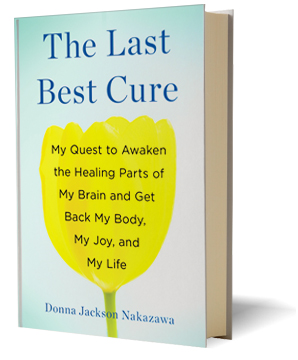
  • Dr Castells interview: lifestyle changes DO work for mast cell/histamine disorders

    Dr Castells interview: lifestyle changes DO work for mast cell/histamine disorders

    Young sports woman with barbell.

    Many of you will read the title of this post and think “D’oh! Of course lifestyle changes work for mast cell/histamine disorders!”

    But would you believe that out of eight world renowned mast cell experts at the European Mastocytosis Conference patient Q & A session in London last week, none of them appeared to acknowledge that lifestyle and diet play a part in either the progression, regression or management of mast cell activation, mastocytosis, systemic mastocytosis and by extension (I would think), histamine intolerance (if indeed they believed it exists). (Click through to my FAQ to learn how mast cells, histamine intolerance and allergies are related). 

    And that dear friends is why I believe I seriously lucked out in first being diagnosed with histamine intolerance rather than mast cell activation. Why? Because it was impressed upon me that diet was the key to controlling symptoms. I was however eventually also told it wasn’t all about food – something I chose to ignore till my symptoms didn’t really resolve on the standard low histamine diet. (They got better at first but soon with each food I eliminated from my diet I grew sicker and sicker.)

    But that’s old news.

    Coming up with the recipes for my high nutrient antihistamine and anti-inflammatory books gave me my life back, and as regular readers know, I’m now actually in the best health of my life!

    The new news is that one of the world’s most respected mast cell experts, Dr Mariana Castells, was kind enough to grant me an interview. The even better news is that she believes, (wholeheartedly I might add), that lifestyle changes – exercise, diet and stress relief can cause a remission of mast cell symptoms. She told me a wonderful story (not unlike my own) in which a patient with systemic mastocytosis who wasn’t seeing the improvement she wanted from meds, chucked it all in: changed her life, diet, started exercising and traveling. She came back years later to relate to Castells that her symptoms were in remission and that she no longer took any meds for her systemic mastocytosis. This is not an isolated case. I’ll soon begin featuring recovery stories sent in by readers of this blog and also those of friends.

    For those of you who don’t know, English is not Dr Castells’ mother tongue – she’s Spanish.

    “In terms of systemic mastocytosis, and some with cutaneous mastocytosis, the most important things is to think about changing the lifestyle and the two most important pieces of the lifestyle are the exercise and the diet – interchangeably I mean, not one over the other,” Dr Castells.

    She went on to cover something very close to my heart: that nutrition, rather any particular one type of diet is the critical component.

    “The diet is critical and there is no single diet, so there are diets that will be good for a patient or not so good, grains, fruits, vegetables, any of that with antioxidants are tremendously good for patients – fats are not so good, said Dr Castells. 

    Surprised to hear me agree with her? While I credit diet with helping me heal, it wasn’t the low histamine diet that did so, but rather the very high nutrient diet I adopted just over a year ago. I believe that a diet rich in natural antihistamines helped me reach where I am now, though I concede that simply replacing the low nutrient foods with nutritionally excellent foods, be they antihistamine foods or not, has upped my intake of hundreds of phytonutrients that support my body as a whole. Throw in the placebo effect, because I’ve convinced myself it’s why I’m healing, and we’re cooking.

    It’s so important to remember, as I say over and over, histamine is only ONE of many inflammatory elements released by mast cells (I’m shocked that some people don’t even know that histamine is already stored in our bodies!) and as such we’re better off eating any kind of diet does not cause inflammation in our bodies, regardless of what it is.

    I didn’t have time to ask a follow up on the fats point – but I’m not really surprised she said that. And please, let’s be honest with ourselves. You may think you do ok with Chocolate Chunk Cookie Dough ice cream for breakfast, lunch and dinner, but we know better right?

    And couch potatoes, time to get those sneaks on!

    Dr Castells says that it’s important to “maintain a healthy lifestyle, which is at least 30-45 minutes of exercise per day like brisk walking, not running but jogging, swimming, and even dancing. I actually have patients who dance Zumba, it’s pretty heavy duty in decreasing calories, so those are the lifestyle changes that a patient with systemic mastocytosis needs to make in order to improve the quality of their life.”

    But I’m too exhausted all the time? Can’t you just give me more meds instead?

    “Fatigue doesn’t respond well to all the medications we use, even the more sophisticated ones – fatigue only responds to changes you make to your tissues through exercising or changes you make to your intestinal absorption by changing what you eat,” says Dr Castells.

    I know many of us are scared to exercise. I know I was. This doesn’t mean you should run out and take a one hour aerobics class but rather that incremental steps may help train mast cells, giving more energy to build up to a routine that will in turn generate more energy.

    Castells’ 20 years of seeing mastocytosis patients has shown her that if a patient comes to her with symptoms, and a digestive tract loaded with mast cells, it may well be time to completely change their approach to diet and exercise – because a clean break and a change in perspective could just be what the doctor ordered (sorry, couldn’t resist).

    Interestingly the analogy Dr Castells used is one I often do myself – cancer induced inflammation, saying that genetic markers/similarities exist: “There is a tremendous inflammatory component. In cancer it’s harder to get that inflammatory component in check, but in mastocytosis, just by educating the mast cells to a certain level of activity, tremendously reduces that inflammatory component,” she said.

    Yoga is an excellent inflammation busting exercise, there’s even a few studies on yogic pranayama breathing shown to lower histamine in particular.

    Dr Castells recipe for health?

    “My recipe, not as a physician, but as someone who has followed patients with mastocytosis over about 20 something years, and seeing it’s kind of evidence based, not published, but evidence based, the patients in which I have been most successful in treating are patients who make changes in exercise and diet, and need a few medications here and there. They’ll need protection with an epi pen, in case of anaphylactic events, they may still have days in which things are different, but the need for medications is lowered, the quality of life is dramatically increased and overall the disease in the great majority of patients is very stable,” she said. 

    Don’t miss part two of this interview where we cover:

    1. The role of stress in mast cell disorders

    2. How mast cell disorders can be misdiagnosed as psychiatric

    3. The importance of managing your environment

    4. How a positive attitude impacts prognosis

    5. Why medication won’t help fatigue (and what you can do about it)

    You’ll also find out the best kinds of exercise for histamine intolerance in my post here. 

    Please don’t forget antihistamine, pain killing foods can still hurt us, so please always check with your doctor before adding new foods to your diet. 
     

GET STARTED HEALING HISTAMINE

WHAT YOU NEED TO KNOW ABOUT HISTAMINE DELIVERED TO YOUR INBOX