
Food additive sensitive ADHD kids may lack histamine-degrading HNMT enzyme

Lack of a histamine-degrading enzyme linked to ADHD in kids

Children lacking the HNMT gene responsible (along with Diamine Oxidase) for degrading histamine in the body, are likely to suffer an increase in adverse reactions to food additives and colorings, which may exacerbate existing ADHD [1]. I have a feeling we’ll be seeing many more studies making a stronger case for food additives and colorings being implicated in all kinds of behavioral disorders in children.

Dr. Emily Deans on her blog Evolutionary Psychiatry had this to say about the study: “Overall, the three year-olds had significant reactions to the hyper juice (more Mix A than Mix B) if they lacked certain alleles of the histamine N-methyltransferase (HNMT) gene.  There seemed to be no differences in the reactions depending on the dopamine or other checked genotypes.   In the 8/9 year-olds, the results were quite similar.  Not too much difference when dopamine may be off, but a significant difference depending on the HNMT gene allele.”This is not only the first study I have seen definitively making a link between behavioral problems in children and food additives, but also the first one linking histamine to it. Though it wasn’t a huge sample (less than 300 kids) and was not a long term study, I’m sure we’ll be hearing a lot more in the near future.

As someone who can attest to the mania inducing effects of food additives and colouring, I sincerely hope that parents around the world will pay more attention to what they put in their children’s bodies, whether influenced by histamine or not. My uncle had a very simple rule with his kids in the supermarket. You can have it if you can pronounce every word on the food label! His kids were well into their teens before getting their first taste of nasty foods. By that time their taste buds were well formed enough to know that it was poison. They’re two of the healthiest eaters I know (other than their parents!).

 I’d love to hear from you if this study correlates with your own experiences and if you’ve had success treating your child through a low histamine, low amine, or dye/preservative free diet.

It’s finally here! Man Food – a high nutrient antihistamine and anti-inflammatory ingredient filled book geared towards guys, women who love to work out, yoga like they mean it, or just load up on healing nutrients. Features my personal shopping list of antihistamine and anti-inflammatory foods. 

The Anti-cookbook and all liquid Anti-Detox Book, don’t treat any conditions, but feature a plethora of the high nutrient antihistamine and anti-inflammatory ingredients that have been instrumental in helping me feed myself on a limited diet. The Anti-cookbook features a six page list of antihistamine and anti-inflammatory foods and comes in regular and Paleo. 

The Low Oxalate Cookbook features antihistamine and anti-inflammatory rich recipes. 

Don’t miss the Low Histamine Beauty Survival Guide for non-toxic beauty tips, the skinny on histamine releasing (mast cell degranulating) beauty ingredients, antihistamine and anti-inflammatory beauty alternatives and the top brands natural brands I’ve found.

Take a peek at my other low histamine and antihistamine cookbooks for more high nutrient recipes

———-REFERENCES———-

[1] http://www.ncbi.nlm.nih.gov/pubmed/20551163

10 responses to “Food additive sensitive ADHD kids may lack histamine-degrading HNMT enzyme”

  1. Hayden Barnes-Turnidge Avatar
    Hayden Barnes-Turnidge

    You mention that the only way to test for HNMT is through genetic testing, is this a specific test or something that the 23andme test could possibly indicate?

  2. Hayden Barnes-Turnidge Avatar
    Hayden Barnes-Turnidge

    You mention that the only way to test for HNMT is through genetic testing, is this a specific test or something that the 23andme test could possibly indicate?

  3. Alex Morgan Avatar
    Alex Morgan

    Hi, I was interested to come across this article whilst searching for antihistamine foods. My daughter, now 6, has been suffering with her health and behaviour all her life (chronic tonsil and ear infection, rashes, ulcers, slow healing leading to infections, stomach pain, swelling and itching eyes, hyperactivity and aggression). We recently noticed her behaviour seemed worse after strawberries, pineapple and raisins. We then researched and found out about histamine intolerance, we tried giving her antihistamine medication and found on the days she had antihistamine her symptoms were greatly improved and then without, back to normal. Obviously giving her antihistamine medication isn’t our long term plan, hence my coming across your work. Anyhow, we had always noticed that she was suffered especially whilst on antibiotics or after taking pain killing medicine. We researched the ingredients of these medications and found they all contained sodium benzoate or a derivative of. Sodium benzoate is a histamine liberator. We are trying to cut all food and non food products containing this chemical as we soon realised that we were washing her hair with it, cleaning her bath with it, washing her skin with it, cleaning her clothes in it, brushing her teeth with it as well as giving her food, drink and medicine containing it. Now, whilst I was looking into sodium benzoate, it was noted that those sensitive to sodium benzoate are commonly also sensitive to tartrazine (also found on histamine no no lists), this was interesting as my parents would not allow me to have tartrazine as a child because of how it affected my mood. Also, my mother has suffered with anaphylaxis, which I learnt from your interview with Dr Janice Jonejo may mean she has low DAO enzyme. I’m now wondering if the low DAO enzyme feature is hereditary and if my daughter has a) suffered more because of having many many courses of antibiotics, I was given them in labour so she had her natural gut balance wiped out from the get go, and b) suffered more because of the possibility that her ‘histamine bucket’ might be rather full from her reaction to sodium benzoate and it’s ever presence in one for or another in her day to day life. Of course I question whether I am clutching at straws and seeing patterns where there are none. So it was very interesting for me to see this article, to find that there have been links made between additives, behaviour and histamine; makes me feel a little less crazy 😉 Thanks.

  4. Alex Morgan Avatar
    Alex Morgan

    Hi, I was interested to come across this article whilst searching for antihistamine foods. My daughter, now 6, has been suffering with her health and behaviour all her life (chronic tonsil and ear infection, rashes, ulcers, slow healing leading to infections, stomach pain, swelling and itching eyes, hyperactivity and aggression). We recently noticed her behaviour seemed worse after strawberries, pineapple and raisins. We then researched and found out about histamine intolerance, we tried giving her antihistamine medication and found on the days she had antihistamine her symptoms were greatly improved and then without, back to normal. Obviously giving her antihistamine medication isn’t our long term plan, hence my coming across your work. Anyhow, we had always noticed that she was suffered especially whilst on antibiotics or after taking pain killing medicine. We researched the ingredients of these medications and found they all contained sodium benzoate or a derivative of. Sodium benzoate is a histamine liberator. We are trying to cut all food and non food products containing this chemical as we soon realised that we were washing her hair with it, cleaning her bath with it, washing her skin with it, cleaning her clothes in it, brushing her teeth with it as well as giving her food, drink and medicine containing it. Now, whilst I was looking into sodium benzoate, it was noted that those sensitive to sodium benzoate are commonly also sensitive to tartrazine (also found on histamine no no lists), this was interesting as my parents would not allow me to have tartrazine as a child because of how it affected my mood. Also, my mother has suffered with anaphylaxis, which I learnt from your interview with Dr Janice Jonejo may mean she has low DAO enzyme. I’m now wondering if the low DAO enzyme feature is hereditary and if my daughter has a) suffered more because of having many many courses of antibiotics, I was given them in labour so she had her natural gut balance wiped out from the get go, and b) suffered more because of the possibility that her ‘histamine bucket’ might be rather full from her reaction to sodium benzoate and it’s ever presence in one for or another in her day to day life. Of course I question whether I am clutching at straws and seeing patterns where there are none. So it was very interesting for me to see this article, to find that there have been links made between additives, behaviour and histamine; makes me feel a little less crazy 😉 Thanks.

  5. meg Avatar
    meg

    I think you should reintroduce some of your older articles. I have an ADHD son. So this one interests me a great deal! 🙂 I read your articles because I’m HIT and never saw this one. I caught it from an ADHD site that posted a link to it.

  6. Katrina Roitburd Avatar
    Katrina Roitburd

    So will taking antihistamines also help to improve their reaction to dyes?

  7. Cyndi Avatar
    Cyndi

    Can you state which SNPs are involved? Of course no one lacks an entire gene (unless they have serious chromosomal abnormalities). The article you linked to is another recap like yours. They link to the full article, but the link is bad. I found an abstract here: http://www.ncbi.nlm.nih.gov/pubmed/20551163 And it gives some SNPs but not in tons of detail.

    Thanks!

    “The adverse effect of food additives on ADHD symptoms was moderated by histamine degradation gene polymorphisms HNMT T939C and HNMT Thr105Ile in 3- and 8/9-year-old children and by a DAT1 polymorphism (short versus long) in 8/9-year-old children only. There was no evidence that polymorphisms in catecholamine genes COMT Val108Met, ADRA2A C1291G, and DRD4-rs7403703 moderated the effect on ADHD symptoms.”

  8. Cyndi Avatar
    Cyndi

    Thr105Ile = rs11558538 and 23andme did not test for it.
    T939C is not even on SNPedia but I found elsewhere it is rs55641247, also not tested by 23andme.

  9. Cyndi Avatar
    Cyndi

    Found what looks like the whole article…but it’s from 2010!
    http://adhdnet.com/wp/papers10/Stevenson2010.pdf

  10. Upholstered Gun Avatar
    Upholstered Gun

    Actually, if you read this study closely, the children were not missing the gene, they simply looked at two mutations, and found no assocation with ADHD in either the 3 or 8 year olds for rs1801105. And for the claimed causative mutation that increased ADHD, rs1050891, it was the common wild allele, T that had a slight increase in ADHD, and its p value was 0.06. It should be below 0.05 to be statistiscally significant. This research shows nothing IMO.

Leave a Reply

Your email address will not be published. Required fields are marked *

More Articles from Healing Histamine

  • Best Outdoor Finger Foods

    Best Outdoor Finger Foods

    There’s nothing like light-hearted summer get-togethers in the backyard or out on the deck fueled by delightful and delicious finger foods. For the histamine intolerant guest, chips and salsa are…

    Read more

  • Best Histamine Intolerance BBQ Foods

    Best Histamine Intolerance BBQ Foods

    Summertime is BBQ time. There’s nothing like the smell of hot food fresh from the grill and an al fresco meal with friends or family to wrap up a hot…

    Read more

  • The Hay Fever-Histamine Connection

    The Hay Fever-Histamine Connection

    Hay Fever, otherwise known as allergic rhinitis (nasal allergies), or what most people refer to simply as “allergies” has an association with histamine intolerance and mast cell disorders. Have you…

    Read more

  • Histamine & The Pool or Beach

    Histamine & The Pool or Beach

    When it’s hot and sticky in the summertime, there’s nothing like a dip in the pool or a trip to the beach to cool you down. And since histamine intolerance…

    Read more

  • This Parasite Triggers Histamine Intolerance

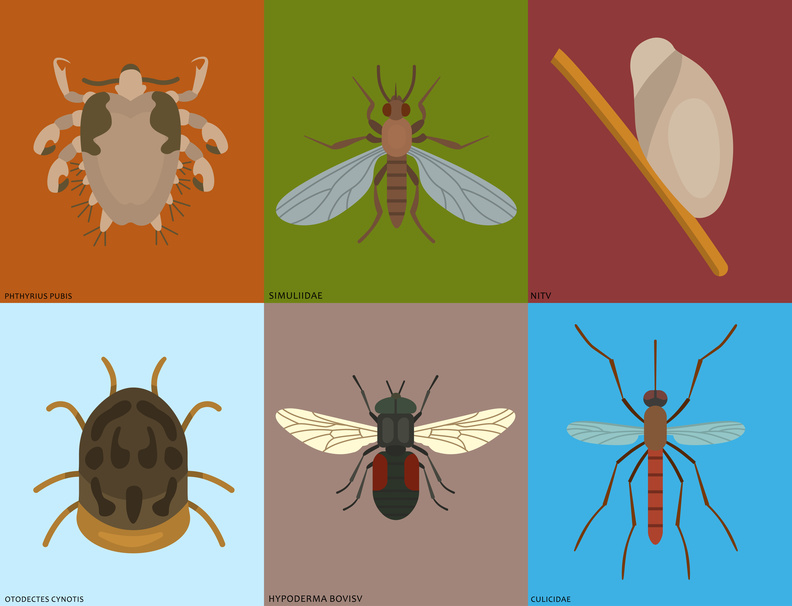
    This Parasite Triggers Histamine Intolerance

    Could parasites be causing or contributing to your chronically high histamine levels? We know that imbalances in the gut microbiome can cause histamine problems, but how about intestinal parasites? It’s…

    Read more

  • 6 Summer Histamine Challenges and Solutions

    6 Summer Histamine Challenges and Solutions

    Summertime is a wonderful time of being outside, taking in the sunshine, mowing the lawn, and enjoying cookouts with friends and family. However, for those of us dealing with histamine…

    Read more

  • Boost Good Gut Bacteria Without Supplements

    Boost Good Gut Bacteria Without Supplements

    Most of us know that our gut plays an important role in our immune response. The levels of different species and strains of bacteria in the gut, and especially which…

    Read more

  • Exercising with Histamine Intolerance

    Exercising with Histamine Intolerance

    We all know exercise is recommended for a healthy body in the long run. However, with histamine intolerance, you’re probably finding that exercise can make you sick. Unfortunately, exercise over…

    Read more

Welcome!

Yasmina was an award-winning broadcast journalist with a decade of experience covering war zones for CNN and the BBC. She devoted her journalism skills to researching and writing about histamine. Click here to learn about her. Each post is carefully and fully referenced with the latest scientific research. Not sure where to start? Here’s a four week meal plan and overall Histamine Reset.


4 Week Histamine Reset


Recent posts


Anti-Recipes…Bioflavonoid Rich & Hearty Foods $18

GET STARTED HEALING HISTAMINE

WHAT YOU NEED TO KNOW ABOUT HISTAMINE DELIVERED TO YOUR INBOX