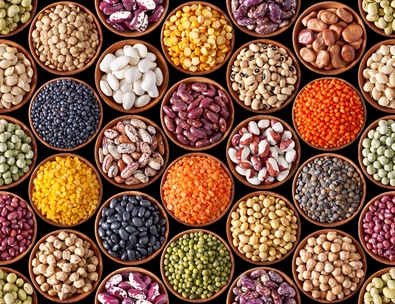
Lectins: friend or foe?

lectins release histamine

Lectins: they help fight cancer but can cause mast cells to release histamine. The good news is that how you cook them makes a world of difference. 

You know how I said a few weeks ago that I stuck my head in the sand over the whole oxalate causing pain down there issue? Well the good news is, no major harm done, a few weeks on a moderately low oxalate diet has pretty much taken care of that. If only I could get those 30 or so years of pain rolled back; but hey, it is what it is.

Most recently some research crossed my virtual desk that I’ve also spent the last few years trying to ignore. There’s only so much a girl can do at once you know?

CLICK HERE TO CREATE YOUR OWN PERSONALISED HEALING HISTAMINE PLAN. 

But at the end of the day I’m not a girl any more and as such when a couple of juicy tidbits like this smack me in the face there’s no option but to pull my head out of the sand (or my butt) and get with the program. After all, I’ve come this far, made all this progress, why not go the whole nine yards?

So here we go.

Lectins.

One word that could explain mast cell/histamine reactions to potato, rice, lentils and other lectin rich legumes.

Lectins are not something I’ve worried too much about because other than having eliminated (without realising) the highest lectin, non-nutritious foods from my diet, I always try to weigh up the good and the bad. And I really really love my vitamin B, copper and fiber rich lentils! My recent lectin, gluten and dairy free Paleo cookbook (The Anti-Cookbook: High Nutrient Antihistamine and Anti-inflammatory Recipes for Health) was mostly in response to the number of requests I was getting asking for it!

Yes, the Paleo community and many others have spoken out quite a bit about the damage they can cause so I’m not going to go over it again – I’m dealing solely with the histamine angle. 

In a nutshell, lectins can cause  mast cells to release histamine into the body, but because they also fight cancer [1] I’m willing to put up with mild symptoms that could lead to increased immunity to cancer in the long run. I also reported a while back that many beans have antihistaminic properties.

But my head is out of my butt now so lets explore the issue…

I’ll preface this by saying that many of the studies I found were conducted on animals and that in our recent interview Dr Janice Joneja told me that lentils and chickpeas are just fine. We didn’t get into the other foods but potatoes are listed as a mast cell trigger on her food list for the Mastocytosis Society Of Canada website.

From a human study: “A major factor in non-allergic food hypersensitivity could be the interaction of dietary lectins with mast cells and basophils…Because IgE contains 10-12% carbohydrates, lectins can activate and degranulate these cells.” [2]

Ouch. I don’t like the sound of that!

They go on to talk about how the white blood cells of people with a negative IgE allergy test for potato go on to react to a prick test, while another study re-affirms that certain lectins are able to induce mast cell activation (thereby releasing histamine into the body) [3].

What fun!

But here’s the interesting part, some of the studies found that lectin induced histamine release from mast cells was inhibited in the absence of extracellular calcium [4]. And that lectins at high concentrations can “quench” the histamine release [5]. I’d love to know how high a concentration – I’m fantasising about eating my way out of lentil soup bath. Score!

Don’t want to eliminate lectins? Studies show that soaking, germinating and pressure cooking can inactivate lectins [6], which may be the reason that I’ve never had a significant reaction to lectin rich foods. Or it could be because not enough of the lectins were ingested.

Have you noticed any reactions to lectin rich foods or eliminated them from your diet? Have you, like me (at least for now), decided that you’ll put up with mild reactions for the anti-cancer benefit?

———REFERENCES——–

[1] http://www.ansci.cornell.edu/plants/toxicagents/lectins.html#leccan

[2] http://www.ncbi.nlm.nih.gov/pmc/articles/PMC1941928/

[3] http://www.ncbi.nlm.nih.gov/pubmed/22108054

[4] http://www.scielo.br/scielo.php?pid=S0100-879X2005000600016&script=sci_arttext

[5] http://www.scielo.br/scielo.php?pid=S0100-879X2005000600016&script=sci_arttext

[6] http://www.ncbi.nlm.nih.gov/pubmed/12017999

17 responses to “Lectins: friend or foe?”

  1. Sara Avatar
    Sara

    Would you distinguish between pressure cooked and processed (say in canning jars) in a pressure canner? Just thinking. I CAN make my own lentil soup.

  2. Nona Avatar
    Nona

    I’m like you in that I react to many different things, including foods on the high lectin lists. Almost every meal is a trip, no matter how informed I try to be about the lurking barbs in my food choices. It works better for me to spend my energy embracing the aftermath, rather than getting too anxious about picking an elimination strategy. So I’ll probably cling indefinitely to my lentil soup and keep my head in the proverbial butt, aka food diary! It’s fascinating that lectins could play such a huge role in the whole histamine game, though. Thanks.

  3. thelowhistaminechef Avatar

    Hi Sara, I think I understand that you mean home canned? Lol yes you can! I don’t know how long I would keep it though…I just don’t like the idea of cooked food sitting around.

  4. thelowhistaminechef Avatar

    Hi Nona, thanks for your post! Exactly – at some point I just embraced what was going on and focused instead on living. It was possible in part to finally knowing that I was dying from some weird condition. Lol yes me too 🙂 Lentils are here to stay! I’ve cut plenty of lectins already, I’m sure I can deal with these. Thanks for reading (and posting).

  5. aaron Avatar
    aaron

    had to give lentils the chop and gut very thankful for it. Lectin’s are an issue for me – cause major gut inflamation, and potatoes cause an instant reaction. I take an autoimmune view on it, so nightshades like potatoes and peppers are out, both lectin heavy from memory.

    every one is different of course but for me “auto immune foods” that cause problems like eggs dont cause an instant reaction, but small non itchy rashes the next day or so. so i steer very clear.

  6. Anne Avatar
    Anne

    So soaking legumes doesn’t increase amines?

  7. thelowhistaminechef Avatar

    Hi there, I don’t find that it does and the studies I found on it said that the amines end up in the soaking water. So you could just toss that out and use fresh for boiling.

  8. thelowhistaminechef Avatar

    It’s a crapshoot for me. Some days I’m fine and on others my body just goes crazy,..

  9. Jodi Owen Avatar
    Jodi Owen

    When I first learned about MCAD and began a low histamine diet, I continued to react to foods beyond those containing histadine, histamine and liberators: the common denominator ended up being lectins. In an effort to increase my food options, I tried soaking and sprouting mung beans (supposedly the least reactive legumes from what I researched) but continued to experience oesophageal swelling and GI inflammation. I continued to eat them regardless but finally had to stop as I couldn’t ignore the inflammation was increasing. Aside from histamine and other biogenic amines, I react to grains including rice, oats, quinoa, and corn; potatoes, lentils, dairy, soya, eggs, nuts, and seeds.
    Lectins are a huge trigger for me.

  10. thelowhistaminechef Avatar

    Hi Jodi, sorry to hear it, but I’m glad you managed to work it out! It’s so frustrating when you can’t work out what’s bothering you. I never rule a food out entirely because as I have healed I have managed to re-introduce many nutritious foods. But I wouldn’t fight to add something back that triggered than much inflammation.

  11. Karen Avatar
    Karen

    Hi, I have been newly diagnosed with severe histamine intolerance, plus some food allergies, and severe environmental allergies. I am only saying from my experiences so far that lectins are really BAD for me! If I eat eggs, even in small amounts, I will get a stomach ache leaving me doubled over in pain for hours. Nuts will do the same thing, and sometimes cause breathing difficulty and dizziness. Beans cause discomfort, but so far, nothing life threatening from them. But, my allergist told me to carry Epi-Pen with me everywhere just in case, because I have really serious reactions. Lectins seem to be some of the worst for me. But, I am still learning what is okay and what isn’t. But, I don’t want to make any bad mistakes and end up in the hospital. I already have had to use my asthma rescue inhaler a bunch of times due to my peanut butter and chocolate addiction. The two together are a horrible combo. I am learning NOT to ever eat chocolate, along with peanuts. But, severe allergies run in my family, and it seems histamine intolerance does as well, judging by all the same family health problems and symptoms. My cousin has a deadly peanut allergy, and my aunt is deadly allergic to bees. I have it bad both with allergies and histamine intolerance. I have anaphylactis symptoms. Right now, I’m scared of eating pretty much anything, lectins included.

  12. Rachel Avatar
    Rachel

    Do we need to soak AND germinate AND pressure cook in succession to eliminate the lectins? Or can we choose ONE of these methods?

  13. Janer Avatar
    Janer

    I’m eating beans and grains and/or lentils almost every day right now, having not heard of the lectin connection. I’m nominally reactive for the past month eating this way having had urticaria, angiodema, GI issues since 2003, and throat/mouth swelling that began in Oct 2015. So maybe I am a test subject for this high lectin effect? I gravitated towards them when this more recent, alarming symptom showed up because I wasn’t certain where I could get freshly butchered meat and I have been vegetarian and vegan at different points in my life so beans are an old friend. I don’t pressure cook at this point but I do skim off the foam as they cook and soak them over night when that is generally called for. (i.e. don’t soak lentils because they cook up just fine without it.) The beans I’m eating with minimal-to-almost-no reactions are mung, adzuki, french lentil, red/green/brown lentils. And brown short rice, quinoa and oats, both rolled and stone cut, and buckwheat groats. All on rotation, but now less rigidly as I can choose to not eat what I did yesterday. As well, spaghetti squash, buttercup and butternut squashes, turnip (swede), brussel sprouts and green cabbage. Now I know I need to start challenging green veggies. So I’m off to pick up some celery and maybe some delicious arugula! And I will say that even your suggestion to remind the immune system to ‘stand down’ when I think I’m being exposed to triggers has been very helpful.

  14. Janer Avatar
    Janer

    I’m eating beans and grains and/or lentils almost every day right now, having not heard of the lectin connection. I’m nominally reactive for the past month eating this way having had urticaria, angiodema, GI issues since 2003, and throat/mouth swelling that began in Oct 2015. So maybe I am a test subject for this high lectin effect? I gravitated towards them when this more recent, alarming symptom showed up because I wasn’t certain where I could get freshly butchered meat and I have been vegetarian and vegan at different points in my life so beans are an old friend. I don’t pressure cook at this point but I do skim off the foam as they cook and soak them over night when that is generally called for. (i.e. don’t soak lentils because they cook up just fine without it.) The beans I’m eating with minimal-to-almost-no reactions are mung, adzuki, french lentil, red/green/brown lentils. And brown short rice, quinoa and oats, both rolled and stone cut, and buckwheat groats. All on rotation, but now less rigidly as I can choose to not eat what I did yesterday. As well, spaghetti squash, buttercup and butternut squashes, turnip (swede), brussel sprouts and green cabbage. Now I know I need to start challenging green veggies. So I’m off to pick up some celery and maybe some delicious arugula! And I will say that even your suggestion to remind the immune system to ‘stand down’ when I think I’m being exposed to triggers has been very helpful.

  15. Sandra Avatar
    Sandra

    Rachel, did you find the answer to the above question? Please let me know so I can begin eating a few legumes!

  16. Sandra Avatar
    Sandra

    Rachel, did you find the answer to the above question? Please let me know so I can begin eating a few legumes!

  17. Rachel Avatar
    Rachel

    I didn’t get an answer, sorry. I know that canned beans don’t produce as much gas in my gut. But, the next place you could look would be at chriskresser.com or marksdailyapple.com as they have both written stome stuff about this (I just can’t remember and haven’t had time to look.)

Leave a Reply

Your email address will not be published. Required fields are marked *

More Articles from Healing Histamine

  • Best Outdoor Finger Foods

    Best Outdoor Finger Foods

    There’s nothing like light-hearted summer get-togethers in the backyard or out on the deck fueled by delightful and delicious finger foods. For the histamine intolerant guest, chips and salsa are…

    Read more

  • Best Histamine Intolerance BBQ Foods

    Best Histamine Intolerance BBQ Foods

    Summertime is BBQ time. There’s nothing like the smell of hot food fresh from the grill and an al fresco meal with friends or family to wrap up a hot…

    Read more

  • The Hay Fever-Histamine Connection

    The Hay Fever-Histamine Connection

    Hay Fever, otherwise known as allergic rhinitis (nasal allergies), or what most people refer to simply as “allergies” has an association with histamine intolerance and mast cell disorders. Have you…

    Read more

  • Histamine & The Pool or Beach

    Histamine & The Pool or Beach

    When it’s hot and sticky in the summertime, there’s nothing like a dip in the pool or a trip to the beach to cool you down. And since histamine intolerance…

    Read more

  • This Parasite Triggers Histamine Intolerance

    This Parasite Triggers Histamine Intolerance

    Could parasites be causing or contributing to your chronically high histamine levels? We know that imbalances in the gut microbiome can cause histamine problems, but how about intestinal parasites? It’s…

    Read more

  • 6 Summer Histamine Challenges and Solutions

    6 Summer Histamine Challenges and Solutions

    Summertime is a wonderful time of being outside, taking in the sunshine, mowing the lawn, and enjoying cookouts with friends and family. However, for those of us dealing with histamine…

    Read more

  • Boost Good Gut Bacteria Without Supplements

    Boost Good Gut Bacteria Without Supplements

    Most of us know that our gut plays an important role in our immune response. The levels of different species and strains of bacteria in the gut, and especially which…

    Read more

  • Exercising with Histamine Intolerance

    Exercising with Histamine Intolerance

    We all know exercise is recommended for a healthy body in the long run. However, with histamine intolerance, you’re probably finding that exercise can make you sick. Unfortunately, exercise over…

    Read more

Welcome!

Yasmina was an award-winning broadcast journalist with a decade of experience covering war zones for CNN and the BBC. She devoted her journalism skills to researching and writing about histamine. Click here to learn about her. Each post is carefully and fully referenced with the latest scientific research. Not sure where to start? Here’s a four week meal plan and overall Histamine Reset.


4 Week Histamine Reset


Recent posts


Anti-Recipes…Bioflavonoid Rich & Hearty Foods $18

GET STARTED HEALING HISTAMINE

WHAT YOU NEED TO KNOW ABOUT HISTAMINE DELIVERED TO YOUR INBOX