

Tag: monoamine oxidase

  • These probiotic strains help fight allergies (rather than causing them)

    These probiotic strains help fight allergies (rather than causing them)

    Baby bacteria lowers histamine levels
    Baby bacteria lowers histamine levels

    I’ve been exploring the catch-22 of probiotic supplementation for some time now. The dilemma? Probiotics are necessary for proper intestinal function – the histamine lowering enzymes diamine oxidase and monoamine oxidase live there, so fixing up our poop tube seems like a good idea right?

    Not so simple.

    Probiotic supplements are fermented (a no go for histamine intolerance/histamine related disorders) and some strains actually raise histamine and tyramine in the body. The good news is that strains commonly found in babies can actually lower histamine, helping us fight allergies and lower our overall histamine burden.

    Lactobacillus casei (TISTR 389) andLactobacillus delbrueckii subsp. bulgaricus (TISTR 895) were found to produce BA (biogenic amines). The highest levels of histamine (1820.9 ± 3.5 mg L−1) and tyramine (5486.99 ± 47.6 mg L−1) formation were observed for the TISTR 389 strain, while TISTR 895 produced only histamine (459.1 ± 0.63 mg L−1) in the decarboxylase broth. Biogenic amine potential was not observed for the Lactobacillus acidophilus,Lactobacillus lactis subsp. lactis, Lactococcus lactis subsp. lactis, and Lactobacillus plantarum strains studied. This study confirmed that BA formation is strain dependent and not related to the species. Read the full study here.

    English translation…

    The BAD

    Lactobacillus casei was shown to produce histamine and tyramine, while Lactobacillus Bulgaricus increased histamine alone.

    The NEUTRAL

    Lactobacillus acidophilus, Lactobacillus Lactis, Lactococcus Lactis, and Lactobacillus plant arum did not have any effect on biogenic amines like histamine and tyramine.

    And now for…The GOOD

    One of the perks of being the member of a highly educated online community who are incredibly proactive in their own healthcare, is that they often help fill in the missing links. Today I was reminded of studies I found last year which talked about the histamine-lowering effects of two strains of probiotic bacteria, Bifidobacterium infants, Bifidobacterium longum, commonly found in infant intestines. The studies also noted that the longum species had significant IgE mediation action. This means it could prove helpful to those with allergies. Read the full study here.

    Does this mean you can cure your histamine intolerance/histaminosis/mastocytosis with a histamine-lowering probiotic? Doubtful. Could it be helpful? Possibly. Why the cautious optimism? Because I have experienced a variety of reactions to supplements over the years. But if you’re going to try probitic supplementation, this might be a good place to start.

    I would not recommend starting this, or any supplement, without consulting your doctor. If you do try, please go slowly. If you prefer to go the nutritional route, a diet low in histamine is a good place to start – check out my post on pre-bioitic foods here.

  • Ayurvedic remedy helps fight flab, fix your thyroid and lower histamine levels!

    I’m taking a number of steps to help my body recover from any inadvertent histamine hiccups (ahem, cupcake incidents) I may subject it to. One of them is the food-coaching course I’m taking with my nutritional hero Dr. Fuhrman, and an intensive immersion into herbalism, which I’m sure to expand upon in coming years. I’m currently devouring the modern herbalism bible I’ve seen the Whole Foods naturopathic gurus toting when in deep consult with customers. I naturally started in the immune system chapter where I came across yet another ayurvedic miracle herb.

    (more…)
  • There’s more to the low histamine lifestyle than elimination!

    UPDATE: there is a ton of misinformation flying around on the internet. I’m constantly flummoxed by how people will attribute feeling awful to chickpeas or a banana rather than the taco bell, potato chips or chocolate they also had. I have yet to see any scientific study showing high histamine content in chickpeas. On the contrary, sprouted chickpeas are high in DAO, the histamine degrading enzyme. Even a high histamine food can lower or raise histamine, because different parts of the plant have varying properties. Raspberry fruit for example is listed as high histamine, but it also contains antihistamine quercetin. Raspberry leaves meanwhile are scientifically proven to have antihistamine properties.

    I have over the last few years called a number of labs to ask how histamine testing is done, and trying to get an accurate list made. But I haven’t been able to.

    You know why?

    Because according to the labs I have spoken with, it is impossible to measure histamine accurately in vegetables and fruits, because the level is too LOW for the tests to pick it up correctly. Most of the lists you find on the internet were put together by polling readers on what they feel is high histamine, or just copied from other incorrect sources.

    So here’s a tip, please stop worrying about whether chickpeas are high histamine, and a little more effort into avoiding processed foods full of gut damaging emulsifiers, stop roasting foods because this oxidising cooking method causes histamine release, and definitely do not go gunning after healthy foods while you’re still indulging in potato chips. Fixing a histamine problem is all about fixing the body as a whole, and eating junk food and worrying about the histamine status of vegetables, beans and pulses isn’t going to get us anywhere.

    All scientific references to the statements I just made can be found in this post.

    I spend a lot (a LOT) of time on the net chatting with people who are in various stages of eliminating high histamine foods. While going low histamine does mean binning a number of high histamine foods, eliminate too many and you could end up worse off in the long run. I know because I spent a number of years doing it myself. Cut cut cut was all I did, but I soon became reactive to the “safe” foods and I just wasn’t getting any better overall.

    A little dabbling in supplements showed me they’re (mostly) out. I just don’t tolerate them. So I eat them instead. I’m quite convinced that their magical qualities, in balance with other nutrients, renders them effective, thought I do realise I’d have to wear a trough around my neck to ingest a therapeutic dose (100mg per kilo??) of some herbs.

    Why this emphasis on nutrition rather than antihistamines? Well, antihistamines only work on one or two of the four (known) histamine receptors. Is that bad? Depends – do you enjoy eating obsessively till obesity? How about suffering from chronic infections, liver damage, heart failure or antihistamine toxicity? I personally don’t. Also, my experience on them was, ok, I can eat more – well – I don’t have a choice really – I’m desperate to fill every minute of my day stuffing my face (read is your anti-histamine making you fat). Oddly, if you eat enough, you’ll need more antihistamines! It’s a vicious cycle of filling your bucket, then instead of emptying it, fooling your body into thinking it’s ok to fill it even more.

    Take these examples:

    SWEET POTATO is high not only in quercetin, but also in histamine-lowering rutin, and has anti-ulcerative properties.  And if that’s not enough for you, sweet potato extract has recently excited scientists by suppressing the growth of stomach cancer, colon cancer and leukemia cells.

    OREGANO contains polyphenols with antihistamine properties.

    CHICKPEAS…amongst their many nutritional benefits, they’re a particularly good source of plant-based diamine oxidase (DAO – this is the histamine degrading enzyme)

    Recently, it has been found that DAO from pea seedlings shows higher activity compared to commercial porcine kidney diamine oxidase (PKAO).  Read the full study here.

  • Surfing the crimson wave make you crazy? Could be histamine…

    Surfing the crimson wave make you crazy? Could be histamine…

    A little insulting but still pretty funny…

    Tired of your man attributing every nuance of behavior to your menstrual cycle? Well, he could have a point, but you’d die before admitting it (yup that’s me I’m talking about).

    Well here’s a little nugget to wave under his nose. It’s not the menstrual cycle, it’s the histamine stupid!

    Japanese researchers have (re)confirmed that the histamine lowering diamine oxidase enzyme (DAO) is influenced by the menstrual cycle.

    “Serum DAO levels were influenced by the menstrual cycle. Furthermore, our findings suggest that serum DAO levels should be interpreted cautiously in premenopausal women.”

    This could explain why an allergy to food or environment seems to affect you differently each time, depending on where you are in your cycle and how much histamine-lowering diamine oxidase is available to you.

    We know from Maintz and Novak’s seminal histamine study, that DAO is at its highest during pregnancy (500% – 1000% higher) so it’s a not unreasonable to conclude that lower hormones = lower diamine oxidase? BUT, that’s not right…

    “estrogen can influence histamine action. A significant increase in weal and flare size in response to histamine has been observed to correspond to ovulation and peak estrogen concentrations (118).” Maintz and Novak.

    This would seem to point to diamine oxidase being lower during ovulation – though we’re now not taking the potential involvement of monoamine oxidase and HNMT (the other enzymes involved in histamine metabolism) into account. Phew, I’ve confused myself. What is certain is that high histamine mimics the symptoms of anxiety so if you have a histamine-related disorder, certain times of the month are going to be tougher than others.

    So, where does this leave your average diamine oxidase impaired lass?

    (more…)
  • Holy Basil! Anti-inflammatory and anti-histamine superstar

    Holy Basil! Anti-inflammatory and anti-histamine superstar

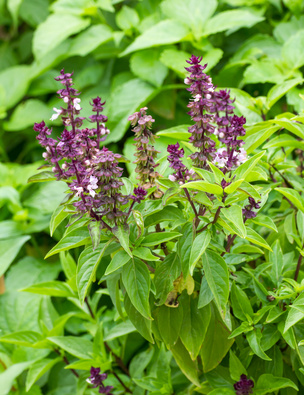
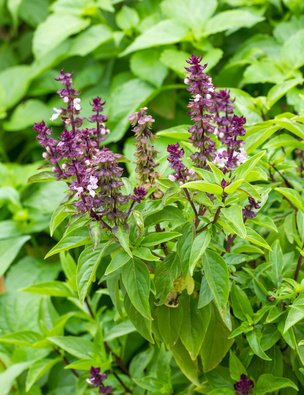
    Basil flowers in the garden

    Not only is Holy Basil tasty in just about any Thai or Vietnamese dish – turns out it’s an anti-inflammatory, anti-histamine herb that’s as effective as Ranitidine/Zantac at treating H2 (histamine) induced ulcers, preventing mast cell degranulation and anaphylactic shock. How do’you like them apples?

    I like Holy Basil a lot better than them apples…but just to clear up any potential confusion, Holy Basil is also known as Sweet Thai Basil or by it’s proper names: Ocimum tenuiflorum and Ocimum sanctum. (source: Wikipedia)

    Holy Basil’s activity as an anti-histamine has been found to affect histamine’s H2 receptor, great news for those with histamine intolerance/histaminosis/mastocytosis/mast cell activation disorders with gastrointestinal complaints. I’d be interested to know if it’s anti-inflammatory effects are in part due to it’s high Vitamin K content. Don’t forget that Vitamin K (as I mentioned in this post), is a potent anti-inflammatory, is found in many foods like cauliflower, which is also high in Vitamin C.

    Holy Basil prevents mast cell degranulation, helping treat allergic disorders

    “Basophils, mast cells, and their preformed de novo synthesized mediators, play a pivotal role in the pathogenesis of allergic disorders. These molecules are potent vasoactive and bronchoconstrictor agents and they modulate local immune responses and inflammatory cell infiltration (17-18).Immunoglobulin E (IgE)-mediated mast-cell stimulation is an important initial event in the development of type I allergic reactions such as asthma and atopic disorders. Clinical studies have found a close association between asthma and serum IgE levels, as well as IgE-dependent skin test reactivity to allergens. Antigen challenge, in sensitized animals, results in the degranulation of mast cells, which is an important feature of anaphylaxis. O. sanctum ethanolic extract showed marked protection against the mast cell degranulation following antigen challenge in sensitized animals. Mast cell stabilizing activity of extract may be attributed to the presence of anti-inflammatory mediator release, which is known for their mast cell stabilizing potential against antigen-antibody reaction and/or due to the suppression of IgE antibody production, which is responsible for degranulation mast cells. This antianaphylactic and antihistaminic effect may be due to the stabilization of the mast cell membrane, suppression of IgE, and inhibition of pathological effects induced by the release of inflammatory mediators in test extract treated animals.

    Experimental results indicated the potent benefits of O. sanctum in the treatment of asthma and related conditions. The findings from various studies reveal that the antihistaminic and antianaphylactic activity of extract which is mainly due to its mast cell stabilizing potential, suppression of IgE, and inhibition of release of inflammatory mediators. Thus use of O. sanctum leaves proved the strong rationale behind the mentioned therapeutic activities [1].”

    Holy Basil is as effective as Ranitidine/Zantac at treating H2 receptor induced GI complaints

    “This study was conducted with the aim of comparing the efficacy of ocimum sanctum against gastric and duodenal ulcers. The hydralcoholic extract of the plant exhibited significant ulcer protective effect against gastric ulcers in pyloric ligated rats as well as against duodenal ulcers in histamine treated guinea pigs. In both these models of peptic ulcer, significant ulcer protective effects were observed with 100 mg/kg and 200 mg/kg of ocimum sanctum, which were comparable. These effects were also comparable with ranitidine which was used as the standard drug for comparison in both the models. The antiulcer activity of ocimum sanctum could be due to its antisecretory, anticholinergic or antihistaminergic properties. In view of this therapeutic potential, more studies are required to establish ocimum sanctum as a standard drug for peptic ulcer [2].”

    They’re using high amounts of Holy Basil in the studies.What do you think? Would you consider adding Holy Basil to your diet as an anti-inflammatory or histamine blocker to help treat your histamine intolerance, histaminosis, mastocytosis or mast cell activation?

    WONDERING HERE TO START? HERE’S A FOUR WEEK COURSE & MEAL PLAN TO TAKE THE STRESS OUT OF HEALING HISTAMINE

    Please don’t forget antihistamine, pain killing foods can still hurt us, so please always check with your doctor before adding new foods to your diet. 

    ————REFERENCES—————

    [1] http://www.ispub.com/journal/the-internet-journal-of-pharmacology/volume-7-number-1/pharmacological-basis-for-antianaphylactic-antihistaminic-and-mast-cell-stabilization-activity-of-ocimum-sanctum.html

    [2] http://www.ispub.com/journal/the-internet-journal-of-gastroenterology/volume-11-number-1/comparison-of-efficacy-of-ocimum-sanctum-against-gastric-and-duodenal-ulcers-in-animals.html


  • Got allergies? Homeopathic remedy reduces histamine-induced inflammation

    Got allergies? Homeopathic remedy reduces histamine-induced inflammation

    Natural caduceus bottle concept

    I’m usually on the fence about homeopathic remedies. I’d love to believe they work, but have yet to see the studies backing up their claims. Today however I found a study showing that a homeopathic remedy, Rhus Toxicodendron, “significantly reduces” carrageenan induced inflammation in rats. As I mentioned in another post, carrageenan (irish moss) is a seaweed derived food additive that is also frequently used in raw food desserts . 2016 update: sorry I should say that irish moss is used in raw foods, not carrageenan. Carrageenan is however found in many organic and natural foods as well as toothpaste.

    The study authors note: “We found significant reductions compared to control in carrageenan-induced paw oedema, vascular permeability, writhing induced by intraperitoneal acetic acid and stress induced gastric lesions. Rhus tox in homeopathic dilution appears to interfere with inflammatory processes involving histamine, prostaglandins and other inflammatory mediators.” But that doesn’t mean upping the dose will get you more inflammation relief, on the contrary…”Administration of a single dose of Rhus tox 1h prior to injection of Carrageenan significantly reduced the paw inflammation in a dose dependent manner. Administration of multiple doses of Rhus tox increased the intensity of inflammation induced by Carrageenan, but this was not statistically significant. [1]

  • Unexplained weight gain? Dr. Oz blames hidden food allergies!

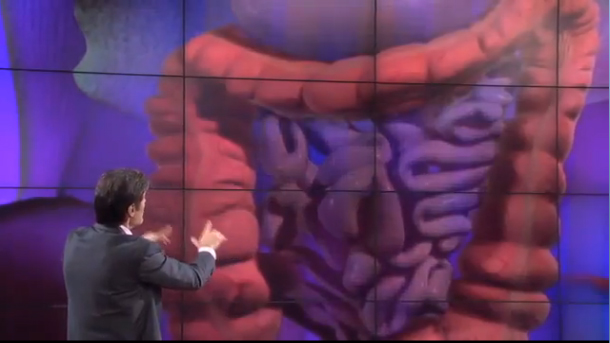
    Ok here’s one I totally relate to. Dr. Mehmet Oz, on his show, recently explained how hidden food allergies can make you gain up to 30lbs (20kg) a YEAR.

    food allergies make you fat!
    food allergies make you fat!

    Here’s Dr. Oz on his show explaining how, when faced with an undiagnosed allergy whereby the good bacteria cannot process the food (I think maybe he’s referring to the histamine degrading enzymes diamine oxidase, monoamine oxdase and HNMT) the body responds with inflammation that quickly distends the bowels, stomach and surrounding areas, adding up to 30 pounds (20 kilos) of weight EVERY YEAR.

    “Gulp”. Yes, I have experienced that first hand. I finally lost 35 kilos (77 lbs) over two years ago, as a result of going on a low histamine diet. I lost the equivalent of a small person!

    I attribute some of the weight loss to stopping the anti-histamines which were making me eat like a football player. A football player who has been wandering the dessert without food for two weeks, with only a bag of ganja to sustain him. Yeah, I was obsessed with food, allergenic food that was causing inflammation thanks to a lack of histamine-degrading diamine oxidase, monoamine oxidase and others. But even before then, my friends were always as baffled as I by my weight gain. Was I eating in secret? Was I sleep eating? These were valid questions but I wasn’t.

    I can’t say I haven’t become healthier overall since going low histamine, because I definitely have, but my calories aren’t that much lower now. I even eat more dessert now than I used to, which brings me back to how to pig out without gaining weight. Can you guess?? Yup, my first dessert book is finally out! The Low Histamine Dessert Book is gluten-free, milk-free and refined sugar free. All low histamine desserts have been tested out on my non-amine challenged friends…this is the good stuff that I break out for tea, after dinner treats and kiddie birthday parties! The moist chocolate (make it with carob or cacao, there are instructions for both) is perfect for birthdays, and no one has no come back for seconds of the delicious almond butter cupcakes. Though you can frost them with anything…

    You can download the low histamine dessert book here. If you’re dealing with histamine-induced weight gain from anti-histamines, histamine intolerance, histaminosis or mastocytosis, you might want to check out my Low Histamine Diamine Oxidase Support Cookbook first!

  • I have histamine intolerance, are my thyroid meds making me sick?

    I have histamine intolerance, are my thyroid meds making me sick?

    THE LOW HISTAMINE CHEF MAILBAG

    I found this particular email very interesting given that I’ve been misdiagnosed with thyroid issues twice in my life before being finally diagnosed with a histamine related disorder (high histamine/histamine intolerance/histaminosis). I refused meds the first time but gave in on the second. What a weird, crazy ride Levothyroxine sent me on. We’re talking severe mania here. Awake for days on end, racing thoughts, very productive behaviour till the crash. And boy was it spectacular!

    Medicine has sent me on so many Alice in Wonderland trips that I didn’t necessarily think there was a link when I began my investigations, but a little research turned up that not only do thyroid meds (synthetic thyroxine) raise histamine levels, they also lower diamine oxidase and monoamine oxidase, the enzymes responsible for metabolising histamine and tyramine (respectively).

    Circulating levels of 5-hydroxytryptamine (5HT), histamine, monoamine oxidase (MAO), histaminase, tri-iodothyronine (T3) and thyroxine (T4) were studied in L-thyroxine and carbimazole treated rats. Increased concentrations of 5-HT, histamine, glutamate, T3 and T4 were recorded in L-thyroxine-treated rats while plasma gamma-aminobutyric acid (GABA), MAO and histaminase levels were significantly decreased. The findings suggest that alterations in the metabolism of thyroid hormones may have a link with the altered metabolism of biogenic amines. Read the full study here.

    And another that mentions cardiac involvement:

    Thyroxine-induced supersensitivity to histamine and norepinephrine activation of cardiac phosphorylasea. The results indicate that thyroid hormone can enhance both histamine and norepinephrine-induced activation of cardiac phosphorylasea. Possible mechanisms of this interaction are discussed. Read the full study here.

    Thyroxin induced supersensitivity. Yes, that’s one way of referring to the hell that I went through on these meds. The next endocrinologist I consulted with called it “a sub clinical diagnosis” that should never have been tampered with. He did not in any way attribute my anxiety/mania symptoms to it. I asked. Sheesh. I’ve seen a lot of silly docs over the years. This might be something to keep in mind if you’ve been diagnosed with a histamine related disorder.

    Please consult your doc before even thinking about messing with your meds!

  • Histamine in Foods (list)

    Histamine in Foods (list)

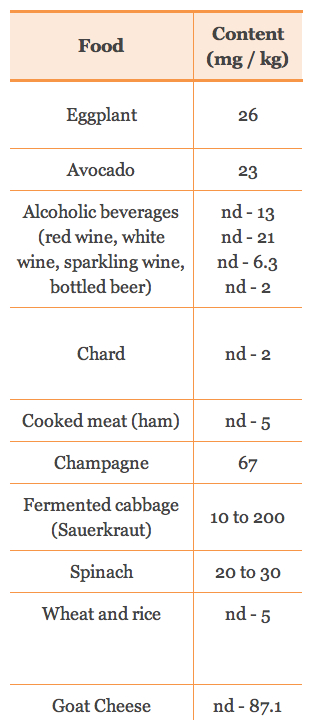
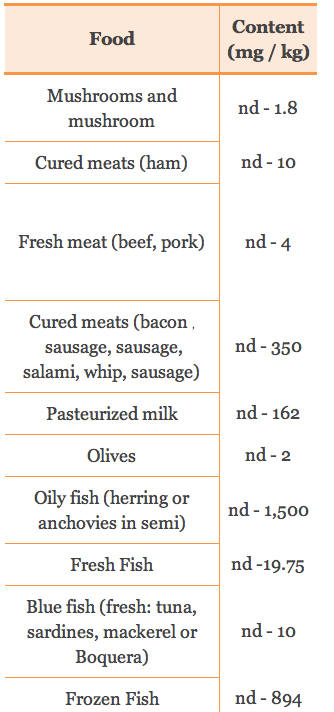
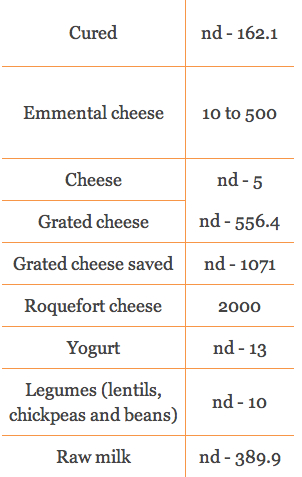
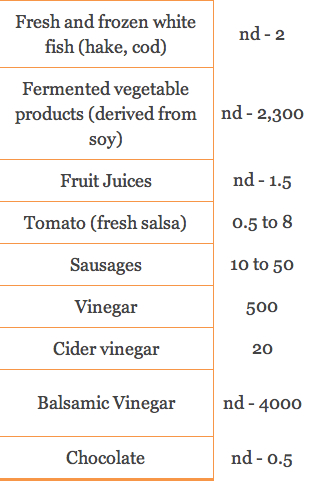
    This week I had the pleasure of meeting Barcelona-based nutritionist Adriana Duelo. She has kindly allowed me to re-blog an article that was originally part of her nutritional thesis. Adriana’s research is regularly submitted to the prestigious SPANISH SOCIETY OF DAO DEFICIENCY  (of which she is also a member). Something that quickly caught my eye on Adriana’s website was a breakdown of histamine content in some popular foods. The charts and the text below were translated from the spanish on her site (using Google Translate). Adriana herself speaks perfect English and will be sharing a few more interesting articles for release through my site in the coming weeks.

    Histamine levels in popular foods
    Histamine levels in popular foods

    Were you as surprised as I by some of these results? I was excited to see chocolate scoring so low – but we already know that cacao is more of a histamine liberator rather than being high in it. Alcohol, though not too high histamine, has the very unfortunate effect of blocking DAO (diamine oxidase) production. I don’t feel that bad when I drink (as long as I stick to tequila, rum or gin), but feel horrible for days afterwards when things I usually tolerate suddenly start bothering me.

    Histamine levels in popular foods
    Histamine levels in popular foods

    Milk certainly shocked me, though it’s not relevant to me as I don’t indulge in dairy. My home made (raw) chocolate bars are pure cacao and almond butter. Before you rush out and indulge in all the things you’ve thought were off the menu – please read the text below from Adriana’s site where she points out that not only is there some dispute about the histamine content of foods, but also at what concentration (mg per kilo) to avoid them.

    Histamine levels in popular foods
    Histamine levels in popular foods

    I personally don’t think people should be too strict. I’m only as strict as I have to be and most of the time chemicals bother me more than foods. I understand that histamine is necessary for almost all bodily functions, but that doesn’t give me permission to pig out on pizza and sausage. I’m much more likely to be found adding tomatoes to my salads and pineapple to a smoothie.

    Histamine levels in popular foods
    Histamine levels in popular foods

    Continued from Adriana Duelo’s site….

    FOODS RICH IN HISTAMINE

    The lack of enzymatic activity of Diamino oxidase (DAO) can cause different symptoms in our body that is manifested by several signs, as shown in an article published last month in this blog: ” Deficit of enzyme DAO . “

    First, is diagnosed when there is a lack of DAO activity with a blood test, the nutritionist can rate portal as a diet low in histamine and other amines . (These other amines also be taken into account, but I’ll leave for another article).

    This pattern is essential to prevent the onset of symptoms (one of the main, the migraine ), so you need to degrade histamine enzyme DAO, and but we have enough accumulated histamine can produce symptoms mentioned.

    From this diet, while nutritionist decide if, moreover, the supplies necessary for a DAO enzyme dietary supplement to help absorb the low histamine foods that we ingest.

    There is disagreement over the criteria to be followed for the consideration of whether or not a food rich in histamine. Some authors suggest avoiding those foods from the diet that have concentrations above 20 mg / kg, while others are much more demanding and consider foods with low amounts of histamine which contain less than 1 mg / kg. ‘ What is clear is that the dose symptomatological is much lower in patients with CAD deficit in sporadic histamine poisoning: 15-20mg and 150mg respectively. This demonstrates clearly important in a diet low in rate portal histamine deficit in patients with CAD.

    ADRIANA DUELO – Nutritionist.  

GET STARTED HEALING HISTAMINE

WHAT YOU NEED TO KNOW ABOUT HISTAMINE DELIVERED TO YOUR INBOX