Do you spend hours roaming the supermarket in search of a quick meal? Are you bored with eating the same five foods over and over? Would you like to whip up nutritious, low histamine recipes in 20 minutes (or less)? Then make sure you’re signed up to my newsletter for an exclusive 10% discount on the 60+ page Low Histamine ‘On the Go’ Cookbook!
The Low Histamine ‘On the Go’ Cookbook takes you on a whirlwind tour of Vietnam, Lebanon, Italy and India, via the good ol’ US of A. Eating healthy’s NEVER tasted so good, or this easy.
WHO AM I?
YASMINA YKELENSTAM – THE LOW HISTAMINE CHEF
The fridge and fields are my medicine cabinet. I’ve managed to withdraw from all pharmaceuticals including: anti-histamines, anti-anxiety meds, antidepressants, migraine, nausea, and dizziness meds. I’m now the happiest and healthiest I’ve ever been. I’ve learned to harness the positives that high histamine bestows (appetite suppression, higher metabolism, energy) and make them work for me!
Who the hell am I to give dietary advice? My cookbooks reflect the incredible amount of research into histamine and other biogenic amines in food that I’ve obsessively collected over the last two years since my histamine intolerance diagnosis. As a former journalist with over 10 years research and international news production experience for 60 Minutes, CNN and the BBC, I know how important the facts are. Not only do I back up each claim on my site with numerous studies, I’ve even used myself as a guinea pig, taking myself from washed up medical mystery to successful 21st century businesswoman.
I suffered daily migraines for many years. At some point I finally came to the conclusion that my headaches, which made me bang my head against the wall on occasion, had something to do with my diet. I was vindicated by the person who diagnosed me with histamine intolerance in London, and now by the growing number of studies clearly spelling out the allergy/histamine migraine link.
I cannot even begin to properly thank my lucky stars for curing me of this blight. I was about six weeks into the low histamine diet when I was able to trash the 600mg ibuprofen that I had been scarfing daily by the handful for most of my adult life. Not to mention the migraine injections. Youch! You truly haven’t experienced hell till you’ve had a constant migraine for six months.
Interestingly, in Spain (and France), it’s commonly acknowledged that migraines are caused by a lack of the histamine-lowering enzyme diamine oxidase (DAO). Seems that the US and UK are way behind the curve on this one.
But histamine can also cause migraine in “healthy” people:
Headache can be induced dose-dependently by histamine in healthy persons as well as in patients with migraine (53, 61). Histamine-induced headache is a vascular headache caused mainly by nitrate monoxide (62). Histamine releases endothelial nitrate monoxide upon stimulation of H1R, which is also expressed in the large intracranial arteries (63). In migraine patients, plasma histamine concentrations have been shown to be elevated both during headache attacks and during symptom-free periods. An increase in the number of brain mast cells is associated with pathologic conditions such as migraine, cluster headache, and multiple sclerosis (64). Many migraine patients have histamine intolerance evidenced by reduced DAO activity, triggering of headache by food rich in histamine (eg, long-ripened cheese or wine), and the alleviation of headache (ie, disappearance of symptoms) under a histamine-free diet (57, 65) and therapy with antihistamines (66). Maintz and Novak.
Meanwhile, for those of us presenting with histamine intolerance, histaminosis, mastocytosis or mast cell disorders…
This study colludes that: “Thus, the avoidance of allergic conditions in migraine patients may be a simple, helpful way for prophylaxis or their treatment.”
Although migraine affects about 15% of population and many studies have been performed to find the mechanism and a successful management, the physiopathology of migraine is still largely unknown. The possibility of an immunoglobulin E (IgE)-mediated allergic mechanism and the role of histamine remain controversial. The aim of the present study was to evaluate serum total IgE and histamine levels in migraine patients and the influence of allergy on them. Seventy patients (18-58 years) with migraine without aura were divided into two groups according to their history of allergy (60% with and 40% without allergy). Serum samples were collected during fasting without allowing any premedication during the two periods of attack and remission. There was a control group containing 45 healthy volunteers. Serum total IgE and histamine levels were measured by enzyme-linked immunosorbent assay and fluorimetric methods, respectively. Mean and standard errors of serum histamine (ng/ml) and total IgE (IU/ml) levels were found in the control group to be 48.16 +/- 2.70 and 38.31 +/- 3.20, in the migraine with allergy group 159.11 +/- 4.60 and 303.30 +/- 42.50 and in the migraine without allergy group 105.01 +/- 8.50 and 79.07 +/- 2.70, respectively. Total IgE levels in migraine with allergy group were found to be significantly (P < 0.0001) above that in the control and another group, suggesting an influence of an IgE-mediated mechanism on migraine. Although the plasma histamine levels, which were significantly elevated (P < 0.0001) in patients with migraine, both during headache and symptom-free periods, when compared with the control group, indicate that there is an increased susceptibility to histamine in allergic conditions, this molecule has also an unrelated role in migraine. The relationship between allergy and migraine can be based, in part, on an IgE-mediated mechanism, and histamine release plays an important role. Thus, the avoidance of allergic conditions in migraine patients may be a simple, helpful way for prophylaxis or their treatment.
Has a low histamine or tyramine diet helped your migraines? As always, I’d love to hear from you and don’t forget to check out my diamine oxidase boosting recipes.
You’ll find a collection of all liquid high nutrient antihistamine and anti-inflammatory rich recipes for days when my histamine bucket overflowed in the new Anti-Detox book.
The Anti-cookbook, while it doesn’t treat any conditions, due to its high nutrient, antihistamine and anti-inflammatory ingredients, has been instrumental in helping me feed myself on a limited diet. It features a six page list of antihistamine and anti-inflammatory foods. It comes in regular and Paleo.
The Low Oxalate Cookbook features antihistamine and anti-inflammatory rich recipes.
Don’t miss the Low Histamine Beauty Survival Guide for non-toxic beauty tips, the skinny on histamine releasing (mast cell degranulating) beauty ingredients, antihistamine and anti-inflammatory beauty alternatives and the top brands natural brands I’ve found.
If you’ve found this information useful I’d appreciate your support (at no extra cost to you!) – please check out my online store for your health foods, supplements, kitchen items and beauty product purchases. Affiliate sales through my online store go towards maintaining the website, funding travel to interviews and purchasing all the lovely foods for my free online recipes. You’ll find these items in the “Shop with us” drop down menu on my homepage.
Please don’t forget antihistamine, pain killing foods can still hurt us, so please always check with your doctor before adding new foods to your diet.
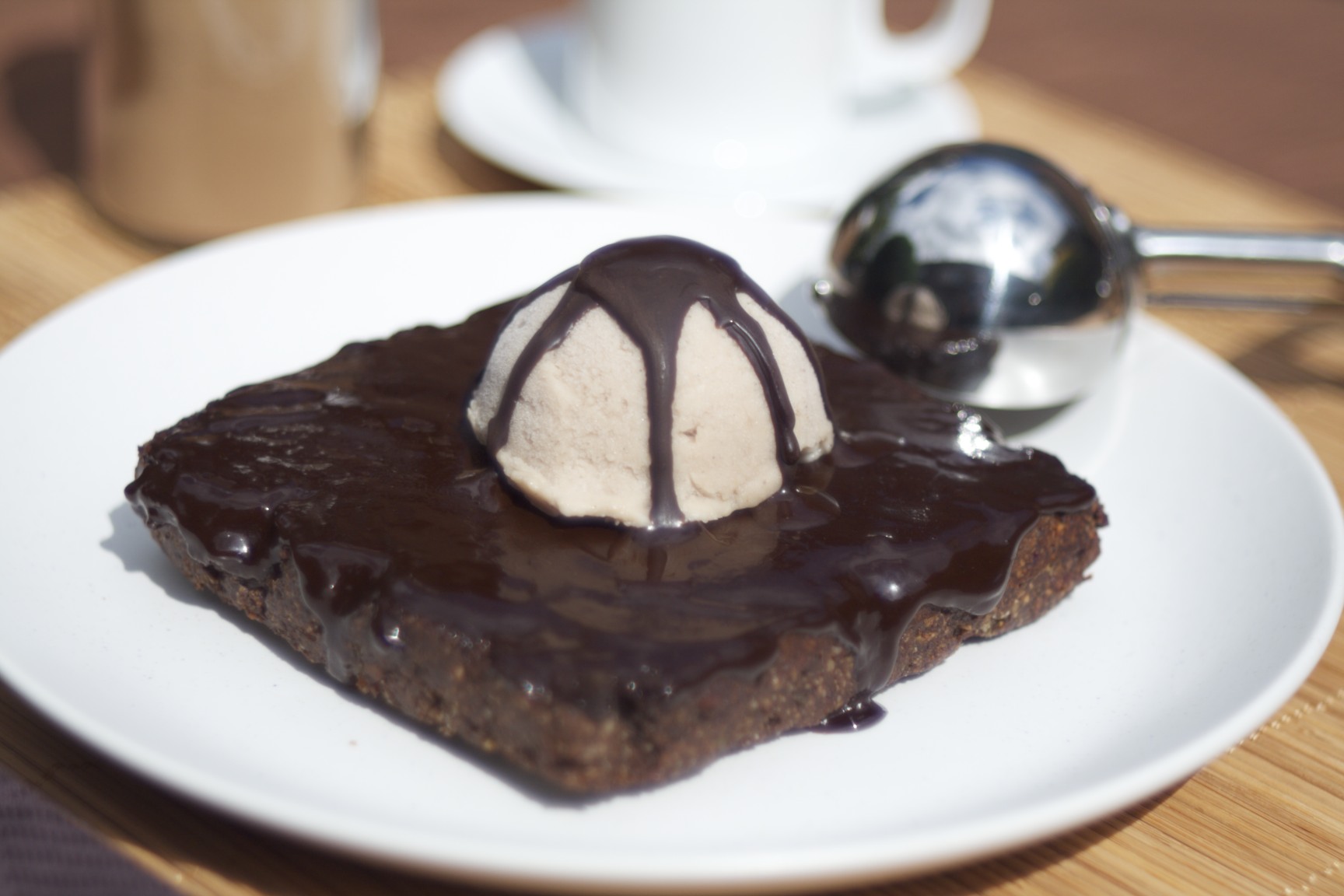
Low Histamine Brownie from The Low Histamine Dessert Book
What recipe would you absolutely love to have low histamine-i-fied? Had a good think?
Please post your requests on the Facebook Page and I’ll pick one to adapt. Keep in mind I’m not a miracle worker but I’m confident that I can whip up something low histamine and nutritious in its stead.
No major junk food requests please, unless you’re ready for a seriously healthy alternative…I obviously don’t consider dessert junk!
Tired of your man attributing every nuance of behavior to your menstrual cycle? Well, he could have a point, but you’d die before admitting it (yup that’s me I’m talking about).
Well here’s a little nugget to wave under his nose. It’s not the menstrual cycle, it’s the histamine stupid!
Japanese researchers have (re)confirmed that the histamine lowering diamine oxidase enzyme (DAO) is influenced by the menstrual cycle.
“Serum DAO levels were influenced by the menstrual cycle. Furthermore, our findings suggest that serum DAO levels should be interpreted cautiously in premenopausal women.”
This could explain why an allergy to food or environment seems to affect you differently each time, depending on where you are in your cycle and how much histamine-lowering diamine oxidase is available to you.
We know from Maintz and Novak’s seminal histamine study, that DAO is at its highest during pregnancy (500% – 1000% higher) so it’s a not unreasonable to conclude that lower hormones = lower diamine oxidase? BUT, that’s not right…
“estrogen can influence histamine action. A significant increase in weal and flare size in response to histamine has been observed to correspond to ovulation and peak estrogen concentrations (118).” Maintz and Novak.
This would seem to point to diamine oxidase being lower during ovulation – though we’re now not taking the potential involvement of monoamine oxidase and HNMT (the other enzymes involved in histamine metabolism) into account. Phew, I’ve confused myself. What is certain is that high histamine mimics the symptoms of anxiety so if you have a histamine-related disorder, certain times of the month are going to be tougher than others.
So, where does this leave your average diamine oxidase impaired lass?
In last week’s post “Histamine’s upside: I lost 35kgs in 6 months” I mentioned the role of histamine in appetite suppression. I recently had a conversation with a friend whose family member suffers from anorexia nervosa. I felt compelled to share that in my teens I too was thought to be anorexic. Food was hurting me so badly that I was starving myself to make it stop. It was more than just a physical reaction, because as we know, histamine is a neurotransmitter and as such affects mood. Food made me crazy, depressed, anxious and manic but I had no clue what was causing it all, despite my raging allergy symptoms.I’ve spent the last few days doing some more research into what’s behind my suddenly stable weight these last two years:H1 receptor antagonists like loratidine (claritin) and cetirizine (zyrtec) make you fat. It’s just a fact. It’s in the medical inserts of both and my own personal hellish experience on them confirms it. At my worst, when I was taking one and a half to two pills daily, I became obsessive about food – to the point of dreaming about eating. I would get up several times a night to rummage through the fridge and spend almost the entire day absolutely ravenous. I would graze all day long. The most incredible benefit of having stopped them is the relief from my food fantasies. I can now easily go half a day without once thinking about food. Is that abnormal? Seems I have H3 receptor stimulation to thank for it. Studies show that H3 receptor agonists (the opposite of antagonists like Claritin and Zyrtec) suppress appetite.
The H3 receptor is a pre-synaptic autoreceptor that inhibits the synthesis and release of histamine, and a heteroreceptor that inhibits other neurotransmitters such as serotonin (5-HT), noradrenaline (NA) and acetylcholine (ACh), which are also implicated in the regulation of food intake. Thus, the H3 receptor is in a prime position to regulate food intake, both through its control of histamine and its influence on other feeding pathways.Study
Translated into English: as a neurotransmitter, histamine affects the brain chemicals that control hunger!
Not just that, but the studies go on to say that histamine’s H3 receptor plays a part in how our body burns fat and what temperature your body runs at. I know from experience that my body runs very very hot when I’m in histamine overload. Interestingly I did some research into a diet pill I looked into in my teens – it worked by raising your body temperature.
Nowadays I don’t take any antihistamines, choosing instead to control my histamine level through diet (check out my low fat high nutrient low histamine DAO Support Cookbook) and a great quercetin supplement called Neuroprotek.
Next step would be finding out if certain foods affect just one of the histamine receptors, H3 in particular, in order to lose weight. Don’t worry, I’m on the case. Sign up to my newsletter for more info on this subject and others.
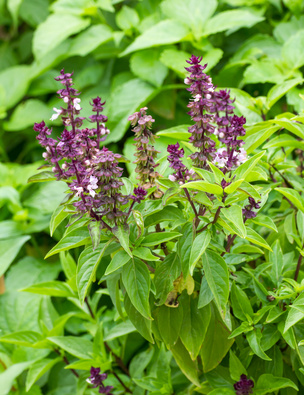
Not only is Holy Basil tasty in just about any Thai or Vietnamese dish – turns out it’s an anti-inflammatory, anti-histamine herb that’s as effective as Ranitidine/Zantac at treating H2 (histamine) induced ulcers, preventing mast cell degranulation and anaphylactic shock. How do’you like them apples?
I like Holy Basil a lot better than them apples…but just to clear up any potential confusion, Holy Basil is also known as Sweet Thai Basil or by it’s proper names: Ocimum tenuiflorum and Ocimum sanctum. (source: Wikipedia)
Holy Basil’s activity as an anti-histamine has been found to affect histamine’s H2 receptor, great news for those with histamine intolerance/histaminosis/mastocytosis/mast cell activation disorders with gastrointestinal complaints. I’d be interested to know if it’s anti-inflammatory effects are in part due to it’s high Vitamin K content. Don’t forget that Vitamin K (as I mentioned in this post), is a potent anti-inflammatory, is found in many foods like cauliflower, which is also high in Vitamin C.
“Basophils, mast cells, and their preformed de novo synthesized mediators, play a pivotal role in the pathogenesis of allergic disorders. These molecules are potent vasoactive and bronchoconstrictor agents and they modulate local immune responses and inflammatory cell infiltration (17-18).Immunoglobulin E (IgE)-mediated mast-cell stimulation is an important initial event in the development of type I allergic reactions such as asthma and atopic disorders. Clinical studies have found a close association between asthma and serum IgE levels, as well as IgE-dependent skin test reactivity to allergens. Antigen challenge, in sensitized animals, results in the degranulation of mast cells, which is an important feature of anaphylaxis. O. sanctum ethanolic extract showed marked protection against the mast cell degranulation following antigen challenge in sensitized animals. Mast cell stabilizing activity of extract may be attributed to the presence of anti-inflammatory mediator release, which is known for their mast cell stabilizing potential against antigen-antibody reaction and/or due to the suppression of IgE antibody production, which is responsible for degranulation mast cells. This antianaphylactic and antihistaminic effect may be due to the stabilization of the mast cell membrane, suppression of IgE, and inhibition of pathological effects induced by the release of inflammatory mediators in test extract treated animals.
Experimental results indicated the potent benefits of O. sanctum in the treatment of asthma and related conditions. The findings from various studies reveal that the antihistaminic and antianaphylactic activity of extract which is mainly due to its mast cell stabilizing potential, suppression of IgE, and inhibition of release of inflammatory mediators. Thus use of O. sanctum leaves proved the strong rationale behind the mentioned therapeutic activities [1].”
Holy Basil is as effective as Ranitidine/Zantac at treating H2 receptor induced GI complaints
“This study was conducted with the aim of comparing the efficacy of ocimum sanctum against gastric and duodenal ulcers. The hydralcoholic extract of the plant exhibited significant ulcer protective effect against gastric ulcers in pyloric ligated rats as well as against duodenal ulcers in histamine treated guinea pigs. In both these models of peptic ulcer, significant ulcer protective effects were observed with 100 mg/kg and 200 mg/kg of ocimum sanctum, which were comparable. These effects were also comparable with ranitidine which was used as the standard drug for comparison in both the models. The antiulcer activity of ocimum sanctum could be due to its antisecretory, anticholinergic or antihistaminergic properties. In view of this therapeutic potential, more studies are required to establish ocimum sanctum as a standard drug for peptic ulcer [2].”
They’re using high amounts of Holy Basil in the studies.What do you think? Would you consider adding Holy Basil to your diet as an anti-inflammatory or histamine blocker to help treat your histamine intolerance, histaminosis, mastocytosis or mast cell activation?
New studies show that aerobic exercise raises histamine levels. This isn’t news to me. When playing squash I have to take time outs to scratch myself silly and wait for the room to stop spinning. My man, now used to such bizarre-isms, plays against the wall for a while till it calms down again. I looked a lot crazier, to a much larger crowd, during our recent trapezing class! I’m sure I can thank adrenaline for that…What really interested me in this particular study is that they determined resistance training (weights/yoga) doesn’t raise histamine levels. They highlight how histamine released by aerobic exercise causes significant vasodilation (the widening of blood vessels in the body).This study ties in nicely with last week’s post about histamine being a vasoactive amine that can increase or decrease heart rate and induce anxiety-mimicking symptoms.
*Resistance training is any exercise that causes the muscles to contract against an external resistance with the expectation of increases in strength, tone, mass, and/or endurance. The external resistance can be dumbbells, rubber exercise tubing, your own body weight, bricks, bottles of water, or any other object that causes the muscles to contract. http://www.emedicinehealth.com/strength_training/article_em.htm
Interestingly, I meeting quite a few people who are being prescribed anti-histamines by their docs to deal with asthma/wheezing, abnormally high heart rate and passing out while exercising. Wouldn’t it be simpler to go on a low histamine diet? Probably not, but it would yield better (healthier) results!
What does this mean for your work out routine?
Aerobic exercise, like my current favorites kickboxing and squash, can significantly raise histamine levels in the body. The upside (because in my world there always is one) is that people pay good money for pharmaceutical vasodilators to lower their blood pressure. The downside (other than the spike in histamine for those of us with histaminosis/histamine intolerance), is the migraines that accompany vasodilation. I often get migraine like headaches if it’s too hot in yoga class.
Does this mean I shouldn’t exercise?
I’m asked this a lot, usually by life long couch potatoes!
What I take from this study is that it might be a good idea, if you’re suffering from histaminosis/histamine intolerance, to explore “non dynamic” exercise like weight training, or my perennial favourite, yoga. Speaking of which, did you know that one of the many studies on yoga showed that females who practiced yoga regularly had 41% lower stress markers than non-yogis? And significantly lower inflammation! Given that inflammation (caused by high histamine) is a huge concern to those of us with histaminosis/histamine intolerance, it’s food for thought the next time you’re crashed out on the sofa telling yourself that exercise is bad (while contemplating another root around the fridge).
So what’s a histamine-challenged gal to do?
We’ve all been there, but there’s really no time like the present for a full body/mind make over. Try waking up tomorrow and investing in a yoga mat and a $15 subscription to Yogaglo online classes. I promise you won’t regret it.
Don’t forget to sign up to my newsletter for free recipes and a 10% discount on ebooks…and why not check out how I keep my histamine level in check and stay anti-histamine free with my low histamine DAO Support Recipe Book and The Low Histamine Desserts Book?
Make-up allergies got you down? Have you considered that your beloved cosmetics are causing your histamine intolerance/chemical sensitivity/mastocytosis to flare up? If you’re on a low histamine diet but still suffering from make-up allergies, rashes and migraines, don’t despair, just bin the histamine raising dirty cosmetics! I did…
As the head of a successful digital agency in London, meeting and pitching clients is a daily requirement, and looking good is a must. It took me a long time to accept that cosmetics played a role in my declining health. But once I did, I worked hard to get out of the toxic mindset and figure out alternatives. In this ebook you’ll find the tips, tricks and coping strategies I’ve discovered, developed and employed these last two years, that helped me stand out from the crowd in one of the world’s most fashionable cities.
This book lists my favourite non-allergenic make-up, beauty, cleansing and styling products, home-made beauty product recipes and my personal beauty & make-up routine, as well as featuring a number of natural cosmetic video make-over tutorials and tips on everything from the perfect updo to how to have “the talk” with your hairdresser. You’ll find pages of resources and information on the biggest scams the make-up industry has perpetrated: hypoallergenic make up, organic labeling, carcinogenic ingredients and the hypocrisy of the pink ribbon campaigns.
Please sign up to the mailing list for a 10% discount on this and other books.
I’m usually on the fence about homeopathic remedies. I’d love to believe they work, but have yet to see the studies backing up their claims. Today however I found a study showing that a homeopathic remedy, Rhus Toxicodendron, “significantly reduces” carrageenan induced inflammation in rats. As I mentioned in another post, carrageenan (irish moss) is a seaweed derived food additive that is also frequently used in raw food desserts . 2016 update: sorry I should say that irish moss is used in raw foods, not carrageenan. Carrageenan is however found in many organic and natural foods as well as toothpaste.
The study authors note: “We found significant reductions compared to control in carrageenan-induced paw oedema, vascular permeability, writhing induced by intraperitoneal acetic acid and stress induced gastric lesions. Rhus tox in homeopathic dilution appears to interfere with inflammatory processes involving histamine, prostaglandins and other inflammatory mediators.” But that doesn’t mean upping the dose will get you more inflammation relief, on the contrary…”Administration of a single dose of Rhus tox 1h prior to injection of Carrageenan significantly reduced the paw inflammation in a dose dependent manner. Administration of multiple doses of Rhus tox increased the intensity of inflammation induced by Carrageenan, but this was not statistically significant. [1]
GET STARTED HEALING HISTAMINE
WHAT YOU NEED TO KNOW ABOUT HISTAMINE DELIVERED TO YOUR INBOX