Tag: anti-histamine foods

  • There’s more to the low histamine lifestyle than elimination!

    UPDATE: there is a ton of misinformation flying around on the internet. I’m constantly flummoxed by how people will attribute feeling awful to chickpeas or a banana rather than the taco bell, potato chips or chocolate they also had. I have yet to see any scientific study showing high histamine content in chickpeas. On the contrary, sprouted chickpeas are high in DAO, the histamine degrading enzyme. Even a high histamine food can lower or raise histamine, because different parts of the plant have varying properties. Raspberry fruit for example is listed as high histamine, but it also contains antihistamine quercetin. Raspberry leaves meanwhile are scientifically proven to have antihistamine properties.

    I have over the last few years called a number of labs to ask how histamine testing is done, and trying to get an accurate list made. But I haven’t been able to.

    You know why?

    Because according to the labs I have spoken with, it is impossible to measure histamine accurately in vegetables and fruits, because the level is too LOW for the tests to pick it up correctly. Most of the lists you find on the internet were put together by polling readers on what they feel is high histamine, or just copied from other incorrect sources.

    So here’s a tip, please stop worrying about whether chickpeas are high histamine, and a little more effort into avoiding processed foods full of gut damaging emulsifiers, stop roasting foods because this oxidising cooking method causes histamine release, and definitely do not go gunning after healthy foods while you’re still indulging in potato chips. Fixing a histamine problem is all about fixing the body as a whole, and eating junk food and worrying about the histamine status of vegetables, beans and pulses isn’t going to get us anywhere.

    All scientific references to the statements I just made can be found in this post.

    I spend a lot (a LOT) of time on the net chatting with people who are in various stages of eliminating high histamine foods. While going low histamine does mean binning a number of high histamine foods, eliminate too many and you could end up worse off in the long run. I know because I spent a number of years doing it myself. Cut cut cut was all I did, but I soon became reactive to the “safe” foods and I just wasn’t getting any better overall.

    A little dabbling in supplements showed me they’re (mostly) out. I just don’t tolerate them. So I eat them instead. I’m quite convinced that their magical qualities, in balance with other nutrients, renders them effective, thought I do realise I’d have to wear a trough around my neck to ingest a therapeutic dose (100mg per kilo??) of some herbs.

    Why this emphasis on nutrition rather than antihistamines? Well, antihistamines only work on one or two of the four (known) histamine receptors. Is that bad? Depends – do you enjoy eating obsessively till obesity? How about suffering from chronic infections, liver damage, heart failure or antihistamine toxicity? I personally don’t. Also, my experience on them was, ok, I can eat more – well – I don’t have a choice really – I’m desperate to fill every minute of my day stuffing my face (read is your anti-histamine making you fat). Oddly, if you eat enough, you’ll need more antihistamines! It’s a vicious cycle of filling your bucket, then instead of emptying it, fooling your body into thinking it’s ok to fill it even more.

    Take these examples:

    SWEET POTATO is high not only in quercetin, but also in histamine-lowering rutin, and has anti-ulcerative properties.  And if that’s not enough for you, sweet potato extract has recently excited scientists by suppressing the growth of stomach cancer, colon cancer and leukemia cells.

    OREGANO contains polyphenols with antihistamine properties.

    CHICKPEAS…amongst their many nutritional benefits, they’re a particularly good source of plant-based diamine oxidase (DAO – this is the histamine degrading enzyme)

    Recently, it has been found that DAO from pea seedlings shows higher activity compared to commercial porcine kidney diamine oxidase (PKAO).  Read the full study here.

  • Low histamine recipes in 20mins (or less!)

    Do you spend hours roaming the supermarket in search of a quick meal? Are you bored with eating the same five foods over and over? Would you like to whip up nutritious, low histamine recipes in 20 minutes (or less)? Then make sure you’re signed up to my  newsletter for an exclusive 10% discount on the 60+ page Low Histamine ‘On the Go’ Cookbook!

    The Low Histamine ‘On the Go’ Cookbook takes you on a whirlwind tour of Vietnam, Lebanon, Italy and India, via the good ol’ US of A. Eating healthy’s NEVER tasted so good, or this easy.

    WHO AM I?

    YASMINA YKELENSTAM – THE LOW HISTAMINE CHEF

    The fridge and fields are my medicine cabinet. I’ve managed to withdraw from all pharmaceuticals including: anti-histamines, anti-anxiety meds, antidepressants, migraine, nausea, and dizziness meds. I’m now the happiest and healthiest I’ve ever been. I’ve learned to harness the positives that high histamine bestows (appetite suppression, higher metabolism, energy) and make them work for me!

    Who the hell am I to give dietary advice? My cookbooks reflect the incredible amount of research into histamine and other biogenic amines in food that I’ve obsessively collected over the last two years since my histamine intolerance diagnosis. As a former journalist with over 10 years research and international news production experience for 60 Minutes, CNN and the BBC, I know how important the facts are. Not only do I back up each claim on my site with numerous studies, I’ve even used myself as a guinea pig, taking myself from washed up medical mystery to successful 21st century businesswoman.

    (more…)
  • The surprising link between allergies and migraines.

    The surprising link between allergies and migraines.

    woman with head on fire

    I suffered daily migraines for many years. At some point I finally came to the conclusion that my headaches, which made me bang my head against the wall on occasion, had something to do with my diet. I was vindicated by the person who diagnosed me with histamine intolerance in London, and now by the growing number of studies clearly spelling out the allergy/histamine migraine link.

    I cannot even begin to properly thank my lucky stars for curing me of this blight. I was about six weeks into the low histamine diet when I was able to trash the 600mg ibuprofen that I had been scarfing daily by the handful for most of my adult life. Not to mention the migraine injections. Youch! You truly haven’t experienced hell till you’ve had a constant migraine for six months.

    CLICK HERE TO LEARN HOW I WORKED OUT MY TRIGGERS AND FIGURED OUT A HISTAMINE-BALANCED DIET THAT WORKED FOR ME. 

    Interestingly, in Spain (and France), it’s commonly acknowledged that migraines are caused by a lack of the histamine-lowering enzyme diamine oxidase (DAO). Seems that the US and UK are way behind the curve on this one.

    But histamine can also cause migraine in “healthy” people:

    Headache can be induced dose-dependently by histamine in healthy persons as well as in patients with migraine (53, 61). Histamine-induced headache is a vascular headache caused mainly by nitrate monoxide (62). Histamine releases endothelial nitrate monoxide upon stimulation of H1R, which is also expressed in the large intracranial arteries (63). In migraine patients, plasma histamine concentrations have been shown to be elevated both during headache attacks and during symptom-free periods. An increase in the number of brain mast cells is associated with pathologic conditions such as migraine, cluster headache, and multiple sclerosis (64). Many migraine patients have histamine intolerance evidenced by reduced DAO activity, triggering of headache by food rich in histamine (eg, long-ripened cheese or wine), and the alleviation of headache (ie, disappearance of symptoms) under a histamine-free diet (57, 65) and therapy with antihistamines (66). Maintz and Novak.

    Meanwhile, for those of us presenting with histamine intolerance, histaminosis, mastocytosis or mast cell disorders…

    This study colludes that: “Thus, the avoidance of allergic conditions in migraine patients may be a simple, helpful way for prophylaxis or their treatment.”

    Although migraine affects about 15% of population and many studies have been performed to find the mechanism and a successful management, the physiopathology of migraine is still largely unknown. The possibility of an immunoglobulin E (IgE)-mediated allergic mechanism and the role of histamine remain controversial. The aim of the present study was to evaluate serum total IgE and histamine levels in migraine patients and the influence of allergy on them. Seventy patients (18-58 years) with migraine without aura were divided into two groups according to their history of allergy (60% with and 40% without allergy). Serum samples were collected during fasting without allowing any premedication during the two periods of attack and remission. There was a control group containing 45 healthy volunteers. Serum total IgE and histamine levels were measured by enzyme-linked immunosorbent assay and fluorimetric methods, respectively. Mean and standard errors of serum histamine (ng/ml) and total IgE (IU/ml) levels were found in the control group to be 48.16 +/- 2.70 and 38.31 +/- 3.20, in the migraine with allergy group 159.11 +/- 4.60 and 303.30 +/- 42.50 and in the migraine without allergy group 105.01 +/- 8.50 and 79.07 +/- 2.70, respectively. Total IgE levels in migraine with allergy group were found to be significantly (P < 0.0001) above that in the control and another group, suggesting an influence of an IgE-mediated mechanism on migraine. Although the plasma histamine levels, which were significantly elevated (P < 0.0001) in patients with migraine, both during headache and symptom-free periods, when compared with the control group, indicate that there is an increased susceptibility to histamine in allergic conditions, this molecule has also an unrelated role in migraine. The relationship between allergy and migraine can be based, in part, on an IgE-mediated mechanism, and histamine release plays an important role. Thus, the avoidance of allergic conditions in migraine patients may be a simple, helpful way for prophylaxis or their treatment.

    Has a low histamine or tyramine diet helped your migraines? As always, I’d love to hear from you and don’t forget to check out my diamine oxidase boosting recipes.

    You’ll find a collection of all liquid high nutrient antihistamine and anti-inflammatory rich recipes for days when my histamine bucket overflowed in the new Anti-Detox book. 

    The Anti-cookbook, while it doesn’t treat any conditions, due to its high nutrient, antihistamine and anti-inflammatory ingredients, has been instrumental in helping me feed myself on a limited diet. It features a six page list of antihistamine and anti-inflammatory foods. It comes in regular and Paleo. 

    The Low Oxalate Cookbook features antihistamine and anti-inflammatory rich recipes. 

    Don’t miss the Low Histamine Beauty Survival Guide for non-toxic beauty tips, the skinny on histamine releasing (mast cell degranulating) beauty ingredients, antihistamine and anti-inflammatory beauty alternatives and the top brands natural brands I’ve found.

    Take a peek at my other low histamine and antihistamine cookbooks for more high nutrient recipes.

    If you’ve found this information useful I’d appreciate your support (at no extra cost to you!) – please check out my online store for your health foods, supplements, kitchen items and beauty product purchases. Affiliate sales through my online store go towards maintaining the website, funding travel to interviews and purchasing all the lovely foods for my free online recipes. You’ll find these items in the “Shop with us” drop down menu on my homepage.  

    Please don’t forget antihistamine, pain killing foods can still hurt us, so please always check with your doctor before adding new foods to your diet. 

  • Holy Basil! Anti-inflammatory and anti-histamine superstar

    Holy Basil! Anti-inflammatory and anti-histamine superstar

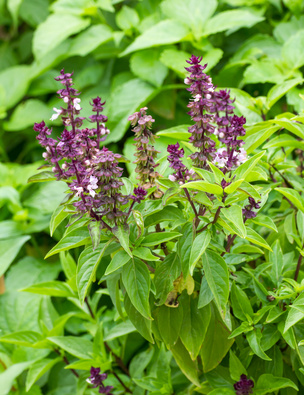
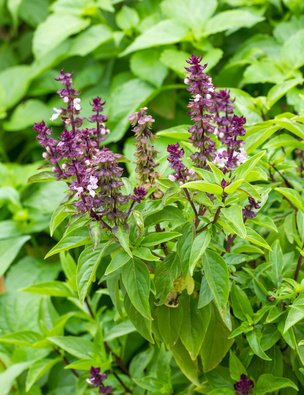
    Basil flowers in the garden

    Not only is Holy Basil tasty in just about any Thai or Vietnamese dish – turns out it’s an anti-inflammatory, anti-histamine herb that’s as effective as Ranitidine/Zantac at treating H2 (histamine) induced ulcers, preventing mast cell degranulation and anaphylactic shock. How do’you like them apples?

    I like Holy Basil a lot better than them apples…but just to clear up any potential confusion, Holy Basil is also known as Sweet Thai Basil or by it’s proper names: Ocimum tenuiflorum and Ocimum sanctum. (source: Wikipedia)

    Holy Basil’s activity as an anti-histamine has been found to affect histamine’s H2 receptor, great news for those with histamine intolerance/histaminosis/mastocytosis/mast cell activation disorders with gastrointestinal complaints. I’d be interested to know if it’s anti-inflammatory effects are in part due to it’s high Vitamin K content. Don’t forget that Vitamin K (as I mentioned in this post), is a potent anti-inflammatory, is found in many foods like cauliflower, which is also high in Vitamin C.

    Holy Basil prevents mast cell degranulation, helping treat allergic disorders

    “Basophils, mast cells, and their preformed de novo synthesized mediators, play a pivotal role in the pathogenesis of allergic disorders. These molecules are potent vasoactive and bronchoconstrictor agents and they modulate local immune responses and inflammatory cell infiltration (17-18).Immunoglobulin E (IgE)-mediated mast-cell stimulation is an important initial event in the development of type I allergic reactions such as asthma and atopic disorders. Clinical studies have found a close association between asthma and serum IgE levels, as well as IgE-dependent skin test reactivity to allergens. Antigen challenge, in sensitized animals, results in the degranulation of mast cells, which is an important feature of anaphylaxis. O. sanctum ethanolic extract showed marked protection against the mast cell degranulation following antigen challenge in sensitized animals. Mast cell stabilizing activity of extract may be attributed to the presence of anti-inflammatory mediator release, which is known for their mast cell stabilizing potential against antigen-antibody reaction and/or due to the suppression of IgE antibody production, which is responsible for degranulation mast cells. This antianaphylactic and antihistaminic effect may be due to the stabilization of the mast cell membrane, suppression of IgE, and inhibition of pathological effects induced by the release of inflammatory mediators in test extract treated animals.

    Experimental results indicated the potent benefits of O. sanctum in the treatment of asthma and related conditions. The findings from various studies reveal that the antihistaminic and antianaphylactic activity of extract which is mainly due to its mast cell stabilizing potential, suppression of IgE, and inhibition of release of inflammatory mediators. Thus use of O. sanctum leaves proved the strong rationale behind the mentioned therapeutic activities [1].”

    Holy Basil is as effective as Ranitidine/Zantac at treating H2 receptor induced GI complaints

    “This study was conducted with the aim of comparing the efficacy of ocimum sanctum against gastric and duodenal ulcers. The hydralcoholic extract of the plant exhibited significant ulcer protective effect against gastric ulcers in pyloric ligated rats as well as against duodenal ulcers in histamine treated guinea pigs. In both these models of peptic ulcer, significant ulcer protective effects were observed with 100 mg/kg and 200 mg/kg of ocimum sanctum, which were comparable. These effects were also comparable with ranitidine which was used as the standard drug for comparison in both the models. The antiulcer activity of ocimum sanctum could be due to its antisecretory, anticholinergic or antihistaminergic properties. In view of this therapeutic potential, more studies are required to establish ocimum sanctum as a standard drug for peptic ulcer [2].”

    They’re using high amounts of Holy Basil in the studies.What do you think? Would you consider adding Holy Basil to your diet as an anti-inflammatory or histamine blocker to help treat your histamine intolerance, histaminosis, mastocytosis or mast cell activation?

    WONDERING HERE TO START? HERE’S A FOUR WEEK COURSE & MEAL PLAN TO TAKE THE STRESS OUT OF HEALING HISTAMINE

    Please don’t forget antihistamine, pain killing foods can still hurt us, so please always check with your doctor before adding new foods to your diet. 

    ————REFERENCES—————

    [1] http://www.ispub.com/journal/the-internet-journal-of-pharmacology/volume-7-number-1/pharmacological-basis-for-antianaphylactic-antihistaminic-and-mast-cell-stabilization-activity-of-ocimum-sanctum.html

    [2] http://www.ispub.com/journal/the-internet-journal-of-gastroenterology/volume-11-number-1/comparison-of-efficacy-of-ocimum-sanctum-against-gastric-and-duodenal-ulcers-in-animals.html


  • Dr. Oz: “inflammation is waging a war on our bodies”

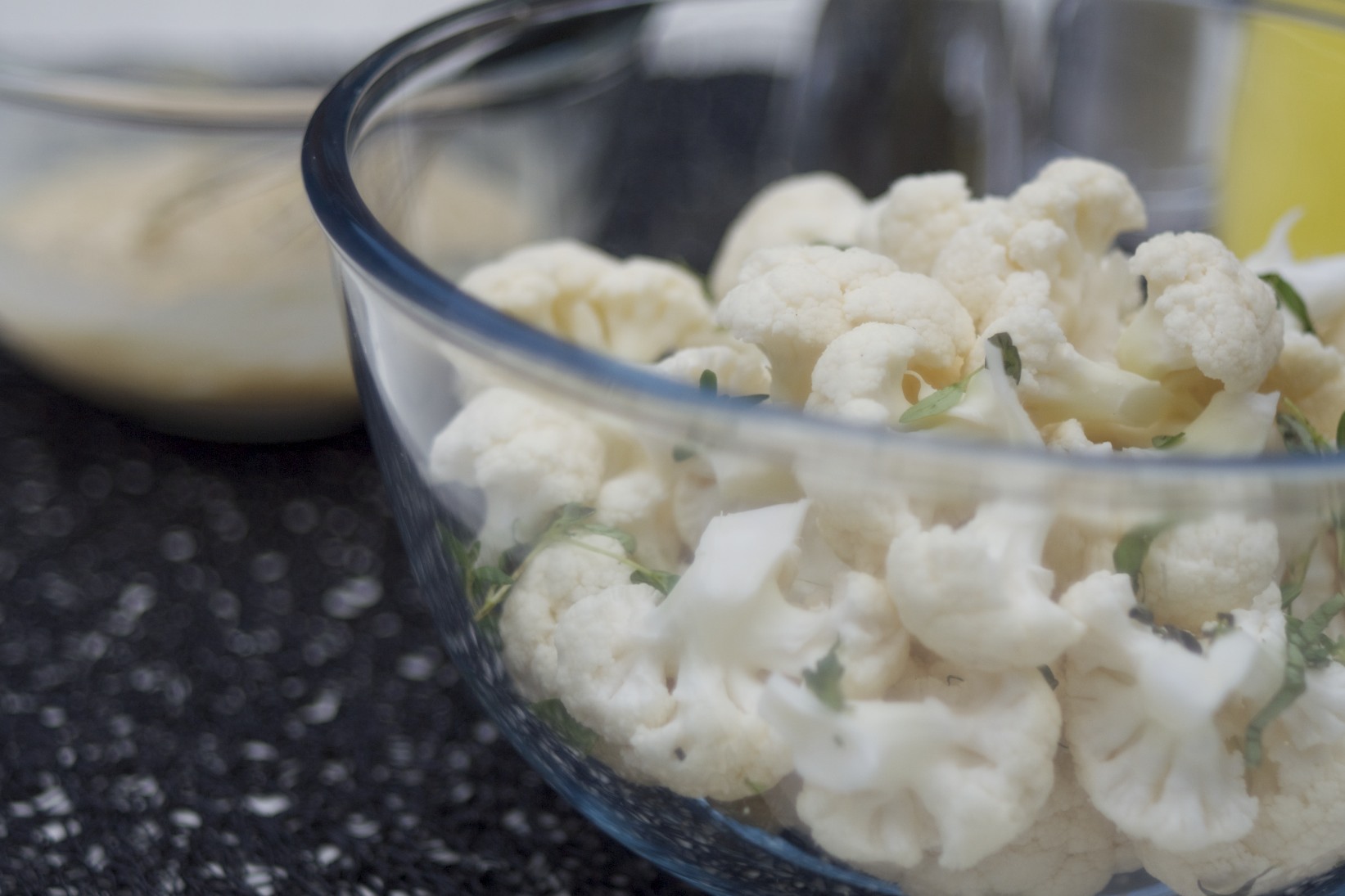
    Cauliflower
    Anti-inflammatory superstar cauliflower

    AN INVISIBLE WAR

    Dr. Oz calls inflammation an “invisible civil war raging in your body. Undetected it can cause heart attacks, stroke and cancer.” According to him, the problem begins when inflammation does not resolve following its role in healing an injury, causing your immune system to go haywire, turning your best friend into your worst enemy.  This ties in to all my reading of this last year. Yes, inflammation is a serious concern when it unnecessarily stokes the immune system into over reacting to everything. Inflammation isn’t just dangerous to those of us with inflammation-induding histamine related disorders like histamine intolerance, histaminosis, mastocytosis and mast cell activation, it’s relevant to anyone with an interest in minimising their cancer, stroke and heart attack risk.

    CONDITIONS LINKED TO INFLAMMATION

    CANCER

    HEART ATTACK AND STROKE

    PRE-ECLAMPSIA – excessive maternal inflammatory response to pregnancy…(here’s a study on histamine in pregnancy)

    And that’s where the low histamine diet comes in, at least for me. Histamine causes inflammation. Controlling its intake, especially when already dealing with a histamine-related issue, is a good first step, as is adding more anti-inflammatory foods to the diet. A word of caution here: just because something is anti-inflammatory doesn’t mean that you might not have a histamine reaction to it. We’re talking a straight up classic histamine/IgE mediate allergy or food intolerance here.

    So, now you’re aware of why you need to be fighting inflammation, but what’s the best way to do it? I take a three pronged approach: diet (check out my low histamine cookbooks for recipes), supplements and lifestyle.

    MY TOP ANTI-HISTAMINE & ANTI-INFLAMMATORY FOODS

    CAULIFLOWER – my favourite recipe.

    Vitamin K status, as measured by plasma phylloquinone and phylloquinone intake, was significantly inversely associated with the overall inflammation index, which represented the sum of the normalized deviates of the individual markers. Secondary analyses of the individual markers demonstrated significant (p<0.01) associations with 5 of the 14 markers. A two-fold higher plasma phylloquinone concentration was associated with 15 percent lower CD40 ligand, three percent lower intracellular adhesion molecule-1, eight percent lower interleukin-6, four percent lower serum osteoprotegerin, and four percent lower tumor necrosis factor receptor-2 concentrations in multivariable-adjusted analyses. Usual dietary phylloquinone intake was also significantly (p=0.01) inversely associated with C-reactive protein, fibrinogen, interleukin-6, lipoprotein phospholipase A2 mass, myeloperoxidase, osteoprotegerin, and urinary isoprostanes.

    WATERCRESS

    Histamine release inhibitors in watercress (Nasturtium officinale) were isolated using a monitoring system with antigen-stimulated RBL-2H3 cells. Of the 15 compounds isolated, flavonols and megastigmanes significantly inhibited histamine release. Two flavonols, 3-O-sophorosides of rhamnetin and rhamnazin, were new compounds. To investigate the inhibitory mechanism, the effects of rhamnetin, rhamnetin 3-O-sophoroside and an isolated megastigmane glucoside on the increase in the intracellular free calcium concentration were examined at a concentration providing 60% inhibition of histamine release. The results suggest that these compounds did not affect the calcium influx at that concentration. The structure-activity relationships of the megastigmanes on histamine release were also investigated.

    QUINCE

    We examined the effect of a crude hot-water extract (HW) of quince (Cydonia oblonga Miller) fruit on type I allergy in vivo and in vitro. The oral administration of the quince HW-added diet to NC/Nga mice for 63 d showed a significant decrease in the development of atopic dermatitis-like skin lesions under conventional conditions. The concentration of IgE in the serum collected from mice fed with quince HW was also lowered in a dose-dependent manner. Moreover, we found that quince HW inhibited the release of beta-hexosaminidase from rat basophilic leukemia cell line RBL-2H3 after a 24-h treatment. The quince HW fraction of less than 3 kDa reduced the mRNA expression of the high-affinity IgE receptor (FcepsilonRI) gamma subunit. These results suggest that quince HW had an inhibitory effect on type I allergy by suppressing IgE production and IgE-mediated degranulation.

    GREEN TEA

    The human body is made of some 250 different cell types. From them, only a small subset of cell types is able to produce histamine. They include some neurons, enterochromaffin-like cells, gastrin-containing cells, mast cells, basophils, and monocytes/macrophages, among others. In spite of the reduced number of these histamine-producing cell types, they are involved in very different physiological processes. Their deregulation is related with many highly prevalent, as well as emergent and rare diseases, mainly those described as inflammation-dependent pathologies, including mastocytosis, basophilic leukemia, gastric ulcer, Crohn disease, and other inflammatory bowel diseases. Furthermore, oncogenic transformation switches some non-histamine-producing cells to a histamine producing phenotype. This is the case of melanoma, small cell lung carcinoma, and several types of neuroendocrine tumors. The bioactive compound epigallocatechin-3-gallate (EGCG), a major component of green tea, has been shown to target histamine-producing cells producing great alterations in their behavior, with relevant effects on their proliferative potential, as well as their adhesion, migration, and invasion potentials. In fact, EGCG has been shown to have potent anti-inflammatory, anti-tumoral, and anti-angiogenic effects and to be a potent inhibitor of the histamine-producing enzyme, histidine decarboxylase. Herein, we review the many specific effects of EGCG on concrete molecular targets of histamine-producing cells and discuss the relevance of these data to support the potential therapeutic interest of this compound to treat inflammation-dependent diseases.

    CORIANDER

    Ethanolic extract of fruits of Coriandrum sativum, leaves of Datura stramonium and Azadirachta indica showed a significant (p<0.01) inhibition of carrageenan induced rat paw edema and the results are presented in table -2. The extract of C. sativum, D. stramonium and A. indica showed 40.81%, 39.43% and 46.47% edema inhibition respectively after third hour at 200 mg/kg dose. Maximum activity was found at 3.0 hr intervals with each dose. Among these plant Azadirachta indica showed maximum anti-inflammatory activity every hour. The inflammation induced by carrageenan is biphasic in nature. The initial phase of edema has been attributed to the release of histamine and serotonin; the edema maintaining during the plateaue phase, attribute to kinin like substances and the second accelerating phase of swelling is attributed to the release of prostaglandin [12, 13]. Since the extract of C. sativum, D. stramonium and A. indica inhibited the carrageenan induced edema that involves release of histamine and serotonin in the first phase; hence the inhibitory effect of the extracts could be partly due to inhibition of mast cell mediator release.

    LIFESTYLE

    Yoga and meditation help you fight inflammation.

    SUPPLEMENTS

    Dr. Theoharides’ Neuroprotek quercetin supplement is not only the cleanest, but also the most effective that I have come across in years. I will soon be selling it through my site, in the meantime please visit my good friend’s website to order.

    You’ll find the Dr. Oz inflammation episode here.

GET STARTED HEALING HISTAMINE

WHAT YOU NEED TO KNOW ABOUT HISTAMINE DELIVERED TO YOUR INBOX