

Category: Healing Histamine

  • 4 Things You Should Do Every Morning (When You Have Histamine Intolerance)

    4 Things You Should Do Every Morning (When You Have Histamine Intolerance)

    People often ask how to get started addressing their histamine intolerance. How you begin each day can make a huge difference in how you’ll feel the rest of the day. Start your day off right by following the suggestions below.

    DON’T RUSH TO BREAKFAST

    Unless you have a pre-existing condition or hypoglycemia, light fasting might be an excellent approach to fighting histamine inflammation. Research shows that up to forty percent of faulty white blood cells (including mast cells, where histamine lives in the body) can be regenerated in just five days of calorie restriction.

    Intermittent fasting has gained huge popularity in recent years. There are a number of variations, but prolonging the time between dinner and the next morning’s breakfast (break-fast) is a great way to incorporate fasting daily.

    There are many differing views on the ideal eating window, but don’t get extreme. Stress releases histamine after all…

    For example, you finish eating dinner by 8 pm and don’t eat breakfast until 8am (a nice gentle 12 hour fast).

    Or you could try extending the window one hour at a time till reaching your ideal window. 

    Of course, you can also stop eating earlier in the evening (by 6 pm, for example), and then eat earlier in the day (10 am or noon).

    To learn more about fasting’s effects on histamine, check out the following posts:

    START WITH AN ANTIHISTAMINE TEA

    Since you’re fasting in the morning and not taking in any calories, why not start with a therapeutic (and delicious) tea with antihistamine properties? Tea is a wonderfully relaxing way to start the day. In fact, studies have shown that just holding a warm mug in your hands tends to make you see the world in a more positive light.

    Holy Basil or “Tulsi” tea is a great one to start with. It is highly antihistamine and can be found in quite a number of different blends and flavours. Just be sure the herbs it’s blended with aren’t a problem for you (e.g. cinnamon and nutmeg in a tulsi chai).

    While black and green teas might be problematic for some people, white tea, made from the same plant (plus, lower in caffeine and not fermented), may be a good option. Or try the blossom of the tea plant. Read the post here.

    For some other ideas on antihistamine teas and tisanes (and a few recipes), read these posts:

    BRUSH YOUR TEETH

    This might seem a little obvious, but there’s been an interesting amount of research finding that people think it’s ok to brush just once a day. There’s a reason why dental infections have been linked to heart disease: Inflammation. And you know chronic inflammation is an issue when it comes to histamine intolerance. Oral infections lead to more histamine release, and that’s not good for us at all.

    Gingivitis, or inflammation of the gums, has been directly linked to mast cell activation and histamine release. So, brush your teeth; floss your teeth. Make sure you take good care of your oral microbiome by eating whole foods and avoiding sugar.

    Learn more about the connection between your oral health and histamine by checking out my interview with Dr. Steven Lin, bestselling author of the Dental Diet. 
    GET STRESS OUT OF THE WAY EARLY

    Don’t wait until the stresses of the day add up and cause symptoms or reactions to act. Remember the inflammation bucket concept. You want to start with an empty bucket at the beginning of the day so that as daily stressors, triggers, and exposures accumulate, you have plenty of leeway for into the evening.

    Don’t let your inflammation bucket fill up by noon. Instead, start your morning with yoga or some type of breathing, meditation or relaxation practice so that you lower your inflammation and histamine response right at the beginning of the day. You could even keep a daily gratitude journal that you write in while sipping your tea. This is a great way to keep your brain focused on positivity rather than in fear/stress mode.

    ———REFERENCES———

    Marinac, C. R., Sears, D. D., Natarajan, L., Gallo, L. C., Breen, C. I., & Patterson, R. E. (2015). Frequency and Circadian Timing of Eating May Influence Biomarkers of Inflammation and Insulin Resistance Associated with Breast Cancer Risk. PLoS ONE, 10(8), e0136240. http://doi.org/10.1371/journal.pone.0136240

    Williams, L. E., & Bargh, J. A. (2008). Experiencing Physical Warmth Promotes Interpersonal Warmth. Science (New York, N.Y.), 322(5901), 606–607. http://doi.org/10.1126/science.1162548
  • Histamine Involved In Diabetes & Kidney Disease

    Histamine Involved In Diabetes & Kidney Disease

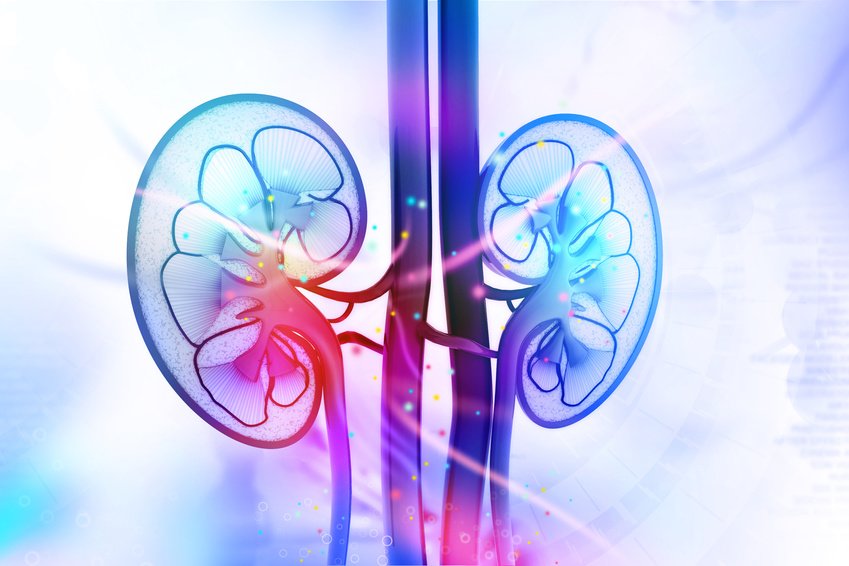
    cross section of kidney's depicting kidneys diabetes and histamine

    We already know diabetes and histamine are linked. And along with diabetes often comes diabetic nephropathy, the kidney damage that often occurs as a side effect of chronically elevated blood sugar. While searching for solutions, scientists came across the histamine H3 and H4 receptors as potential targets for therapies.

    HOW DIABETES IS LINKED TO HISTAMINE

    In both human and animal studies, diabetics have higher levels of histamine in the blood and tissues. In animal studies, diabetes has been shown to cause a decrease in the histamine-degrading enzyme diamine oxidase (DAO), resulting in increased histamine levels.

    Because the histamine 3 receptor is expressed in key areas of the central nervous system (CNS), scientists have been seeking out blockers for this receptor that may be able to treat cognitive disorders, sleep disorders, and manifestations of metabolic syndrome, like obesity and diabetes.

    In fact, blocking the histamine 3 receptor (H3) was shown to reduce blood sugar levels in diabetic patients.

    The histamine 4 receptor is primarily expressed in the cells and tissues of the immune system, which indicates a potential for blockers that help with immune-related disorders, such as allergies and asthma.  

    While a histamine 4 receptor blocker did not affect blood sugar levels in studies, it was protective against diabetic nephropathy by way of its positive effects on kidney function directly and on the immune system.

    HOW TO MEDIATE HISTAMINE’S EFFECT

    To lessen the effect of histamine on a diabetic patient, it would be wise to go at it from both directions: address the histamine intolerance by lowering histamine levels and address the diabetes by balancing out blood glucose levels.

    Beyond following a low histamine diet, as outlined on this site, it would also be prudent to increase levels of diamine oxidase (DAO) to help lower histamine. To learn how to do so through food and nutrients, read my post How To Naturally Boost Production Of The Histamine Degrading DAO Enzyme.

    Additionally, you might want to ask your doctor about a nutrient-dense, lower carbohydrate diet. This means being highly aware of the (even natural) sugars in your diet — perhaps even leaving the carbs for later in the day, like for dinner, to avoid the constant blood sugar peaks and valleys throughout the day.

    At a loss for what to make for dinner? (Or breakfast or lunch, for that matter?) Check out one of my Anti-Cooks (regular or Paleo) for some great recipe ideas.

    There are also specific antihistamine foods that also help balance out blood sugar levels. Some great options are listed below.

    BENEFICIAL FOODS WITH ANTIHISTAMINE PROPERTIES

    These foods, herbs, and spices not only have anti-inflammatory and/or anti-histamine properties, but are also blood sugar balancing.

    Apple cider vinegar (the only acceptable vinegar for histamine intolerance; helps balance blood sugar)

    Bitter melon

    Cherries (especially tart cherries)

    Fenugreek

    Ginseng

    Garlic

    Ginger

    Oregano

    Prickly Pear/Nopales cactus (which is also highly anti-inflammatory and antihistamine)

    Sage

    Additionally, check out the flavonoids found in all of my recipes in the 28-day histamine reset.

    WHAT DOES PRE-DIABETES LOOK LIKE?

    Prediabetes is what you’re diagnosed with when you’re on your way toward diabetes, but not there yet.

    Prediabetes is determined by blood glucose or A1C levels—which reflect average blood glucose levels over the last 3 months—which are higher than normal but not high enough for a diagnosis of diabetes. There may not be other signs or symptoms. However, some risk factors for the condition include being overweight, having high blood pressure, and an HDL cholesterol level below 35 mg/dL or a triglyceride level above 250 mg/dL.

    A diagnosis of pre-diabetes means it’s time to get serious about your diet and lifestyle. There’s still hope for turning things around!

    PREVENTING DIABETES

    It’s certainly possible to prevent diabetes (unless, of course, you were born with it). Diet is paramount. A disease of blood sugar imbalance certainly calls for a diet that supports balanced blood glucose levels.

    A systematic review study published in 2013 in the American Journal of Clinical Nutrition analyzed several diets used as a therapy for diabetes. After assessing the data from 20 Randomized Controlled Trials, the authors concluded that Low-carbohydrate, Low-Glycemic Index, Mediterranean, and High-Protein diets were all effective in lowering risk factors in diabetics and recommended following one of these diets to help control diabetes.

    Exercise and weight loss also go a long way in helping to improve insulin sensitivity and lower your risk of developing diabetes.

    So! Get outside and get some exercise AND get in the kitchen and embrace your inner Julia Child (or Jacques Pepin). Both histamine and diabetes can be addressed at once, starting in the produce section of your local grocery store.

    To help you kick off your new healthy lifestyle, I’ve created my Histamine Reset, with a kitchen detox, food ideas, recipes, and anti-stress meditation ideas. Start lowering your inflammation bucket and improving your health and energy levels today. Your body will breathe a sigh of relief!

    ——— REFERENCES ————

    Fogel, W. A., Chmielecki, C., Grałek, M., & Maslinski, C. (1990). Histamine metabolism in diabetic rats. Agents & Actions, 30(1-2), 243–246. Retrieved from: https://link.springer.com/article/10.1007/BF01969050

    Gill, D. S., Barradas, M. A., Fonseca, V. A., Dandona, P. (1989). Plasma histamine concentrations are elevated in patients with diabetes mellitus and peripheral vascular disease. Metabolism, 38(3), 243-247. Retrieved from: https://www.ncbi.nlm.nih.gov/pubmed/2918844

    Paoli, A., Rubini, A., Volek, J. S., & Grimaldi, K. A. (2013). Beyond weight loss: a review of the therapeutic uses of very-low-carbohydrate (ketogenic) diets. European Journal of Clinical Nutrition, 67(8), 789–796. http://doi.org/10.1038/ejcn.2013.116

    Pini, A. et. al. (2018). Histamine H4 receptor antagonism prevents the progression of diabetic nephropathy in male DBA2/J mice. Pharmacological Research, 128, 18-28. https://doi.org/10.1016/j.phrs.2018.01.002

    Rao, A. U., Shao, N., Aslanian, R. G., Chan, T.-Y., Degrado, S. J., Wang, L., … Palani, A. (2012). Discovery of a Potent Thiadiazole Class of Histamine H3 Receptor Antagonist for the Treatment of Diabetes. ACS Medicinal Chemistry Letters, 3(3), 198–202. http://doi.org/10.1021/ml200250t

GET STARTED HEALING HISTAMINE

WHAT YOU NEED TO KNOW ABOUT HISTAMINE DELIVERED TO YOUR INBOX