
One of the most frustrating histamine-related symptoms for a lot of people is the associated weight problems. And this can be either an inability to lose weight OR and inability to gain weight. If this is an issue for you, don’t despair. Certain whole foods may help.
HOW HISTAMINE IMPACTS METABOLISM
Metabolism is controlled by the brain, particularly in a region of the brain called the hypothalamus. When histamine enters the hypothalamus, it activates several receptors — as though turning switches on or off. Some of those switches have to do with body heat, energy output, and feelings of either hunger or satiety.
Depending on a number of other factors, including genetics, level of inflammation in the body, and other coexisting conditions, elevated histamine can lead to weight problems. This can come in the form of excess weight or in difficulty keeping weight on.
In general, histamine promotes weight loss. This is due to the stimulation of histamine 1 receptors in the brain which have also been shown to suppress food intake. Animal studies have shown that low levels of histamine in the brain are associated with obesity. So, histamine can help keep us thin.
On the other hand, high levels of inflammation (very common with histamine intolerance) can contribute to weight gain. There are a number of different biological pathways in the body by which inflammation leads to weight gain. A couple of these include increased Corticotropin Releasing Hormone (CRH — a stress hormone) and increased glutamate (a stimulatory neurotransmitter in the brain).
CRH causes mast cells to release more histamine, and the cycle continues. Glutamate (which also comes as the food additive, Monosodium Glutamate = MSG) stimulates the appetite and causes weight gain. And there are many other pathways in the body that link inflammation to weight gain.
For more of my thoughts (and experiences) regarding the histamine, inflammation, and weight connection, read my posts, Mast Cells, Histamine, Inflammation And Obesity and Histamine’s Upside: I Lost 35kg (77 lbs) In 6 Months!
WHAT CAN WE DO ABOUT IT?
When the body is in balance, we maintain a healthy weight easily. Since inflammation and histamine levels are major reasons for the histamine intolerant person’s imbalance, these two things are a good place to start.
To address inflammation, switch to a whole foods, nutrient-dense, anti-inflammatory diet and do what you need to do to get your stress under control. For me, the stress component was just as important as the food component. To learn how I addressed stress and got my brain to work in my favour, check out my Online Workshop: Healing the Brain to Heal the Body.HISTAMINE-FRIENDLY-ISH FOODS THAT MAY HELP
Here are some low histamine and/or antihistamine foods that have been shown to have a positive effect on metabolism (particularly for weight loss):
LOW HISTAMINE FOODS
Apple Cider Vinegar – Apple cider vinegar can help reduce weight gain.
Coconut oil – Coconut oil is “thermogenic” and as such, increases metabolism and leads to fat loss.
Lemon – Animal studies indicate lemon polyphenols help to suppress weight gain and the accumulation of body fat.
Seaweed – Alginate in seaweed has been shown to help reduce body fat when used in conjunction with dietary therapy.
ANTIHISTAMINE FOODS
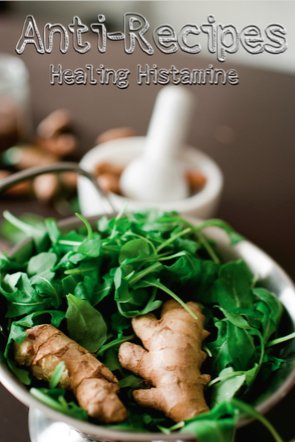
Ginger – Ginger is a potent antihistamine, soothing to the stomach, and it’s both anti-inflammatory and anti-obesity.
Nigella sativa – Nigella sativa is extremely antihistamine, anti-inflammatory, and has been found to have anti-obesity effects. You can read more about it here.
Olive oil – Olive oil is anti-inflammatory, has anti-obesity effects, and promotes production of diamine oxidase (DAO), an enzyme that helps break down histamine.
————REFERENCES—————
Dulloo, A. G., Fathi, M., Mensi, N., Girardier, L. (1996). Twenty-four-hour energy expenditure and urinary catecholamines of humans consuming low-to-moderate amounts of medium-chain triglycerides: a dose-response study in a human respiratory chamber. European Journal of Clinical Nutrition, 50(3), 152-8. Retrieved from: https://www.ncbi.nlm.nih.gov/pubmed/8654328
Fukuchi, Y., Hiramitsu, M., Okada, M., Hayashi, S., Nabeno, Y., Osawa, T., & Naito, M. (2008). Lemon Polyphenols Suppress Diet-induced Obesity by Up-Regulation of mRNA Levels of the Enzymes Involved in β-Oxidation in Mouse White Adipose Tissue. Journal of Clinical Biochemistry and Nutrition, 43(3), 201–209. http://doi.org/10.3164/jcbn.2008066
Georg-Jensen, M., Kristensen, M., Astrup, A. (2012). Effect of alginate supplementation on weight loss in obese subjects completing a 12-wk energy-restricted diet: a randomized controlled trial. American Journal of Clinical Nutrition, 96(1), 5-13. doi: 10.3945/ajcn.111.025312. Epub 2012 May 30.
Hasani-Ranjbar , S., Jouyandeh, Z., & Abdollahi, M. (2013). A systematic review of anti-obesity medicinal plants – an update. Journal of Diabetes and Metabolic Disorders, 12, 28. http://doi.org/10.1186/2251-6581-12-28
Hermanussen, M., García, A. P., Sunder, M., Voigt, M., Salazar, V., Tresguerres, J. A. (2006). Obesity, voracity, and short stature: the impact of glutamate on the regulation of appetite. European Journal of Clinical Nutrition, 60(1), 25-31. Retrieved from: https://www.ncbi.nlm.nih.gov/pubmed/16132059
Hough, L. B. (1999). Histamine Actions in the Central Nervous System. Retrieved from: https://www.ncbi.nlm.nih.gov/books/NBK28245/
Janssens, P. L. H. R., Hursel, R., Martens, E. A. P., & Westerterp-Plantenga, M. S. (2013). Acute Effects of Capsaicin on Energy Expenditure and Fat Oxidation in Negative Energy Balance. PLoS ONE, 8(7), e67786. http://doi.org/10.1371/journal.pone.0067786
Mohamed, el-O. A., Mohamed, S. M., Mohamed, K. A. (2001). The effect of cider vinegar on some nutritional and physiological parameters in mice. Journal of the Egyptian Public Health Association, 76(1-2), 17-36. Retrieved from: https://www.ncbi.nlm.nih.gov/pubmed/17216979
Mahmoud, R. H., Elnour, W. A. (2013). Comparative evaluation of the efficacy of ginger and orlistat on obesity management, pancreatic lipase and liver peroxisomal catalase enzyme in male albino rats. European Review for Medical Pharmacological Sciences, 17(1), 75-83. Retrieved from: https://www.ncbi.nlm.nih.gov/pubmed/23329526
Tabarean, J. (2016). Histamine receptor signaling in energy homeostasis. Neuropharmacology, 106, 13-19. Retrieved from:
Webster, E. L., Torpy, D. J., Elenkov, I. J., Chrousos, G. P. (1998). Corticotropin-releasing hormone and inflammation. Annals of the New York Academy of Sciences, 840, 21-32. Retrieved from: https://www.ncbi.nlm.nih.gov/pubmed/9629233
Wollin, A., Wang, X. and Tso, P. (1998). Nutrients regulate diamine oxidase release from intestinal mucosa. American Journal of Physiology-Regulatory, Integrative and Comparative Physiology 275(4), R969-R975. Retrieved from: https://www.ncbi.nlm.nih.gov/pubmed/9756524







Leave a Reply