Histamine, Mast Cells and Methylation: A Mother Battles MCAD

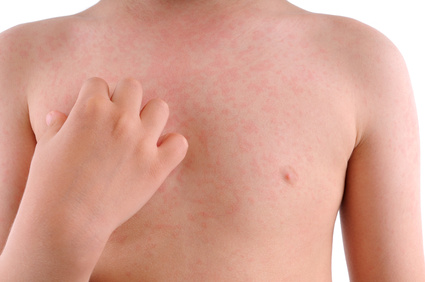
Close up image of a little boy’s body suffering urticaria.

UPDATE: for more on methylation and how it relates to histamine intolerance, mast cell activation and mastocytosis, don’t miss my interview with Dr Ben Lynch of MTHFR.net – sign up to my mailing list!

There’s little in life more frightening than having a sick child. Make it an illness that no one has ever heard of, that has little treatment beyond over the counter medications, and you’re entering a vortex of fear. Enter the warrior moms.

Today’s guest poster has devoted her life to helping heal her son’s severe mast cell activation disorder. Please meet Tiffany Blackden…

We’ve been living in this crazy world of histamine and hyperactive mast cells now for several years. Our son will be turning 5 this month, and he’s been our docent, as we gather our education in the museum of mast cell madness. He’s shared with us all the nuances of mast cell activation disorder, which may have been missed, had it been anyone other than our charming little guy guiding us. This disorder has both opened up our world like new understandings around family member’s health histories, and restricted it as well, particularly where social outings and nutrition comes in.

For anyone going through mast cell activation disorder, or histamine intolerance, you are aware that the symptoms can affect *any* of your body systems, many of them all at once. This is because histamine and other chemicals housed in the mast cells don’t stay isolated, but travel throughout the body.

In our world, we have experienced symptoms in some body systems more dramatically than others. Skin presentations from foods, friction, contact with triggers could cause swelling, hives, dermatographia as well as other persistent skin lesions and eczema. We’ve had years with terrible stomachaches, headaches, dizziness, vomiting, leg pain, neurological symptoms and anaphylaxis. The neurological symptoms have been mostly tics or behavioral shifts from exposure to triggers, or being overloaded with chemicals he was exposed to outside our home. In the last two years, we’ve been able to calm his body, get some vital nutrients on board, and lower his overall histamine burden.

I just noticed some of your ears perked up…’What do you mean lower his overall histamine burden?’ I go into more detail in this presentation  (http://www.slideshare.net/tiffanyblackden/working-with-histamine-overload-april-2013-20158082 ) I’ve shared at Mastocytosis Society conferences, but it has a LOT to do with supporting the liver. The liver support I am talking about in particular is supporting methylation and sulfation in the body that assist in clearing chemicals, both exogenous (those entering our body from our environment) and endogenous chemicals (those made by the body).

Methylation. I first heard this term over a year ago, several years after we were experiencing the ‘joy’ of mast cell madness. I had floundered around in the world of ‘food allergy mom’ before arriving at mast cell activation syndrome. Medical professionals kept making me believe that the only trouble was something that was going INTO my son that was causing the problems…but now I realize that his acute presentation was very closely linked to what was NOT coming OUT.

The magic of genetics has given us a way for us to understand some deficiencies in enzymes in our family. As we’ve studied methylation as it affects mast cell activation, we’ve also come to a greater understanding of how lifestyle, diet, environmental exposures can all cause FUNCTIONAL deficiencies that can look exactly like genetic disorders.

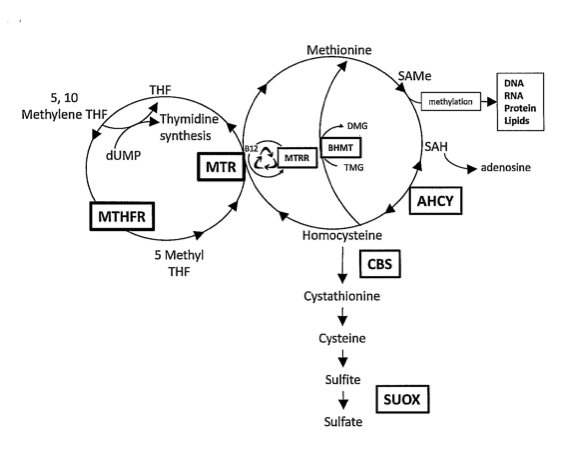
If you are looking into genetics and enzymes related to high histamine levels in the body, you may have stumbled over some of these: MTHFR, MAO A, DAO1, ABP1, HNMT…and more! Some of those affect enzymes that are responsible for histamine degradation, and some are in the methylation cycle. These and many more genes are involved in the body’s ability to excrete chemicals from the body, INCLUDING histamine. There are some very detailed warnings for supplements, medications and more, for those of us who have some of these genetic mutations (I like the term variant better, but you’ll see mutation in many texts as you dive into the ocean of genetics) in the methylation cycle. Some of us need to have activated forms of vitamins, because our bodies can’t convert nutrients as simple as folic acid. Some of us need to avoid high sulphur foods or medications. Then, many of us need to lighten up the already heavy toxic load on our livers. Something to be aware of, though, is there is no way there can be a ONE SIZE FITS ALL solution to chronic issues like this, because our individual genetics vary SO much! For instance, Epsom salt baths are really helpful for many people (transdermal absorption of magnesium sulfate can help with a number of health issues, especially supporting sulfation, a Phase II liver detox process!), but for people with certain CBS gene mutations, they can actually drain some of the vital nutrients from the body, if overused.

Our goal in helping our little guy was to lower the histamine we were putting IN his body,reduce the amount of the chemicals that were competing for the same pathway out, and lighten up the functional bottleneck that was backing up histamine in his body. Part of the reason this was happening was his genetic hiccups in the methylation cycle inhibit some of the enzymes that act as the ‘bouncers’. The liver secretes these molecules in order to escort the chemicals you don’t want in your body anymore to the door…or the toilet, as the case may be.

Methylation does more than just excrete the bad stuff, it is also a process that turns genes on and off, supplies active enzymes that manage important metabolic functions in the body and more. The big gene that is being talked about in our methylation circles is MTHFR. These are a few resources, if you want to learn a little more about it. http://babyfoodsteps.wordpress.com/2013/03/24/snips-about-snps-mthfr/  http://www.MTHFR.net    and    http://www.mthfrsupport.com/
histamine, histamine intolerance, mast cells and methylation

As you work to find more pieces to your particular health puzzle, keep looking for answers. Each week we have new insights and information that helps us connect dots. It’s painstaking work, but worth it each time we figure out something that helps our children. 

Tiffany Blackden is a warrior mom working to find answers for her children about health problems that baffle most doctors. She stresses that moms need to take care of themselves, find support, trust their intuition about their children’s health, and be very particular about the medical professionals her family hires. Tiffany’s family page on facebook, where she posts medical information and research she is discovering is: http://www.facebook.com/blackdenfamily. She is also building out a new blog about her experience with mast cell challenges here: http://www.mastcellmadness.com Connect with her on facebook, Twitter or LinkedIn.

5 responses to “Histamine, Mast Cells and Methylation: A Mother Battles MCAD”

  1. Audrey Avatar
    Audrey

    I also have the MTHFR mutation and suffer from histamine intolerance. Thanks for sharing!

  2. thelowhistaminechef Avatar

    Thanks so much for posting and reading! I really appreciate it 🙂 Best of luck and please keep in touch.

  3. thelowhistaminechef Avatar

    Thanks so much for posting and reading! I really appreciate it 🙂 Best of luck and please keep in touch.

  4. Frances Wisniowski Avatar
    Frances Wisniowski

    Thank you for this post, this inspired me to do some more reasearch on my own.
    In the meantime I am trying to get into to see a nutritionist but I am not sure that it will be much help (aside from having enzyme levels/ activity tested).

    Most doctors are completely ignorant of MCAD and under- methylation.
    I have been following your blog and am interested in your books but I am hesitant to buy them becuse I find that I am even more food restricted than most.
    My triggers are: wheat, any animal protein (no meat, fish or dairy), garlic/onions, Soy, potatoes/eggplant, peanuts.
    I am intolerant of high folate foods, nutritional yeast, grapefruit, and corn.
    I am having a difficult time finding a vegan low histamine diet that does not incorporate my trigger foods.
    I am active duty military and I find it difficult to set aside time for food prep, leftovers make me sick so how do I make food ahead of time?!
    So frustrating; I end up compromising with my health and barely making it through a day. Some things have improved ( I am not having anaphylaxsis 1-4 times a day) but I still agonize over food and often feel sick.
    Any suggestions are welcome!
    :: the following is an excerpt from my food journal::
    journal entry 5/21/2013
    Gleevec is working wonderfully; I have had zero anaphylactic reactions while on it (I have stress tested with triggers that have produced anaphylaxis in the past), however I am beginning to believe that there is an additional mechanism behind my illness.
    I still have hives, edema, smooth muscle spasms, pain, fatigue etc., all symptoms of still high histamine levels. I am noticing a *direct* correlation between certain foods (things that have never provoked an anaphylactic response) and my symptoms of high histamine. Foods like potatoes, eggplant, mango, oranges, left overs of any cooked food are causing symptoms, interestingly enough they are also naturally high in dietary histamine.
    I believe my ability to eliminate serum histamine is compromised. I am already supplementing with vitamin C, I recently added in B6 and experienced an improvement in some of my physical symptoms. Together vitamin C and B6 help support the formation of DAO (diamine oxidase), which degrades serum histamine (via oxidative deamination). So by inference it appears that I am not naturally producing enough DAO on my own.
    Histamine N-methyltranferase also degrades histamine (by N-methylation) specifically implicated in airway response and brain histamine levels (HNMT is active within the cells whereas DOA is active in the blood serum).
    I have noticed some improvement by cutting back on dietary histamine and supplementing my DAO production, however, I still have fatigue, brain fog, pain, etc.
    Now I am looking at another mechanism by which histamine is generated.
    MTHFR SNPs
    “At least 40 mutations in the MTHFR gene have been identified in people with homocystinuria. Most of these mutations change single amino acids in MTHFR. These changes impair the function of the enzyme, and some cause the enzyme to be turned off (inactivated). Other mutations lead to the production of an abnormally small, nonfunctional version of the enzyme. Without functional methyenetetrahydrofolate reductase, homocysteine cannot be converted to methionine.”
    MTHFR genetic home reference http://ghr.nlm.nih.gov/

    “Methylenetetrahydrofolate reductase catalyzes the reduction of methylenetetrahydrofolate to methyltetrahydrofolate. This is the only reaction generating methyltetrahydrofolate in the cell. Methionine synthase catalyzes a methyl transfer from methyltetrahydrofolate to homocysteine, generating methionine and tetrahydrofolate. “
    http://deepblue.lib.umich.edu/bitstream/handle/2027.42/42254/431-157-S2-S54_8157s054.pdf?sequence=1
    Histidine converts to Histamine (by specific L-histidine decarboxylase) or is converted to Glutimate by Tetrahydrofolate.
    “Another key feature of histidine catabolism is that it serves as a source of ring nitrogen to combine with tetrahydrofolate (THF), producing the 1-carbon THF intermediate known as N5-formiminoTHF. The latter reaction is one of two routes to N5-formiminoTHF. Urocanate is converted to 4-imidazolone-5-propionate via the action of urocanate hydratase. The latter product is then converted to N-formiminoglutamte via the action of imidazolone propionase. Glutamate formiminotransferase then transfers the fomimino group to THF yielding glutamate and N5-formiminoTHF.”
    http://themedicalbiochemistrypage.org/amino-acid-metabolism.php
    Without adequate Tetrahydrofolate greater amounts of serum Histamine are created from Histidine (less Histadine is catabolized into Glutamate). This leads to abnormal and dangerously high levels of Histamine in the blood and cellular tissues.
    In this way MTHFR SNPs directly contribute to abnormally high histamine levels.

  5. Jake Avatar
    Jake

    Is there a particular MTHFR supplement that is acceptable for people with histamine intolerance/MCAD? At least one that won’t make things worse?

Leave a Reply

Your email address will not be published. Required fields are marked *

More Articles from Healing Histamine

  • Best Outdoor Finger Foods

    Best Outdoor Finger Foods

    There’s nothing like light-hearted summer get-togethers in the backyard or out on the deck fueled by delightful and delicious finger foods. For the histamine intolerant guest, chips and salsa are…

    Read more

  • Best Histamine Intolerance BBQ Foods

    Best Histamine Intolerance BBQ Foods

    Summertime is BBQ time. There’s nothing like the smell of hot food fresh from the grill and an al fresco meal with friends or family to wrap up a hot…

    Read more

  • The Hay Fever-Histamine Connection

    The Hay Fever-Histamine Connection

    Hay Fever, otherwise known as allergic rhinitis (nasal allergies), or what most people refer to simply as “allergies” has an association with histamine intolerance and mast cell disorders. Have you…

    Read more

  • Histamine & The Pool or Beach

    Histamine & The Pool or Beach

    When it’s hot and sticky in the summertime, there’s nothing like a dip in the pool or a trip to the beach to cool you down. And since histamine intolerance…

    Read more

  • This Parasite Triggers Histamine Intolerance

    This Parasite Triggers Histamine Intolerance

    Could parasites be causing or contributing to your chronically high histamine levels? We know that imbalances in the gut microbiome can cause histamine problems, but how about intestinal parasites? It’s…

    Read more

  • 6 Summer Histamine Challenges and Solutions

    6 Summer Histamine Challenges and Solutions

    Summertime is a wonderful time of being outside, taking in the sunshine, mowing the lawn, and enjoying cookouts with friends and family. However, for those of us dealing with histamine…

    Read more

  • Boost Good Gut Bacteria Without Supplements

    Boost Good Gut Bacteria Without Supplements

    Most of us know that our gut plays an important role in our immune response. The levels of different species and strains of bacteria in the gut, and especially which…

    Read more

  • Exercising with Histamine Intolerance

    Exercising with Histamine Intolerance

    We all know exercise is recommended for a healthy body in the long run. However, with histamine intolerance, you’re probably finding that exercise can make you sick. Unfortunately, exercise over…

    Read more

Welcome!

Yasmina was an award-winning broadcast journalist with a decade of experience covering war zones for CNN and the BBC. She devoted her journalism skills to researching and writing about histamine. Click here to learn about her. Each post is carefully and fully referenced with the latest scientific research. Not sure where to start? Here’s a four week meal plan and overall Histamine Reset.


4 Week Histamine Reset


Recent posts


Anti-Recipes…Bioflavonoid Rich & Hearty Foods $18

GET STARTED HEALING HISTAMINE

WHAT YOU NEED TO KNOW ABOUT HISTAMINE DELIVERED TO YOUR INBOX